

You clip on the leash, step outside, and your dog turns into a statue. No pulling forward, no sniffing around — just four planted paws and a look that says “absolutely not.” I know how frustrating this feels. Here is the short answer: a dog that won’t walk is almost never being stubborn. Something is stopping them — pain, fear, confusion, or equipment that hurts — and your job is to figure out which one it is.
Once you know the reason, the fix is usually straightforward. Let me walk you through how to read the situation, what to do in the moment, and how to rebuild your dog’s love of walks.
“When my dog refuses to walk, I treat it as information, not disobedience — the refusal is my dog telling me something is wrong, and listening is always faster than forcing.”
The Short Answer: Your Dog Isn’t Being Stubborn
Dogs don’t skip walks out of spite. In my experience, the cause falls into one of four buckets: the dog hurts somewhere, the dog is scared of something, the dog doesn’t understand the leash yet, or the conditions are wrong (heat, exhaustion, or sheer boredom with the same route). Stubbornness is a human label we stick on behavior we haven’t decoded yet.
That distinction matters because the fix for pain looks nothing like the fix for fear. Before you try any technique, spend one walk just observing: when exactly does your dog stop — the same spot, certain surfaces, certain people? The pattern tells you the cause.
Rule Out Pain Before Anything Else
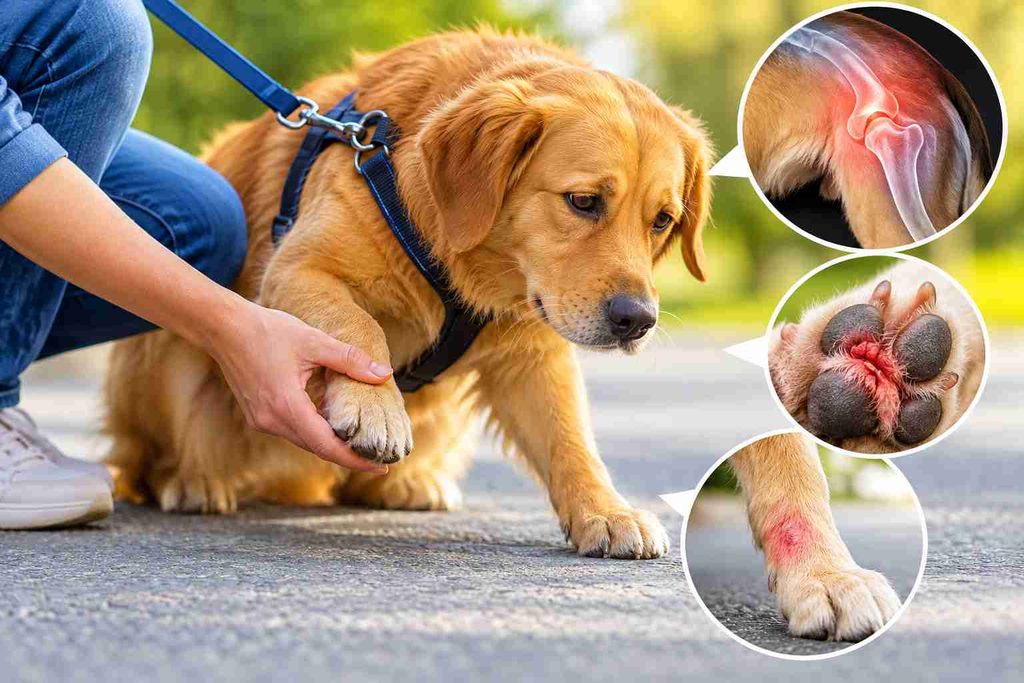
This is the golden rule: when a dog suddenly refuses to go on walks after walking happily before, assume a medical cause until a vet says otherwise. A sudden behavior change is the clearest signal your dog’s body is involved.
Joint pain and arthritis
Arthritis is one of the most common reasons older dogs start balking at walks. Watch for stiffness after rest, a reluctance to climb stairs or jump into the car, and a walk that starts fine but deteriorates. Dogs with hip dysplasia or elbow problems often plant their feet rather than limp obviously — refusing to move is simply less painful than moving.
Watch your dog get up from a nap: if the first few steps look stiff and then loosen up, that pattern points strongly toward joint pain. Never try to “walk through it.”
Paw, nail, and leg injuries
The smaller culprits are easy to miss. A torn nail, a thorn between the toes, a cracked paw pad from hot pavement, or a mild muscle strain can make every step hurt. After any walk refusal, I check paws first: look between the toes, press the pads gently, and watch for flinching. Check nails for cracks and legs for swelling or heat.
Owners often overlook the walk surface itself. Hot asphalt, rough gravel, road salt in winter, or a trail full of burrs can turn a willing dog into a statue within minutes. If your dog walks fine on grass but freezes on pavement, the surface — not the walk — is the problem.
Fear and Freezing: When the Walk Feels Unsafe
If pain is ruled out, fear is the next most likely cause. Dog freezing on walks is a classic stress response — the dog isn’t deciding to annoy you, its nervous system has hit the brakes. This is especially common in puppies going through a fear period, newly adopted dogs in an unfamiliar neighborhood, and anxious adult dogs with a history of scary experiences.
A dog scared to go for walks usually shows it in the body before the feet stop: ears pinned back, tail tucked, crouching low, yawning, lip-licking, or scanning the environment with wide eyes. When you see that cluster of signals, believe it. Your dog is telling you the environment feels dangerous.
Common triggers include loud traffic, construction noise, skateboards, a dog that lunged at them last week, or even a trash can that wasn’t there yesterday. When a dog refuses to walk due to fear, it often stops in the exact same spot every day — that’s your clue that a specific sight, sound, or smell lives at that location.
Never drag the dog forward or scold — flooding a frightened dog teaches it that walks are even scarier. Instead, increase distance from the trigger, let the dog watch from a comfortable spot, and reward calm behavior. Over several sessions, gradually shrink that distance.
Check the Gear: Collars, Harnesses, and Leashes
Sometimes the problem is literally around your dog’s neck: a collar that’s too tight, a prong or choke collar that punishes forward movement, or a harness that chafes behind the front legs can all make a dog shut down.
When a dog resists walking on leash, it may simply never have been taught what the leash means. Leash pressure is confusing at first — the dog feels a tug and freezes because it doesn’t know which direction relieves the pressure. Teaching loose-leash basics indoors, where distractions are low, builds the understanding before you ever hit the sidewalk. Loose-leash walking is a foundation skill for every dog — it is even one of the basics covered in my guide to making your dog a service dog.
Fit matters more than brand. You should be able to slide two fingers under the collar. The harness should not press into the armpits or restrict the shoulders. And check the leash itself — a heavy chain leash on a small dog is like asking you to walk with an anchor.
When It’s Not Pain or Fear: Heat, Boredom, and Bad Timing
Not every refusal is dramatic. Sometimes a dog won’t budge on walks for the most ordinary reasons. Heat is a big one — dogs overheat far faster than people, and a dog that loved morning walks may plant its feet at noon in July. Walk early or late, bring water, and test the pavement with your own hand: if it’s too hot for your palm, it’s too hot for paws.
Exhaustion works the other way — a senior dog or a puppy that’s been playing all morning may simply be out of energy. And then there is boredom: the same half-mile loop every day can make walks feel like a chore. New routes and sniff breaks can reignite interest.
Strong smells can stop a dog cold too. Cigarette smoke, vape clouds, fresh chemicals on a lawn, or a neighbor’s grill can all make a sensitive nose say no — dogs’ noses are so powerful that detection dogs can even smell nicotine through sealed packaging. If your dog always freezes near the same house or corner, consider what the air carries there.
Timing also plays a role. A walk right after a big meal can cause discomfort. A walk during the neighborhood’s loudest hour — garbage trucks, school buses, leaf blowers — stacks stress. Small adjustments to when and where you walk solve more refusals than any training technique.
What To Do in the Moment: A Calm 5-Step Protocol
When your dog locks up mid-walk, here is exactly what I do:
- Stop and breathe. Don’t pull. Plant your own feet, keep the leash loose, and give your dog 30 seconds. Tension on the leash signals that you are worried too.
- Scan for the cause. Check paws, look for limping, notice the environment — is there a trigger nearby?
- Make it easy. Turn slightly sideways (less confrontational than facing head-on), use a cheerful voice, and take one step backward to invite your dog toward you rather than pushing forward.
- Reward any movement. One step, a head turn, even shifting weight forward — mark it and reward it. You are rebuilding momentum, not demanding a march.
- Know when to quit. If your dog won’t move after a few calm minutes, head home without drama. A short walk beats a battle, and you can troubleshoot from the couch.
What never helps: dragging, scolding, or yanking the leash. Those responses punish the dog for communicating and guarantee the next walk starts with dread. If frustration turns into leash-grabbing or mouthing, redirect onto a toy — and work on impulse control separately using the same steps I recommend for teaching a dog not to bite.
High-value treats earn their keep here — the kibble your dog ignores at home won’t cut it on a scary sidewalk. Bring small pieces of chicken or cheese, reserved only for walks.
Puppies, New Rescues, and the Dog That Won’t Leave the House
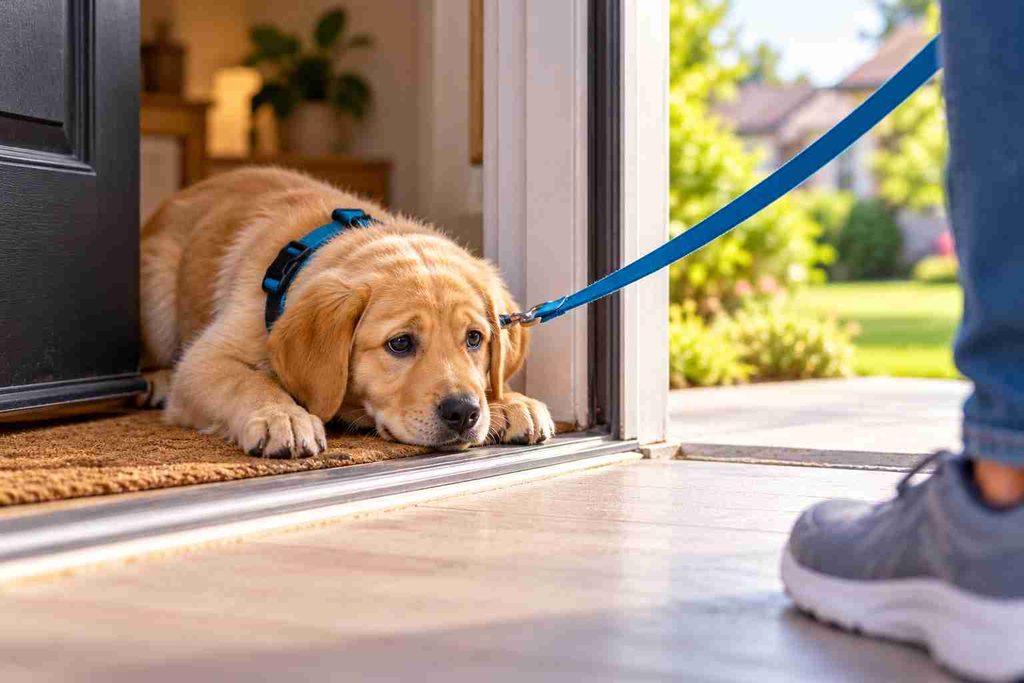
Some dogs never make it past the front door. When a dog refuses to leave house for walk, it is usually dealing with overwhelm — the outside world is simply too much, too fast. This is textbook for young puppies in their first fear period and for rescue dogs still decompressing in a new home.
For these dogs, shrink the world. Practice leash walking inside the house first. Then graduate to the yard, then the driveway, then one house down the street. Each new zone only opens when the previous one feels boring. When a puppy won’t walk on leash outdoors but walks beautifully indoors, that contrast tells you the problem is the environment, not the leash.
New rescues deserve extra patience: three days to decompress, three weeks to learn routines, three months to feel at home. A rescue that won’t walk in week one may trot happily by week six.
When a dog stops walking and wont move at the threshold, never carry the dog past the scary part and set it down — that teaches the dog that the only way forward is being scooped up. Instead, play training games near the door: toss treats across the threshold, feed meals just outside it, and let curiosity do the pulling.
If you decide to bring in professional help, choose a certified force-free trainer — and apply the same skepticism I describe for how to catch a fake service dog to any trainer promising instant, guaranteed fixes. Real behavior change takes sessions, not miracles.
When to Call the Vet
Call your vet promptly if the refusal came on suddenly, if your dog yelps when touched, if there is limping, swelling, or a visible wound, or if it comes with lethargy, appetite loss, vomiting, or heavy panting at rest.
Senior dogs deserve a vet visit at the first sign of walk reluctance — arthritis and other age-related conditions respond far better to early treatment. And if your dog’s behavior changed overnight with no obvious trigger, don’t wait a week to see if it passes. Pain hides well in dogs; a professional exam is the fastest way to rule it out.
Frequently Asked Questions
Why does my dog lie down and refuse to walk?
Lying down usually means your dog has hit a limit — fear, exhaustion, or discomfort. A dog that flops onto the pavement is saying “I can’t,” not “I won’t.” Check for pain first, then consider whether something in the environment overwhelmed them, and end the walk calmly rather than pulling them up.
Why is my dog hesitant to walk all of a sudden?
A sudden change points to pain, a scary recent experience, or a new trigger on your route. Think back over the last few days for a loud noise, a confrontation with another dog, or a gear change — and get a vet check if no obvious cause appears within a day or two.
Why does my dog stop walking halfway through every walk?
A consistent halfway point usually means the walk is too long, too hot, or passes something unpleasant at that spot. Try a shorter route, walk during cooler hours, or change direction at the usual stopping point and see if the pattern breaks.
How to get a stubborn dog to walk without forcing it?
Trade pressure for motivation: high-value treats, a new route with interesting smells, and a cheerful “let’s go” cue. Reward every step forward at first, keep sessions short, and end on a win. Dogs repeat what pays — make walking the best deal on the menu.
Why dog refuses to walk: is it stubbornness or something else?
Almost always something else. True stubbornness is rare in dogs; what looks like defiance is usually pain, fear, confusion, or an unmet need like rest. When you replace the stubbornness story with curiosity about the cause, the fix usually becomes obvious.
Should I drag my dog when it refuses to move?
No. Dragging risks injuring your dog’s neck and teaches the dog that walks involve force, which makes future refusals worse. It also masks pain — a dog that would have shown you a sore paw just learns to endure it. Stop, assess, and lure or redirect instead.
When should walk refusal be treated as an emergency?
Treat it as urgent if your dog suddenly can’t walk or stand, drags its back legs, yelps in pain, has a visibly swollen limb, or collapses. Those signs can indicate a spinal issue, fracture, or other emergency — skip troubleshooting and get to a vet immediately.
Turning “Nope” Into “Let’s Go”
A dog that won’t walk is giving you information, not attitude. Start with the body — rule out pain. Then the mind — fear and confusion shut down more walks than any medical issue. Then the setup — gear, route, timing, and temperature.
Most refusals resolve once the real cause is addressed: better-fitting gear, a desensitization plan for the scary corner, shorter walks for the senior, or simply permission to sniff instead of march. Be the owner who listens when their dog says no, and you’ll end up with a dog that says yes far more often.
If the refusal persists beyond a week, loop in your vet and a force-free trainer together — between them, medical and behavioral causes both get covered.