
Here is the short answer: most of the time, she licks because she adores you and wants the petting to last a little longer. Licking releases feel-good chemicals in both of you, and many dogs learn that a few warm licks earn a few extra minutes of your attention. But not every petting-lick comes from the same place.
Some are calming signals, and a few can point to stress, overstimulation, or even a health issue. The trick is knowing which lick you are looking at.
Most petting-licks say, “I love this — please don’t stop.” But a few say, “I’m not enjoying this as much as you think.” Learning the difference changes everything about petting time.
1. Affection — and a Little Oxytocin Science
So why do dogs lick you when you pet them? The most common answer is the simplest one: affection, backed by real brain chemistry. Positive, gentle interaction between a person and a dog raises oxytocin — the same bonding hormone that cements a parent’s bond with a child — in both species. Licking may be your dog’s way of returning that warm rush, a little love note written with her tongue.
I recommend watching what accompanies the licks. A soft, loose body, a tail wagging at a relaxed height, and happy eyes usually mean the affection reading is correct. When the whole dog looks melted and content, the licks are simply joy leaking out.
Keep in mind that affection-licks tend to be slow and rhythmic, often paired with your dog leaning her whole weight into you. Fast, frantic licking is a different message — one I cover in Reason 5 below.
2. It Works — Licking Keeps the Petting Going
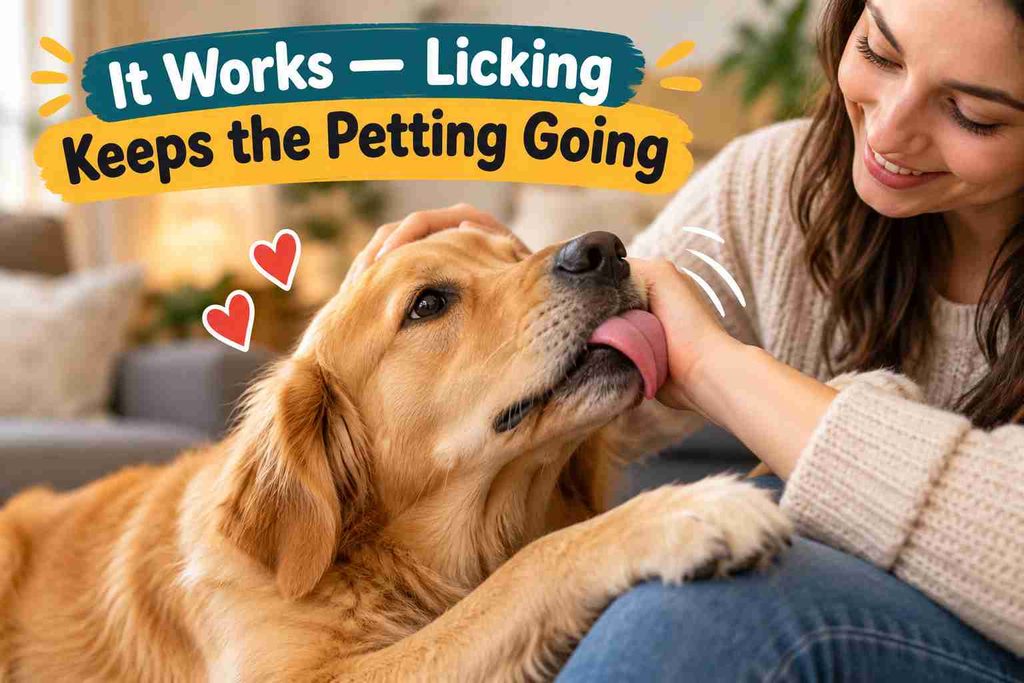
Here is the flip side: when people ask why does my dog lick me when i pet him, the honest answer is sometimes that he has trained you. Dogs are brilliant little behavior scientists. If licking your hand once made you laugh, smile, or keep petting for another minute, your dog filed that away under “things that work.”
This is simple positive reinforcement at play. Every extra stroke she earns with a lick strengthens the lick-pet cycle, and the cycle gets faster each week. It is not manipulation in any mean sense — it is just smart behavior meeting a willing partner.
Nothing here is harmful on its own. But if the licking has become nonstop, you can gently retrain the pattern — I give you a step-by-step plan in the redirect section below.
3. You Simply Taste Interesting
Sometimes the answer is embarrassingly practical: you taste like something delicious. Your skin carries salt from sweat, traces of your lunch, lotions, and the general scent of your day. Dogs explore the world through taste, and your hand is the most accessible sample they have.
This is why do dogs lick your hands more than any other spot — your hands are where the salt, the snacks, and the stories of the day live. A hand that just handled food is practically irresistible to a curious nose.
For many owners, the question of why do dogs lick my hand has this same straightforward answer: it is the taste. If the licking spikes right after you cook, eat, or apply lotion, you have found your culprit — and it usually fades once the flavor does.
4. Social Grooming Is in Their DNA
In the wild, canines groom each other as a social ritual. Mothers lick their puppies from birth, and pack members groom one another to strengthen social bonds. When your dog licks you during a petting session, she may be returning the favor — you groom her with your hand, and she grooms you with her tongue.
This mutual-grooming loop is the same instinct that makes dogs lick each other’s ears during quiet moments together. Your petting feels like grooming to her, and licking you back is her way of completing the ritual. It is one of the oldest social behaviors dogs carry, and it usually comes from a place of deep trust.
5. Appeasement — Not Every Lick Means Happiness
Anyone puzzling over why do dogs lick when you pet them should know that licking can also be an appeasement signal — a polite canine way of saying, “please keep this gentle, I am a little unsure.” Appeasement licking is quick, repetitive, and often aimed at your face or hands while your dog’s body stays low and still.
The context tells you everything. Appeasement licks often arrive with lip licking, yawning, turning the head away, or a tucked tail. If you notice these signs while you pet a particular spot — the top of the head and the paws are common triggers — your dog may be asking you to slow down or switch to a favorite spot instead.
This is not defiance, and not a problem with your bond. Some dogs simply find certain types of touch intense, and adjusting your petting style usually clears the appeasement licks right up.
6. Your Attention Is Addictive
Some dogs are simply attention connoisseurs. They have learned that you are never more focused on them than when you are petting them, and licking becomes their way of soaking up every second of it. When people ask me why does my dog keep licking my hands, my answer is usually this: because it works on you every single time.
You can see this pattern clearly when the licking clusters around pauses. You stop petting to answer a text, and the tongue immediately appears — part reminder, part flattery. Dogs who lay on you for the same reason are working the same angle: stay close, stay in contact, and the good stuff keeps coming.
A little of this is charming. A lot of it can turn into demand behavior, where any pause in attention triggers a lick campaign. The redirect plan below helps you keep it balanced without crushing your dog’s enthusiasm.
7. Anxiety or Overstimulation
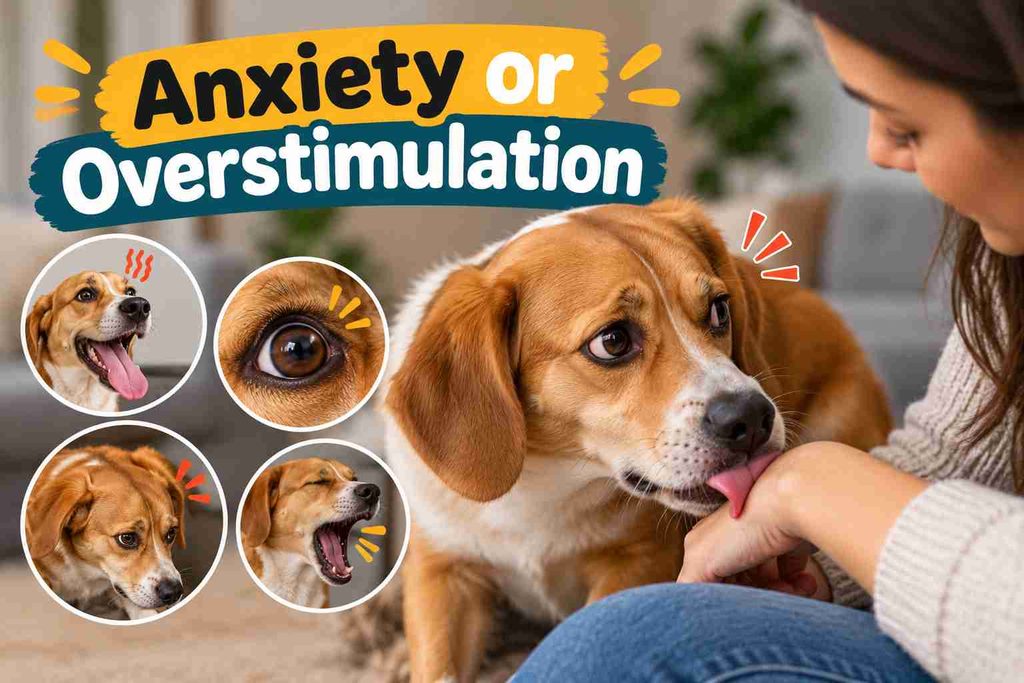
Finally, there is the stress side of the coin. Anxious or overstimulated dogs lick as a self-soothing behavior — the same way some people bite their nails. This is the deeper reason behind why do dogs lick your hand when a petting session gets too long, too fast, or too intense: the licking helps them cope with feelings they cannot name.
Watch for the cluster of stress signals: panting when it is not hot, dilated pupils, a stiff or tucked tail, ears pinned back, or sudden whimpering. If these show up alongside frantic licking, your dog is not asking for more — she is asking for a break.
Overstimulated dogs often lick right before they escalate: mouthing, nipping, or bolting off. If you learn to read the frantic lick as an early warning, you can end the session calmly before anyone gets overwhelmed.
When Petting-Licks Start Signaling a Problem
Most licking during petting is harmless. But I recommend paying attention when the pattern changes suddenly — a dog that never licked during petting and starts now, or one whose licking becomes obsessive, is worth a closer look. Sudden behavior changes in dogs are often the first sign something is off physically.
The red flags I take seriously are licking paired with nausea, drooling, gulping, or grass-eating (possible stomach trouble), licking that spreads to constant floor or furniture licking (which can point to nausea or other internal issues), and licking at one spot on their own body (which suggests pain, skin irritation, or allergies).
Sometimes the problem goes wider: a dog whose petting-licks escalate into lick everything in the house — floors, furniture, the air itself — may be dealing with nausea, liver trouble, or neurological concerns that deserve a vet’s opinion.
Dogs who fixate on one area of their own body are telling a different story. It may be pain, a hot spot, or an allergy flare, and the petting-licks you notice might just be the most visible part of a bigger itch.
A closely related habit is the dog that is constantly licking their paws. Allergies, yeast between the toes, or a small sore can drive relentless paw licking, and once you know to look, you will often find the real source of the whole licking pattern.
None of this means panic. It means observation — and, when several signs stack up or the behavior is truly new and persistent, a vet visit. You know your dog’s normal better than anyone, so trust the change you noticed.
What About Hygiene? Keeping the Licks Safe
A calm word on germs: a dog’s mouth is not cleaner than yours — that old saying is a myth — but healthy dogs rarely pass anything dangerous through a lick. The sensible middle ground is simple hygiene, not fear.
Wash your hands after a good licking session, especially before eating. Keep licks away from open cuts, fresh wounds, and your mouth or eyes. If anyone in the household is immunocompromised, very young, or recovering from illness, be a little more careful and check with your doctor about ground rules.
Normal, healthy interaction between you and your dog carries very little risk, and basic hand washing covers almost all of it.
How to Respond When the Licking Gets to Be Too Much
Whether the licking comes from affection, habit, or overstimulation, you never need to punish it. You just redirect it. Here is the simple plan I recommend:
- Pause, don’t push. When the licking ramps up, calmly stop petting for a few seconds and withdraw your hand. You are not scolding — you are showing her that calm behavior earns continued attention.
- Offer a legal outlet. Redirect the mouth to a toy or a chew. A dog that needs to lick can lick a stuffed toy; the behavior finds a home that is not your hand.
- Restart on your terms. After a few calm seconds, resume petting a favorite spot — the chest and the base of the ears work well for most dogs. Stop again if the frantic licking returns.
- Avoid known hot spots. If certain areas (the top of the head, the belly, the paws) reliably trigger appeasement or overexcited licking, pet the spots she loves and skip the ones she merely tolerates.
- Teach a cue. A simple “leave it” or “enough,” rewarded with a treat the instant she stops, gives you a polite off-switch you can use anywhere.
Consistency is the whole game. If everyone in the house follows the same pause-and-redirect routine, most dogs settle the pattern within a couple of weeks.
Frequently Asked Questions
What does it mean when a dog licks your hand?
Usually, it is a friendly gesture — a mix of affection, recognition, and curiosity about your taste. Dogs greet and bond through their mouths the way people use a handshake. Context matters: a loose, waggy dog is saying hello, while a tense one may be offering an appeasement lick instead.
What does it mean when your dog licks your hand?
When it is your own dog, a hand-lick is most often bonding behavior: you are her person, your hand feeds and pets her, and licking it feels like returning the favor. Taste plays a part too — salty skin after a workout is a classic trigger — and so does habit, since licking has probably earned her more attention before. In a relaxed dog, it is a compliment.
Is a dog licking you a sign of affection?
Most of the time, yes. Slow, relaxed licking from a loose-bodied dog is one of the clearest signs of canine affection, and it is backed by real bonding chemistry. The exception is appeasement licking: quick, repetitive licks from a tense dog mean “please be gentle,” not “I love this.” Body language decides.
Why do dogs lick their lips when you pet them?
Lip licking during petting is often a calming signal — your dog’s way of saying the attention feels intense and she is trying to keep things peaceful. It is one of the classic stress indicators trainers watch for. If it pairs with yawning, turning away, or a tucked tail, ease up on that spot; if her body stays soft and happy, it may just be anticipation of a treat-flavored hand.
Dog Licking Lips: What Does It Mean When Petted?
The question behind dog licking lips meaning when petted is whether your dog is actually enjoying the attention. In most cases, quick lip flicks mean mild stress or deep concentration — the dog is processing the sensation and asking, in dog language, for the petting to stay gentle. It differs from relaxed, happy licking because the lips flick fast and the body may tense slightly.
Why does my dog lick me when we cuddle?
Cuddling stacks every trigger at once: warmth, closeness, your scent, and a relaxed mood — a perfect recipe for affection-licks. Many dogs also lick during cuddles as social grooming, treating the snuggle like a shared ritual. If the licks come with sighs and a melting body, she is simply happy; frantic licking during cuddles can mean overstimulation instead.
Why does my dog lick my hand?
Because your hand is the part of you she interacts with most — it feeds her, pets her, and carries every interesting smell of your day. A hand-lick blends bonding, taste, and curiosity into one gesture. If it happens right after you handle food or lotion, taste is almost certainly the reason; if it happens during every petting session, it is mostly love and habit.
Why does my dog lick my hands?
Both hands, all the time? That is usually a dog who has learned that licking hands gets a reliable reaction — more petting, laughter, or attention. Taste plays a role too, since both hands carry salt and scent. If you want less of it, the pause-and-redirect plan above works; if you enjoy it, there is no harm in letting a happy dog be happy.
Making Petting Time Great for Both of You
Most of the time, a lick during petting is your dog’s way of saying she is right where she wants to be. The affection, the oxytocin loop, the social grooming instinct — it all adds up to her telling you, in the only language she has, that you matter.
The only real job is reading the exceptions: the appeasement lick that asks for gentleness, the frantic lick that asks for a break, and the sudden new pattern that deserves a vet’s eye. Get those right, and petting time becomes what it should be — the easiest, happiest part of both your days.
So the next time the tongue comes out mid-pet, you will know exactly what to do: enjoy the love, watch the body language, and keep the strokes coming — on her terms as much as yours.