

Your dog may lick everything to explore smells and tastes, show affection, get attention, relieve boredom, or calm anxiety. Occasional licking is normal, but sudden or excessive licking can also signal nausea, allergies, pain, dental problems, or other health issues that may need veterinary attention.
Is your dog licking everything in sight? Discover what this unusual habit means, when it’s harmless, and when your dog may need extra care.
Why Dogs Lick Everything
Licking is a normal part of being a dog. Puppies use their mouths to investigate their surroundings, while adult dogs may lick people, surfaces, toys, or themselves for many different reasons.
Sometimes the answer is simple. A floor may have food residue, your skin may taste salty, or a favorite toy may provide comfort. Other times, repeated licking is your dog’s way of responding to boredom, anxiety, discomfort, or illness.
If you are asking why is my dog licking everything, look at the pattern rather than one isolated lick. Occasional licking that stops easily is very different from repetitive behavior that takes up a large part of the day.
Behavioral Issues
Boredom is one possible reason. A dog without enough exercise, play, training, or mental stimulation may create their own activity, and licking can become an easy way to pass time.
Stress can also trigger repetitive licking. Changes at home, separation, loud noises, unfamiliar visitors, or changes in routine may cause some dogs to use licking as a calming behavior.
Attention can play a role too. If licking regularly earns talking, petting, eye contact, or even an attempt to stop the dog, your pet may learn that licking produces a response. Over time, an occasional behavior can become a habit.
Compulsive licking is different. A compulsive behavior tends to be repetitive, difficult to interrupt, and may continue even when there is no obvious reason for it. Veterinary behavior sources recommend looking at both medical and behavioral causes rather than assuming the behavior is simply stubbornness.
Health Issues
Health problems should be considered when licking suddenly increases or becomes difficult to interrupt.
Allergies can make dogs intensely lick itchy paws or other body areas. Pain can cause focused licking around an injured or uncomfortable spot. Nausea and gastrointestinal discomfort may also lead some dogs to lick floors, furniture, carpets, or other surfaces.
Dental and mouth problems can contribute to unusual licking too. Air licking, lip licking, drooling, bad breath, or difficulty eating deserves attention, particularly when these signs appear suddenly.
Persistent self-licking can also damage the skin. Moisture, irritation, and repeated trauma may contribute to secondary infections, creating an uncomfortable cycle of itching and more licking.
If your dog’s behavior has changed noticeably, a veterinarian can help determine whether there is a physical problem before you focus mainly on training.
Why Dogs Lick Specific Things
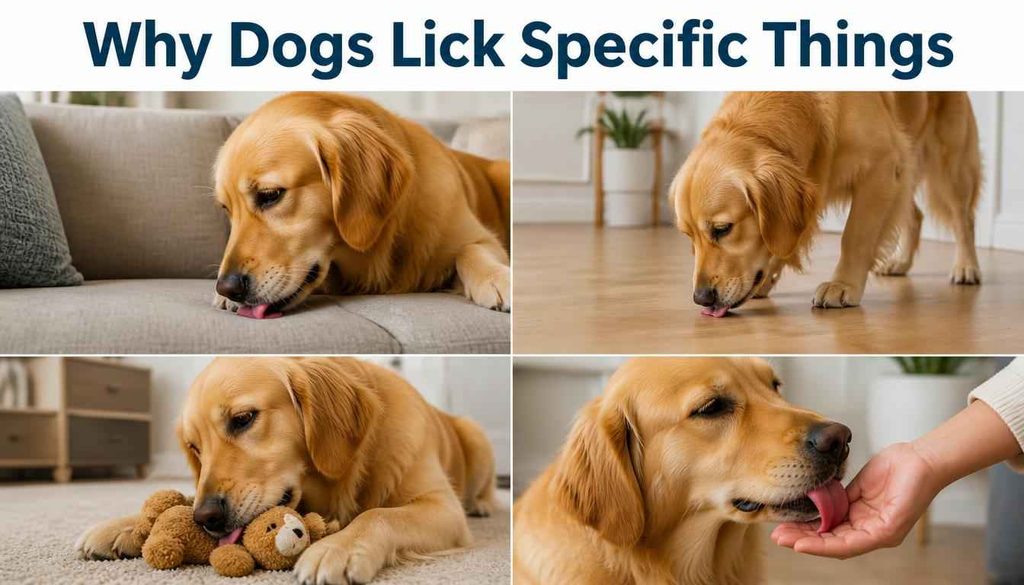
The object your dog chooses can provide useful clues. Different surfaces and body areas may attract licking because of taste, smell, texture, habit, comfort, or discomfort.
People
Dogs may lick people because human skin carries interesting smells and tastes. Sweat can leave salt on the skin, which some dogs find appealing. Licking can also be a social behavior or a way to get attention.
If you have been wondering why does my dog lick me excessively, consider what happens immediately afterward. If you usually pet, speak to, or look at your dog, they may have learned that licking starts an interaction.
You do not need to punish the behavior. Calmly moving away and rewarding an alternative behavior, such as sitting, can teach your dog another way to ask for attention. AKC guidance similarly recommends redirection and positive reinforcement rather than punishment.
Air
Air licking can look strange, especially when your dog appears to be licking at something invisible.
Sometimes dogs lick the air because they smell something interesting, anticipate food, or have something irritating their mouth. However, repeated air licking can occasionally be associated with dental discomfort, gastrointestinal problems, or neurological issues.
Watch for other signs such as drooling, difficulty eating, unusual facial movements, vomiting, weakness, or changes in awareness. If air licking is new, frequent, or difficult to interrupt, speak with your veterinarian.
Couches/Furniture
If you have ever asked why does my dog lick the couch, there may be a surprisingly simple answer. Food crumbs, human sweat, interesting smells, or another appealing residue can remain on fabric even when the furniture looks clean.
Some dogs also lick furniture because they enjoy the texture or have learned that repetitive licking feels calming.
But dog constantly licking furniture deserves closer attention. If your dog spends long periods licking cushions, seems unable to stop, or shows anxiety or other unusual behavior, consider medical and behavioral causes. Persistent furniture licking has been associated with boredom, stress, compulsive behavior, and gastrointestinal discomfort.
Cleaning the area and offering an appropriate activity can help when the cause is simple curiosity or boredom.
Flooring or Carpet
If you are wondering why do dogs lick the floor, start by checking what may be attracting them. Food residue, spilled drinks, cleaning-product smells, and interesting scents can all encourage investigation.
Some dogs may also lick hard floors or carpet when they feel bored or stressed. In other cases, repeated surface licking may accompany nausea or gastrointestinal discomfort.
Dog licking carpet constantly should not simply be dismissed as a funny habit. Keep floors free of food, chemicals, small objects, and anything your dog could swallow.
If the licking is frequent and you notice vomiting, diarrhea, appetite changes, drooling, restlessness, or other signs of illness, arrange a veterinary examination.
Their Toys
Toy licking is often harmless. Dogs may lick familiar toys because they enjoy the smell, flavor, texture, or soothing sensation.
A favorite toy can also become a comforting object, especially when a dog is relaxing. If your dog licks the toy for a short time and then moves on to normal activities, there is usually little reason to worry.
Still, check toys regularly for damaged pieces. A dog that begins chewing and swallowing pieces of a toy faces a different risk from a dog that simply licks it.
Each Other (Other Dogs’ Ears, Eyes, Mouths, etc.)
Dogs may lick other dogs as part of social interaction, grooming, communication, or exploration. A familiar dog may tolerate or even encourage the behavior.
However, excessive licking around another dog’s ears, eyes, or mouth can sometimes indicate irritation or a health problem in the dog being licked. For example, unusual discharge or inflammation may attract attention.
Do not allow persistent licking to continue if either dog appears uncomfortable. Excess moisture and repeated contact can also irritate already sensitive areas.
Their Own Paws/Tails/Backs/Legs/Lips/Groin Area
Dogs naturally groom themselves, so some self-licking is expected. The concern is when the behavior becomes intense, frequent, or focused on one area.
If you have been searching why is my dog licking himself so much, check the skin and paws for redness, swelling, cuts, parasites, irritation, or signs of allergies. Paw licking can occur with allergies, infections, injuries, foreign objects, parasites, and other problems.
Repeated licking around the groin can also have medical causes, including urinary or skin problems. Excessive licking of the rear may be linked to irritation, allergies, infection, or anal-gland problems.
If licking one area causes hair loss, raw skin, swelling, or visible irritation, veterinary advice is important.
Behavioral Roots of Licking
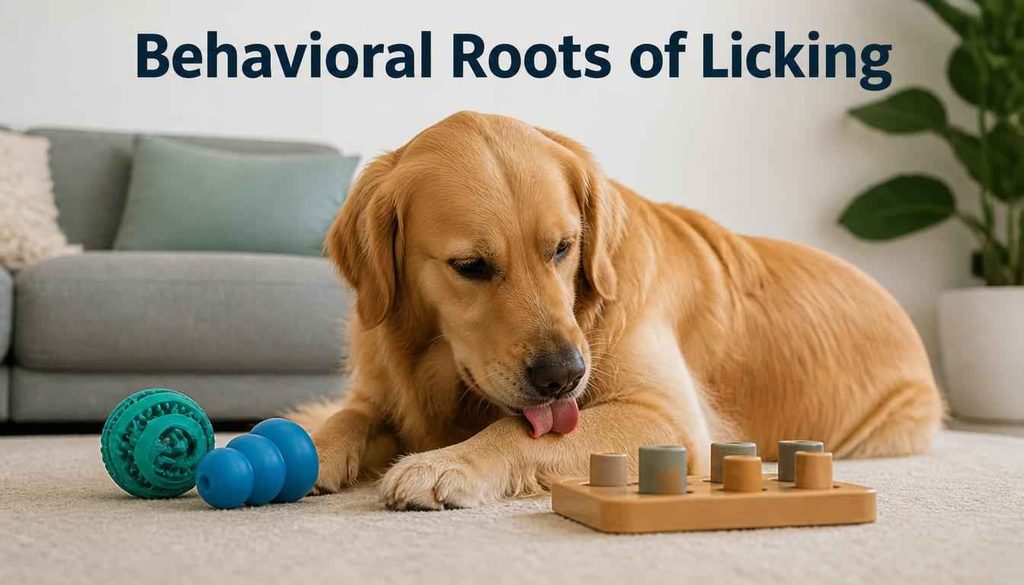
Behavioral licking often develops because the action gives the dog some type of reward. That reward does not have to be food.
For some dogs, licking is calming. For others, it provides something to do when they are bored. A dog may also discover that licking gets attention, which can strengthen the behavior every time a person reacts.
Common behavioral triggers include:
- Boredom and too little daily activity
- Stress caused by changes or unfamiliar situations
- Separation from an owner
- Attention-seeking
- A learned habit
- Repetitive or compulsive behavior
Age matters too. Puppies naturally investigate their surroundings, while older dogs may develop new repetitive behaviors that deserve more attention.
A useful clue is whether your dog can easily switch to another activity. If they happily stop licking when offered a walk, toy, training game, or food puzzle, boredom or habit may be part of the picture. If they seem unable to disengage, investigate further.
Medical Reasons for the Licking Habit
Excessive licking is not always behavioral. Veterinary evaluation is especially important when the behavior is new, intense, or accompanied by other changes.
Possible medical causes include:
Allergies: Itchy skin can cause repeated licking, especially around the paws, belly, ears, and other affected areas.
Nausea or gastrointestinal discomfort: Some dogs repeatedly lick surfaces, lips, or the air when they feel sick. Gastrointestinal problems can therefore be an important consideration when surface licking suddenly increases.
Pain: A dog may repeatedly lick a painful joint, paw, wound, or another specific body area.
Dental problems: Mouth pain, dental disease, or something trapped in the mouth can cause unusual licking, drooling, or difficulty eating.
Skin infections: Constant licking can damage the skin and create a secondary infection, which may increase itching and licking.
Neurological problems: Repetitive air licking or unusual “fly-catching” behavior can sometimes occur with neurological disorders and should be evaluated when persistent or accompanied by other abnormal signs.
Pica or other abnormal eating behavior: Some dogs lick or consume non-food materials. This can create a risk of poisoning, choking, or intestinal obstruction if objects are swallowed.
This is why there is no single answer to what causes excessive licking in dogs. The cause depends on the dog’s age, health, environment, licking pattern, and other symptoms.
What to Do If Your Dog is Licking Inanimate Objects
Start by observing instead of immediately trying to stop the behavior.
Write down:
- What your dog is licking
- When the behavior happens
- How long it lasts
- What happened immediately beforehand
- Whether you can interrupt it
- Whether your dog starts again soon afterward
- Any vomiting, diarrhea, itching, pain, drooling, or appetite changes
Then remove obvious attractions. Clean food residue from floors and furniture, keep unsafe substances away, and make sure your dog has safe toys and regular opportunities for exercise.
If boredom appears likely, increase physical activity and mental enrichment. Short training sessions, sniffing games, puzzle feeders, and interactive play can give your dog better outlets.
If anxiety appears to trigger the licking, look for changes in routine or environment. A calm resting area and predictable daily routine may help, but severe anxiety should be discussed with a veterinarian or qualified behavior professional.
For dogs interested in appropriate chewing and enrichment, you can also explore why dogs like bones for related behavior insights.
When to Be Concerned About Licking
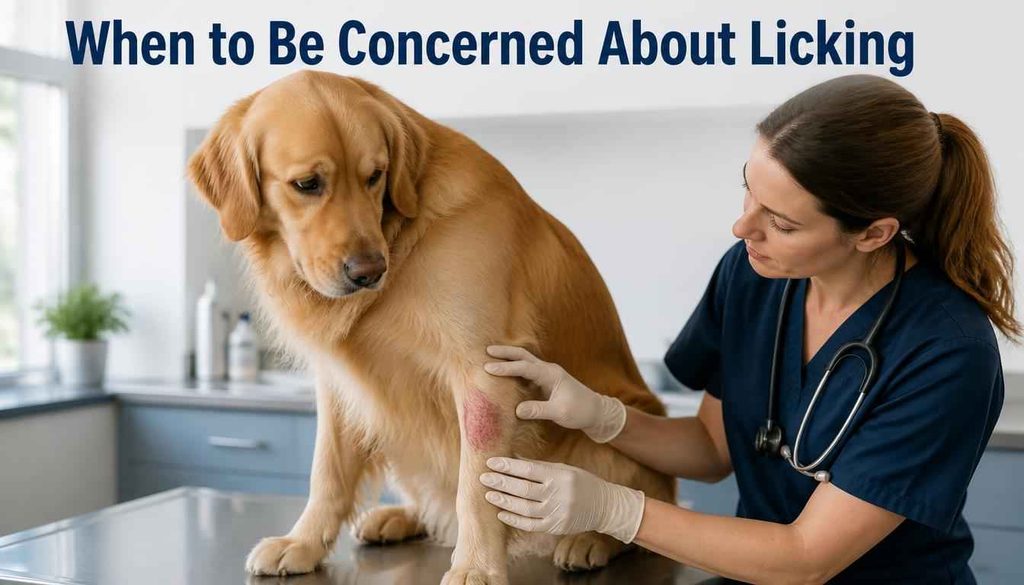
Not every lick is a warning sign. The most important difference is between normal, occasional behavior and licking that is persistent, intense, or difficult to interrupt.
Contact your veterinarian if your dog:
- Suddenly starts licking much more than usual
- Cannot be distracted from licking
- Licks one body area repeatedly
- Develops red, swollen, painful, or damaged skin
- Loses hair from repeated licking
- Shows vomiting, diarrhea, appetite changes, or unusual drooling
- Seems painful, restless, weak, or unusually withdrawn
- Starts a new repetitive behavior, particularly as an older dog
If licking causes skin damage, the behavior itself can become part of the problem. Early attention can help prevent a small irritation from turning into a larger cycle of licking and inflammation.
How to Handle Excessive Licking
The best approach depends on the cause.
If your veterinarian finds a medical problem, treating that problem is the priority. Once discomfort or illness has been addressed, behavioral work may become much easier.
For boredom-related licking, build more activity into your dog’s day. Walks, sniffing opportunities, training, food puzzles, and interactive games can provide healthier ways to spend energy.
For attention-seeking licking, avoid turning the behavior into a conversation. Instead, wait for calm behavior and reward your dog for doing something you want.
Redirection is also useful. Offer a safe toy, puzzle, training exercise, or another appropriate activity before the licking becomes intense. Positive reinforcement is preferred over punishment because punishment can increase stress and may make anxiety-related behavior worse.
If your dog enjoys licking and has no medical problem, a suitable lick-based enrichment activity may provide a safer outlet. Always use dog-safe ingredients and supervise your pet.
For more information about paw-related licking, see why dogs lick at their paws.
The goal is not always to eliminate every lick. It is to understand why your dog is doing it and prevent licking from becoming harmful.
Key Takeaways
- Licking is normal for dogs, especially when they are exploring, grooming, showing affection, or enjoying an interesting smell or taste.
- Excessive licking can be linked to boredom, anxiety, stress, attention-seeking, allergies, nausea, pain, or other health problems.
- Sudden or unexplained licking deserves more attention than an occasional lick.
- Repeated licking of the paws or one body area may point to itching, irritation, pain, or another medical issue.
- Floor, carpet, furniture, and air licking can sometimes be harmless, but persistent behavior should not be ignored.
- Give your dog regular exercise, mental stimulation, safe toys, and positive training to help reduce boredom-related licking.
- If licking causes hair loss, red skin, wounds, vomiting, appetite changes, pain, or other unusual symptoms, contact your veterinarian.
FAQs
Why is my dog licking everything excessively suddenly?
A sudden increase can be linked to nausea, gastrointestinal discomfort, pain, allergies, stress, anxiety, or another medical or behavioral change. Because the change is sudden, it is worth discussing with your veterinarian.
Why is my female dog licking everything?
Female dogs can lick objects for the same reasons as other dogs, including exploration, boredom, anxiety, taste, habit, and illness. If the behavior is new or excessive, check for other symptoms rather than assuming it is related to sex.
Why is my male dog licking everything?
Male dogs may lick surfaces because of smells, food residue, boredom, stress, habit, or physical discomfort. Excessive licking should be considered in the context of the dog’s overall behavior and health.
Why does my dog lick everything in the house?
Your dog may be exploring smells and tastes, cleaning up food residue, seeking stimulation, or soothing themselves. If the behavior happens repeatedly across many surfaces and is difficult to interrupt, a veterinary check can help rule out medical causes.
Why does my dog lick everything in sight?
Some dogs naturally investigate their environment with their mouths and tongues. Frequent licking can also develop from boredom, anxiety, habit, nausea, allergies, or pain, so the frequency and surrounding signs matter.
How to stop dog from licking everything?
First identify the reason. Remove tempting residues, provide exercise and mental stimulation, redirect licking toward appropriate activities, and reward calm behavior. If licking is sudden, intense, or persistent, have your dog examined by a veterinarian before treating it as a training issue.
Putting it all together
A dog that licks everything is not necessarily sick or badly behaved. Licking can be a normal way to explore, groom, communicate, enjoy a taste, or relax.
The important clue is change. Occasional licking that stops easily is usually very different from sudden, repetitive licking that your dog cannot seem to control.
Watch the pattern, check for other symptoms, keep your dog active and engaged, and seek veterinary advice when the behavior becomes persistent or unusual. With the right cause identified, many dogs can return to comfortable, normal routines.
If you are also dealing with other unusual dog behaviors, you may find our guide on why dogs sleep with their bum facing you useful for understanding normal canine body language.