
Dogs like bones because they instinctively enjoy chewing, a behavior passed down from their wild ancestors. Chewing bones helps relieve boredom, supports dental health, strengthens jaw muscles, and gives dogs access to nutrient-rich bone marrow. This natural behavior keeps many dogs mentally and physically satisfied.
In this guide, we’ll explain why do dogs like bones, explore the science behind the dog bone chewing instinct, discuss the benefits of bones for dogs, and explain how to offer bones safely.
Why Do Dogs Like Bones So Much?
Dogs like bones so much because chewing is an instinct inherited from their wolf ancestors. Bones satisfy their natural desire to chew, provide mental enrichment, exercise the jaw muscles, and often contain nutrient-rich bone marrow that dogs find highly rewarding.
Although today’s dogs enjoy balanced commercial diets, their instincts haven’t disappeared. The desire to chew remains a normal part of dog natural chewing behavior.
The Dog Bone Chewing Instinct Explained
The dog bone chewing instinct developed thousands of years before dogs became household pets. Wolves and other wild canines relied on every part of their prey for survival. After eating the meat, they continued chewing bones to reach the nutritious marrow hidden inside.
This behavior offered several advantages:
- Access to valuable nutrients
- Reduced food waste
- Stronger jaw muscles
- Cleaner teeth
- Long-lasting mental engagement
Modern dogs may no longer hunt for food, but they still inherit these ancestral instincts of dog chewing. That’s why even well-fed dogs naturally enjoy chewing bones, toys, sticks, and other safe objects.
Chewing isn’t something dogs need to learn—it’s part of who they are.
Dog Chewing Behavior and Evolutionary History
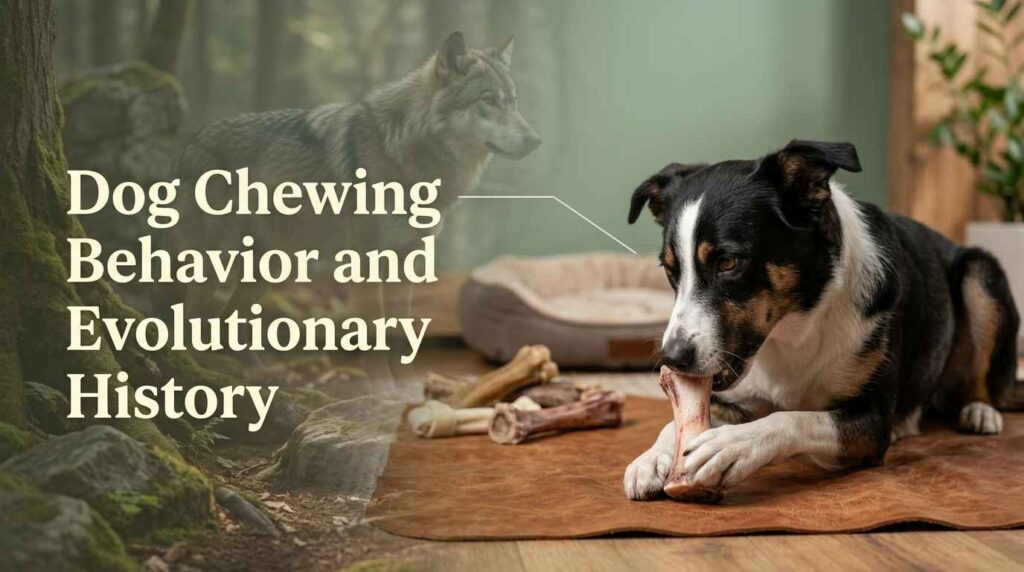
Understanding dog chewing behavior evolutionary history helps explain why bones remain so appealing today.
Wild canines faced fierce competition for food. Every calorie mattered. After consuming meat, they cracked open bones to reach the marrow, which contains healthy fats, vitamins, and minerals.
Over generations, dogs evolved with this natural behavior. Even though domesticated dogs now receive complete nutrition from their meals, their brains still associate bones with reward and satisfaction.
Researchers also believe chewing activates reward pathways in a dog’s brain, making the activity enjoyable rather than simply functional. This explains why do dogs like bones so much even when they aren’t hungry.
Dogs have many other instinctive behaviors related to food, chewing, and scavenging. Understanding these natural behaviors can also help explain why some dogs develop unusual eating habits, including eating poop. If your dog is showing this behavior, learning how to stop a dog from eating poop can help you address possible triggers and redirect them toward healthier behaviors.
Why Domestic Dogs Still Chew Bones Today
Many owners wonder why do domestic dogs chew when food is always available.
The answer lies in instinct combined with enrichment.
Chewing helps dogs:
- Relieve boredom
- Reduce stress and anxiety
- Stay mentally occupied
- Burn excess energy
- Practice natural behaviors
Dogs also have many other instinctive behaviors that help them feel secure and comfortable. For example, the way a dog chooses to sleep near its owner can reveal how comfortable and trusting the dog feels around its family.
This is especially important for active breeds that need both physical and mental exercise. Without appropriate chewing outlets, dogs often redirect their energy toward shoes, furniture, socks, table legs, or other household objects. Giving dogs safe chewing opportunities helps satisfy these natural urges in a healthy way.
Why Do Dogs Chew on Bones?
Dogs chew on bones because the activity satisfies both physical and psychological needs. It exercises the jaw, relieves boredom, reduces stress, and fulfills natural hunting instincts inherited from their ancestors.
Chewing is much more than entertainment—it’s an important part of normal canine behavior.
Why Do Dogs Gnaw on Bones?
Many people ask, why do dogs gnaw on bones instead of simply chewing them.
Gnawing involves repeated pressure using the back teeth. Dogs instinctively use this motion to scrape meat from bones or reach the marrow inside.
The repetitive chewing action also releases endorphins—natural chemicals that promote calmness and relaxation.
This is one reason dogs often appear peaceful and completely focused while chewing a bone.
For anxious or easily bored dogs, supervised chewing sessions can become a healthy stress-relieving activity.
Bone Marrow Benefits for Dogs
One major reason dogs enjoy bones is the delicious marrow hidden inside.
Historically, bone marrow was an excellent energy source for wild canines.
Some bone marrow benefits for dogs include:
- Healthy dietary fats
- Iron
- Vitamin B12
- Collagen
- Protein
- Rich flavor that dogs love
Bone marrow is highly rewarding because it is calorie-dense and aromatic.
However, it should only be offered in moderation since excessive fat may upset some dogs’ stomachs.
Why Puppies Chew Bones
Many owners notice that puppies seem determined to chew everything they find.
So, why do puppies chew bones?
Puppies chew for several reasons:
- Teething discomfort
- Exploring their environment
- Learning appropriate chewing habits
- Strengthening jaw muscles
- Relieving boredom
Safe puppy chew products designed specifically for growing teeth are generally a better option than hard natural bones, especially while permanent teeth are still developing.
Always consult your veterinarian before introducing bones to young puppies.
Why Do Dogs Chew on Things Besides Bones?
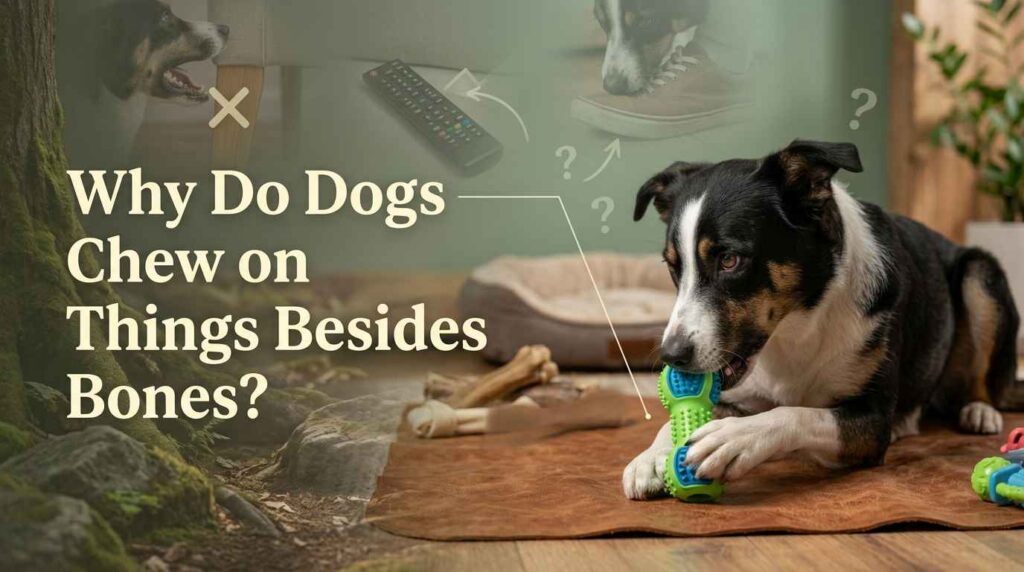
If your dog chews shoes, furniture, or remote controls, you may wonder why do dogs chew on things that aren’t food.
Common reasons include:
- Boredom
- Anxiety
- Curiosity
- Teething
- Lack of exercise
- Separation stress
- Normal exploration
Dogs experience the world through both their noses and mouths. Providing safe chew toys and appropriate bones can redirect this instinct toward healthier choices while protecting your belongings.
Benefits of Bones for Dogs
When offered safely and appropriately, bones provide several physical and mental benefits for dogs. They can support dental hygiene, encourage natural chewing behavior, strengthen jaw muscles, and provide valuable mental stimulation.
However, bones should always complement—not replace—a balanced diet and regular veterinary dental care.
Do Bones Clean Dogs’ Teeth?
Many owners ask, do bones clean dogs’ teeth? Chewing can help reduce plaque buildup by creating friction against the tooth surface. As dogs gnaw, the scraping action may remove some soft debris before it hardens into tartar.
Chewing also stimulates saliva production, which helps rinse away food particles and bacteria.
Although bones may contribute to better oral hygiene, they are not a substitute for tooth brushing or professional dental cleanings.
A complete dental care routine still provides the best protection against gum disease and tooth decay.
Support for Dog Dental Health
One of the biggest benefits of bones for dogs is improved dog dental health.
Regular, supervised chewing may help:
- Reduce plaque buildup
- Massage the gums
- Exercise jaw muscles
- Freshen breath by removing food debris
- Keep chewing muscles strong
Healthy chewing habits can be part of an overall dental care plan when paired with regular brushing and veterinary checkups.
Mental Stimulation and Stress Relief
Chewing is excellent mental exercise. Working on a bone requires concentration, persistence, and problem-solving, keeping dogs engaged for extended periods.
For many dogs, chewing also helps release built-up energy and provides a calming effect.
This mental enrichment can reduce boredom-related behaviors such as excessive barking, digging, or destructive chewing around the house. A satisfied dog is often a calmer and happier companion.
Do Dogs Need Bones?
Dogs do not need bones to stay healthy if they eat a complete and balanced diet. However, safe bones or veterinarian-approved chew alternatives can satisfy their natural chewing instinct, provide mental enrichment, and support dental health when offered correctly.
Many people believe dogs must have bones because their ancestors did, but modern nutrition is very different. High-quality commercial dog foods already provide the vitamins, minerals, and protein that dogs need every day.
Bones should be viewed as an occasional enrichment activity rather than a dietary necessity.
Are Bones a Nutritional Necessity?
For most healthy dogs, bones are not an essential part of the diet.
Wild wolves relied on bones because they consumed entire prey animals, including meat, organs, cartilage, and marrow. Domestic dogs, on the other hand, receive complete nutrition from balanced dog food.
While raw bones may contain nutrients such as calcium, phosphorus, collagen, and marrow, these nutrients are already included in most commercial diets.
The primary value of bones today is behavioral rather than nutritional. They allow dogs to express their natural chewing behavior, helping them stay mentally satisfied and reducing boredom.
Safe Alternatives That Satisfy a Dog’s Chewing Instinct
If you aren’t comfortable giving your dog real bones, there are plenty of safer alternatives that still satisfy the urge to chew.
Popular options include:
- Veterinary-approved dental chews
- Durable rubber chew toys
- Nylon chew toys designed for dogs
- Natural chew treats like bully sticks
- Frozen enrichment toys filled with dog-safe food
These products can help fulfill the same instinct while lowering the risk of splintering or digestive injuries.
Are Bones Safe for Dogs?
Bones can be safe for some dogs when the correct type is chosen and proper supervision is provided. However, the wrong bone can lead to broken teeth, choking, or serious digestive injuries.
Not every bone is appropriate for every dog. Safety depends on the bone’s size, hardness, preparation, and your dog’s chewing style.
Raw Bones vs. Cooked Bones
One of the biggest safety differences is whether a bone is raw or cooked.
Raw recreational bones are generally less likely to splinter than cooked bones because they retain more moisture and flexibility. Even so, they should only be offered under supervision and after discussing your dog’s individual needs with your veterinarian.
Cooked bones should never be given to dogs.
Cooking makes bones brittle, causing them to break into sharp fragments that can injure the mouth, throat, stomach, or intestines.
Whether the bone comes from chicken, turkey, pork, or beef, cooked bones present a much greater risk than raw bones.
Bones Dogs Should Never Eat
Certain bones should always be avoided because they pose a higher risk of injury.
These include:
- Cooked chicken bones
- Turkey bones
- Cooked pork bones
- Rib bones
- Small brittle bones
- Bones that are small enough to swallow whole
Also avoid giving your dog old leftovers from your dinner plate, as these bones were never intended for safe chewing.
Choosing a bone that matches your dog’s size and chewing strength is one of the best ways to reduce risk.
Potential Risks of Bone Chewing
Although many dogs enjoy chewing safely, owners should understand the possible dangers.
Choking Hazards
Small bone pieces can become lodged in the throat, creating a choking emergency.
Always remove a bone once it becomes small enough for your dog to swallow.
Broken Teeth
Extremely hard bones can fracture premolars and molars.
Dogs that are aggressive chewers are at greater risk of dental injuries.
If your dog bites down with excessive force, consider softer veterinarian-approved chew alternatives.
Splintering and Digestive Injuries
Sharp bone fragments may damage the mouth, esophagus, stomach, or intestines.
Signs of trouble include:
- Vomiting
- Difficulty swallowing
- Bloody stool
- Loss of appetite
- Abdominal pain
- Excessive drooling
If your dog shows any of these symptoms after chewing a bone, contact your veterinarian immediately.
How to Choose the Right Bone for Your Dog
Choosing the right bone depends on your dog’s size, age, chewing strength, and overall health. A properly selected bone reduces risks while providing a satisfying chewing experience. There is no one-size-fits-all option for every dog.
Choosing the Right Bone by Size and Chewing Style
Always choose a bone that is larger than your dog’s mouth to reduce the chance of swallowing it whole.
Light chewers may enjoy softer recreational bones or dental chews, while powerful chewers often require larger, more durable options.
Puppies, senior dogs, and dogs with existing dental problems may need softer alternatives rather than hard natural bones.
If you’re unsure which option is safest, ask your veterinarian for recommendations based on your dog’s individual needs.
How Long Should Dogs Chew on Bones?
Moderation is important. Most veterinarians recommend limiting chewing sessions to around 15–20 minutes at a time.
Extended chewing sessions may increase tooth wear or encourage dogs to break off dangerous pieces.
Once the bone becomes excessively worn or small enough to swallow, it should be discarded immediately.
Safe Bone Chewing Tips for Pet Owners
Following a few simple safety practices can greatly reduce the risk of injury.
- Always supervise your dog while chewing.
- Choose a bone appropriate for your dog’s size.
- Remove damaged or splintered bones.
- Never give cooked bones.
- Replace bones once they become too small.
- Wash your hands after handling raw bones.
- Schedule regular dental checkups with your veterinarian.
Responsible supervision is the best way to ensure chewing remains both enjoyable and safe.
Frequently Asked Questions
Why Do Dogs Love Bones?
Dogs love bones because chewing satisfies instincts inherited from their wolf ancestors. Bones also provide mental stimulation, jaw exercise, and access to flavorful marrow that many dogs find highly rewarding.
Why Do Dogs Eat Bones?
Dogs eat bones because their ancestors consumed every edible part of prey, including nutrient-rich marrow. Although modern dogs don’t rely on bones for survival, this instinct still exists today.
What type of bones are safe for dogs?
Raw, recreational bones that are large enough for your dog’s size are generally considered safer than cooked bones. Choose bones designed for dogs and always supervise chewing. Ask your veterinarian which option is best for your dog’s age, breed, and chewing habits.
Why Do Dogs Like Chewing Bones?
Chewing bones helps relieve boredom, reduce stress, exercise the jaw muscles, and satisfy a natural behavioral need. Many dogs also simply enjoy the taste and texture.
Why Do Dogs Chew Bones Even After Eating?
Even after finishing a meal, dogs often continue chewing because the behavior is instinctive rather than hunger-driven. Chewing provides enrichment and relaxation in addition to nutrition.
What bones should not be given to dogs?
Never give dogs cooked bones, especially chicken, turkey, pork, or rib bones, because they can splinter easily. Small, brittle bones and leftovers from the dinner table should also be avoided. These bones increase the risk of choking, broken teeth, and digestive injuries.
How long should I let my dog chew on a bone?
Limit bone chewing sessions to about 15–20 minutes at a time. Always supervise your dog and remove the bone if it becomes small, damaged, or starts splintering. This helps reduce the risk of dental injuries and choking.
Tying the pieces together
The answer to why do dogs like bones lies in their evolutionary history, natural instincts, and love of chewing. From their wild ancestors that cracked bones to reach nutrient-rich marrow to today’s family pets seeking mental stimulation and stress relief, chewing remains an important part of normal canine behavior.
While bones can provide benefits such as improved dental hygiene, jaw exercise, and enrichment, they should always be offered responsibly. Not every bone is safe, and choosing the right size, avoiding cooked bones, and supervising every chewing session are essential for protecting your dog’s health.
Understanding your dog’s natural chewing instincts allows you to provide safe outlets that satisfy their needs while reducing destructive behaviors. Whether you choose an appropriate raw bone or a veterinarian-approved chew toy, giving your dog a safe way to chew helps keep them happier, healthier, and mentally engaged.



Pingback: Why Do Dogs Sleep With Their Bum Facing You | Explained
Pingback: Why Do Dogs Lick At Their Paws | 5 Common Reasons
Pingback: Why Do Dogs Like Peanut Butter | Reasons They Love It
Pingback: Why Does My Dog Lick Everything | 7 Surprising Reasons
Pingback: Why Do Dogs Lick Each Other's Ears? 6 Surprising Reasons
Pingback: Why Does My Dog Pee on My Bed? Causes & Reasons
Pingback: Why Is My Dog Whimpering? 14 Reasons & What to Do
Pingback: Why Do Dogs Eat Sticks? Reasons, Risks & How to Stop