

Every dog owner knows the scene: you’re halfway through a peaceful walk when your dog proudly trots back with a stick clamped in their jaws — and starts crunching. It’s funny, it’s classic, and it raises an obvious question: why do dogs eat sticks, and should you let them?
The short answer is that chewing sticks is a deeply natural behavior, but eating them is genuinely risky. I don’t recommend letting the habit continue. Let me explain what’s going on in your dog’s head, what can go wrong, and how to steer them toward safer chewing.
“I don’t recommend letting your dog chew or eat sticks. The splinter, choking, and blockage risks are real — and safe chew toys satisfy the same urge without the danger.”
Why Your Dog Can’t Resist Sticks
If you’ve ever wondered why do dogs chew sticks with such dedication, the answer starts with how dogs experience the world. Dogs explore with their mouths the way we use our hands — picking things up, testing textures, and learning what’s interesting. A stick is the perfect test object: it’s everywhere, it’s easy to grab, and it feels rewarding to carry around.
There are several layers to why do dogs like chewing sticks so much. Texture is a big one. The rough, fibrous surface feels a lot like the bones we give them, which makes sticks instinctively satisfying. Smell matters too. That earthy, woodsy scent taps into your dog’s wild instincts in a way a plastic toy never will. This is also part of why do dogs chew wood of any kind — fallen branches, fence posts, even firewood — when the mood strikes.
Boredom is another major driver. A dog with nothing to do will invent their own entertainment, and a yard full of sticks is basically a free toy store. Dogs who don’t get enough exercise, play, or mental stimulation — no puzzle toys, no training games, no interesting walks — often turn to whatever the backyard offers. Anxiety plays a similar role. Some dogs chew to self-soothe, the way a person might squeeze a stress ball. Separation anxiety, loud noises, or big changes at home can all push a dog toward compulsive chewing.
Then there’s the attention factor. If you chase your dog every time they grab a stick, you’ve just taught them that sticks are the fastest way to start a game. They learn quickly. And sometimes the motivation is simpler: the stick might taste interesting because it’s coated in something delicious, like bird droppings or spilled food.
Finally, there’s a medical angle worth knowing about. A condition called pica in dogs causes them to crave and eat non-food items — dirt, rocks, fabric, and yes, wood. When it comes to why do dogs eat wood specifically, nutritional gaps are the usual suspect: poor-quality food, unbalanced homemade diets, or too many treats can leave a dog short on minerals or fiber, and some dogs seem to go searching for what’s missing.
If the craving is intense, repeated, and focused on non-food items, vets may describe it as canine pica wood eating, and that’s a sign the behavior deserves a closer look rather than just a scolding.
Puppies and Sticks: Why Young Dogs Are the Biggest Chewers

Puppies take stick obsession to another level, and for good reason. Between roughly six weeks and six months of age, puppies lose their baby teeth and grow their adult set, and the whole process aches. Chewing on anything — shoes, furniture, sticks — helps soothe sore gums. Puppy chewing sticks is also driven by pure curiosity: everything is new, and the mouth is how a puppy investigates it.
Young dogs are also still learning the rules of the world, including what is and isn’t food. That makes early training especially valuable. If you teach a puppy now that sticks get traded for toys and treats, you won’t be fighting the same battle when they’re a 70-pound adult who can gulp a branch whole.
The Dangers: Why Sticks and Dogs Don’t Mix
Here’s the part I want every dog owner to take seriously. When a dog chewing sticks gets carried away, the consequences can go far beyond a messy yard. So is dog eating sticks dangerous? Yes — here’s exactly how things can go wrong.
Splinters are the most common problem. Wood doesn’t break cleanly; it fractures into sharp shards that can cut the tongue, gums, and cheeks, or wedge painfully between teeth and into the roof of the mouth. Even dog eating twigs can cause trouble, because small splinters are easy to swallow unnoticed and can scratch the throat on the way down.
Bigger pieces bring bigger risks. A chunk of stick can get lodged in the throat and cause choking, or travel further and create an intestinal blockage — a genuine emergency that sometimes requires surgery. Sharp fragments can also puncture or tear the digestive tract. And chewing hard wood is rough on teeth: cracked or fractured teeth from aggressive chewing are something vets see regularly.
Then there’s what’s on and in the wood. Dog eating bark is worth singling out, because bark and wood from certain trees can be harmful. Yew and black cherry are among the most dangerous common trees for dogs, and black walnut wood is also considered risky.
Rotting wood can harbor molds, and sticks in treated areas may carry pesticide or fertilizer residue. Wood from pressure-treated lumber is especially bad news because of the preserving chemicals. If you don’t know what tree a stick came from, assume the worst and take it away.
What to Do If Your Dog Already Swallowed a Stick
First, don’t panic. Many dogs chew and even swallow small pieces of wood without any lasting harm — but you should take it seriously and stay alert. As for why do dogs swallow sticks instead of just chewing them, it’s usually accidental: a piece breaks off mid-chew, or the dog gulps it down because someone reached for it and made it feel like a prize.
Here’s what I recommend doing right now:
- Check the mouth. Gently look inside for splinters, bleeding, or a piece wedged across the roof of the mouth or between teeth. Remove anything you can reach easily — but never force your fingers down the throat.
- Watch closely. Keep an eye on your dog rather than assuming all is fine. Note what they ate and roughly how much, in case you need to describe it to a vet.
- Do not try to make your dog vomit. Vomiting can drive sharp splinters back up through the throat and cause more damage. Only induce vomiting if a veterinarian specifically tells you to.
- Call your vet if you see warning signs. Drooling, pawing at the mouth, gagging, vomiting, loss of appetite, lethargy, abdominal pain, straining to poop, or blood anywhere are all reasons to get professional help promptly. A dog that suddenly adopts the “prayer position” — front end down, rear end up — may be showing abdominal pain and needs to be seen quickly.
When in doubt, a quick call to your vet or an animal poison-control line is always the right move. Describe what happened and follow their guidance — they may advise monitoring at home or ask you to come in.
How to Stop Your Dog From Eating Sticks
Stopping the habit takes a mix of training and management, and it works best when you stay calm about it. The single most effective tool is the trade game: when your dog picks up a stick, offer something better in exchange — a tasty treat or a favorite toy. Most dogs can’t resist peanut butter smeared on a toy or a high-value treat, and trading teaches them that giving things up pays well. The key rule is never chase, yell, or pry the stick out of their mouth. That turns the stick into a prize and can trigger resource guarding — some dogs will even swallow the stick just to keep it from you.
Teach a solid “leave it” and “drop it” cue with positive reinforcement, practicing first with boring objects indoors before testing it on exciting sticks outside. Keep training sessions short and reward generously. Over time, your dog learns that ignoring sticks earns better things.
Management matters just as much as training. Clear fallen sticks and branches from your yard regularly, supervise outdoor play, and choose walking routes that aren’t littered with tempting debris. If dog chewing on branches is mainly a walk-time problem, keep your dog leashed in stick-heavy areas so you can redirect before the chewing starts.
Finally, address the root cause. A tired, mentally satisfied dog is far less interested in sticks. Add daily exercise suited to your dog’s breed and energy level, plus brain work: puzzle feeders, snuffle mats, and short training games. If anxiety is driving the chewing, work on the stress itself — the same kind of stress behind other anxious habits needs calming routines, and sometimes a conversation with your vet about dealing with stress behaviors.
Safer Things for Your Dog to Chew Instead
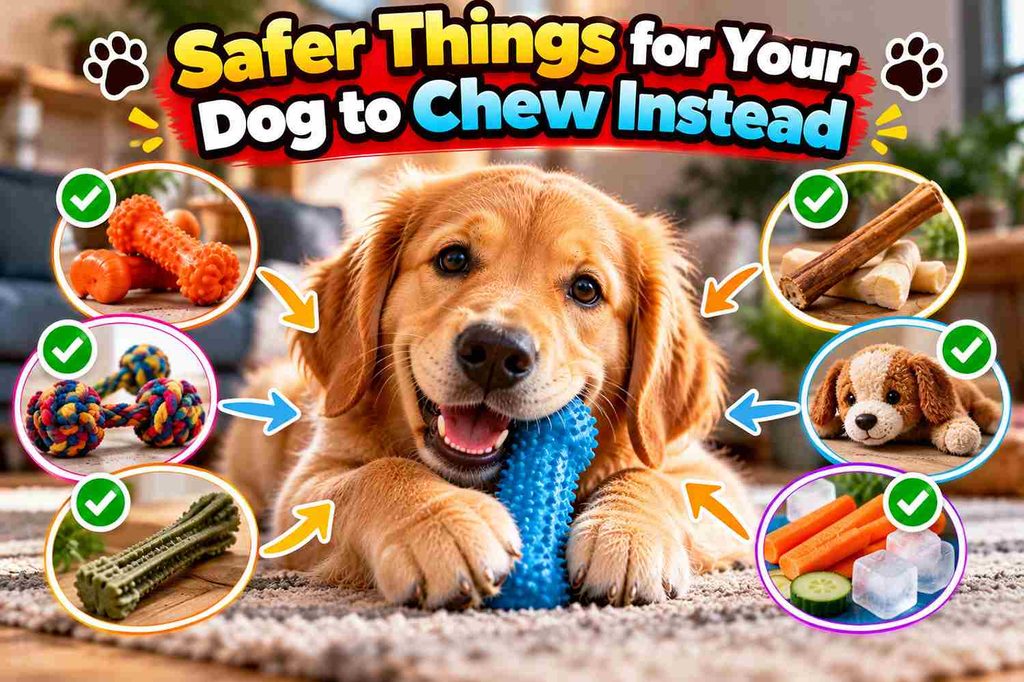
You don’t need to fight your dog’s urge to chew — just redirect it onto things that won’t splinter. Durable rubber toys, especially stuffable ones you can fill with treats, are a great starting point for heavy chewers. Edible dental chews satisfy the gnawing instinct while helping keep teeth clean. Bully sticks are another popular option that most dogs love, though you should take them away when they get small enough to swallow.
Some owners also use coffee-wood chews, which are marketed as splinter-resistant wood alternatives. Whatever you choose, match the size and toughness to your dog, always supervise chewing sessions, and throw away toys that are breaking apart. And if you need a quick, cheap option, a frozen carrot can keep many dogs happily occupied.
When Stick-Eating Means It’s Time to Call the Vet
Occasional stick chewing is a training issue. But some patterns point to something medical, and those deserve a vet visit rather than just more training. When dog eating wood is a brand-new habit in an adult dog who never cared about sticks before, pay attention — sudden behavior changes are how dogs tell us something feels off inside.
Call your vet if your dog compulsively eats sticks along with other non-food items like dirt, rocks, or fabric, or has broadened their menu to other gross things they find outside. Other red flags include weight loss, vomiting or diarrhea, lethargy, dull coat, or a sudden drop in appetite. Your vet will likely start with bloodwork to check for nutritional deficiencies or underlying illness, since pica can be a symptom rather than the whole story. Catching the real cause early makes everything easier to fix.
A Stick-Free Habit Is a Safer Habit
Your dog isn’t being naughty when they go after sticks — they’re following instincts that made perfect sense for their wild ancestors. But your backyard isn’t the wild, and the risks of splinters, choking, and blockages aren’t worth it when safe alternatives do the same job.
Trade calmly, train patiently, keep the yard picked up, and give your dog plenty of legitimate ways to chew, play, and think. Do that consistently, and the stick obsession usually fades into just another phase you both outgrow.
Frequently Asked Questions
Why does my dog eat sticks?
Most dogs eat sticks because of natural chewing instincts, curiosity, boredom, teething, anxiety, or attention-seeking. In some cases, nutritional deficiencies or a condition called pica can drive dogs to eat wood and other non-food items repeatedly.
Can dogs eat sticks?
Technically they can, but they shouldn’t. Sticks can splinter and injure the mouth, cause choking, break teeth, or create intestinal blockages. Some woods are also toxic. I recommend redirecting your dog to safe chew toys instead.
Is it safe for dogs to chew sticks?
No, it’s not considered safe. Even casual chewing risks splinters in the gums, tongue, or roof of the mouth, plus choking if a piece breaks off. Most veterinarians advise against letting dogs chew sticks regularly, despite how much dogs enjoy it.
Is chewing wood bad for dogs?
Yes, chewing wood is bad for dogs overall. Beyond splinters and choking hazards, wood can’t be digested, swallowed pieces can block or puncture the intestines, and some tree species and treated lumber are toxic. Safe chew toys are always the better choice.
Why do puppies eat sticks?
Puppies eat sticks mostly because they’re teething and exploring. Sore gums make them chew everything, and their mouths are how they investigate the world. Redirecting early with appropriate teething toys prevents the habit from sticking around into adulthood.
How do I stop my dog from eating sticks?
The short answer on how to stop dog from eating sticks: trade sticks for treats or toys instead of chasing, teach “leave it” and “drop it,” clear your yard of debris, supervise outdoors, and add exercise plus puzzle toys to beat boredom.
Why does my dog chew on leaves too?
Leaves often come with the territory — dogs that mouth sticks tend to mouth leaves for the same reasons: curiosity, texture, and interesting smells. Rotting leaves can carry molds that upset stomachs, so discourage leaf-eating the same way you discourage sticks.
My dog eats sticks and rocks — is that worse?
Eating multiple types of non-food items points more strongly toward pica, which can stem from nutritional deficiencies, digestive problems, or anxiety. Mention it to your vet, especially if the behavior started suddenly in an adult dog.
Can chewing sticks break my dog’s teeth?
Yes. Aggressive chewing on hard wood can crack or fracture teeth, particularly the large upper premolars vets call “carnassial” teeth. A broken tooth is painful and often needs veterinary dental treatment, sometimes extraction.
Are some types of wood poisonous to dogs?
Yes. Yew and black cherry are among the most dangerous common trees, black walnut wood is considered risky, and pressure-treated lumber contains harmful chemicals. Rotting wood can also harbor toxic molds. If you’re unsure what tree a stick came from, take it away.
Why does my dog carry sticks around but never eat them?
Carrying is usually about play and pride, not hunger. Many dogs love parading a good “find,” and the carrying itself is rewarding. It’s still smart to trade for a toy, since a carried stick can become a chewed — and swallowed — stick in seconds.
Should I throw sticks for my dog to fetch?
No. Thrown sticks are especially dangerous — a dog running to catch one can be impaled if it lands point-up, causing severe throat or chest injuries. Use balls, frisbees, or soft fetch toys designed for dogs instead.
Conclusion: Should You Let Your Dog Eat Sticks?
Dogs chew sticks because of natural instincts, curiosity, teething, or boredom, but that doesn’t mean it’s safe. Wood can splinter, damage teeth, cause choking, or lead to serious intestinal injuries if swallowed. The safest approach is to redirect your dog toward durable chew toys, reward good behavior, and keep sticks out of reach whenever possible.
If your dog repeatedly eats wood or other non-food items, consult your veterinarian to rule out pica or an underlying health problem. With consistent training, proper supervision, and safer chewing options, you can satisfy your dog’s natural urge to chew without putting their health at risk.