

Dogs may pee on your bed because of medical problems, anxiety, urine marking, or incomplete house training. Sudden accidents can signal a UTI, bladder issue, or incontinence. Stress and changes at home may also play a role, so avoid punishment and consider a veterinary checkup.
Your dog isn’t peeing on your bed to upset you. Discover the real reason behind this behavior and simple, gentle ways to prevent future accidents.
Why Do Dogs Pee on Beds?: Possible Causes
If you are wondering Why Do Dogs Pee on Beds?, the answer is rarely spite or revenge. Dogs may urinate on beds because of bladder problems, incomplete house training, urine marking, anxiety, or changes linked to age. Veterinary behavior references recommend looking at both medical and behavioral causes, especially when a previously house-trained dog suddenly starts having accidents indoors.
Age-Related Accidents
Age can change how well a dog controls its bladder. Puppies are still learning where and when to urinate, while older dogs may develop urinary incontinence, reduced mobility, or age-related cognitive changes that affect previously learned bathroom habits.
A soft bed can also be an easy place for an accident because it is comfortable and absorbent. A puppy sleeping on the bed may simply wake up needing to go but lack enough bladder control to wait.
Senior dogs can have a different problem. If urine leaks while your dog is sleeping or resting, it may be involuntary rather than a training issue. New accidents in an older dog deserve attention rather than blame.
Marking With Urine

Urine marking is different from emptying a full bladder. A marking episode usually involves a small amount of urine and can happen when a dog is responding to social or environmental changes.
Beds can become targets because they carry strong household scents. A dog may add its own scent as a form of canine communication. Marking can occur in both male and female dogs, although some dogs are more likely to mark than others.
If the accident is a small amount and happens repeatedly around particular objects or after changes at home, marking may be worth considering.
Underlying Health Issues
A dog that was reliably house-trained and suddenly starts urinating indoors should be checked for a medical cause. Urinary infections, bladder inflammation, stones, kidney disease, diabetes, neurological problems, and urinary incontinence can all contribute to inappropriate urination.
Pain or urgency can make it difficult for a dog to reach its normal bathroom spot in time. Some conditions also increase how much urine a dog produces, making accidents more likely.
A sudden change is particularly important. Rather than assuming your Dog Pees on Bed because of bad behavior, consider whether something has changed with your dog’s health.
Anxiety or Stress
Stress can affect bathroom behavior. A frightened dog may urinate during stressful situations, while a dog with separation anxiety may have accidents when left alone.
Common triggers include fireworks, storms, visitors, changes in routine, a new pet, moving house, or long periods alone. Dogs with separation anxiety may also follow their owners closely, vocalize, pace, or become destructive when separated.
Your bed may feel especially comforting because it smells strongly like you. This can explain why an anxious dog chooses the bed rather than another area of the home.
Understanding Why Dogs Pee on Beds
Understanding the pattern behind an accident can make the next step much clearer. If you notice when, where, and how often it happens, you can give your veterinarian or trainer useful information.
For example, some dogs only urinate on the bed while their owner is away, while others have accidents after meals, during storms, or overnight. Those differences can point toward different causes.
If your dog enjoys sleeping close to you, you may also notice other scent-based behaviors. For example, you can learn more about canine scent preferences in this guide to why do dogs like bones?.
Observing Patterns in Your Dog’s Accidents
Keep a simple record for several days. Write down the time of each accident, what your dog was doing before it happened, whether you were home, and whether there were changes in the environment.
Look for clues such as:
- Accidents that happen only when you leave.
- Small amounts of urine in repeated locations.
- Large amounts that suggest a full bladder.
- Accidents after drinking more water than usual.
- Leaking while sleeping or lying down.
- Straining, licking the genital area, or showing discomfort.
A short video can also help if the behavior occurs only when you are away. Veterinary behavior specialists often use information about what happens during separation to understand whether anxiety may be involved.
Common Reasons Dogs Pee on the Bed
Several causes can overlap, so it is helpful to consider your dog’s age, health, training history, environment, and daily routine together. The goal is not simply to stop the accident but to understand what is driving it.
Young Dogs and Potty Training
Puppies have limited bladder control and need frequent opportunities to go outside. If a puppy has not fully learned the household bathroom routine, a bed may seem like an acceptable place to eliminate.
This is one reason why does puppy pee on my bed can have a simple answer: the puppy may not yet understand that the bedroom is off-limits for bathroom use.
Take the puppy outside after waking, eating, drinking, playing, and sleeping. Praise and reward the correct behavior immediately. Supervision and repetition are more useful than punishment.
Marking and Changes in the Home
A dog may begin marking after a new person or animal enters the home, furniture is rearranged, a new work schedule begins, or another environmental change occurs.
Marking can also be linked with anxiety or social conflict. If your my dog keeps urinating on my bed, consider whether something recently changed in the household.
Clean previous urine thoroughly and temporarily limit access to the bed while you identify the trigger. If marking continues, your veterinarian can help determine whether a medical or behavioral problem is involved.
Other Animals and Territorial Behavior
Other animals can influence a dog’s bathroom behavior. A new puppy, visiting dog, neighborhood dog, or even changes in relationships between pets may increase social tension.
Dogs communicate through scent, and urine contains chemical signals that provide information to other dogs. This can make particular areas more interesting when another animal’s scent is present.
If your dog has started marking after another pet arrived, provide predictable routines, individual attention, exercise, and quiet resting areas. Reducing competition around food, toys, and sleeping spaces can also help.
Separation Anxiety and Stress

If accidents happen mainly when you leave, separation-related distress may be part of the picture. Dogs with separation anxiety can show several behaviors at once, including barking, whining, pacing, destruction, and house soiling.
This is different from assuming My dog peed on my bed on purpose. The behavior may happen because the dog is distressed and has poor control during that emotional state.
If possible, record your dog’s behavior after you leave. A gradual training plan, predictable routine, enrichment, and veterinary guidance may help, particularly when anxiety is severe.
Medical Conditions Affecting Bladder Control
Medical problems should always be considered when a house-trained dog develops new accidents. Urinary tract infections can cause frequent or painful urination, while bladder stones can irritate the urinary tract. Kidney disease, diabetes, hormonal problems, neurological disease, and incontinence can also affect normal bathroom habits.
Watch for signs such as frequent attempts to urinate, straining, blood in the urine, increased thirst, unusual licking around the genital area, or urine leakage while resting.
These symptoms are reasons to contact your veterinarian rather than trying to solve the problem through training alone.
When Accidents Signal More Than One Issue
Sometimes there is no single cause. An older dog might have weaker bladder control while also developing a medical condition. A dog with anxiety may also have incomplete house training or urine marking.
This is why one accident does not always tell the whole story. Your veterinarian may use your dog’s history, physical examination, urine testing, bloodwork, or imaging when appropriate to identify the underlying problem.
Avoid starting supplements or major dietary changes simply because you suspect a urinary problem. The right treatment depends on the actual cause.
Why Is My Female Dog Peeing on My Bed All of a Sudden?
A sudden change in a female dog’s urination deserves attention. Hormonal factors, urinary infections, bladder stones, and urinary incontinence can all play a role.
If your dog was previously reliable and now leaves wet spots on the bed, note whether the urine appears during sleep, happens while awake, or is associated with frequent attempts to urinate.
Hormonal Changes in Female Dogs
Some older spayed female dogs develop hormone-responsive urinary incontinence. This can cause urine to leak when a dog is relaxed or sleeping and is different from intentionally choosing a place to urinate.
If you notice a wet patch where your dog was sleeping but did not see her get up and urinate, tell your veterinarian. The pattern can provide an important clue.
Intact females can also have changes in urination around reproductive cycles. Any sudden or persistent change should still be evaluated if it does not quickly resolve.
Urinary Tract Infections and Bladder Stones
UTIs can cause frequent urination, painful urination, accidents indoors, and sometimes blood in the urine. Bladder stones may cause similar signs because they can irritate the urinary tract.
Female dogs can be more prone to urinary infections because of their anatomy. If your dog is repeatedly squatting, straining, producing very small amounts, or showing discomfort, contact your veterinarian promptly.
How to Stop a Dog Peeing on the Bed
The best approach depends on the cause. Start by ruling out medical problems when the behavior is sudden or unusual. Then combine management, cleaning, supervision, and positive bathroom training.
Thoroughly remove urine odors, restrict bedroom access for a while, and provide regular bathroom breaks. Take your dog outside at predictable times, especially after waking, eating, playing, and sleeping.
Reward the correct bathroom behavior immediately. If anxiety or marking is involved, address the trigger instead of focusing only on the accident.
How to Respond When Accidents Happen
A calm response makes the situation easier for both you and your dog. Your goal is to clean the area, prevent another accident, and identify what may have caused it.
Cleaning and Removing Odors
Wash bedding promptly and use an enzyme-based pet urine cleaner on surfaces that can safely be treated with it. Enzymatic products are designed to break down urine residue and can help reduce lingering odors that may attract a dog back to the same location.
For a mattress, blot rather than aggressively rubbing the wet area, then follow the cleaner’s instructions. A waterproof mattress protector can make future accidents easier to manage.
Staying Calm in the Moment
Do not yell, hit, rub your dog’s nose in the urine, or punish your dog after discovering an accident. Punishment can increase fear and may make some behavior problems harder to resolve.
If you catch your dog beginning to urinate, calmly interrupt and guide them to the appropriate bathroom area. Reward them if they finish there.
This calm approach is especially important for anxious dogs. Your dog needs to learn what behavior earns praise rather than simply learning to fear accidents.
Limiting Bed Access
Temporary management can prevent repeated accidents while you work on the underlying cause.
Close the bedroom door when you cannot supervise, use a suitable gate, or provide a comfortable resting area elsewhere. This is management, not punishment.
If you are learning how to keep dog from peeing on bed, preventing access while retraining is one of the simplest practical steps.
Teaching Good Bathroom Habits
Go back to the basics if necessary. Take your dog to the same bathroom area on a predictable schedule and reward successful urination immediately.
Keep supervision closer during the retraining period. If your dog starts sniffing, circling, or heading toward a familiar accident spot, calmly redirect them outside.
Consistency matters more than intensity. Short, repeated opportunities are easier for dogs to understand than occasional corrections.
Consistency in Family Routines
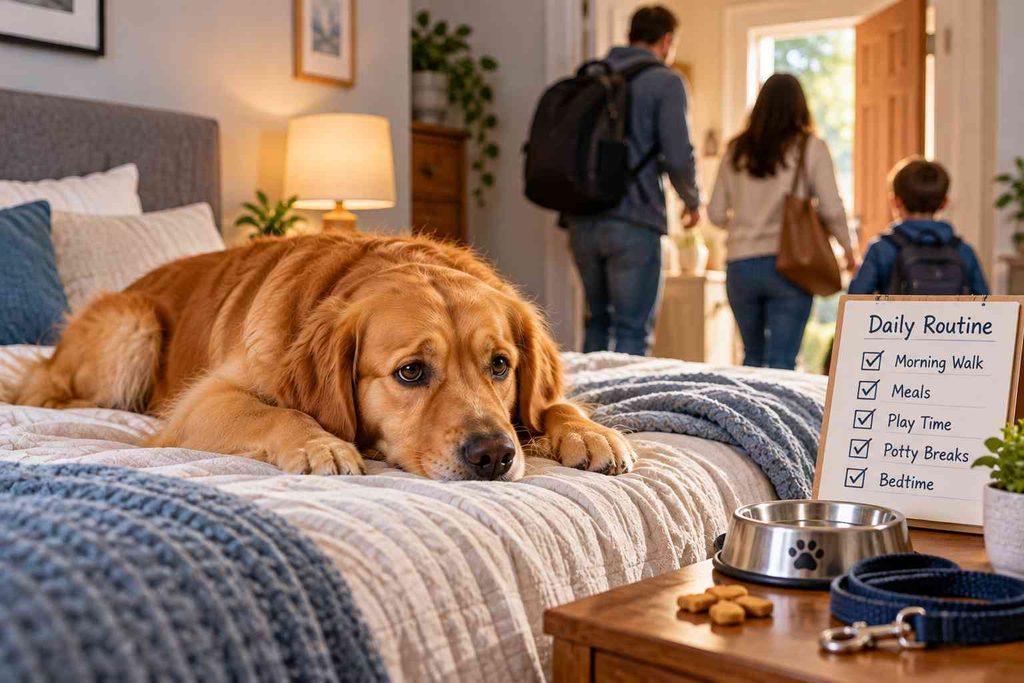
Everyone in the household should follow the same bathroom and bedroom rules. Mixed messages can make training harder.
Set consistent times for meals, walks, bathroom breaks, bedtime, and access to the bedroom. A predictable routine can also help dogs that become anxious when daily patterns change.
Crate Training and Safe Spaces
A properly introduced crate can provide a safe resting area and help with management, but it should never be used as punishment.
The crate should be large enough for your dog to stand, turn around, and lie down comfortably. Introduce it gradually with positive experiences such as treats, toys, and quiet rest.
A comfortable dog bed or gated room can work just as well for some dogs. The best option is one where your dog feels secure and can be safely supervised.
When to See a Veterinarian
Contact your veterinarian if a previously house-trained dog suddenly starts having accidents, especially when the change is repeated or accompanied by other symptoms.
Seek veterinary care promptly if you notice:
- Straining or difficulty urinating.
- Blood in the urine.
- Frequent attempts to urinate.
- Signs of pain or unusual discomfort.
- Increased thirst or urination.
- Urine leaking while sleeping.
- New accidents in a senior dog.
- Persistent accidents despite consistent training.
Straining to urinate can sometimes indicate a serious urinary problem, so it should not be ignored.
Your veterinarian may recommend a physical examination and urine testing, with additional tests depending on the findings.
Preventing Future Accidents
Once the immediate problem improves, prevention becomes much easier. Keep bathroom routines predictable, continue rewarding good habits, and maintain good access management until your dog’s behavior is reliable.
Also remember that prevention may need to change as your dog ages. A puppy, adult dog, and senior dog can have very different bathroom needs.
Creating a Calm Environment
Reduce unnecessary stress around your dog. Give them a quiet resting place, regular exercise, predictable meals, and enough opportunities to go outside.
If loud noises or visitors trigger accidents, create a safe area where your dog can retreat. Dogs experiencing separation-related distress may also benefit from structured behavior work rather than simply being left alone for longer periods.
If your dog shows other unusual behaviors, learning about related habits such as why does my dog lick everything? can help you better notice changes in normal behavior.
Using Positive Reinforcement Long-Term
Reward the behavior you want to see. When your dog urinates in the correct location, offer immediate praise, attention, or a small treat.
Positive reinforcement makes the correct bathroom location more rewarding and gives your dog a clear reason to repeat it.
Training should continue even after accidents stop. Consistency helps make good habits dependable.
Managing Special Needs in Senior Dogs
Senior dogs may need more frequent bathroom breaks, easier outdoor access, and additional supervision. If your older dog leaks urine while sleeping, do not assume it is simply part of aging without discussing it with your veterinarian.
Waterproof bedding and washable covers can make daily care easier. Give your dog a comfortable resting place and allow extra time to get outside.
If your senior dog develops confusion, mobility problems, increased thirst, or a sudden change in bathroom habits, veterinary evaluation is especially important.
Helping Your Dog Feel Secure Again
A bed accident does not mean your dog is bad, stubborn, or trying to upset you. It is a behavior that gives you information about your dog’s health, emotions, training, or environment.
Look for patterns, clean accidents thoroughly, avoid punishment, and temporarily manage access to the bed. Most importantly, treat sudden changes as a reason to investigate rather than simply correct.
If your dog also shows other scent-related behaviors, this guide on why do dogs like peanut butter? can help you understand another common canine preference.
With patience and the right support, you can help your dog rebuild reliable bathroom habits and feel comfortable at home again.
FAQs about Dog Pees on Bed
Dog Deliberately Peeing on Our Bed?
If your dog suddenly pees on your bed, it may be linked to stress, a routine change, anxiety, scent marking, or a medical issue—not spite. After boarding or major changes, temporary retraining and limited bed access can help.
My dog peed on my bed and never does that?
If your dog suddenly peed on your bed despite never doing so before, look for medical problems, stress, unusual drinking, routine changes, or an unexpected bladder-control issue.
Why does my dog pee on my bed at night?
Dogs may pee on the bed at night because of limited bladder control, anxiety, medical conditions, age-related incontinence, or needing a bathroom break before morning.
What Should I Do If My Dog Pees on My Bed?
Clean the urine thoroughly with an enzymatic cleaner, restrict bed access temporarily, avoid punishment, and observe your dog for health or behavioral changes that may explain the accident.
Should I Punish My Dog for Peeing on the Bed?
No, punishment is not recommended. It can increase fear and anxiety without teaching the correct behavior. Calmly redirect your dog and reward appropriate bathroom habits instead.
Why Is My Dog Peeing on My Bed When I’m Not Home?
Peeing on the bed when you are away may be linked to separation anxiety, stress, marking, or a medical problem. Look for other signs of distress during absences.
Did My Dog Pee on My Bed Because She’s Mad at Me?
Dogs generally do not pee on beds because they are angry or trying to get revenge. Accidents are more often connected to health problems, stress, anxiety, marking, or training.
Why did my dog pee on my bed all of a sudden?
A sudden accident can result from a urinary infection, bladder problem, increased urination, anxiety, environmental changes, marking, or age-related bladder control issues. Persistent changes deserve veterinary attention.
Did my dog pee on my bed out of spite?
No, dogs are not generally considered to urinate out of spite. Bed accidents usually have a medical, emotional, environmental, marking, or house-training explanation that needs investigation.
Why does my dog pee on my bed when I leave?
Peeing when you leave can be associated with separation anxiety, particularly if your dog also barks, whines, paces, destroys things, or becomes distressed during your absence.
How do I get dog pee out of a mattress?
Blot fresh urine, then use an enzyme-based pet urine cleaner according to its instructions. Allow the mattress to dry completely and use a waterproof protector afterward.
What should I do if my dog suddenly starts peeing on the bed?
First, consider a veterinary checkup to rule out medical causes. Then clean the bed thoroughly, restrict access temporarily, maintain regular potty breaks, and reward appropriate bathroom behavior.
Can a dog be trained not to pee on the bed?
Yes, many dogs can relearn appropriate bathroom habits through consistent potty schedules, supervision, restricted bed access, positive reinforcement, and addressing any underlying medical or anxiety-related causes.
Are there any health conditions that can cause a dog to pee on a bed?
Yes. UTIs, bladder stones, kidney disease, diabetes, urinary incontinence, neurological problems, and other conditions can cause increased urination, urgency, leakage, or loss of bladder control.
Why does my dog pee on my bed but not theirs?
Your bed may carry a stronger familiar scent, making it especially important or comforting to your dog. Marking, anxiety, soft surfaces, or access and training differences can also contribute.
How do I know if my dog is marking or having an accident?
Marking usually involves a small amount of urine deposited in specific locations, while an accident often involves a larger amount. Your dog’s pattern, posture, and medical history can provide additional clues.
How do I stop repeat accidents?
Clean previous urine odors thoroughly, maintain regular bathroom breaks, supervise your dog, limit bed access temporarily, reward outdoor urination, and address medical, anxiety, or marking causes when present.
What this really means for your dog
Finding urine on your bed is frustrating, but it is also a useful clue. The cause may be puppy training, marking, stress, aging, incontinence, or an underlying medical condition.
Stay calm, clean the area thoroughly, rebuild good bathroom habits, and watch for changes in your dog’s health or behavior. When accidents are sudden, persistent, painful, or unusual, your veterinarian should help identify the cause.
With patient training and thoughtful care, your dog can get back to comfortable, reliable bathroom habits—and you can get back to enjoying your bed together.