

Dogs can eat eggs when they are fully cooked and served plain. Eggs provide protein, vitamins, minerals, and healthy fats. Boil, scramble, or poach them without oil or seasoning, avoid raw eggs, and serve them in moderation as an occasional treat.
Wondering if eggs are safe for your dog? Learn the benefits, risks, safe portions, and best ways to serve eggs without unnecessary worry.
Can Dogs Have Eggs?
Yes, most dogs can have eggs as an occasional treat when the eggs are fully cooked and served plain. Boiled, scrambled, and poached eggs can all work well when they contain no salt, butter, oil, sauces, onion, garlic, or other unsafe ingredients.
Eggs can add useful nutrients to a balanced diet, but they are not necessary for every dog. Your dog’s main food should still provide complete and balanced nutrition, while treats and extras remain a small part of the overall diet.
If your dog has never eaten eggs before, start with a small portion. Watch for vomiting, diarrhea, gas, itching, or other unusual signs before offering more.
Dogs can enjoy many animal-based foods safely when they are prepared properly. For example, some owners also ask whether chicken liver is good for dogs, but the same basic rule applies: the food, preparation, portion, and your dog’s individual health all matter.
Are Eggs Good for Dogs?

Eggs can be a nutritious addition to a dog’s diet. They contain high-quality protein along with several vitamins, minerals, and fatty acids. These nutrients can support normal muscle function, skin, coat, metabolism, and general health.
A cooked egg provides nutrients such as:
- Protein: Helps support muscles and normal tissue maintenance.
- Vitamin A: Supports normal vision, skin, and immune function.
- Vitamin B12: Helps with normal blood and nervous-system function.
- Riboflavin: Supports energy metabolism.
- Selenium: Plays a role in antioxidant protection and thyroid function.
- Fatty acids: Help support healthy skin and coat.
Eggs are best viewed as a nutritious extra rather than a replacement for a complete dog food. A balanced commercial diet or properly formulated veterinary diet should remain the foundation of your dog’s nutrition.
Are Eggs Bad for Dogs?
Eggs are not generally bad for healthy dogs when they are cooked and given in sensible portions. The main concern is what happens when a dog receives too much, eats raw eggs, or has a health problem that makes extra fat or calories unsuitable.
Too many eggs can add significant calories and fat to the diet. Some dogs may also develop digestive upset after trying a new food, particularly when they receive a large portion at once.
Possible problems include:
- Gas or bloating
- Vomiting
- Diarrhea
- Extra calorie intake
- Weight gain
- Food sensitivity or allergy
Dogs with pancreatitis, obesity, certain digestive problems, or other conditions may need a more carefully controlled diet. If your dog eats a prescription diet, do not add eggs unless your veterinarian approves them.
The important point is simple: a plain cooked egg can be a safe treat, but more is not always better.
Can Dogs Eat Raw Eggs?
Raw eggs are best avoided. Although an uncooked egg contains many of the same nutrients as a cooked egg, it also carries food-safety concerns that are not worth the added risk.
Raw or undercooked eggs can contain bacteria such as Salmonella. Infected dogs may develop vomiting, diarrhea, fever, lethargy, or loss of appetite, although some infected animals may show few or no obvious signs. Dogs can also potentially shed bacteria and expose people or other animals in the household.
Raw egg whites also contain avidin, a protein that binds biotin and can interfere with its absorption. Naturally occurring biotin deficiency is uncommon, but repeated feeding of raw egg whites can create a nutritional concern. Cooking destroys this effect.
So, if you want to give your dog eggs, the safer choice is straightforward: cook them thoroughly first.
Can Dogs Eat Egg Yolk?
Yes, dogs can eat cooked egg yolk. The yolk contains protein, fats, vitamins, and minerals, including nutrients such as vitamins A and D.
However, the yolk is also the more calorie-dense and fatty part of the egg. That makes portion control especially important for dogs that need to manage their weight or have conditions where dietary fat needs to be restricted.
You do not need to remove the yolk from every egg. For a healthy dog, a small amount of a fully cooked whole egg can be appropriate. If your veterinarian has recommended a low-fat diet, ask before adding egg yolk.
Can Dogs Eat Egg Shells?
Eggshells contain calcium, but that does not mean every dog needs them. Giving eggshells without a nutritional reason can make a dog’s diet less balanced, and poorly prepared shells may create additional problems.
Whole or sharp pieces can be uncomfortable or potentially harmful if swallowed. There is also a food-safety concern if the shell has been contaminated.
If your veterinarian believes your dog needs additional calcium, ask about an appropriate source and amount rather than adding eggshell powder on your own. Dogs eating a complete and balanced diet generally do not need extra calcium simply because eggshells contain it.
Eggshells should therefore be treated differently from the edible cooked egg itself. Do not assume that more calcium is automatically better.
Can Dogs Eat Hard-Boiled Eggs?

Yes, hard-boiled eggs can be one of the easiest ways to give eggs to a dog. The egg should be cooked until both the white and yolk are firm, then cooled and cut into small, manageable pieces.
Keep the egg completely plain. Avoid salt, butter, sauces, spices, onion, garlic, and other additions.
You can give a small piece as a treat or crumble some cooked egg over your dog’s normal food. Start with a modest amount, especially if your dog has never eaten eggs before.
Hard-boiled eggs are convenient because they can be prepared ahead of time. Store cooked eggs safely in the refrigerator and follow normal food-storage practices.
How to Cook Eggs for Dogs
The safest approach is simple: cook the egg thoroughly and keep it plain.
You can:
- Boil the egg until the white and yolk are firm.
- Scramble the egg thoroughly without adding salt, butter, oil, or seasoning.
- Poach the egg until completely cooked.
- Cook an omelet only with dog-safe ingredients and no harmful seasonings.
Avoid serving eggs with common breakfast ingredients such as bacon, sausage, salty cheese, heavy sauces, onion, or garlic. These additions can turn an otherwise simple food into a poor choice for dogs.
After cooking, allow the egg to cool before serving. Cut larger pieces into smaller bites appropriate for your dog’s size.
Veterinary guidance generally favors fully cooked eggs rather than raw eggs because cooking reduces foodborne-pathogen concerns and eliminates the biotin-binding effect of raw egg whites.
How Many Eggs Can a Dog Eat?
There is no single egg serving that is perfect for every dog. The right amount depends on your dog’s size, age, activity level, normal diet, calorie needs, and health.
A useful starting point is to think of eggs as a treat, not as a major part of the daily diet. Treats and extras should generally stay within about 10% of daily calories, with the rest coming from a complete and balanced food.
For a first serving, offer only a small piece rather than a whole egg. If your dog handles it well, your veterinarian can help you decide whether eggs can be offered regularly and how much fits your dog’s diet.
A tiny dog and a large active dog should not automatically receive the same portion.
How Many Eggs Can a Dog Eat in a Day?
For most dogs, there is no need to make eggs a daily food. Even though eggs can be nutritious, adding them every day can increase calorie and fat intake and may crowd out the balanced nutrition provided by the dog’s regular food.
Rather than focusing only on a maximum number of eggs, consider the whole diet. A dog’s age, body condition, activity, existing health problems, and normal food intake all affect how much of an extra food is appropriate.
If you want to give eggs frequently, speak with your veterinarian about the portion that fits your dog’s individual calorie needs.
Can Dogs Eat Eggs Every Day?
Some healthy dogs may tolerate small amounts of cooked egg regularly, but daily eggs are not necessary for most dogs. Eggs should not replace a complete and balanced diet.
The biggest issue with daily feeding is not that eggs are automatically toxic. It is that repeated extras can gradually add calories and fat. This can contribute to unwanted weight gain if the rest of the diet is not adjusted.
A simple approach is to use eggs occasionally and keep portions modest. If your dog needs a special diet or has a medical condition, ask your veterinarian before making eggs a regular part of meals.
Can Dogs Eat Eggs and Be Allergic?
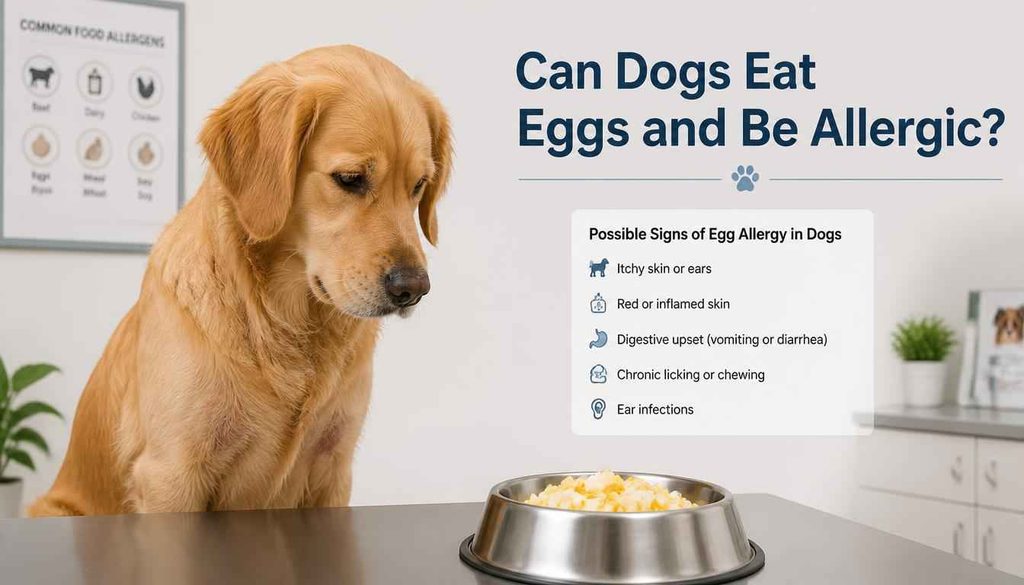
Yes. Dogs can develop food allergies to proteins found in foods, including eggs. Egg allergy is not something every dog will experience, but it is possible.
Signs can include:
- Itching
- Red or irritated skin
- Recurrent ear problems
- Vomiting
- Diarrhea
- Excessive gas
- Hives or swelling
More serious allergic reactions can cause breathing difficulty, weakness, or collapse and require immediate veterinary attention.
If your dog develops repeated symptoms after eating eggs, stop offering them and contact your veterinarian. Food allergies can be difficult to diagnose from symptoms alone, and veterinary elimination diets are commonly used to identify the problem.
How To Safely Feed Eggs to Dogs
Introducing eggs does not need to be complicated. A few simple habits can make the experience safer and easier.
Start small. Give your dog a small amount the first time and watch how they respond.
Cook thoroughly. Fully cooked eggs reduce the food-safety concerns associated with raw or undercooked eggs.
Keep eggs plain. Skip salt, butter, oil, sauces, spices, onion, garlic, and other unnecessary additions.
Watch portions. Remember that eggs are an extra source of calories, not a replacement for balanced dog food.
Consider your dog’s health. Dogs with pancreatitis, obesity, allergies, digestive problems, or prescription diets may need different advice.
Store leftovers safely. Refrigerate cooked eggs promptly and discard food that has been stored improperly.
If you are introducing several new foods at once, it can also be difficult to know which food caused a reaction. Introducing one new food at a time makes it easier to notice changes.
Homemade Dog Treats With Egg
Cooked egg can be included in simple homemade dog treats, provided the other ingredients are also safe for dogs.
Keep homemade treats simple. A small amount of cooked egg can be combined with appropriate dog-safe ingredients and baked into small treats. Avoid recipes containing chocolate, xylitol, onion, garlic, excessive salt, or other ingredients known to be unsafe for dogs.
Homemade treats should remain occasional extras. If you are making a larger batch, remember that the calories from these treats still count toward your dog’s daily intake.
Store-Bought Dogs Treats With Egg
Egg is also used in some commercial dog treats and foods. A product containing egg is not automatically better or worse than another treat.
Look at the complete ingredient list and nutritional information, and choose products appropriate for your dog’s age and dietary needs. If your dog has a known food allergy or follows a prescription diet, check with your veterinarian before introducing a new treat.
The goal is not simply to find a treat containing eggs. The goal is to choose something that fits comfortably into your dog’s overall diet.
My Dog Ate Too Much Egg—What Do I Do?
If your dog accidentally eats more egg than intended, do not panic. A large portion may cause digestive upset, particularly if your dog is not accustomed to eggs.
Watch for:
- Vomiting
- Diarrhea
- Gas
- Abdominal discomfort
- Poor appetite
- Unusual tiredness
If your dog develops severe or persistent vomiting or diarrhea, becomes very lethargic, has trouble breathing, shows signs of significant pain, or you are worried about their condition, contact your veterinarian promptly.
Dogs that eat large amounts of high-fat foods can be at greater risk of problems such as pancreatitis, so dogs with a history of pancreatitis deserve particular caution.
For other animal-based foods, the same principle of preparation and portion control matters. If you’re exploring other options, you may also want to learn whether dogs can eat chicken feet before adding them to your dog’s diet.
Eggs For Dogs FAQs
Can Dogs Eat Boiled Eggs?
Yes. Dogs can eat fully cooked boiled eggs in moderation. Let the egg cool, keep it plain, and cut it into suitable pieces. Avoid salt, butter, sauces, and seasonings.
Can Dogs Eat Scrambled Eggs?
Yes, dogs can eat scrambled eggs when they are fully cooked and plain. Avoid butter, excessive oil, salt, spices, onion, garlic, and other potentially harmful ingredients.
How Many Eggs Can A Dog Eat In A Week?
It depends on the dog’s size, calorie needs, activity, health, and regular diet. Start with a small amount and ask your veterinarian about a suitable serving if you want to offer eggs regularly.
Can Some Dogs Be Allergic To Eggs?
Yes. Some dogs can react to egg proteins. Possible signs include itching, ear problems, vomiting, diarrhea, gas, hives, or swelling. Speak with your veterinarian if you notice a repeated reaction after eating eggs.
Can Puppies Eat Eggs?
Yes, puppies can eat small amounts of fully cooked, plain egg. However, puppies have specific nutritional requirements for growth, so eggs should remain a small treat rather than replacing their complete puppy food.
Can Dogs Eat Scrambled Eggs?
Yes. Fully cooked plain scrambled eggs can be offered as an occasional treat. Keep the recipe simple and avoid salt, butter, oil, onion, garlic, and heavy seasonings.
Can Dogs Have Raw Eggs?
Raw eggs are not recommended for dogs. They can carry harmful bacteria such as Salmonella, while raw egg whites contain avidin, which can interfere with biotin absorption when consumed repeatedly.
Is It Safe For Dogs To Eat Eggs?
Yes, cooked plain eggs can be safe for many dogs when given in moderation. The safest choice is a thoroughly cooked egg without added seasonings or fatty ingredients.
Are Eggs Healthy For Dogs?
Eggs can provide protein, fats, vitamins, and minerals. They can be a nutritious treat, but they are not required when a dog already eats a complete and balanced diet.
Are Eggs Safe For Dogs?
Fully cooked, plain eggs are generally safe for healthy dogs when portions are appropriate. Raw eggs and excessive amounts should be avoided.
Are Eggs Ok For Dogs?
Yes. Eggs are generally okay for dogs when fully cooked, served plain, and given as an occasional treat.
Can I Feed A Dog Eggs?
Yes, if the dog can safely have them and your veterinarian has no concerns. Start with a small amount of plain, fully cooked egg and watch for digestive or allergic reactions.
Can Dogs Have Boiled Eggs?
Yes. Fully cooked boiled eggs are a simple option for dogs. Remove the shell, allow the egg to cool, and offer a small portion without salt or seasoning.
Are Eggs Harmful To Dogs?
Eggs are not normally harmful when cooked and given in moderation. Problems are more likely with raw eggs, excessive portions, unsuitable ingredients, or dogs with certain health conditions or allergies.
The bottom line on eggs for dogs
So, can dogs eat eggs? Yes, many dogs can safely enjoy fully cooked eggs as an occasional treat.
The safest approach is easy to remember: cook the egg thoroughly, keep it plain, serve a sensible portion, and watch how your dog responds. Eggs can provide useful protein, fats, vitamins, and minerals, but they should complement—not replace—a complete and balanced diet.
Avoid raw eggs because of food-safety and nutrient-absorption concerns, and be cautious with eggshells, large portions, and high-fat preparations. If your dog has a medical condition, follows a prescription diet, or develops unusual symptoms after eating eggs, your veterinarian can give advice tailored to your dog’s needs.
A little egg can be a tasty reward. The key is keeping it simple, cooked, and moderate.



Pingback: Can Dogs Eat Mango? A Complete Guide to Safe Feeding
Pingback: Can Dogs Eat Walnuts? Safe Types vs. Toxic Ones
Pingback: Can Adult Dogs Eat Puppy Food? Safety & Risks Guide
Pingback: Can Dogs Have Tofu? What Vets Say Is Safe