

It happens in countless multi-dog homes: you turn around for two seconds and your grown dog is crunching away at the puppy’s dinner. Is it safe? A bite or even a full bowl will not poison a healthy adult dog, but puppy food was never meant to be an adult’s daily diet.
It carries extra calories, fat, protein, and minerals that a growing puppy burns through fast — and all of that becomes a useless surplus once a dog finishes growing. So can an adult dog eat puppy food without problems? Not as a habit. Below, I explain how the formulas differ, what the surplus does to a mature dog, the rare vet-approved exceptions, and what to do if the swap already happened.
“I don’t recommend feeding puppy food to a healthy adult dog as a regular diet. The occasional stolen bite is nothing to panic about, but those extra calories and minerals do more harm than good when they become a habit.”
Why Can’t Adult Dogs Eat Puppy Food?
The honest reason is simple: puppy food is built for rapid growth, and a fully grown dog’s body has no productive use for that surplus.
A puppy builds new bone, muscle, and brain tissue every single day, and that construction work demands dense fuel. Once a dog reaches adult size, growth stops and the job changes to maintenance. Extra calories and nutrients that once went into growth now have nowhere useful to go, so the body stores them as fat.
PetMD notes that once a dog is done growing, it needs less protein and fat, and any extra will simply be stored as fat. Puppy food contains nothing toxic to adults — a maintenance body simply cannot spend a growth budget, so the surplus piles up where you least want it.
Puppy Food vs Adult Dog Food: What’s Actually Different
Open the two bags side by side and the labels tell the story. Puppy formulas are denser in nearly everything because they answer a completely different nutritional question.
The Association of American Feed Control Officials (AAFCO) sets different minimums for the two life stages. PetMD reports the AAFCO minimums as roughly 22.5% protein for puppy food versus 18% for adult food, with higher fat minimums for growth as well. In practice, quality foods on store shelves usually run higher than those minimums, often landing between 25% and 35% protein, but the gap between the two formulas stays consistent.
Here is how the two formulas typically compare:
| Nutrient | Puppy food | Adult dog food |
|---|---|---|
| Protein | Higher (supports tissue and muscle growth) | Moderate (maintains existing muscle) |
| Fat and calories | Higher (fuels growth and high activity) | Lower (matches maintenance energy needs) |
| Calcium and phosphorus | Higher (builds bones and teeth) | Balanced for maintenance |
| DHA (omega-3 fatty acid) | Added for brain and vision development | Not a standard feature |
The main difference between puppy and adult dog food is the job each formula is built for: one constructs a growing body, and the other maintains a finished one. A puppy also eats more often — typically three or more meals a day in the early months — while most adults do well on one or two meals.
That does not mean protein stops mattering for adults. A grown dog still needs quality protein to hold onto muscle, and lean, digestible sources such as eggs can support muscle maintenance without a calorie overload. The point is simply that the total amount an adult needs is lower than what a growth formula delivers.
What Happens If an Adult Dog Eats Puppy Food?
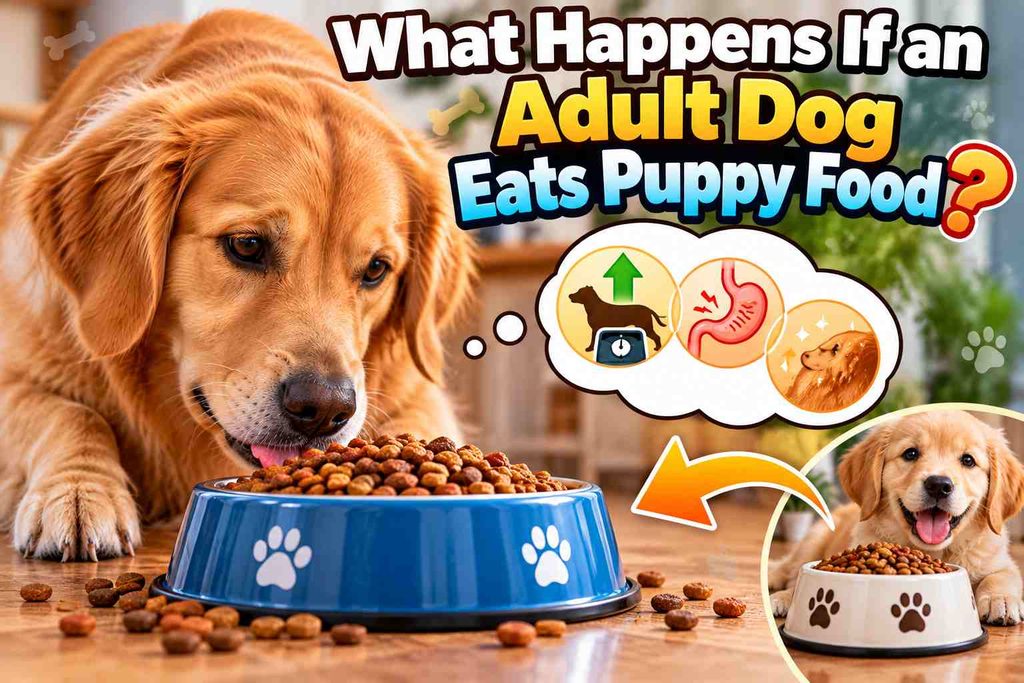
If your adult dog eats puppy food once, the most likely outcome is nothing at all. The real problems start when “once” becomes “every day.”
Does Puppy Food Make Adult Dogs Gain Weight?
Yes, and this is the most common consequence by far. Puppy food is significantly more calorie-dense than adult food, so an adult eating the same volume gets far more energy than its body needs. Those extra calories have nowhere to go except into fat stores.
PetMD warns that feeding puppy food or “all life stages” food to an adult dog can increase the risk of becoming overweight or obese. This matters more than it sounds, because excess weight in dogs is linked to arthritis, diabetes, heart strain, and even a shorter lifespan.
Short-Term Digestive Upset
So will puppy food hurt an adult dog after a single serving? For a healthy adult, one stolen meal is very unlikely to cause real harm. That said, puppy food is richer and fattier than what most adult stomachs are used to, and a sudden rich meal can trigger vomiting, gas, or loose stools — especially in dogs with sensitive stomachs.
Dogs with a history of pancreatitis deserve extra caution. Rich, high-fat meals are a known trigger for flare-ups in susceptible dogs, so if your dog has ever dealt with pancreatitis, a puppy-food raid is worth a call to your vet even if the dog seems fine at first.
The Slower Effects: Kidneys, Joints, and Minerals
The effects of feeding puppy food to adult dogs show up gradually. Beyond weight gain, the extra minerals and protein create steady background strain: high calcium and phosphorus fed in excess over long periods can contribute to urinary stone formation, and while high protein is fine for healthy kidneys, it gives already-struggling kidneys more waste to filter in dogs with kidney disease.
Make no mistake: the risks of feeding adult dog puppy food build up over weeks and months, not from one bowl. Extra weight also means extra load on hips, knees, and the spine, which is particularly rough on large breeds and older dogs already dealing with stiffness.
Adult maintenance foods take a steadier approach. They pair moderate protein with controlled fat, and formulas built around dependable proteins such as lamb give adult dogs the amino acids they need without the growth-fuel surplus their bodies can no longer use.
Is Puppy Food Bad for Adult Dogs?
Not in the sense of being toxic — no ingredient in a standard puppy formula will poison a healthy adult dog. But as a steady diet, yes, it is a poor choice that works against your dog’s health.
The food itself is good quality — it is simply aimed at a completely different energy budget. An adult dog eating puppy food long term tends to gain weight, strain its joints, and take in minerals it does not need, all while missing nothing that its own life-stage formula would have provided.
One label trap worth knowing: foods marked “for all life stages” are essentially puppy food in disguise. PetMD explains that these products meet the stricter nutritional requirements of puppies, which means feeding them to an adult carries the same overweight and obesity risk as feeding puppy food directly. If your adult dog’s bag says “all life stages,” it is worth switching to a formula labeled for adult maintenance.
Feeding Adult Dog Puppy Food: The Rare Exceptions
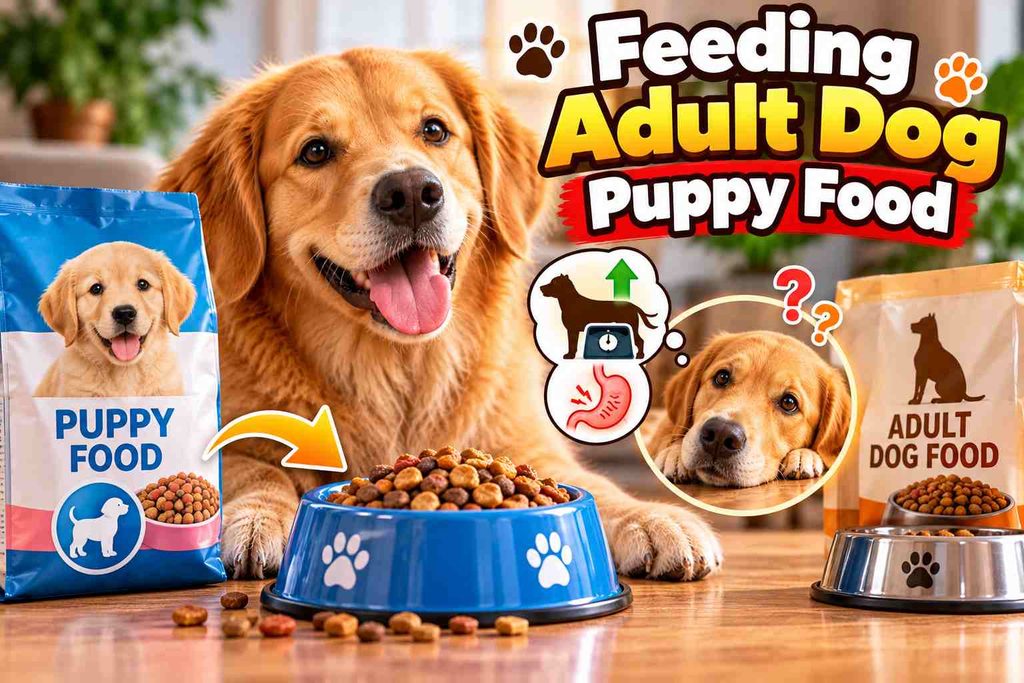
As a general rule, veterinarians don’t recommend it, but they do make exceptions for specific dogs with specific needs. PetMD notes there can be good reasons to feed an adult dog the extra calories and protein found in puppy food — for example, if a dog is extremely active or has trouble maintaining its weight.
The situations where a vet might suggest it include:
- Nursing mothers. A dog feeding a litter burns an enormous amount of energy, and puppy or “all life stages” food helps her keep up with demand.
- Underweight dogs. A dog recovering from illness or struggling to hold weight may benefit from the calorie density for a limited time.
- Extremely active working dogs. Dogs doing intense daily work can burn calories at a rate closer to a growing puppy’s.
Should adult dogs eat puppy food without one of these reasons? No. And giving adult dog puppy food under a vet’s guidance usually means measured portions for a limited period — a tool with a start date and an end date.
So can dogs eat puppy food when fully grown but struggling to keep weight on? Yes, when a veterinarian supervises the plan. Can grown dogs eat puppy food every day just because they prefer the taste? I would not allow it — taste is not a nutritional reason.
If your vet wants extra calories for an underweight dog, there are gentler ways to add them than switching the whole diet. Small amounts of cooked chicken liver make a calorie-dense, nutrient-rich topper that can help a thin dog gain weight while the base diet stays appropriate. Ask your vet which approach fits your dog’s situation.
Can Senior Dogs Eat Puppy Food?
For most seniors, the answer is no. Puppy food is not recommended for older dogs because the high fat and protein levels can be harder for an aging digestive system to handle, and seniors are the group most likely to already have kidney issues, weight problems, or sensitive stomachs.
That said, can old dogs eat puppy food in any situation? The one exception is a senior who cannot keep weight on despite eating well — some veterinarians allow puppy food short term to stop the weight loss. This must be the vet’s call, since an older dog’s kidneys and pancreas need professional judgment behind any rich diet.
For seniors who simply need gentle, satisfying nutrition, lean and easy-to-digest proteins are usually the better direction. Plain cooked cod is a lean protein many older dogs handle well, offering quality nutrition without the heavy calorie load of a growth formula. If your senior is losing weight or turning away from meals, talk to your vet before reaching for the puppy bag — there may be a dental issue, illness, or a senior-specific formula that solves the real problem.
My Adult Dog Already Ate Puppy Food — What Should I Do?
First, take a breath — a healthy adult dog that raids the puppy bowl once is almost certainly going to be fine. Here is a calm plan:
- Note how much was eaten. A few bites and a full bowl are different situations, and your vet will ask.
- Watch for digestive upset over the next 24 hours. Mild vomiting, gas, or loose stools can follow a rich meal and often pass on their own.
- Keep water available and feed the next meal normally. Do not try to “make up for it” by skipping meals unless your vet advises it.
- Call your vet if symptoms persist or worry you. Repeated vomiting, ongoing diarrhea, lethargy, abdominal pain, or loss of appetite beyond a day deserve professional attention.
Contact your veterinarian promptly — or an animal poison-control service — if your dog has a history of pancreatitis, kidney disease, or diabetes and eats a large amount of puppy food, or if any dog shows severe or worsening symptoms. Never try to induce vomiting or use home remedies unless a veterinary professional specifically tells you to.
How to Stop the Great Bowl Swap
In multi-dog homes, the fix is practical. A few simple habits solve most bowl swaps:
- Feed dogs in separate areas. Different rooms, opposite sides of a baby gate, or the puppy in a crate or pen during meals.
- Pick up bowls after 15–20 minutes. Free-feeding from a shared bowl is how most swaps happen.
- Supervise mealtimes. Stay nearby until both dogs finish, then remove the bowls.
- Train a solid “leave it.” It takes practice, but it pays off at every meal.
- Reward calm waiting. While one dog eats, keep the other happily occupied — safe, properly prepared chicken feet can keep a waiting dog busy as a long-lasting chew.
One related question comes up often: can adult dogs eat puppy kibble without any trouble from the kibble size itself? Kibble size is not the issue here. A large dog can crunch small puppy kibble perfectly well, and a small adult may even prefer it. What matters is the nutrition packed inside the kibble, not its shape — so do not let the small pieces fool you into thinking the food is interchangeable.
When to Switch Your Puppy to Adult Food
Since the whole problem starts with a puppy growing up, it helps to know when that switch should happen. PetMD gives these general timelines, with your vet making the final call for your individual dog:
- Small breeds: around 10–12 months
- Medium breeds: around 12 months
- Large breeds: around 12–18 months
- Giant breeds: around 18–24 months
Switch gradually rather than all at once. Mix about 25% adult food with 75% puppy food for the first few days, then shift the ratio over a week until the bowl holds only adult food — a sudden change can upset any dog’s stomach.
Frequently Asked Questions
Is puppy food okay for adult dogs?
Yes, in the sense that it is not toxic — an occasional bite will not harm a healthy adult dog. But as a regular diet, no: the calorie, fat, and mineral surplus leads to weight gain and related problems over time. Choose a formula labeled for adult maintenance instead.
Can an older dog eat puppy food?
Only under veterinary guidance. Older dogs generally need fewer calories and gentler nutrition than puppy food provides, and many seniors have kidney or digestive issues that rich food can worsen. The exception is a senior losing weight that a vet is actively managing — in that narrow case, short-term puppy food may be part of the plan, with the vet monitoring the results.
Is “all life stages” dog food okay for my adult dog?
Not ideally. “All life stages” products must meet the stricter nutritional requirements of growing puppies, so they are essentially puppy food by another name. Feeding them to an adult dog long term carries the same risk of weight gain as feeding puppy food directly. For most adults, a food formulated specifically for adult maintenance is the better match.
Can I feed puppy food to my adult dog?
Yes, occasionally — a stolen bowl won’t harm your adult dog. But don’t feed it daily: puppy food is calorie-dense and made for growth, so regular feeding causes weight gain.
Can adult dogs eat puppy food everyday?
No — puppy food gives your adult dog excess calories, fat, and minerals meant for growth. Over time this causes obesity and strains kidneys and joints, so feed adult food instead.
Can I give my senior dog puppy food to gain weight
Only with your vet’s approval. Puppy food’s extra calories can help an underweight senior gain weight, but its rich formula may worsen kidney or heart issues — never try this unsupervised.
Can a 2 year old dog eat puppy food
A two-year-old is a full adult: occasional puppy food is harmless, but regular feeding causes weight gain. Feed a balanced adult formula suited to your dog’s size and activity level.
When to switch puppy to dog food?
Switch between 10 and 24 months depending on breed size: small breeds at 10–12 months, medium around 12, large 12–18, giant 18–24 months. Always transition gradually over 7–10 days.
Can adult dogs eat puppy treats?
An occasional puppy treat is fine for adult dogs, but don’t feed them regularly — puppy treats are calorie-dense for growth, and frequent treats add calories that cause weight gain.
Feed the Dog in Front of You
The puppy bowl may smell more exciting, but your adult dog’s body is asking for something simpler: steady nutrition that matches the life it is actually living. Puppy food is excellent at its real job — building a growing puppy — and a poor fit for the maintenance job your adult dog needs done every day.
If you take one action from this article, make it this: check the life-stage statement on your dog’s food bag and make sure it says adult maintenance, not growth or all life stages. And if your household runs on more than one life stage, feed the dogs separately so each one gets the bowl that was made for it. When in doubt about your individual dog’s needs, your veterinarian can confirm the right formula faster than any article can.