

Dogs lick their paws to clean themselves, but constant licking may mean something is wrong. Common causes include allergies, injuries, infections, fleas, joint pain, boredom, or anxiety. Understanding your dog’s natural behaviors, including their dog’s natural chewing habits, can help you better recognize why certain actions develop and what your pet may be trying to communicate.
In this article, we’ll explore why dogs lick their paws, the common causes, warning signs, and simple ways to help your dog stay comfortable and healthy.
5 Reasons Your Dog Is Licking Their Paws
Dogs use their tongues to explore and groom their bodies. A quick lick after a walk or play session may simply mean your dog is cleaning dirt from their paws. However, repeated licking and chewing can become a warning sign.
The pattern matters. If your dog cannot seem to stop, focuses on one paw, or develops redness or swelling, something may be causing discomfort. Common causes include injuries, allergies, parasites, arthritis, and behavioral problems. Allergies, infections, and parasites are also well-established causes of itchy skin and excessive licking in dogs.
1. Injuries or General Pain
A painful paw can make a dog lick repeatedly. Cuts, splinters, thorns, cracked pads, burns, insect stings, broken nails, and other injuries may all cause your dog to focus intensely on one area.
One paw that suddenly becomes the center of attention is especially worth checking. Look gently between the toes and around the pads for swelling, a foreign object, or a visible wound. Avoid digging deeply into the paw to remove something embedded.
Dogs may also lick because of pain higher in the limb or body. If paw licking occurs alongside limping, reduced activity, or reluctance to walk, a veterinary examination is the safest next step. Paw injuries and burns can cause persistent licking and may require prompt treatment.
2. Allergies

Allergies are a major reason dogs repeatedly lick and chew their paws. Environmental triggers such as pollen, molds, dust mites, grass, or other substances can make the skin itchy. Food-related allergies and contact reactions can also contribute.
Dogs with environmental allergies often lick their feet, especially during seasonal flare-ups. Some dogs experience signs year-round. Itching can also affect the ears, face, belly, and other parts of the body.
Allergy-related licking can create a frustrating cycle: the skin becomes itchy, the dog licks it, the moisture and skin damage make the area more vulnerable to secondary infection, and the discomfort may become worse. This is why treating only the licking without identifying the trigger may not solve the problem.
3. Fleas and Ticks
Fleas, ticks, and other parasites can make dogs extremely itchy. Even if you do not immediately see a flea, parasites should not be ruled out without proper examination.
Fleas can trigger intense itching, while ticks may attach around the feet and between the toes. Mites can also contribute to skin irritation. If your dog is suddenly licking and biting its paws, check the skin and speak with your veterinarian about effective parasite control.
Veterinary guidance is especially helpful because the best prevention plan depends on your dog, lifestyle, location, and other health factors. Parasites are among the common causes veterinarians consider when investigating itchy skin in dogs.
4. Arthritis
Arthritis can cause discomfort in older dogs and may lead to licking around painful joints or feet. The condition is not limited to the hips and knees; discomfort in the toes and other joints can also affect mobility.
Watch for additional signs such as stiffness, slower movement, trouble getting up, reluctance to use stairs, or limping. A dog may lick because the action temporarily soothes the painful area.
However, paw licking does not automatically mean arthritis. Dogs with chronic licking problems can have several possible medical or behavioral triggers, including joint pain.
5. Behavior Issues
Some dogs lick their paws because the behavior has become a habit or a way to cope with boredom, stress, or anxiety. Licking may increase when the dog is alone, under-stimulated, or exposed to stressful events. Providing proper mental stimulation and understanding your dog’s habits can also help prevent other unwanted behaviors, such as eating poop.
But behavioral causes should not be assumed too quickly. Pain, allergies, and infections can trigger licking first, and the repeated behavior may continue even after the original problem changes.
In some cases, chronic licking contributes to a condition called acral lick dermatitis, also known as a lick granuloma. Medical problems and psychological factors can both play a role.
Why Is My Dog Licking His Paws So Much?
Excessive paw licking usually means something is irritating, itching, or hurting your dog. Common causes include allergies, bacterial or yeast infections, parasites, injuries, foreign objects, and stress.
The most important clue is the pattern. Does your dog lick one paw or all four? Does it happen only after walks, during certain seasons, or throughout the year? Is there redness, odor, hair loss, swelling, or a change in behavior?
If the licking is constant or difficult to interrupt, do not ignore it. Persistent moisture and self-trauma can damage the skin and create a cycle of inflammation and infection.
What Does It Mean When a Dog Licks His Paws Between the Toes?
Licking between the toes can mean the skin in that area is itchy, painful, or inflamed. Allergies, yeast or bacterial infections, foreign objects, parasites, and painful bumps between the toes are all possible causes.
The area between a dog’s toes can become moist from repeated licking. That environment may encourage secondary yeast or bacterial problems. Signs such as redness, swelling, discharge, hair loss, a strong odor, or painful lumps should be examined by a veterinarian.
Interdigital furuncles can also cause painful swelling and licking. These lesions may be associated with trauma, underlying allergic skin disease, foreign material, or other problems.
Signs That Dog Paw Licking Needs a Vet Visit
You should contact a veterinarian if your dog’s paw licking is excessive or if you notice:
- Redness or severe irritation
- Swelling
- Bleeding
- Pus or discharge
- A strong or unusual odor
- Hair loss
- Open sores
- Limping or avoiding the paw
- Visible cuts or burns
- A deep foreign object
- A painful lump between the toes
- Licking that continues despite distraction
These signs can point to injury, infection, inflammation, or another underlying problem. Early treatment can often prevent a small issue from becoming more painful and difficult to manage.
Can Anxiety Cause a Dog to Lick His Paws?

Yes. Anxiety can contribute to repetitive paw licking in some dogs. Stressful events, separation, boredom, changes in routine, and chronic emotional stress may increase the behavior. Paying attention to your dog’s daily habits and body language can help you understand when your pet feels uncomfortable or stressed.
However, anxiety should usually be considered after physical causes have been carefully evaluated. A dog may start licking because of allergies or pain and later continue because the behavior has become repetitive or self-soothing.
The best approach is to look at the whole picture. Your veterinarian can help rule out medical problems and recommend an appropriate plan for behavioral concerns.
How Vets Diagnose the Cause of Paw Licking in Dogs
Veterinarians diagnose excessive paw licking by combining your dog’s history, a physical examination, and targeted testing.
They may ask when the licking started, whether it is seasonal, which paws are affected, what your dog eats, where your dog walks, and whether other symptoms are present.
Depending on the findings, diagnostic testing may include:
- Skin cytology to look for bacteria or yeast
- Skin scrapings or hair examinations for parasites
- Bacterial or fungal cultures
- Allergy evaluation when appropriate
- A controlled elimination diet for suspected food allergy
- Blood or urine tests
- Radiographs when bone or joint problems are suspected
- Biopsy in selected cases
The goal is not simply to stop the licking. The goal is to discover why your dog started licking so treatment can address the true cause.
Caring for Your Dog’s Paw Health in Hinsdale and Elmhurst
Healthy paw care starts with simple habits. Check your dog’s paws regularly, especially after walks, outdoor play, or time on hot, icy, or chemically treated surfaces.
Remove loose dirt when needed and look between the toes for debris. Keep your dog’s nails appropriately trimmed, and watch for changes such as cracks, redness, swelling, or unusual sensitivity.
For dogs in Hinsdale, Elmhurst, or nearby areas, local seasonal conditions may also matter. Pollen, grass exposure, lawn treatments, road chemicals, and weather can affect sensitive paws. Rinsing or gently cleaning paws after outdoor exposure may reduce the amount of irritating material left on the feet.
If licking continues despite basic care, a veterinary examination is the best way to protect your dog’s comfort and identify the underlying cause. Environmental allergies and contact irritants can both affect the paws, while painful or infectious conditions may need targeted treatment.
Working With Your Veterinarian To Treat the Issue
There is no single treatment for every dog that licks its paws. The right solution depends on the cause.
An injury may require wound care. Parasites may require an appropriate prevention or treatment plan. Allergies may need long-term management. Bacterial or yeast infections require diagnosis and targeted treatment. Pain and arthritis may need a broader mobility and pain-management plan. Behavioral causes may benefit from environmental enrichment and professional guidance.
Avoid guessing when the licking is severe. Applying random creams or human medications can create new problems and may not treat the original cause.
A strong treatment plan should focus on three goals:
- Identify the trigger
- Relieve your dog’s discomfort
- Prevent repeated damage from constant licking
If a dog continues to lick a sore area, your veterinarian may recommend temporary protective measures, such as an appropriate recovery collar, while the underlying condition is treated.
Why Do Dogs Lick Their Paws?
Dogs lick their paws for simple grooming, cleaning, or self-soothing. But frequent licking can mean something is wrong. Allergies, injuries, infections, fleas, dry skin, pain, boredom, or anxiety may make a dog lick their paws more often.
How to Stop Dog From Licking Paws
To stop your dog from licking their paws, first find the reason behind it. Check for injuries, redness, swelling, or irritation, keep the paws clean, and contact your veterinarian if licking continues or causes sores.
Why Is My Dog Licking His Paws?
Your dog may be licking his paws because they feel itchy, painful, or irritated. Allergies, fleas, infections, injuries, and environmental irritants are common causes. Occasional licking is normal, but constant licking deserves closer attention.
What Causes Dogs to Lick Their Paws?
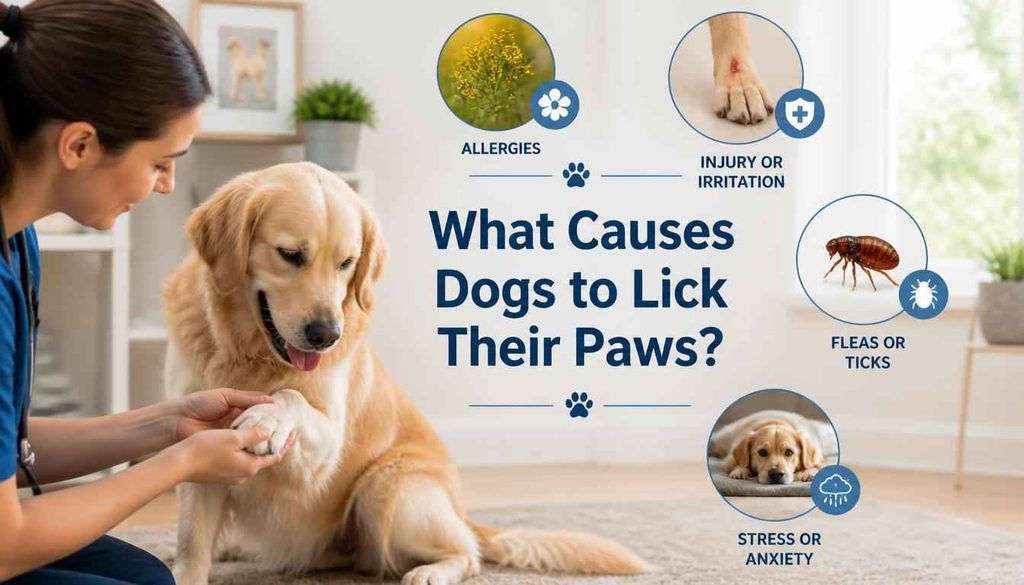
Dogs may lick their paws because of allergies, injuries, infections, parasites, joint pain, or irritated skin. Some dogs also lick because they are bored, stressed, or anxious. The cause is easier to identify by watching when and where licking happens.
Can Allergies Cause Dog to Lick Paws?
Yes, allergies can make a dog’s paws very itchy and uncomfortable. Pollen, grass, dust, fleas, and certain foods may trigger irritation. If your dog keeps licking or chewing their paws, a veterinarian can help identify the possible allergy.
Why Do Dogs Chew Their Paws?
Dogs may chew their paws when something makes them itchy or painful. Allergies, fleas, infections, injuries, and irritated skin are common reasons. Stress or boredom can also cause repetitive chewing, especially when no obvious physical problem is present.
FAQ’s about
Why Is My Dog Licking Paws Constantly?
Dog licking paws constantly can happen because of allergies, infections, fleas, injuries, or irritated skin. Stress and boredom may also cause repetitive licking. If your dog cannot stop, check the paws for redness, swelling, wounds, or other changes.
Why Is My Dog Chewing Feet?
Dog chewing feet is often caused by itching or discomfort. Allergies, parasites, infections, dry skin, and small injuries can make the feet uncomfortable. If chewing becomes frequent or damages the skin, your veterinarian can help find and treat the underlying cause.
What Should I Do About Itchy Dog Paws?
Itchy dog paws may result from allergies, fleas, infections, environmental irritants, or injuries. Check the paws gently for visible problems and keep them clean. Persistent itching should be evaluated by a veterinarian to determine the exact cause.
What Causes Dog Paw Allergies?
Dog paw allergies can develop from environmental triggers such as pollen, grass, dust mites, or certain foods. Flea allergies can also cause intense itching. A veterinarian can help determine whether allergies are responsible and recommend suitable treatment.
Why Is My Dog Constantly Licking Paws?
Dog constantly licking paws may indicate itching, pain, allergies, infection, parasites, or irritation. Some dogs also lick because of anxiety or boredom. Look for redness, swelling, odor, hair loss, or sores, especially when the behavior continues.
What Is the Best Dog Licking Paws Treatment?
The right dog licking paws treatment depends on the cause. Allergies, infections, parasites, injuries, and pain all require different approaches. A veterinarian can examine your dog’s paws and recommend treatment that addresses the underlying problem.
What Causes Red Paws Dog Licking?
Red paws dog licking can be associated with allergies, irritation, yeast or bacterial infections, parasites, or repeated licking. If the paws are swollen, painful, smelly, or producing discharge, veterinary attention can help prevent the problem from getting worse.
What Causes Dog Obsessive Paw Licking?
Dog obsessive paw licking can develop when allergies, infections, injuries, or pain repeatedly irritate the paws. Anxiety, stress, and boredom can also contribute. Because medical and behavioral causes can look similar, persistent licking should be properly evaluated.
Why Is My Dog Licking Front Paw?
Dog licking front paw may indicate a cut, broken nail, thorn, splinter, insect sting, irritation, or pain. If your dog suddenly focuses on one front paw or starts limping, carefully check the area and contact your veterinarian if needed.
Why Is My Dog Licking Paws Raw?
Dog licking paws raw means the repeated licking has damaged the skin. Allergies, infections, pain, parasites, or anxiety may be behind the behavior. Raw or open skin can become infected, so veterinary care is important to address the cause.
How Can I Stop Dog Chewing Paws?
To stop dog chewing paws, first identify why your dog is chewing. Check for injuries, allergies, parasites, and infections rather than simply preventing access to the paws. If chewing continues or causes wounds, ask your veterinarian for appropriate treatment.
Understanding the behavior as a whole
Understanding why dogs lick at their paws can help you notice when normal grooming has become a sign of a deeper problem. Occasional licking is usually harmless, but constant licking, chewing, redness, swelling, or raw skin may point to allergies, injuries, infections, parasites, pain, or anxiety.
The best way to help your dog is to find and treat the underlying cause instead of simply stopping the licking. With careful observation and timely veterinary care, most paw problems can be managed effectively, helping your dog get back to feeling comfortable, active, and happy.



Pingback: Why Is My Dog Whimpering? 14 Reasons & What to Do