

The Kangal is widely reported as the dog with the strongest bite, with popular rankings placing its bite force at about 743 PSI.
Other powerful breeds include the American Bandogge, Cane Corso, English Mastiff, and Dogo Canario. However, many breed-by-breed PSI figures are estimates rather than results from standardized scientific testing.
What Dogs Have the Strongest Bite?
Dogs with the strongest jaws are usually large, muscular breeds developed for guarding, livestock protection, or demanding working roles. The Kangal is commonly listed as the dog with the most powerful bite, followed by powerful mastiff-type breeds and other large working dogs.
Still, a powerful bite does not mean a dog is aggressive or unsafe. Temperament, training, socialization, health, and responsible ownership matter far more when judging a dog’s behavior.
What is PSI strength?
PSI means pounds per square inch. It is a unit used to describe pressure. When people discuss the strongest dog bite PSI, they use PSI to estimate how much pressure a dog’s jaws may apply to a surface.
A higher PSI can suggest greater crushing pressure, but bite force is not a simple test of danger. The way a dog bites, where it bites, its size, and the situation can all affect the injury.
What dog has the strongest bite force?

The Kangal is widely described in popular rankings as having the strongest canine bite force, with an often-repeated estimate of 743 PSI. The American Bandogge and Cane Corso are also frequently placed near the top.
Because dogs are not tested under one universal method, these rankings should be treated as useful estimates, not absolute scientific records.
11. Bulldog
The Bulldog is often estimated at around 305 PSI. Its wide head, strong neck, and powerful jaw muscles give it impressive strength for its size.
Despite its strong appearance, a well-bred and properly socialized Bulldog can be an affectionate companion. Owners should still teach gentle play and avoid encouraging hand biting.
10. Siberian Husky
The Siberian Husky is sometimes listed at approximately 320 PSI. This athletic breed was developed for endurance and hard work in challenging conditions.
Huskies are energetic, intelligent, and playful. Their bite strength does not automatically make them aggressive, but their high energy means they need regular exercise, training, and mental stimulation.
9. Rottweiler
The Rottweiler is commonly placed around 328 PSI in popular bite-force rankings. Its broad head, muscular build, and historic working role contribute to its reputation for a strong bite.
A Rottweiler can be calm, loyal, and deeply devoted to its family. Early training and careful socialization are essential because this is a large, powerful breed.
8. Leonberger
The Leonberger is often estimated at about 399 PSI. This giant breed combines impressive size with a powerful jaw and muscular body.
Leonbergers are known for being gentle and affectionate with their families. Because of their size, however, owners should supervise interactions with small children and teach good manners from an early age.
7. Wolfdog
Wolfdogs are often listed at around 406 PSI, although results can vary greatly because a wolfdog’s genetics, size, and wolf content are not uniform.
They can be demanding animals that require experienced handling. Local laws may also restrict ownership, so anyone considering a wolfdog should research legal requirements and the breed’s complex needs first.
6. Dogo Canario
The Dogo Canario, also called the Presa Canario, is frequently estimated at around 540 PSI. Its powerful build and large head make it one of the strongest-looking dog breeds.
This is a serious working breed that needs knowledgeable ownership, consistent training, and proper socialization. Responsible handling is far more important than focusing on the dog’s bite-force ranking.
5. English Mastiff
The English Mastiff is often placed at approximately 552–556 PSI. As one of the world’s largest dog breeds, it has tremendous physical strength.
Yet many well-socialized Mastiffs are calm and gentle at home. Their enormous size means owners must focus on obedience, control, and responsible management.
4. Dogue de Bordeaux
The Dogue de Bordeaux is commonly listed at about 556 PSI in online rankings. Its massive head and strong jaw muscles give it a powerful appearance.
The breed can be loving and devoted to its family. Good training, socialization, and proper supervision help this powerful dog become a well-mannered companion.
3. Cane Corso
The Cane Corso is frequently given an estimate of around 700 PSI, although this number is not supported by a universal standardized testing system. It is a large Italian working breed with powerful jaws and a strong body.
Cane Corsos can be highly loyal and intelligent. They need experienced, responsible owners who can provide training, socialization, exercise, and clear guidance.
2. American Bandogge
The American Bandogge is often listed near 730 PSI in popular rankings. However, it is important to remember that Bandogges are not one standardized breed, and their genetics can vary.
They are powerful guardian-type dogs and may combine traits from mastiff and bulldog-type breeds. Anyone considering one should choose responsible breeders and understand the needs of a large, strong working dog.
1. The dog with the strongest bite, The Kangal.
The Kangal is widely considered the dog with the strongest bite in popular rankings, often with an estimate of 743 PSI. This Turkish livestock guardian was developed to protect flocks and work independently against predators.
A well-raised Kangal is often calm and deeply loyal to its family. Its natural guarding instincts, enormous strength, and independent personality mean it is best suited to experienced owners who understand large guardian breeds.
Can Dogs with Strong Bite Force Be Aggressive?
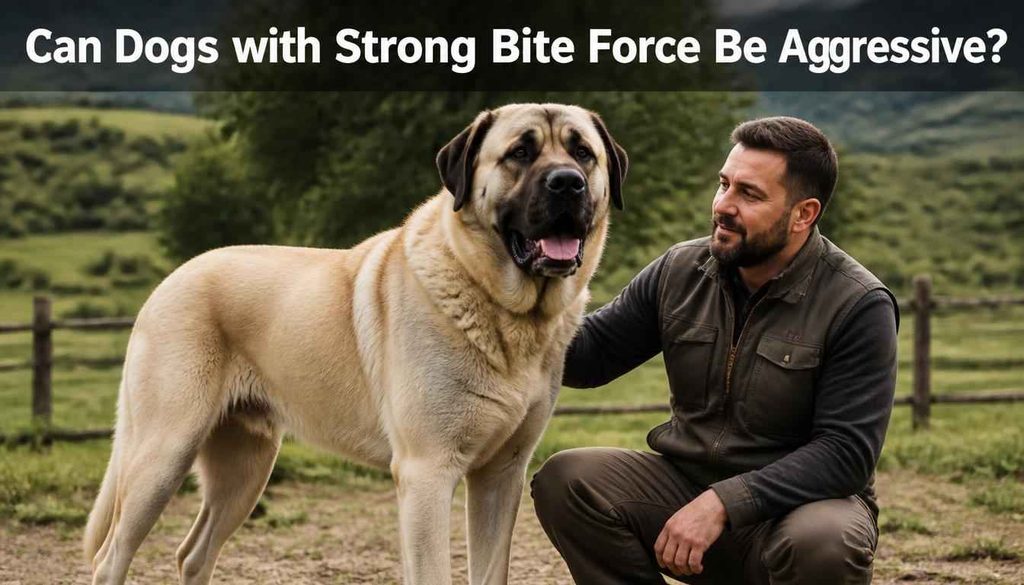
A strong bite force and aggression are not the same thing. A dog may have powerful jaws while being gentle, stable, and friendly.
Behavior depends on many factors, including genetics, early socialization, training, fear, stress, pain, past experiences, and the environment. Responsible ownership plays a major role in preventing dangerous situations.
The best approach is to judge each dog individually instead of assuming that breed traits tell you everything about behavior. Even everyday traits such as grooming and shedding can vary greatly between breeds, as you can see when comparing whether Havanese dogs shed. These differences are separate from bite strength, but they show why every breed should be understood on its own.
Dog Bite Force Comparison Chart (2026 Updated)
| Rank | Dog Breed | Commonly Reported Bite Force |
| 1 | Kangal | ~743 PSI |
| 2 | American Bandogge | ~730 PSI |
| 3 | Cane Corso | ~700 PSI |
| 4 | Dogue de Bordeaux | ~556 PSI |
| 5 | English Mastiff | ~552–556 PSI |
| 6 | Dogo Canario | ~540 PSI |
| 7 | Wolfdog | ~406 PSI |
| 8 | Leonberger | ~399 PSI |
| 9 | Rottweiler | ~328 PSI |
| 10 | Siberian Husky | ~320 PSI |
| 11 | Bulldog | ~305 PSI |
Important: These figures are widely repeated estimates, not a definitive scientific ranking produced through one standardized testing method. A strongest dog bite force breed list can therefore change depending on the source and testing approach.
Understanding Dog Bite Force: What PSI Means
PSI measures pressure over a given area. In simple terms, it helps describe how much force may be applied when a dog bites.
However, PSI alone does not tell the whole story. A dog with a lower reported PSI may still cause a serious injury depending on bite location, duration, body size, and the person’s vulnerability.
For this reason, the dog with the most powerful bite should not automatically be called the most dangerous dog. Responsible training and handling remain the most important safety factors.
Factors That Influence a Dog’s Bite Strength
Several physical and biological factors can influence jaw power.
Jaw Anatomy and Skull Structure
A broad skull and strong jaw muscles can help a dog apply greater force. Large guardian and mastiff-type breeds often have powerful heads designed for demanding working roles.
Dogs also have other physical traits shaped by their breed and original purpose, such as webbed feet in some breeds that were developed for swimming and retrieving. Still, head size alone cannot accurately predict bite force. Individual differences can be significant.
Muscle Mass and Body Size
Large dogs often have more body and jaw muscle than small dogs. This can contribute to greater physical strength and potentially stronger bites.
However, bigger does not always mean stronger. Anatomy, muscle condition, bite position, and individual variation also matter.
Breeding Purpose
Dogs developed for guarding, livestock protection, pulling, hunting, or other demanding work may have strong bodies and jaws. Their history can help explain why certain breeds appear frequently in lists of dog breeds with the strongest bite.
A dog’s original purpose does not decide its personality. Modern behavior depends heavily on breeding quality, training, socialization, and individual temperament.
Dog Bite Statistics in the United States (2025-2026)
Dog bites remain an important public-health concern in the United States. Widely cited estimates suggest that millions of people are bitten each year, although the number of reported and medically treated injuries is lower.
Children can be especially vulnerable because of their size and because bites to the face and upper body can be severe. Many bites also involve familiar dogs rather than unknown animals.
The most useful lesson is prevention: teach children how to interact safely with dogs, supervise young children around dogs, avoid disturbing dogs that are eating or sleeping, and respect warning signs such as growling, freezing, or trying to move away.
Illinois Dog Bite Law: Strict Liability Under 510 ILCS 5/16
Illinois generally follows a strict-liability rule for qualifying dog attacks and injuries. Under the law, an owner can be liable when a dog attacks or injures a person without provocation while that person is peaceably in a place where they are legally allowed to be.
Because legal outcomes depend on the facts, anyone involved in a serious bite should seek advice from a qualified Illinois attorney.
What the Illinois Animal Control Act Requires
The injured person generally needs to show that the attack or injury occurred without provocation and that they were lawfully present.
The statute focuses on the circumstances of the incident. The exact facts can be important, especially in cases involving provocation, ownership, and the location of the attack.
No “One-Bite Rule” in Illinois
Illinois does not generally require an injured person to prove that the dog previously bit someone before liability may arise. In qualifying cases, the first serious incident can still create legal responsibility.
This does not mean every bite leads to the same result. Defenses and the specific facts of the incident can matter.
Who Qualifies as an “Owner” Under Illinois Law?
Illinois defines an owner broadly. Depending on the circumstances, the term may include someone with property rights in the dog, a person who keeps or harbors it, someone who has it in their care, or a person who knowingly permits the dog to remain on property they occupy.
This can make ownership questions more complicated than simply asking whose name appears on the dog’s records.
Common Dog Bite Injuries by Severity
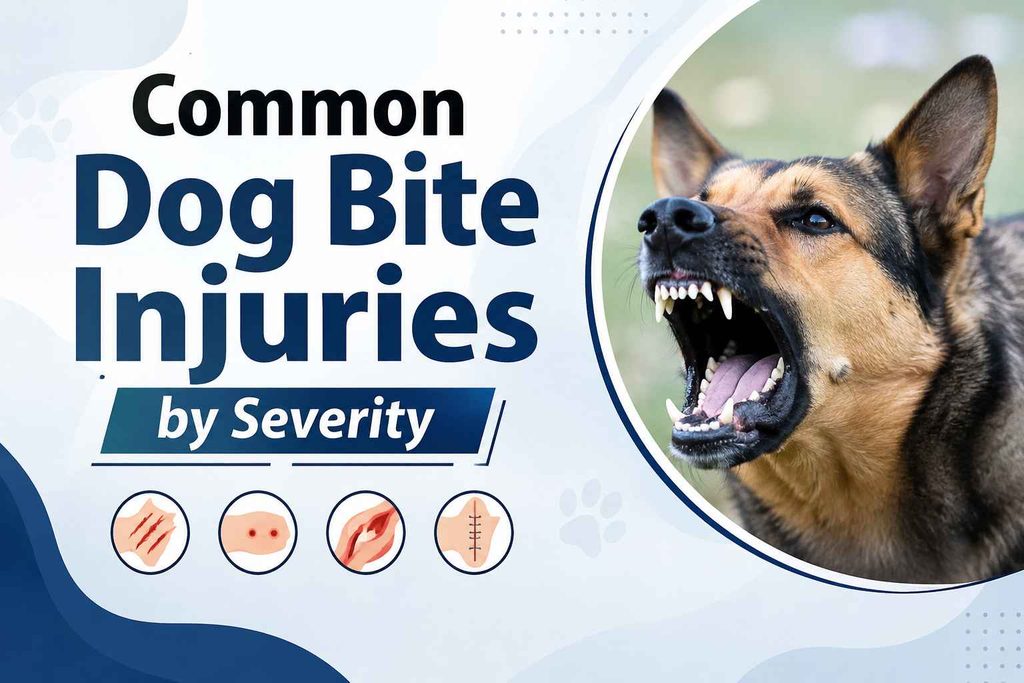
Dog bites can range from minor scratches to severe trauma. Common injuries include puncture wounds, cuts, bruising, torn tissue, fractures, infections, nerve damage, and permanent scarring.
Severity does not depend on PSI alone. A small dog’s bite can also require medical treatment, while a powerful dog can cause devastating injuries when an attack is severe.
Anyone bitten by a dog should clean the wound and seek appropriate medical advice, especially when the skin is broken, the wound is deep, bleeding is difficult to control, or there are concerns about infection or rabies exposure.
Legal Claims You May Have After a Dog Attack
A dog-bite case may involve different legal issues depending on where and how the attack happened. The following are general examples and not legal advice.
Premises Liability Claims
A claim may involve the condition or management of the property where an attack occurred. Responsibility can depend on who controlled the location and what they knew about the risk.
Workers’ Compensation Claims
A person bitten while working, such as a delivery driver or home-service worker, may have a workers’ compensation claim depending on the circumstances and state law.
Wrongful Death Claims
In rare and tragic cases where an animal attack causes a death, surviving family members may have legal rights under state wrongful-death laws.
Medical Malpractice Claims
Medical malpractice is separate from the dog bite itself. A claim may be considered if a healthcare professional allegedly failed to meet the applicable standard of care and that failure caused additional harm.
FAQs
What dog breed has the strongest bite?
The Kangal is widely reported as the strongest dog bite force breed, with popular rankings placing it at about 743 PSI. However, that figure should be treated as an estimate because there is no universal scientific testing standard covering all breeds.
What dogs have the strongest bite force?
The Kangal is commonly listed as having the strongest bite force, often estimated at 743 PSI. Cane Corso, Mastiff, and other large guardian breeds are also known for powerful jaws.
What is the strongest dog jaw strength?
The strongest reported dog jaw strength is commonly associated with the Kangal. Other powerful breeds frequently listed include the American Bandogge, Cane Corso, English Mastiff, and Dogo Canario.
Do Pit Bulls have the strongest bite?
No. Popular rankings do not usually place the American Pit Bull Terrier at the top for maximum bite-force PSI. Bite force should also not be used as the only measure of a dog’s danger or behavior.
How is dog bite force measured?
Researchers can measure bite force using specialized force sensors or related equipment. Results can vary based on the dog’s size, motivation, bite position, equipment, and testing conditions.
Does a stronger bite mean a dog is more dangerous?
No. A dog’s behavior cannot be judged by bite force alone. Temperament, training, socialization, health, environment, and responsible ownership are all important.
What are the top 10 strongest dog bites?
Popular rankings commonly include the Kangal, American Bandogge, Cane Corso, English Mastiff, Dogue de Bordeaux, Dogo Canario, Wolfdog, Leonberger, Rottweiler, and Siberian Husky. Exact positions vary because many bite-force figures are estimates.
Which dog has the strongest bite in the world?
The Kangal is commonly reported to have the strongest dog bite, but exact PSI numbers vary because breeds are not tested using one standard method.
Does bite force determine how dangerous a dog is?
No. Bite force alone does not determine danger. A dog’s temperament, training, socialization, health, and situation play a much bigger role.
Can I sue if a dog bites me in Illinois?
Yes, you may be able to sue in Illinois if the bite was unprovoked and you were lawfully present. Case details matter.
What compensation can I receive for a dog bite in Illinois?
You may recover medical bills, lost income, pain, scarring, and other damages. The amount depends on your injuries and specific circumstances.
The bottom line: what dogs have the strongest bite
So, what dogs have the strongest bite? The Kangal is the breed most commonly ranked at the top, followed by other powerful guardian and mastiff-type dogs. These impressive breeds have been shaped by strength, working ability, and history.
But the most important point is simple: a powerful jaw does not define a dog’s personality. With responsible breeding, proper training, early socialization, and knowledgeable ownership, powerful dogs can be loyal, stable, and loving companions.
When comparing the strongest dog bites ranked, treat dramatic PSI numbers with caution. Real canine behavior and safety depend on far more than a single number.