

A dog throwing up white foam may be due to bile buildup in an empty stomach or bile irritation. This often happens when stomach acids mix with saliva and air. Occasional vomiting may be mild, but repeated episodes or other symptoms should be checked by a veterinarian.
This guide explains the possible causes of dog throwing up white foam, what symptoms matter most, and what you can do next. It is written for pet owners who need clear, trustworthy information—not guesswork.
Why Is My Dog Throwing Up White Foam?
If you’re wondering, “Why is my dog throwing up white foam?”, the answer depends on what else is happening. A dog may throw up white foam when the stomach is empty, irritated, or inflamed, but vomiting can also result from illnesses affecting other parts of the body.
White foam often appears after the stomach has already emptied. Saliva and stomach fluid can mix with air during nausea and retching, creating a foamy appearance. True vomiting usually involves nausea, retching, and abdominal contractions, while coughing or regurgitation can sometimes be mistaken for vomiting.
The key is to look at the whole picture. A dog that vomits once and quickly returns to normal is very different from a dog throwing up white foam and not eating, appearing weak, or showing abdominal pain.
Common Causes of White Foam Vomiting in Dogs
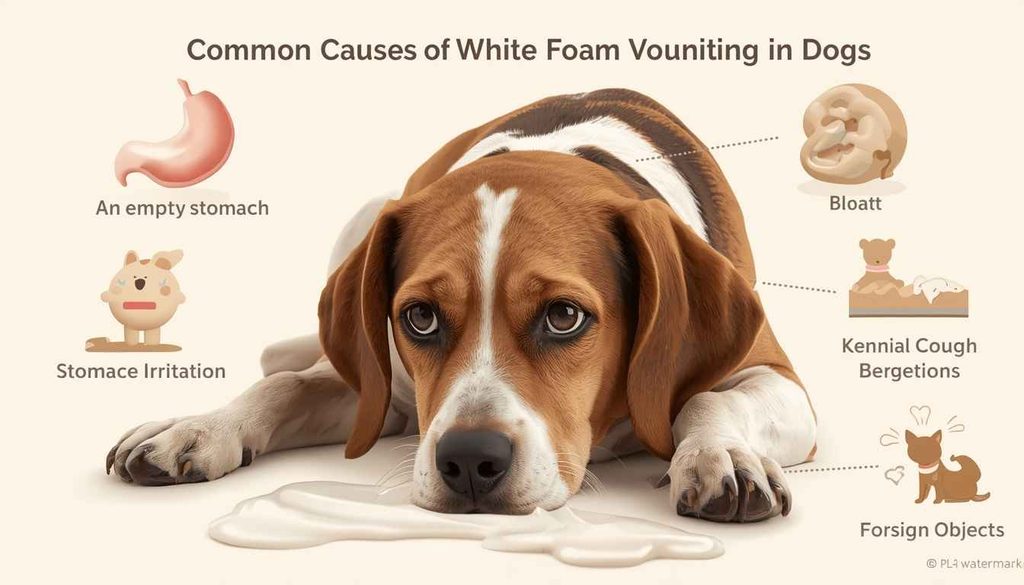
1. Empty Stomach or Acid Reflux
A dog throwing up white foam in morning may have nausea after going many hours without food. Stomach fluid and saliva may be brought up when there is little or no food left in the stomach.
Some dogs improve with smaller, more frequent meals, but frequent morning vomiting should still be discussed with a veterinarian because repeated vomiting can have many causes.
2. Mild Gastritis (Stomach Irritation)
Gastritis means inflammation of the stomach. It can develop after a dog eats something irritating, unusual food, spoiled food, grass, or another substance that upsets the stomach.
Dogs with acute gastritis may vomit food, bile, froth, or other material. Appetite loss or abdominal discomfort may also occur, depending on the cause and severity.
3. Motion Sickness or Stress
Travel, anxiety, or excitement can make some dogs nauseated. A sensitive dog may drool, gag, or vomit during or after a stressful event or car ride.
If dog throwing up white foam and gagging happens regularly during travel, speak with your veterinarian. They can help identify whether motion sickness, anxiety, or another problem is involved.
4. Kennel Cough or Respiratory Irritation
Sometimes what looks like dog puking white foam is actually coughing. A strong coughing fit can bring up frothy saliva or mucus.
If you notice coughing, gagging, nasal discharge, or breathing changes, the problem may involve the respiratory tract rather than the stomach. A dog coughing up white foam should be examined promptly if breathing becomes difficult.
5. Pancreatitis
Pancreatitis is inflammation of the pancreas and can cause vomiting, loss of appetite, weakness, abdominal pain, diarrhea, and dehydration. The vomit itself is not enough to diagnose pancreatitis.
Veterinarians use the dog’s history, examination, and diagnostic testing to investigate the condition. Treatment may include anti-nausea medication, fluids, pain control, and nutritional management.
6. Bloat (Gastric Dilatation-Volvulus) – A Medical Emergency
Bloat, or GDV, is one of the most serious possible reasons for white foam and dry retching. The stomach fills with gas and may twist, rapidly affecting blood flow and breathing.
Warning signs include a swollen or painful abdomen, restlessness, drooling, weakness, collapse, and repeated attempts to vomit with little or nothing produced. Do not wait at home if you suspect bloat—seek emergency veterinary care immediately.
7. Ingesting Toxins or Foreign Objects
Household chemicals, medications, toxic foods, plants, toys, fabric, bones, and other objects can cause vomiting. A foreign object may also create a partial or complete blockage.
Persistent vomiting, loss of appetite, abdominal pain, dehydration, or weakness can occur with gastrointestinal obstruction. Fast diagnosis is important because some blockages require endoscopy or surgery.
Spotting Mild Cases
A mild case may involve one isolated episode of white foam while your dog remains bright, comfortable, and interested in normal activities. Some dogs recover without further vomiting.
Continue to watch your dog closely. Repeated vomiting, behavior changes, weakness, pain, or refusal to drink changes the situation. Even an apparently mild episode deserves veterinary advice if it keeps happening.
A puppy throwing up white foam should be monitored especially carefully because puppies can become dehydrated more quickly and may have additional risks depending on their age and vaccination history.
Recognizing Serious Cases
A serious case is more likely when vomiting continues or appears alongside other warning signs. These include weakness, collapse, abdominal swelling, pain, repeated dry retching, difficulty breathing, tremors, or unusual behavior.
Severe or prolonged vomiting, a bloated or painful abdomen, nonproductive retching, pale or blue gums, and collapse are emergency signs. Unintended ingestion of a toxic substance is also a reason for urgent veterinary care.
Trust your observations. You know what is normal for your dog.
When Should You Worry About White Foam Vomiting?
You should worry when your dog is vomiting repeatedly or does not seem normal between episodes. Contact a veterinarian promptly if vomiting lasts, your dog becomes lethargic, has a painful belly, refuses food or water, or you see blood.
Go to an emergency clinic immediately if your dog has a distended abdomen, repeated unproductive retching, severe weakness, collapse, breathing difficulty, pale or blue gums, or suspected poisoning.
Regular preventive veterinary care is also important for your dog’s health. If you are keeping up with your dog’s vaccinations, learn how often dogs get rabies vaccines and when booster shots may be needed.
Potential Life-Threatening Conditions
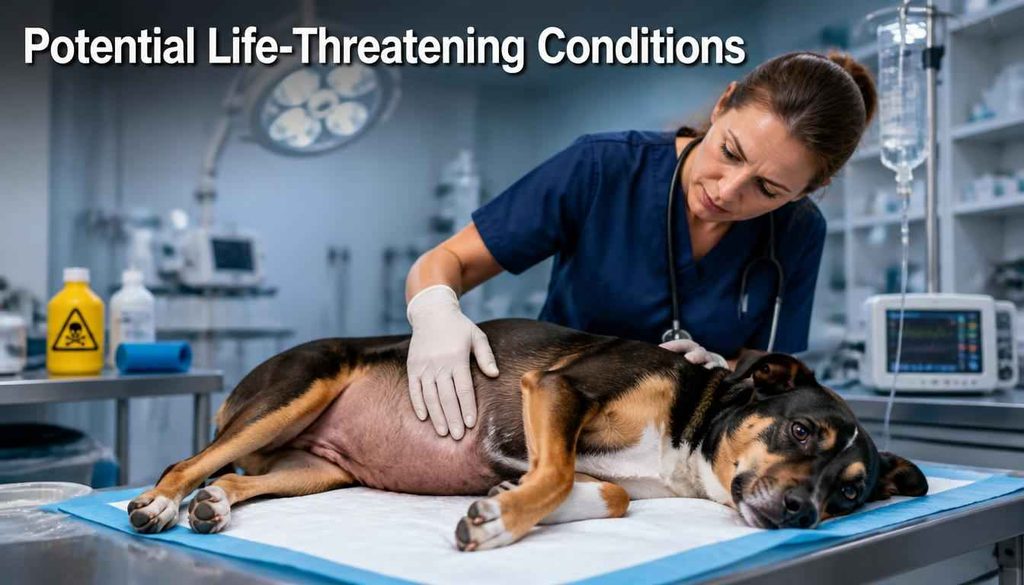
The most important life-threatening conditions include:
- Bloat/GDV: A rapidly progressing emergency involving a distended and potentially twisted stomach.
- Toxin ingestion: Poisoning can cause vomiting and may also cause tremors, seizures, weakness, or collapse.
- Foreign body obstruction: A swallowed object can block the digestive tract and lead to severe complications.
- Severe pancreatitis or systemic illness: These conditions can cause significant vomiting, dehydration, pain, and weakness.
These problems cannot be safely diagnosed from vomit alone. Fast veterinary assessment gives your dog the best chance of effective treatment.
What To Do
Step 1: Check Your Dog’s Condition
Look for repeated vomiting, abnormal breathing, weakness, abdominal swelling, obvious pain, or collapse. Check whether your dog is alert and whether the gums appear normally pink rather than pale or bluish.
Also note how many times your dog has vomited, what the vomit looked like, and whether your dog could have eaten something unusual. If your dog also has repeated hiccups or unusual breathing-related episodes, learn more about do dogs get hiccups and when they may need veterinary attention.
Step 2: Call A Veterinary Clinic
Describe your dog’s symptoms clearly. Tell the clinic when vomiting started, how often it is happening, whether food or water stays down, and any possible toxin or foreign-object exposure.
Calling ahead helps you receive guidance and allows the veterinary team to prepare when urgent care is needed.
Step 3: Withhold Food Temporarily
Do not keep offering meals to a dog that is actively vomiting. Your veterinarian can tell you when and how to restart food based on your dog’s age, health, and symptoms.
Fresh water is important, but repeated vomiting after drinking or signs of serious illness require veterinary advice rather than continued home treatment. Never give human medications unless a veterinarian specifically tells you to do so.
Step 4: Transport Safely If Needed
Keep your dog calm and secure during transport. Use a crate, carrier, or another safe restraint when appropriate. Bring information about possible toxins or foreign objects and take a photo of the vomit if it may help the veterinarian.
Helping Your Pet Before The Vet Visit
Keep your dog quiet and comfortable while you arrange care. Do not give human medications unless your veterinarian specifically recommends them.
If possible, record the vomiting episode or take a photo of the vomit. Note what your dog ate, when they last ate, how often they vomited, and whether they have diarrhea, coughing, pain, or changes in behavior. These details can help the veterinarian identify the cause more efficiently.
If your dog is also panting heavily, watch for breathing changes, weakness, restlessness, or other symptoms. Our guide on why dogs keep panting can help you understand when panting may need closer attention.
How Vets Diagnose the Cause
A veterinarian may begin with questions about your dog’s diet, recent activities, medications, possible toxin exposure, and vomiting history. A physical examination can identify dehydration, abdominal pain, swelling, or other important clues.
Depending on the findings, testing may include blood work, X-rays, ultrasound, or other imaging. X-rays can be especially helpful when a foreign object or other serious abdominal problem is suspected.
Treatment Options for Dogs Throwing Up White Foam
1. Dietary Adjustments
Some mild digestive problems improve with a temporary diet plan recommended by a veterinarian. This may involve smaller meals, a highly digestible diet, or another approach based on the underlying cause.
2. Medications
Veterinarians may prescribe anti-nausea medication, stomach protectants, pain medication, or other treatments. The right medication depends on the diagnosis.
3. Fluid Support
Vomiting can lead to dehydration and electrolyte imbalance. Dogs that are dehydrated or seriously ill may need fluids, especially if they cannot keep water down.
4. Treating Underlying Conditions
This is the most important part of dog throwing up white foam treatment. Bloat requires emergency treatment, toxins may require specific therapy, and a blockage may need removal. Treating only the vomiting without addressing the cause may not be enough.
Preventing Future Episodes

Feed a consistent, appropriate diet and avoid sudden food changes, excessive table scraps, and access to garbage or potentially harmful objects. Dogs that tend to vomit after long periods without food may benefit from a feeding schedule recommended by their veterinarian.
Keep medications, chemicals, toxic foods, and dangerous objects out of reach. Good grooming and regular skin checks can also help you notice problems early. If you notice itching, hair loss, circular patches, or unusual skin irritation, learn more about what ringworm looks like on dogs so you can recognize possible signs and seek veterinary advice when needed.
Regular veterinary care can also help identify health problems before they become more serious.
Local Veterinary Care Matters
Knowing your regular veterinarian and the nearest emergency clinic before a crisis can save valuable time. Keep important phone numbers accessible and know where to go after hours.
If your dog is showing emergency signs, choose immediate care over waiting for symptoms to improve. Fast action can make a meaningful difference when serious conditions are involved.
FAQs
Why is my dog throwing up white foam but acting normal?
A single episode in an otherwise normal dog may be linked to an empty stomach or temporary stomach irritation. If vomiting repeats or your dog’s behavior changes, contact a veterinarian.
Why is my dog throwing up white foam in the morning?
Morning vomiting can occur after many hours without food. However, recurring morning vomiting is worth discussing with your veterinarian because several digestive conditions can cause similar symptoms.
Why is my dog throwing up white foam and not eating?
Loss of appetite combined with vomiting can indicate nausea, pain, pancreatitis, obstruction, or another illness. Call a veterinarian, especially if your dog cannot keep water down or becomes weak.
What does dog throwing up white foam and slime mean?
Foamy material mixed with slime or mucus can come from the stomach or respiratory tract. Watch for coughing, breathing changes, repeated vomiting, or other symptoms and seek veterinary advice if it continues.
Can I give my dog a home remedy for throwing up white foam?
Do not give medications or remedies without veterinary guidance. Some human medications and household products are dangerous for dogs, and home treatment can delay care for serious conditions.
The big picture on this behavior
Why do dogs throw up white foam? The answer can range from a mild, temporary stomach upset to a serious medical emergency. A single episode in a dog that quickly returns to normal may not require emergency treatment, but repeated vomiting or additional warning signs should never be ignored.
Stay calm, observe your dog carefully, and call a veterinarian when you are unsure. With quick attention and the right diagnosis, many causes of dog throwing up white foam can be treated effectively and your dog can get back to feeling comfortable and happy.



Pingback: Probiotics for Dogs | Benefits, Uses, Dosage & Side Effects