

Yes, probiotics can help many dogs. They are live “good” bacteria that support digestion, calm upset stomachs, and boost immune health. Most dogs do well on them, and side effects are usually mild. I explain when probiotics help, how much to give, and how to pick a safe product.
If your dog’s stomach has been acting up lately, keep reading — this might be the simplest fix you have been missing.
What Are Probiotics for Dogs?
Probiotics are live microorganisms — mostly “good” bacteria plus a few helpful yeasts — that live in your dog’s gut. Billions of them form what vets call the gut microbiome: a busy inner community that helps your dog digest food, absorb nutrients, and fight off harmful germs.
Think of it as a garden: when the soil is full of healthy plants, weeds struggle to take hold. A gut crowded with friendly microbes leaves little room for the harmful kind. Problems start when that balance tips — after illness, stress, or medication wipes the good bacteria out. Probiotic supplements simply reseed the garden.
How Do Probiotics Work Inside Your Dog?
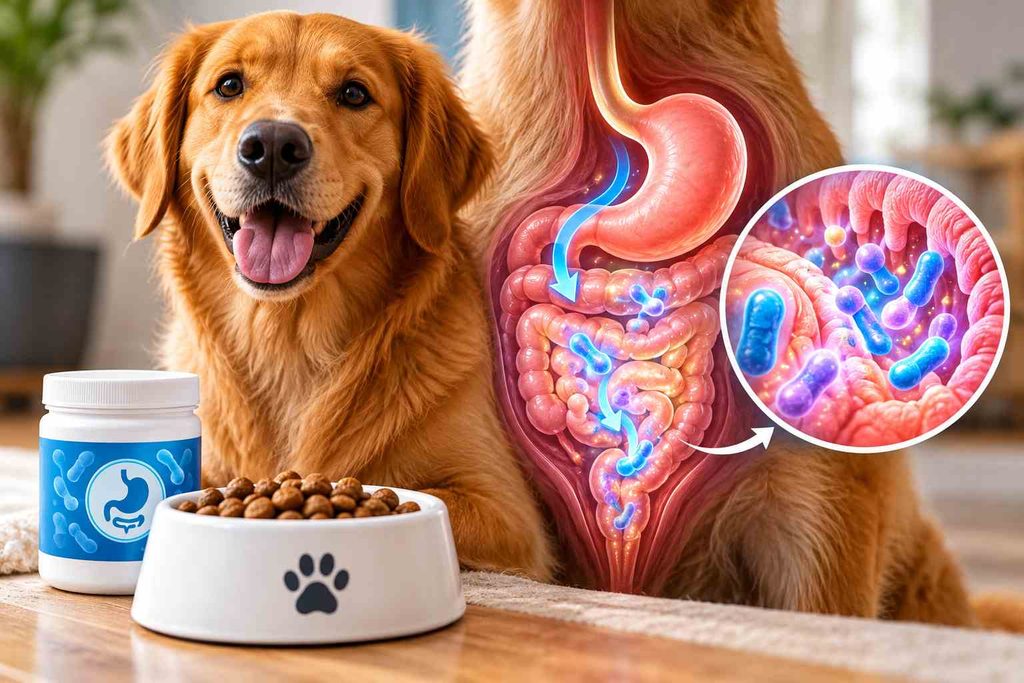
Knowing what probiotics are is one thing — knowing what they actually do once swallowed is another. When your dog takes a probiotic, the live bacteria travel through the stomach toward the intestines. Quality products use strains tough enough to survive stomach acid, so they arrive alive where they are needed.
Once there, they work on three fronts. First, they crowd out harmful bacteria by claiming space and food. Second, they help break down food and produce short-chain fatty acids, which nourish the intestinal lining and keep the gut barrier strong. Third, they communicate with the immune system — much of which is stationed in the gut — helping it respond in a measured way instead of overreacting.
Probiotics vs Prebiotics for Dogs
First, a quick detour to clear up two terms you will see on every label:
| Probiotics | Prebiotics | |
| What they are | Live good bacteria | Fiber that feeds good bacteria |
| What they do | Add friendly microbes to the gut | Nourish the microbes already there |
| Examples | Lactobacillus, Bifidobacterium, Enterococcus faecium | Chicory root, inulin, FOS |
| Found in | Supplements, some yogurts | High-fiber foods, some supplements |
Many products combine both — prebiotics give the newly introduced bacteria the food they need to thrive.
Are Probiotics Good for Dogs?
So here is the question most owners actually ask — and for most dogs, the answer is yes. Probiotics rank among the safest and most useful supplements you can give, and vets recommend them routinely. Here is what they can do for your best friend:
- Calm diarrhea and firm up loose stools
- Ease gas, bloating, and stomach gurgling
- Support recovery during and after antibiotic treatment
- Strengthen the immune system, since much of it lives in the gut
- Help dogs with food sensitivities digest meals better
- Reduce allergy-related itching and skin flare-ups in some dogs
- Help dogs stay settled during travel, boarding, and other stressful changes
- Improve nutrient absorption from food
No supplement is magic, of course. Probiotics shine brightest as part of solid everyday care — good food, clean water, exercise, and regular vet checkups.
What Are the Signs My Dog Needs Probiotics?
Could your own dog use the help? Dogs cannot describe an upset stomach, but their bodies leave clues. I watch for these:
- Loose stools or diarrhea that keep coming back
- Frequent gas or a gurgling belly
- Vomiting now and then without a clear cause — if you ever see white foam, read my guide on why dogs throw up white foam
- Bad breath that is not from dental problems
- Itchy skin, dull coat, or frequent ear infections
- Low energy or a weak appetite after illness or medication
- Stomach upset every time your routine changes, like trips or house guests
An occasional off day is normal for any dog. But when these signs form a pattern, the gut bacteria are often out of balance — exactly what probiotics are built to fix. Rule out anything serious with your vet first, particularly if symptoms linger beyond a couple of days.
When Should I Give My Dog Probiotics?
Once you know the signs, the next question is timing — here is my quick-reference table:
| Situation | How probiotics help |
| Diarrhea or loose stools | Restore good bacteria and firm up stools faster |
| During or after antibiotics | Replace good bacteria that antibiotics wipe out |
| Stressful events (boarding, moving, travel) | Prevent stress-related stomach upset and colitis |
| Diet change | Ease the transition and reduce digestive upset |
| Allergies or itchy skin | Calm the immune response starting in the gut |
| After illness or surgery | Rebuild gut strength during recovery |
| Senior dogs with sluggish digestion | Support nutrient absorption in older age |
Stress deserves a closer look, because it wrecks canine digestion much the way it wrecks ours. Boarding, moving, fireworks, or a new pet can all trigger colitis and diarrhea — and a stressed dog will often pant more than usual too. If heavy panting pairs with loose stools around a stressful event, starting probiotics a few days beforehand can make a real difference.
Then there is the classic case: probiotics for dogs after antibiotics. Timing is simple — give them during the antibiotic course and for at least a week or two after it ends. Antibiotics clear out bad bacteria, but they take the good ones down too, so probiotics refill the gut while your dog recovers. Ask your vet whether to space the probiotic a few hours apart from the antibiotic dose.
Probiotics for Dogs With Diarrhea
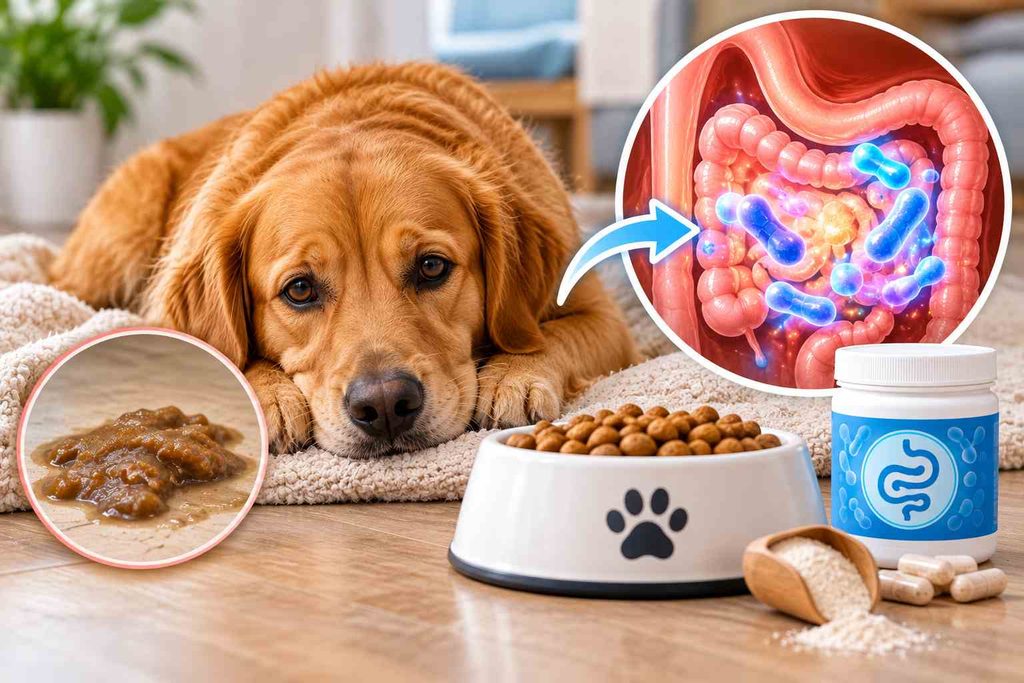
Diarrhea is the number one reason owners reach for probiotics — and it is also where the supporting evidence runs deepest. When harmful bacteria gain the upper hand, stools turn loose and watery. Probiotics send in friendly reinforcements that crowd out the troublemakers and help the gut lining bounce back. They work across the common triggers: stress, sudden diet changes, and antibiotic courses.
Probiotics are not for every case, though. If your dog has bloody diarrhea, severe vomiting, or seems weak and dehydrated, skip the supplement and call your vet right away. Those signs can point to infections or blockages that need real treatment.
Probiotics for Dogs With Allergies
From the gut, let us move to the skin — the two are more connected than most owners realize. A large share of the immune system is stationed in the gut, and allergies are essentially that system overreacting. By steadying the gut, probiotics may steady the whole immune response.
Studies have found that probiotics eased itching and allergy-related skin symptoms in dogs, working at the source of the reaction rather than just masking it. Mild seasonal itchiness responds best; severe year-round allergies usually need more than probiotics alone.
If your dog’s allergies show up as a runny nose, watery eyes, or constant paw licking, probiotics are worth trying alongside your vet’s plan. Give it 6 to 8 weeks, since immune changes take time.
How to Give Probiotics to My Dog
Sold on the idea? Then comes the practical part: getting it into your dog. The best form is simply the one your dog will take reliably:
- Powders: Sprinkle over food. Easy to adjust the amount, and most dogs do not notice it.
- Chews: Tasty, treat-like, and simple. Good for picky eaters but harder to split into smaller doses.
- Capsules: Work well for large dogs. You can hide them in a treat or a spoonful of peanut butter.
- Pastes or gels: Often used for fast relief during diarrhea episodes.
- Probiotic dog foods: Convenient, but heat during manufacturing can kill live bacteria, so a separate supplement is more reliable.
Whatever form you choose, give it with a meal — food buffers stomach acid and helps more live bacteria reach the intestines.
Natural Probiotics for Dogs
Prefer the food-first route? Some everyday foods carry live beneficial bacteria too:
- Plain unsweetened yogurt: Small amounts are fine for most dogs. Make sure it has live cultures and zero artificial sweeteners.
- Kefir: Like a drinkable yogurt, often with a wider mix of bacteria. Start with a spoonful.
- Fermented vegetables: A small amount of plain sauerkraut (no onion or garlic) can work if your dog will eat it.
Keep portions small — a spoonful or two for most dogs. Too much dairy can cause the very stomach upset you are trying to fix. And skip anything sweetened: some artificial sweeteners are dangerous for dogs. Food sources are gentler but less consistent, so for a specific problem like diarrhea, I still reach for a proper dog probiotic.
How Much Probiotics Should I Give My Dog?
Supplement or food, the next question is always the same: how much? No single dose fits every dog, because products differ in strength. Strength is measured in CFUs — colony forming units — which counts the live bacteria per serving. Most dog products range from 1 billion to 10 billion CFU per serving.
Follow these steps:
- Start with the amount on the product label for your dog’s weight.
- Begin with half the dose for the first 3 to 5 days so the gut can adjust.
- Move up to the full dose if your dog handles it well.
- Ask your vet for guidance, especially for puppies, seniors, or dogs on medication — I bring it up at regular checkups, the same visits where we keep vaccines on schedule (here is how often dogs need their rabies vaccine).
More is not always better. A huge dose does not work faster — it just raises the chance of gas and loose stools at the start.
Can Puppies Have Probiotics?
Dosing gets trickiest at the extremes of age. Yes, puppies can have probiotics, and they often benefit the most. A puppy’s gut is still building its bacterial community, and young dogs face one gut challenge after another: new homes, first vaccines, deworming, and diet changes.
Use a product made for dogs and stick to the weight-based dose on the label. Probiotics can help firm up the loose stools puppies often get after training classes or vet visits. One caution: little bodies dehydrate fast, so ongoing puppy diarrhea should always get a vet’s clearance first.
Are Probiotics Safe for Senior Dogs?
At the other end of life, the answer is equally reassuring — older dogs are genuinely great candidates. As dogs age, digestion slows, nutrient absorption drops, and the immune system weakens — probiotics help on all three fronts.
Seniors also take more medications that disturb gut bacteria, so a daily probiotic helps keep their digestion steady. Just confirm with your vet if your senior has a chronic illness or takes daily medication.
Dog Probiotic Side Effects: What to Watch For
Across all ages, the safety record is strong — but no honest guide skips the downsides. The first few days can bring mild, temporary changes as the gut adjusts:
- Gas or bloating
- Mild loose stools
- Slight stomach gurgling
- A brief dip in appetite
These usually fade within a few days, and starting with half the dose keeps them to a minimum. True allergic reactions — itching, swelling, or trouble breathing — are rare and usually trace back to other ingredients in the product, not the bacteria. Stop the supplement and call your vet if you see those signs, or if mild symptoms last more than a week.
FAQs About Probiotics for Dogs
What are the best probiotics for dogs?
There is no single winner for every dog. I look for a product made specifically for dogs, with named bacterial strains on the label, a guaranteed CFU count through the expiration date, and a reputable manufacturer (the NASC quality seal is a good sign). Your vet’s recommendation for your dog’s specific issue beats any “best of” list.
How long can dogs stay on probiotics?
Most healthy dogs can take probiotics daily for life — they are safe for long-term use. Some dogs only need them short-term, like during antibiotics or a stressful month. Review the plan with your vet once or twice a year to make sure daily use still makes sense.
Can dogs take human probiotics?
Not toxic, but not a good choice. Human products contain strains picked for human guts, and some include sweeteners or ingredients that are unsafe for dogs. A dog-specific formula will always work better for your dog’s digestive system.
Do probiotics help dogs with gas?
Yes, they often do. Gas usually means the gut bacteria are out of balance. As probiotics restore that balance, gas and bloating typically settle within a couple of weeks.
Can probiotics help dog anxiety?
Possibly. The gut and brain connect through what scientists call the gut-brain axis, and some studies found certain strains helped dogs stay calmer during stressful events. Probiotics are not a treatment for serious anxiety, but they can help alongside training and vet guidance.
Can my dog overdose on probiotics?
A true overdose is very unlikely. If your dog eats too many chews at once, expect gas, bloating, or loose stools for a day or two. Skip the next few doses and feed a bland meal. Call your vet if vomiting starts or your dog seems painful or bloated.
How long does it take for probiotics to work in dogs?
For diarrhea, many owners see firmer stools within a few days to two weeks. Deeper benefits — like better immunity or calmer skin — can take 6 to 8 weeks of daily use.
Can I give probiotics and antibiotics at the same time?
Yes, and vets often suggest it. Give the probiotic a couple of hours apart from the antibiotic dose so the medicine does not wipe out the new bacteria right away. Continue the probiotic for at least a week after the antibiotics end.
Do dog probiotics need to be refrigerated?
It depends on the product. Some need the fridge to keep bacteria alive; others are shelf-stable by design. Follow the label, and never store them near heat or moisture.
Can probiotics cause constipation in dogs?
Uncommon, but a few dogs get mildly constipated when starting probiotics. Make sure your dog drinks enough water. If it lasts more than a few days, lower the dose or try a different product.
Should I stop probiotics before my dog’s surgery?
Ask your vet. Most vets are fine with probiotics continuing, but some prefer to pause all supplements before anesthesia. Never make that call on your own — a quick call to the clinic settles it.
My Final Take on Probiotics for Dogs
Probiotics have earned their place in my dog-care routine. They are safe, affordable, and useful for the stomach troubles most dogs run into — diarrhea, gas, stress-related upset, and recovery after antibiotics. I do not treat them as a cure-all, and anything serious goes straight to my vet. But for everyday gut health, a quality dog probiotic is one of the simplest wins you can give your best friend