

Dogs may keep panting because of heat, exercise, excitement, anxiety, pain, medication, or an underlying health problem. Persistent panting while resting can be more concerning, especially with weakness, breathing difficulty, pale or blue gums, or other unusual symptoms. In these cases, contact a veterinarian promptly.
In this article, you’ll learn why dogs keep panting, the common causes behind excessive panting, warning signs to watch for, and when your dog may need veterinary care.
Why Do Dogs Pant?
Dogs pant primarily as a way to regulate their body temperature. Unlike humans, dogs do not cool themselves efficiently by sweating across their entire skin. Instead, they use rapid breathing to move air through their respiratory system and help release heat.
Normal panting can happen after running, playing, walking, or spending time somewhere warm. Excitement can also cause temporary panting. Some dogs begin panting when they see another dog, meet new people, travel in a car, or anticipate something exciting. Dogs can also experience other temporary breathing-related behaviors, such as hiccups, which are usually harmless and different from panting.
Panting should generally settle once the activity or trigger has passed. If your dog continues panting long after resting, particularly in a comfortable environment, it is worth paying closer attention.
When Is Panting Normal and When Is It Excessive?
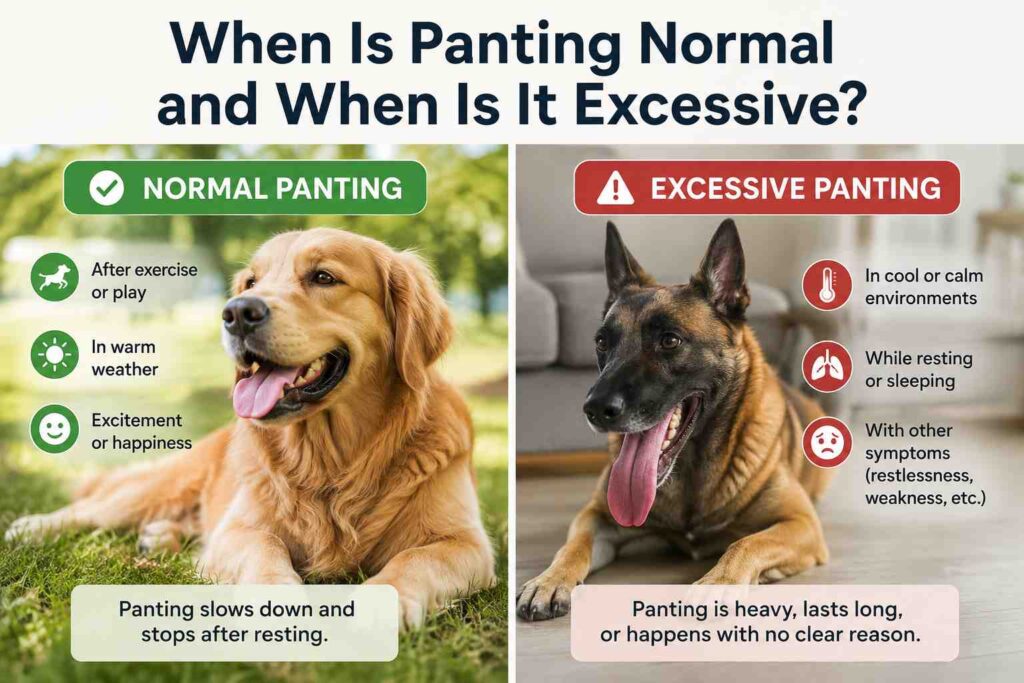
Not every episode of panting is a reason for concern. A healthy dog may breathe rapidly after physical activity and gradually return to normal as the body cools down. Panting can also occur during stressful or exciting situations.
The concern begins when the panting seems excessive compared with what your dog has been doing. Excessive panting in dogs may look unusually intense, continue for a long time, or happen when your dog has not exercised or been exposed to heat.
For example, a dog panting after running around the yard is usually less concerning than a dog panting heavily while resting on the couch. A sudden change from your dog’s normal breathing pattern is also important to notice.
What Causes Excessive Panting in Dogs?
There are many possible answers to what causes excessive panting in dogs, ranging from completely normal situations to medical problems. Heat and exercise are two of the most common causes, but stress and anxiety can also produce noticeable panting.
Pain is another possibility. Dogs cannot tell us that something hurts, so changes such as panting, restlessness, reluctance to move, or difficulty settling down may sometimes be the only visible clues. Any new or unusual physical change should also be noted, including skin or visible growths such as a blood blister on a dog.
Certain medications can increase panting as well. Health conditions involving the heart, lungs, hormones, or other body systems can also cause abnormal breathing or persistent panting. This is why the circumstances surrounding the panting matter so much.
Why Is My Dog Panting While Resting?
If you are asking, “Why is my dog panting while resting?”, the answer depends on what else is happening. A warm room, recent activity, stress, or excitement can cause temporary panting even when your dog has just settled down.
However, dog breathing fast while resting can be more concerning when there is no obvious environmental or emotional trigger. Pain, respiratory disease, heart problems, hormonal disorders, medication effects, and other medical conditions may contribute to unusual panting.
Pay attention to whether your dog can comfortably lie down and relax. If your dog seems unable to settle, repeatedly changes positions, or continues panting despite being calm and comfortable, contacting a veterinarian is a sensible next step.
Why Is My Dog Panting for No Reason?
Sometimes dog panting for no reason only appears unexplained because the trigger is subtle. Your dog may be responding to anxiety, a warm environment, a stressful sound, or physical discomfort that you cannot immediately see.
Dogs can also experience pain without obvious crying or limping. A dog with abdominal discomfort, joint pain, or another painful condition may simply appear restless and pant more than usual.
If the panting repeatedly happens without exercise, heat, excitement, or another recognizable trigger, it deserves attention. Keeping track of when it happens can help you and your veterinarian identify a pattern.
Common Reasons for Sudden Heavy Panting in Dogs
Sudden heavy panting in dogs can happen after excitement, fear, physical activity, or exposure to heat. It can also occur when a dog suddenly experiences pain or becomes frightened by something in its surroundings.
The surrounding circumstances are important. If your dog starts panting after being outside on a hot day, overheating should be considered. If the episode begins during a thunderstorm, fireworks display, car ride, or other stressful event, anxiety may be involved.
Sudden panting becomes more concerning when it is severe, does not improve with rest, or occurs together with weakness, vomiting, difficulty breathing, abnormal gum color, or collapse.
Dog Panting From Pain
Dog panting from pain is something owners should take seriously. Dogs often hide discomfort, and panting may appear alongside other subtle behavioral changes rather than obvious signs of injury.
A painful dog may pace, repeatedly get up and lie down, avoid certain movements, seem unusually quiet, or have trouble finding a comfortable position. Some dogs may also lose interest in food or become unusually sensitive when touched.
Pain can come from many sources, including injuries, dental problems, arthritis, abdominal conditions, or other illnesses. If your dog’s panting is accompanied by signs of discomfort or a sudden behavioral change, veterinary evaluation can help determine the cause.
Dog Anxiety Panting and Restlessness
Stress and anxiety are common reasons for panting that are not related to exercise or temperature. Dog anxiety panting can occur during thunderstorms, fireworks, travel, separation, visits to unfamiliar places, or other frightening situations.
A nervous dog may pant and pace, seek reassurance, hide, tremble, or repeatedly change positions. This explains why dog panting and restless behavior often appear together.
If your dog becomes anxious regularly, identifying the trigger can be helpful. A veterinarian can also help determine whether the behavior is anxiety-related or whether an underlying medical problem could be contributing to the restlessness.
Why Is My Dog Panting at Night?
Dog panting at night can have several possible explanations. A warm bedroom, uncomfortable bedding, anxiety, or a recent stressful event may cause temporary nighttime panting.
In older dogs, however, nighttime changes deserve particular attention. Pain, cognitive changes, hormonal disease, and heart or respiratory problems can interfere with normal sleep and cause a dog to become restless and pant.
If nighttime panting happens repeatedly or is becoming more frequent, do not simply assume your dog is getting older. A veterinarian can assess the change and determine whether there is an underlying reason.
Why Is My Dog Shaking and Panting?
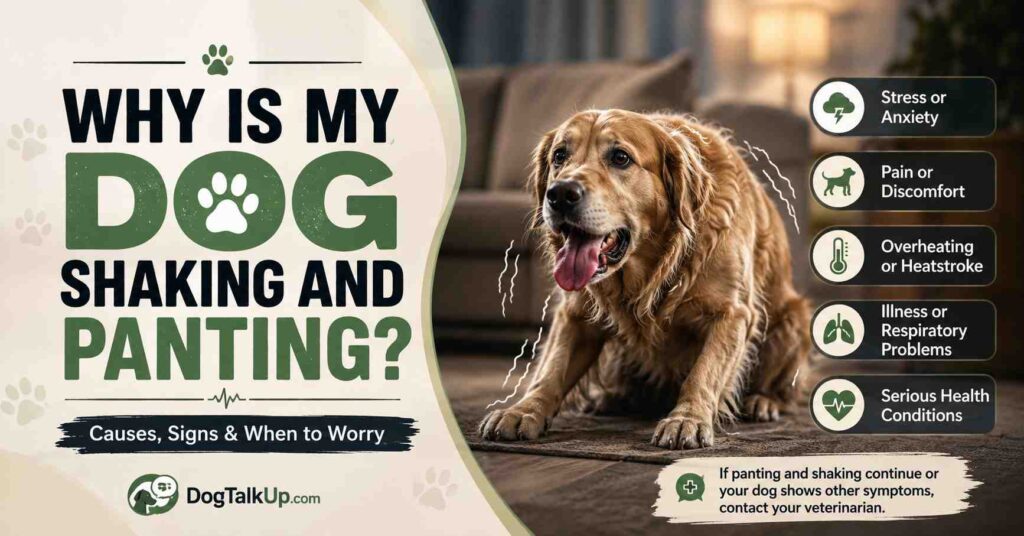
When you notice dog shaking and panting at the same time, fear and anxiety are common possibilities. A dog may shake and pant during thunderstorms, fireworks, travel, unfamiliar situations, or other stressful experiences.
However, shaking can also accompany pain, illness, nausea, or other medical problems. The context and additional symptoms matter.
If the shaking and panting are severe, happen suddenly without an obvious reason, or occur with weakness, vomiting, breathing difficulty, collapse, or other concerning changes, veterinary attention is appropriate.
Old Dog Panting: Why Senior Dogs May Pant More
Old dog panting should not automatically be dismissed as a normal part of aging. Senior dogs can develop conditions that make them pant more frequently, including arthritis and other painful conditions, heart or respiratory disease, anxiety, and hormonal disorders.
Older dogs may also become more restless at night or show changes in sleep and behavior. These changes can have several causes, so a noticeable increase in panting is worth discussing with a veterinarian.
The key is to compare your senior dog’s current behavior with its normal pattern. A gradual or sudden change can provide useful information about its health.
Cushing’s Disease and Excessive Panting in Dogs
Cushing’s disease is one medical condition associated with increased panting. Dogs with this hormonal disorder may also develop increased thirst, increased urination, increased appetite, a pot-bellied appearance, and changes to their skin or coat.
This is why cushing’s disease dog panting is an important connection for owners to understand. Panting alone does not mean a dog has Cushing’s disease, because many other conditions can cause the same symptom.
If excessive panting occurs alongside several of these other changes, a veterinarian can perform an examination and recommend appropriate testing.
Can Heat Cause Heavy Panting in Dogs?
Yes. Heat is one of the most important reasons a dog may begin panting heavily. Panting helps dogs release body heat, but it is not always enough to keep them safe in very hot or humid conditions.
Dogs can overheat during exercise, while outdoors in hot weather, or when left in poorly ventilated environments. Dogs with short or flat-shaped faces can be particularly vulnerable to heat-related problems.
If your dog has been exposed to significant heat and is panting intensely, do not wait for the situation to become severe before taking action.
Signs of Heatstroke in Dogs
Recognizing the signs of heatstroke in dogs can be lifesaving. Dangerous overheating may cause intense panting along with heavy drooling, weakness, vomiting, diarrhea, confusion, abnormal gum color, difficulty standing, collapse, or seizures. If your dog is also vomiting, you can learn more about possible causes in this guide to why your dog is throwing up white foam.
Heatstroke is an emergency. A dog showing severe signs after heat exposure needs prompt veterinary care rather than simply being left to rest and recover at home.
Prevention is equally important. Avoid strenuous exercise during extreme heat, provide access to water and shade, and never leave a dog unattended in a hot vehicle.
Dog Respiratory Distress: When Panting Means Trouble
Normal panting is different from dog respiratory distress. A dog experiencing breathing difficulty may appear to struggle for each breath, extend its neck, use its abdominal muscles noticeably, or have pale, blue, gray, or otherwise abnormal gums.
Dog breathing fast while resting can be particularly concerning when the breathing looks labored rather than like ordinary panting.
If your dog appears unable to breathe comfortably, becomes weak, collapses, or develops abnormal gum color, seek emergency veterinary care immediately.
When to Worry About Dog Panting
So, when to worry about dog panting? Pay close attention when the panting is sudden, unusually intense, persistent while resting, or completely different from your dog’s normal behavior.
Panting becomes especially concerning when it is accompanied by difficulty breathing, weakness, collapse, vomiting, severe restlessness, abnormal gum color, or signs of heat exposure.
You know your dog’s normal behavior better than anyone. If something about the panting looks or feels unusual, it is better to take the change seriously rather than assume it will disappear on its own.
What Should I Do If My Dog Keeps Panting?
Start by considering the obvious factors. Is your dog hot, recently exercised, excited, frightened, or exposed to something stressful? Move your dog to a comfortable environment and allow it to rest while observing its behavior.
If the panting does not settle, repeatedly occurs while your dog is resting, or appears alongside other symptoms, contact your veterinarian. Try to note when the panting started, how long it lasts, what your dog was doing beforehand, and any other changes you have noticed.
If your dog is showing signs of heatstroke, severe breathing difficulty, collapse, or another emergency, seek veterinary care immediately.
Frequently Asked Questions About Dog Panting
Why does my dog keep panting for no reason?
Panting that seems unexplained can be caused by anxiety, heat, pain, medication, or an underlying health problem. Persistent unexplained panting should be discussed with a veterinarian.
Why is my dog panting while resting?
Panting while resting can result from heat, stress, pain, medication, or certain medical conditions. If it is persistent or unusual for your dog, veterinary evaluation is recommended.
Why is my dog panting heavily at night?
Nighttime panting may be related to warmth, anxiety, pain, age-related changes, or an underlying medical condition. Repeated nighttime episodes deserve attention.
Why is my dog shaking and panting?
Fear and anxiety are common causes, but pain and illness can also produce shaking and panting. Sudden or severe symptoms warrant prompt veterinary attention.
Is excessive panting in dogs an emergency?
Not always. Panting after exercise or heat exposure can be normal, but severe or persistent panting accompanied by breathing difficulty, collapse, abnormal gums, vomiting, or other serious symptoms can be an emergency.
Can pain cause a dog to pant?
Yes. Pain and discomfort can cause dogs to pant, pace, or have difficulty settling. A sudden change in behavior alongside panting should be evaluated.
Can anxiety make a dog pant?
Yes. Anxiety, fear, and stress can cause significant panting, particularly during thunderstorms, fireworks, travel, separation, or unfamiliar situations.
Final Thoughts: Why Does My Dog Keep Panting?
So, why does my dog keep panting? Sometimes the answer is completely normal: your dog may be cooling down, recovering from exercise, or reacting to excitement. But persistent, sudden, heavy, or unexplained panting can also be a sign of anxiety, pain, overheating, or an underlying health problem.
The most important clue is a change from your dog’s usual behavior. If your dog keeps panting while resting or develops other concerning symptoms, don’t ignore the change. When in doubt, speaking with a veterinarian is the safest way to find out what is causing the panting.



Pingback: Why Is My Dog Throwing Up White Foam: Causes & What to Do
Pingback: How Often Do Dogs Get Rabies Vaccine | Complete Guide
Pingback: Do Dogs Get Hiccups? Causes, Remedies & When to See a Vet
Pingback: What Causes and How to Treat a Blood Blister on Dog
Pingback: Runny Noses in Dogs | Causes, Warning Signs & What to Do
Pingback: Can I Give My Dog Aspirin for a Limp? What Vets Actually Say