

Ringworm on dogs usually appears as round or irregular bald patches with dry, scaly skin, broken hairs, and sometimes redness or crusting. The lesions may occur on the face, ears, paws, or other areas and do not always form a perfect ring. A veterinarian should confirm the diagnosis.
In this article, discover what ringworm looks like on dogs, the common signs to watch for, where it appears, how it spreads, and when your dog needs veterinary care.
What Does Ringworm Look Like on a Dog?
Ringworm on dogs often appears as a round or irregular area where the hair has become thin or completely fallen out. The skin underneath may look dry, flaky, scaly, or slightly red. In some cases, you may notice broken hairs around the edge of the affected area, giving the coat a rough or uneven appearance.
The classic “ring” appearance that many people associate with ringworm is actually more common in people than in dogs. A dog ringworm rash can have an irregular shape, and the center may not look dramatically different from the surrounding skin. Some dogs develop small bumps or crusts as the infection progresses.
Ringworm on dog skin is often found on the face, ear tips, feet, and tail, although other parts of the body can be affected. The infection may remain localized or spread to additional areas, particularly when it is not recognized and managed appropriately.
Dog Ringworm Symptoms and Signs
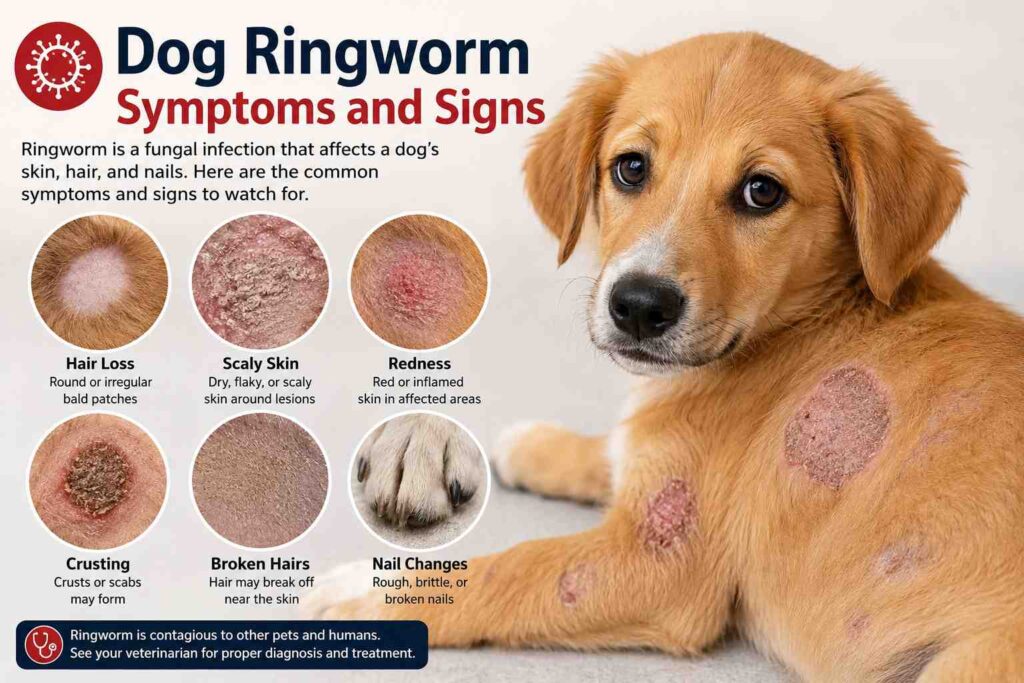
The most common dog ringworm symptoms involve changes to the hair and skin. Hair loss is often one of the first things an owner notices, especially when a previously normal-looking patch suddenly becomes thin or bald.
Other symptoms can include scaling, crusting, broken hairs, redness, and small bumps on the skin. Some dogs may itch or seem uncomfortable, but itching is not always obvious. This means a dog can have canine ringworm symptoms without constantly scratching or licking the affected area.
Early Signs of Ringworm in Dogs
The early signs of ringworm in dogs can be easy to overlook. You might first notice a small area where the coat looks thinner than normal, a little dandruff-like scaling, or several broken hairs close to the skin.
As the infection develops, the patch may become more noticeable and hair loss may increase. Some lesions become crusty or inflamed, while others remain relatively mild. These differences are one reason identifying ringworm in dogs based only on appearance can be difficult.
If you notice unexplained hair loss, especially a new patch that continues to expand, it is worth having your veterinarian examine it rather than waiting for the area to become severe.
Common Symptoms of Ringworm in Dogs
The symptoms of ringworm in dogs vary from one animal to another. A typical infection may cause localized hair loss, scaly skin, broken hairs, crusting, and mild redness. In some cases, the skin can become more inflamed or develop small acne-like bumps.
Canine dermatophytosis symptoms may also involve the claws. When fungal infection affects a claw, it can become rough, brittle, or broken. However, most owners are more likely to notice the skin and coat changes first.
What Do Ringworm Lesions on Dogs Look Like?
Ringworm lesions on dogs generally appear as areas of abnormal skin surrounded by hair loss or broken hairs. The lesion may be circular, oval, or irregular. Its surface can look dry and scaly, and some lesions develop crusts or redness.
Dog ringworm crusty patches can be particularly noticeable because the affected skin may feel rough compared with the healthy coat around it. However, crusts are not unique to ringworm. Other bacterial and inflammatory skin conditions can also produce crusting, which is why a photograph or visual inspection cannot confirm the infection.
A ringworm rash on dogs may also change as the immune system responds. The infection can stop spreading as inflammation and the body’s defenses develop, but this process can take weeks.
Dog Ringworm Bald Spots and Hair Loss
Dog ringworm bald spots usually develop because the fungus grows in the hair and outer layers of the skin. Infected hairs can become weak and break, leaving an area that looks thinner or completely bald.
Dog ringworm hair loss patches may start small and become larger over time. Some dogs develop several patches in different locations, while others have only one affected area. The edges may contain broken hairs and scaling, making the lesion easier to notice against a healthy coat.
However, not every bald spot is ringworm. Flea allergies, mites, bacterial infections, allergies, and other skin disorders can also cause hair loss. Current veterinary guidance emphasizes that many skin diseases look alike, so proper testing may be needed to determine the cause.
Ringworm on Dogs Pictures: What Should You Look For?
When searching for ringworm on dogs pictures, you will probably see images of dogs with circular bald patches, flaky skin, redness, broken hairs, or crusty lesions. These photographs can help you understand what the infection may look like, but they should not be used as a substitute for veterinary diagnosis.
One reason is that ringworm does not have one universal appearance. Some dogs have obvious round patches, while others have less clearly defined areas of hair loss and scaling. Some infected dogs can even carry the fungus without showing obvious skin lesions.
If your dog’s skin looks similar to a photograph you found online, consider it a reason to investigate further rather than proof that your dog has ringworm.
What Does Ringworm Look Like on a Puppy?
What does ringworm look like on a puppy? It can look much like ringworm in an adult dog, with localized hair loss, scaling, broken hairs, redness, or crusty skin. The affected area may appear on the face, ears, paws, or another part of the body.
Puppies and younger animals can be more susceptible to persistent or widespread infections. That makes unexplained bald patches in a puppy worth discussing with a veterinarian, especially if new lesions continue appearing.
Because puppies can also develop several other skin problems, it is particularly important not to assume that every bald or flaky patch is fungal.
Where Does Ringworm Usually Appear on a Dog?

Ringworm can appear almost anywhere on a dog’s body, but the face, ear tips, tail, and feet are among the commonly affected areas.
You may first notice a patch around the muzzle, near the eyes, on an ear, or around a paw. Other areas of the body can become involved as the infection spreads. The location alone cannot confirm ringworm, but noticing unexplained hair loss in one of these areas can be a useful clue for your veterinarian.
How to Identify Ringworm on a Dog
Knowing how to identify ringworm on a dog starts with looking for a combination of signs rather than one specific feature. A patch of hair loss accompanied by scaling, broken hairs, crusting, or inflammation may raise suspicion for ringworm.
Identifying ringworm in dogs at home, however, has limitations. You can observe the appearance and progression of the skin, but you cannot reliably confirm the fungus just by looking at it. It is also helpful to note other changes, such as a running nose in dogs, and tell your veterinarian about any unusual symptoms. Many canine skin conditions can produce similar signs.
Identifying Ringworm in Dogs at Home
If you notice a suspicious area, take note of when it appeared and whether it is becoming larger or whether additional patches are developing. Avoid sharing grooming tools, bedding, or other items between pets until you know what is causing the lesion.
It is also sensible to limit close contact with the affected area and wash your hands after handling your dog’s skin or coat. Ringworm can spread between animals and people through direct contact and contaminated objects.
How Vets Confirm Ringworm
A veterinarian may use several methods to determine whether a dog actually has ringworm. These can include examining hairs and skin under a microscope, using a Wood’s lamp, and performing a fungal culture. Fungal culture is considered an important diagnostic method, although results can take time.
Some ringworm-causing fungi fluoresce under a Wood’s lamp, but not every infection does. Therefore, a negative lamp examination does not necessarily rule out ringworm. Your veterinarian may recommend additional testing when the appearance is uncertain.
Ringworm vs Other Causes of Bald Spots and Rash
A bald, red, or scaly patch does not automatically mean your dog has ringworm. Allergies, fleas, mites, bacterial infections, and other dermatological conditions can produce similar changes.
For example, flea allergy dermatitis can cause significant itching and skin lesions, while bacterial skin conditions may produce crusts and other abnormal areas. A blood blister on a dog can also appear as an unusual skin lesion, so it is important not to assume that every abnormal skin change is ringworm.
That is why the best way to identify the cause is to combine the appearance of the skin with your dog’s history and, when necessary, veterinary testing. Trying to diagnose a skin disease entirely from a picture can lead to the wrong treatment.
Is Ringworm in Dogs Contagious to People?
Yes, ringworm can spread from infected dogs to people. It can also spread between animals through direct contact or through contaminated objects such as bedding, grooming equipment, furniture, and infected hairs.
If your dog is diagnosed with ringworm, follow your veterinarian’s advice about cleaning the environment and reducing contact with other pets and family members. Good hygiene is particularly important when children or people with weakened immune systems are in the household.
When Should You Take Your Dog to the Vet?
You should contact your veterinarian when your dog develops unexplained bald spots, persistent scaling, crusty patches, spreading lesions, or repeated areas of hair loss. A veterinary examination is especially important when the affected dog is a puppy or when several lesions are appearing. Keeping up with routine veterinary care, including knowing how often dogs get rabies vaccines, can also help support your dog’s overall health.
Early evaluation can help determine whether the problem is ringworm or another skin condition. It can also reduce the chance of the infection spreading to other pets or people if ringworm is confirmed.
How Is Ringworm in Dogs Treated?
Treatment depends on how widespread the infection is and your veterinarian’s assessment. Veterinary treatment may involve topical antifungal products, oral antifungal medication, or a combination of approaches. Environmental cleaning is also important because infected hairs can release fungal spores into the surroundings.
Treatment can take several weeks or longer, and stopping medication too early may allow the infection to return. Your veterinarian can determine which treatment is appropriate for your dog’s age, health, and severity of infection.
Frequently Asked Questions About Ringworm in Dogs
Does ringworm always look like a perfect circle on a dog?
No. Ringworm can cause round or irregular patches of hair loss, and the classic ring-shaped appearance is not present in every dog.
Is ringworm on dogs always itchy?
No. Some dogs may itch or show irritation, but itching is not required for a dog to have ringworm.
Can dog ringworm go away on its own?
Some healthy adult dogs may clear the infection without treatment, but veterinary treatment is generally recommended because it can speed recovery and reduce environmental spread.
How quickly does ringworm spread on a dog?
The progression varies. Some infections remain localized, while others spread to additional areas. Young or otherwise vulnerable dogs can develop more persistent or widespread infections.
Can humans catch ringworm from dogs?
Yes. Ringworm is contagious and can spread from infected animals to people through direct contact or contaminated materials.
What does ringworm look like on a puppy?
It may appear as bald, scaly, crusty, or inflamed patches with broken hairs. Puppies can be more susceptible to persistent infections, so suspicious skin changes should be checked by a veterinarian.
Can a dog have ringworm without hair loss?
Yes. Some dogs can carry ringworm fungi without obvious clinical signs, meaning the absence of a bald patch does not completely rule out infection.
What should I do if I see a bald, scaly patch on my dog?
Have your veterinarian examine it, particularly if the patch is growing, new patches appear, or your dog has contact with other pets. Avoid assuming it is ringworm based only on its appearance because several skin conditions can look similar.
Final Thoughts: What Ringworm Looks Like on a Dog
So, what ringworm looks like on a dog can vary more than the name suggests. The most recognizable signs are localized hair loss, broken hairs, scaling, crusting, redness, and abnormal skin, but the affected area does not always form a neat circular ring.
If you notice a suspicious patch, don’t rely solely on online photographs to make a diagnosis. A veterinarian can distinguish ringworm from other causes of hair loss and skin irritation and recommend appropriate testing and treatment. Recognizing the signs early is also important because canine ringworm can spread to other pets and people.



Pingback: How Often Do Dogs Get Rabies Vaccine | Complete Guide
Pingback: Runny Noses in Dogs | Causes, Warning Signs & What to Do
Pingback: Lymphoma in Dogs: Signs, Types, Stages, Treatment & Survival