

Frankincense may be safe for dogs when properly diluted and used cautiously, but concentrated oil can cause vomiting, irritation, or breathing problems. Never use undiluted oil or allow ingestion. When diffusing, use a well-ventilated room and let your dog leave freely.
In this article, discover whether frankincense is safe for dogs, how to use it cautiously, potential risks, warning signs, and what to do after accidental exposure.
Is Frankincense Safe for Dogs?
Whether frankincense is safe for dogs depends largely on the form being used. Frankincense comes from trees in the Boswellia genus and may be found as resin, extracts, supplements, incense, or essential oil. These products should not be treated as interchangeable.
Frankincense essential oil is highly concentrated. Giving it to a dog by mouth or applying concentrated oil directly to the skin can create unnecessary risks. Dogs may also lick oil from their fur, which can turn a topical exposure into an ingestion exposure.
Boswellia supplements are a different matter. Some veterinary products contain Boswellia extracts for dogs, particularly products marketed for joint support. However, that does not mean that a bottle of human frankincense essential oil can be substituted for a canine supplement.
If you’re wondering whether frankincense oil for dogs is safe, the safest approach is to avoid giving or applying concentrated essential oil unless your veterinarian specifically recommends a suitable product and explains how it should be used.
Is Frankincense Toxic to Dogs?
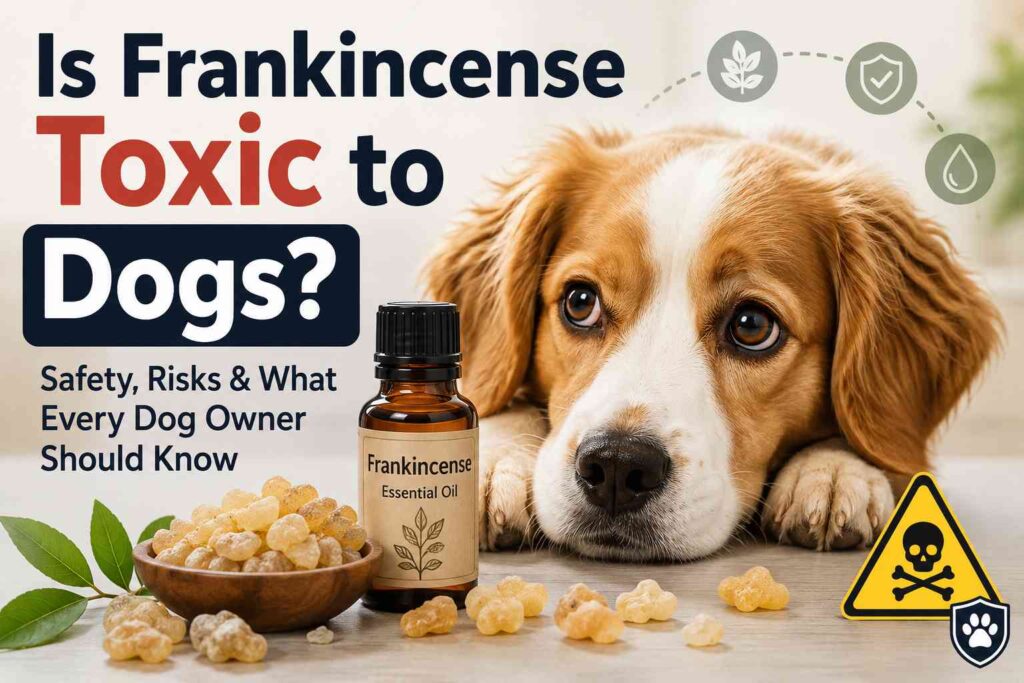
Frankincense can potentially cause problems for dogs when they are exposed to concentrated essential oil, particularly through ingestion or direct application. The risk depends on the concentration, amount involved, route of exposure, and the individual dog.
Essential oils are much more concentrated than the plant material from which they are produced. A product that seems harmless because it is “natural” can therefore behave very differently from a small amount of plant-derived material.
This is why frankincense dog toxicity should be considered in terms of the specific product rather than assuming every frankincense product has the same safety profile.
Is Boswellia Toxic to Dogs?
Boswellia is the plant genus from which frankincense resin is obtained. Certain Boswellia extracts are used in canine supplements, and veterinary sources recognize Boswellia as a nutraceutical that may be used in dogs.
That does not mean every Boswellia product is appropriate for every dog. Supplements can vary in concentration, ingredients, quality, and recommended dosage. Boswellia may also cause digestive upset in some dogs and can interact with certain medications.
So, is Boswellia toxic to dogs? It is more accurate to say that appropriately formulated Boswellia products may be used in dogs under appropriate guidance, while the safety of a particular product depends on its ingredients and dose.
What Is the Difference Between Frankincense and Boswellia?
Frankincense is the aromatic resin traditionally obtained from several Boswellia tree species. Boswellia is therefore the botanical source, while frankincense is the resin and products derived from it.
The confusion usually starts when people see “frankincense” and “Boswellia” used in different products. A Boswellia supplement designed for oral use in dogs is not equivalent to frankincense essential oil used for aromatherapy.
This distinction is particularly important when searching for boswellia serrata for dogs. Boswellia serrata is one species used in extracts and supplements, while frankincense essential oil is a concentrated aromatic product.
Boswellia Serrata for Dogs
Boswellia serrata extracts are sometimes included in canine joint-support supplements. The reason is that compounds in Boswellia may have anti-inflammatory properties, making them of interest for dogs experiencing certain joint and mobility concerns.
However, supplement use should still be individualized. A veterinarian can help determine whether a Boswellia-containing product is appropriate and whether it could interact with medications your dog already takes.
In other words, is frankincense serrata safe for dogs is not quite the right way to frame the question. Boswellia serrata and frankincense essential oil should be considered separate products with different purposes and exposure risks.
Can Dogs Have Frankincense Essential Oil?
Dogs should not be given frankincense essential oil by mouth simply because it is a natural product. Essential oils are concentrated substances, and dogs process many compounds differently from humans.
The same caution applies to putting frankincense essential oil directly onto a dog’s skin or fur. Dogs naturally groom themselves, so anything placed on their coat can potentially end up in their mouth.
If you are considering frankincense essential oil for dogs, speak with your veterinarian first. They can consider your dog’s age, size, health, medications, and the exact product you have.
Can Dogs Ingest Frankincense?

Dogs should not intentionally ingest frankincense essential oil. A supplement containing a standardized Boswellia extract and an essential oil are not the same thing.
If your dog accidentally consumes frankincense oil, don’t assume that a small amount is harmless. The appropriate response depends on the product, concentration, amount consumed, and your dog’s size and health.
Keep the original container available so a veterinarian can identify the ingredients and concentration if an exposure occurs.
What If My Dog Licked Frankincense Oil?
If your dog licked frankincense oil, prevent further access to the product and contact your veterinarian for advice. Don’t induce vomiting unless a veterinary professional specifically tells you to do so.
Pay attention to unusual signs such as vomiting, excessive drooling, weakness, unsteadiness, or breathing difficulties. The severity of an exposure cannot reliably be determined from the name “frankincense” alone because products can differ significantly in concentration and formulation.
If the oil was spilled on your dog’s coat, preventing additional licking is particularly important. Your veterinarian can advise you about the safest way to handle the contamination.
Can Dogs Breathe Frankincense?
Dogs can detect the aroma of frankincense, but being able to smell something does not automatically mean prolonged exposure is harmless. Dogs have an extremely sensitive sense of smell, and strong fragrances may be unpleasant or irritating.
The question can dogs breathe frankincense is therefore best answered by considering how the exposure occurs. Simply being in a room where a mild scent is present is different from breathing concentrated essential-oil vapors for an extended period.
Dogs with respiratory problems deserve additional caution around fragrances and essential-oil products.
Is Diffusing Frankincense Around Dogs Safe?
Diffusing frankincense around dogs requires caution. A diffuser releases aromatic compounds into the surrounding environment, and the amount of exposure depends on the type of diffuser, oil concentration, ventilation, room size, and duration.
ASPCA notes that short-term use of an essential-oil diffuser in a secured area where pets cannot access the device may not necessarily cause a problem. However, extra care is appropriate for pets with respiratory conditions. Direct exposure to concentrated oils should be avoided.
For frankincense diffuser pet safety, keep the diffuser where your dog cannot knock it over or lick it, provide adequate ventilation, and make sure your dog can leave the area. If your dog shows signs of respiratory irritation or seems uncomfortable, stop the exposure and move the dog to fresh air.
Is Frankincense Safe for Puppies?
Extra caution is appropriate when considering frankincense safe for puppies. Puppies are smaller and still developing, so the same exposure that might be relatively minor for a large adult dog could be more concerning for a young puppy.
I would not recommend experimenting with frankincense essential oil on or around a puppy. If you are considering a Boswellia supplement for a growing dog, ask your veterinarian about the specific product rather than relying on general advice about frankincense.
Can You Apply Frankincense Oil to Dogs?
Directly applying frankincense to dogs is not something owners should do casually. Concentrated essential oils can irritate the skin, and a dog may lick the oil after it has been applied.
Another problem is dosage. A drop that seems tiny to a person can represent a relatively concentrated exposure for a small animal.
Even diluted essential oils should not automatically be considered safe simply because they have been mixed with another substance. The appropriate dilution, product formulation, route of application, and individual dog’s health all matter.
For that reason, avoid using frankincense essential oil as a home treatment unless your veterinarian has specifically recommended the product and instructions.
Are There Any Frankincense Benefits for Dogs?
There may be potential frankincense benefits for dogs, but most of the discussion about benefits relates to Boswellia extracts rather than frankincense essential oil.
Boswellia is sometimes included in canine supplements intended to support joint health. Its plant compounds have attracted interest because of their potential effects on inflammatory pathways.
However, a supplement should not be presented as a cure for arthritis or another medical condition. Evidence for supplements can vary, and products sold commercially may differ in quality and concentration.
If your dog has joint pain, stiffness, or difficulty moving, it is better to identify the underlying problem with your veterinarian than to rely on frankincense oil as a treatment.
Boswellia Supplements vs. Frankincense Essential Oil
The simplest way to understand the difference is to think about purpose and concentration. A Boswellia supplement is formulated to provide a measured botanical extract for oral use. Frankincense essential oil is a concentrated aromatic product.
That distinction matters because a product intended for aromatherapy should not be treated like a dietary supplement. Likewise, information about a Boswellia supplement cannot automatically be used to justify giving essential oil to a dog.
Signs of Possible Frankincense Oil Exposure in Dogs
A dog exposed to concentrated essential oil may develop signs such as vomiting, diarrhea, excessive drooling, weakness, depression, unsteadiness, or irritation. Respiratory irritation can also occur when strong aromatic products are used around sensitive animals.
The symptoms and severity depend on several factors, including the specific oil, concentration, quantity, and route of exposure.
If your dog behaves unusually after exposure, don’t wait for symptoms to become severe before seeking professional advice. Keep the product packaging nearby because its ingredient list can help your veterinarian assess the situation.
What to Do If Your Dog Is Exposed to Frankincense Oil
If your dog licks or swallows frankincense oil, remove the product immediately and contact your veterinarian for product-specific advice. Don’t induce vomiting unless instructed by a veterinary professional.
If oil gets onto your dog’s skin or fur, prevent licking and ask your veterinarian how the product should be removed. The safest cleaning approach can depend on the formulation and amount involved.
If your dog inhales a strong concentration, move the dog away from the source and improve ventilation. Watch for coughing, breathing difficulty, unusual behavior or other concerning signs and seek veterinary care if they occur. Similar precautions can also be helpful with other scented products, so learn whether citronella is safe for dogs before using citronella around your pet.
How to Use Frankincense Safely Around Dogs
The safest approach is to treat frankincense essential oil as a concentrated substance rather than as an ordinary household fragrance. Keep bottles securely stored where your dog cannot reach them, and don’t intentionally give the oil orally or apply it directly to your pet. If you use other essential oils around your dog, it is also important to understand their individual risks, such as whether peppermint oil is safe for dogs.
If you use a diffuser, keep it inaccessible to your dog and use it only in a well-ventilated area. Your dog should always have the ability to leave the room.
Dogs with respiratory problems, puppies, and dogs taking medications may require additional caution. For a Boswellia supplement, choose a product intended for dogs and discuss its use and dosage with your veterinarian.
Frequently Asked Questions About Frankincense and Dogs
Is frankincense oil safe for dogs?
Frankincense essential oil should not be given orally or applied directly to dogs without veterinary guidance. Its concentrated nature makes exposure different from using a properly formulated Boswellia supplement.
Can dogs breathe frankincense?
Dogs can be around some diluted aromas under controlled conditions, but concentrated or prolonged essential-oil exposure can cause irritation. Good ventilation and the ability to leave the area are important.
Can dogs smell frankincense?
Yes. Dogs have a highly developed sense of smell and can detect aromatic compounds such as those released by frankincense. A strong aroma may nevertheless be irritating or unpleasant for some dogs.
Is frankincense toxic to dogs?
Concentrated frankincense essential oil can be harmful depending on the amount, concentration, and exposure route. The word “natural” does not guarantee safety for dogs.
Is Boswellia safe for dogs?
Some Boswellia products are used in dogs, particularly for joint-support purposes. However, product quality, dosage, health conditions, and medication interactions should be considered with veterinary guidance.
Can dogs ingest frankincense?
Dogs should not intentionally ingest frankincense essential oil. If accidental ingestion occurs, contact a veterinarian and provide the exact product information.
What should I do if my dog licked frankincense oil?
Stop further exposure and contact your veterinarian for advice. Don’t induce vomiting unless a veterinary professional specifically instructs you to do so.
Is frankincense safe for puppies?
Puppies require additional caution because of their smaller size and developing bodies. Avoid experimenting with essential oils and ask a veterinarian before using any frankincense- or Boswellia-containing product.
Can I apply frankincense oil to my dog?
Direct application of concentrated frankincense oil is not recommended without veterinary direction. Dogs may also lick oil from their coat after application.
Is diffusing frankincense around dogs safe?
For frankincense diffuser pet safety, keep the diffuser where your dog cannot knock it over or lick it, provide adequate ventilation, and make sure your dog can leave the area. Similar precautions are important with other essential oils, so learning whether eucalyptus is safe for dogs can also help you make safer choices around your pet.
Final Verdict: Is Frankincense Safe for Dogs?
So, is frankincense safe for dogs? The answer depends on the form. Boswellia extracts found in appropriately formulated canine supplements are different from concentrated frankincense essential oil.
Frankincense essential oil should not be intentionally given to dogs or applied directly to their skin without veterinary guidance. Diffusing it also requires sensible precautions, especially around puppies and dogs with respiratory sensitivities.
If your dog has accidentally licked, swallowed, or had concentrated frankincense oil applied to its body, don’t rely on general internet advice to judge the risk. Contact your veterinarian with the exact product, concentration, and estimated amount involved so your dog can receive appropriate advice.



Pingback: Is Citronella Safe For Dogs? | What Pet Owners Should Know
Pingback: Is Eucalyptus Safe For Dogs? | Essential Oil Risks Explained
Pingback: Is Peppermint Oil Safe For Dogs? All You Need to Know