

Yes, dogs can have sorbitol in small amounts because it is generally considered non-toxic. However, too much may cause diarrhea, gas, bloating, or vomiting. Always check product labels carefully, as sugar-free products may also contain xylitol, which is highly toxic to dogs.
In this article, we’ll explain whether sorbitol is safe for dogs, its possible side effects, what happens after ingestion, and why checking for dangerous xylitol is essential.
Can Dogs Have Sorbitol?
Yes, dogs can have small amounts of sorbitol without sorbitol itself being considered toxic. Sorbitol is a sugar alcohol used as a sweetener and moisture-retaining ingredient in many human products. Unlike xylitol, it does not typically cause the dangerous blood-sugar drop that makes xylitol an emergency for dogs.
That does not mean sorbitol is something you should intentionally add to your dog’s food. Dogs do not need sweeteners in their diet, and consuming too much sorbitol can upset the digestive system. If your dog accidentally consumes a small amount, monitoring is usually more appropriate than assuming poisoning has occurred.
So, when asking can dogs eat sorbitol, the practical answer is that small accidental amounts are generally not considered toxic, but large amounts may cause gastrointestinal discomfort.
Is Sorbitol Toxic to Dogs?
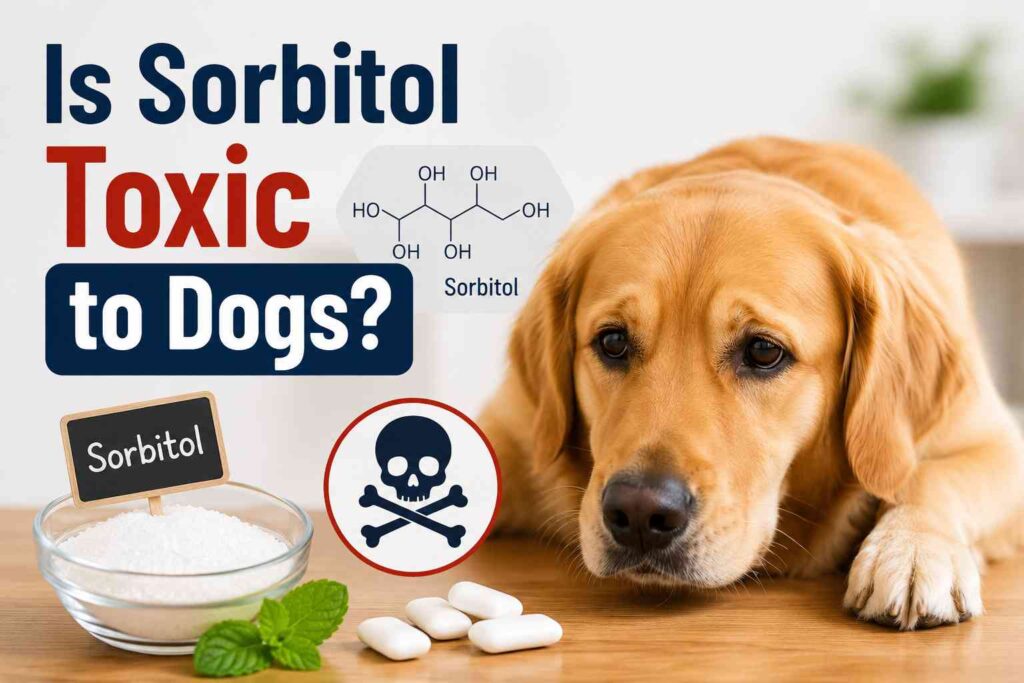
Sorbitol is not generally considered toxic to dogs in the same way that xylitol is. This distinction is important because both ingredients can appear in sugar-free foods, chewing gum, toothpaste, and other products, which can make them easy to confuse.
The term sorbitol toxicity in dogs can therefore be misleading. A dog that consumes too much sorbitol may experience digestive upset, but this is different from the potentially life-threatening poisoning associated with xylitol.
If a product contains sorbitol along with other ingredients, you should still inspect the label carefully. A serious reaction after eating a sugar-free product should never automatically be blamed on sorbitol. Another ingredient could be responsible.
Is Sorbitol Bad for Dogs?
Sorbitol is not necessarily bad for dogs when encountered in a small accidental amount. The concern is mainly related to how much was consumed and how sensitive the individual dog is to the ingredient.
Because sorbitol can have a laxative effect, larger amounts may draw water into the intestines and result in softer stools or diarrhea. Some dogs may also develop gas or abdominal discomfort.
For this reason, although sorbitol is generally considered safe for dogs, it is not something that should be deliberately given as a treat. A balanced dog food already provides the nutrients a dog needs without requiring added sweeteners.
Can Dogs Digest Sorbitol?
Dogs can digest and process sorbitol, although they may not tolerate large quantities particularly well. Sorbitol is absorbed differently from ordinary table sugar, and some of it can reach the large intestine where it may contribute to fermentation and increased water in the bowel.
This explains why the sorbitol effect on dogs is usually associated with the digestive system rather than the severe neurological or metabolic effects seen with certain toxic substances.
A small amount may produce no noticeable reaction at all. A larger amount, however, can result in loose stool, diarrhea, gas, or stomach discomfort.
What Are the Side Effects of Sorbitol in Dogs?
The most likely sorbitol dog side effects involve the gastrointestinal tract. If a dog consumes more sorbitol than it can comfortably tolerate, you may notice softer stool or diarrhea. Gas and bloating are also possible.
Some dogs may experience temporary stomach discomfort, while others may show no obvious symptoms at all. The severity depends on the amount consumed, the dog’s size, individual sensitivity, and what other ingredients were present in the product.
If diarrhea is persistent, your dog repeatedly vomits, seems unusually weak, or shows other concerning changes, it is best to speak with a veterinarian rather than assuming sorbitol is responsible.
What Happens if a Dog Eats Sorbitol?
If a dog eats a small amount of sorbitol, nothing significant may happen. Many dogs can consume a small quantity without developing noticeable symptoms. If a larger amount is consumed, digestive upset becomes more likely.
The first thing to do is identify exactly what your dog ate. Look at the product’s ingredient list and determine whether it contains sorbitol alone or other sweeteners as well.
This is particularly important with sugar-free products. If xylitol is listed, the situation is very different. Xylitol can cause a rapid drop in blood sugar and potentially serious liver injury in dogs, making suspected xylitol ingestion an emergency.
Dog Ate Sorbitol: What Should You Do?
If your dog ate sorbitol, don’t panic. Start by finding the packaging and checking the complete ingredient list. Try to determine approximately how much your dog consumed and when the ingestion occurred.
If the product contains only a small amount of sorbitol and no xylitol, the main issue is usually the possibility of digestive upset. Keep an eye on your dog for diarrhea, gas, vomiting, or signs of abdominal discomfort.
However, if the ingredient list includes xylitol, or you cannot determine whether xylitol was present, contact a veterinarian or emergency veterinary service promptly. Don’t wait for symptoms to appear if xylitol ingestion is suspected.
This is why canine sorbitol ingestion should always be considered in the context of the entire product rather than sorbitol alone. If your dog has also consumed another pet-related substance, it is important to check its specific safety risks, such as whether catnip is bad for dogs.
Sorbitol vs. Xylitol in Dogs: What’s the Difference?
The difference between sorbitol and xylitol is one of the most important things dog owners should understand.
Sorbitol is generally considered non-toxic to dogs, although excessive amounts can cause digestive problems. Xylitol, on the other hand, can be extremely dangerous. It can cause a rapid release of insulin, resulting in dangerously low blood sugar. In serious cases, xylitol poisoning can also cause liver damage.
This makes sorbitol vs xylitol in dogs an important distinction whenever you are checking the label of a sugar-free product.
A product labeled “sugar-free” should never automatically be considered safe for dogs. Read the ingredient list carefully. If you see xylitol, birch sugar, or another name used for xylitol, treat the ingestion seriously and contact a veterinarian immediately.
Is Sorbitol Safe for Dogs in Toothpaste?
Is sorbitol safe for dogs toothpaste? Sorbitol itself is generally not considered toxic to dogs, but that does not mean human toothpaste is suitable for them.
Human toothpaste can contain other ingredients that dogs should not swallow, and some sugar-free oral-care products may contain xylitol. Dogs also cannot reliably rinse and spit toothpaste out the way people do. If you are also checking the safety of ingredients commonly found in dog-care products, you can read more about whether peppermint oil is safe for dogs.
For everyday dental care, it is better to use toothpaste specifically formulated for dogs. Before using any product on your dog, check its ingredients and make sure it is intended for canine use.
If your dog accidentally licks a small amount of toothpaste containing sorbitol, check the label for xylitol and monitor your dog. If xylitol is present, seek veterinary advice immediately.
What If a Dog Ate Chewing Gum With Sorbitol?
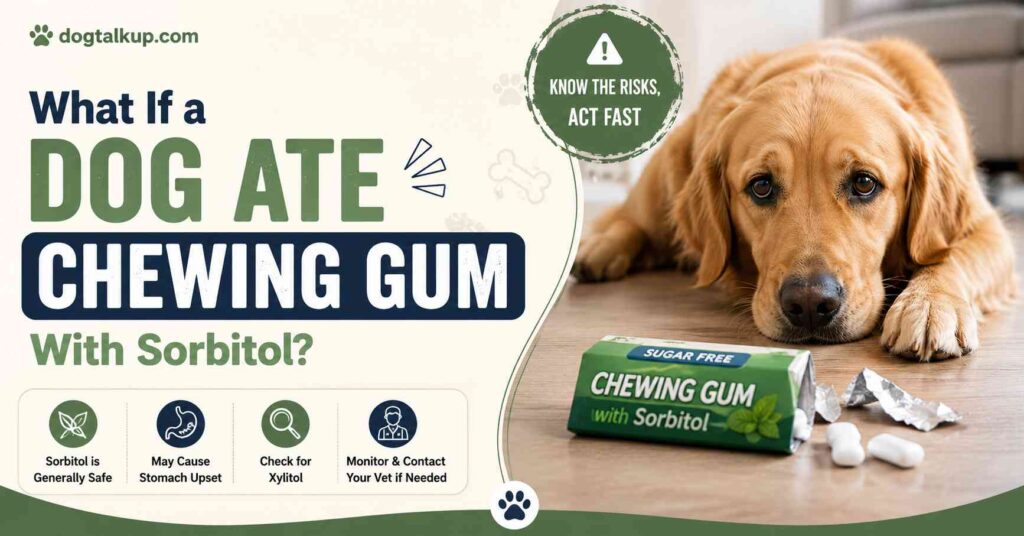
If your dog ate chewing gum with sorbitol, check the package immediately. Many chewing gums are sugar-free and can contain several sweeteners. Sorbitol itself is generally not considered toxic, but the product could also contain xylitol.
The amount of gum eaten also matters. In addition to the ingredients, swallowing gum can create a physical gastrointestinal concern, particularly if a dog consumes a significant amount or swallows packaging.
If the gum contains xylitol, contact a veterinarian immediately rather than waiting for symptoms. Xylitol poisoning can progress rapidly, and early veterinary treatment is important.
Sorbitol Poisoning in Dogs: Is It Possible?
The phrase sorbitol poisoning in dogs is often used when discussing accidental ingestion, but ordinary sorbitol consumption should not be confused with classic poisoning caused by highly toxic substances such as xylitol.
Sorbitol can cause problems when consumed in excessive quantities, primarily because of its effects on the digestive tract. This may lead to diarrhea, gas, bloating, or temporary stomach discomfort.
If your dog develops severe symptoms after eating a product containing sorbitol, don’t assume that sorbitol is the cause. The product may contain another ingredient that is more dangerous.
Symptoms of Sorbitol Poisoning in Dogs
When people search for symptoms of sorbitol poisoning in dogs, they are often actually looking for signs of digestive intolerance after ingestion. Possible symptoms include loose stool, diarrhea, gas, bloating, vomiting, or abdominal discomfort.
These symptoms are generally different from the severe signs associated with xylitol poisoning. Weakness, loss of coordination, collapse, tremors, or seizures after eating a sugar-free product require urgent veterinary attention because xylitol or another dangerous ingredient could be involved.
If symptoms are severe, persistent, or worsening, veterinary advice is the safest option.
How Much Sorbitol Is Safe for Dogs?
There is no single universal amount of sorbitol that can be labeled “safe” for every dog. A dog’s size, health, individual tolerance, and the amount consumed all matter.
For that reason, it is better not to create a specific home dosage for sorbitol. Dogs do not need supplemental sorbitol, and deliberately giving concentrated human products can expose them to other unnecessary ingredients.
If accidental ingestion occurs, focus on identifying the product, checking the complete ingredient list, estimating how much was eaten, and watching for symptoms.
When Should You Call a Veterinarian?
You should contact a veterinarian when your dog has eaten an unknown or large quantity of a sugar-free product, particularly when you cannot confirm all of its ingredients.
Veterinary help is especially important if xylitol may be present. Signs such as weakness, stumbling, tremors, collapse, or seizures should be treated as an emergency rather than being assumed to be ordinary sorbitol side effects.
You should also seek professional advice if your dog develops repeated vomiting, severe diarrhea, significant abdominal discomfort, unusual behavior, or other symptoms that concern you. Similar precautions are important when dogs chew or ingest household plants, so you can also learn whether spider plants are toxic to dogs.
Frequently Asked Questions
Can dogs eat sorbitol?
Dogs can generally tolerate small amounts of sorbitol, and it is not considered toxic like xylitol. Larger amounts may cause diarrhea, gas, or other digestive problems.
Is sorbitol toxic to dogs?
Sorbitol is generally not considered toxic to dogs. The primary concern with excessive ingestion is gastrointestinal upset rather than the severe poisoning associated with xylitol.
Is sorbitol dangerous for dogs?
Small amounts are generally not dangerous, but large quantities can cause digestive upset. Always check the product for other ingredients, especially xylitol.
Is sorbitol harmful to dogs?
Sorbitol can be harmful in excessive amounts because it may cause diarrhea, gas, bloating, or stomach discomfort. It is not considered a canine toxin in the same way as xylitol.
Can dogs digest sorbitol?
Dogs can process sorbitol, although large amounts may not be well tolerated. Some of the ingredient can reach the intestines and contribute to loose stool or diarrhea.
What happens if a dog eats sorbitol?
A small amount may cause no symptoms. A larger amount can cause digestive upset, so check the product label and watch your dog for gastrointestinal symptoms.
Is sorbitol safe for dogs in toothpaste?
Sorbitol itself is generally considered safe in small amounts, but human toothpaste is not recommended for dogs. Always check for xylitol and use toothpaste designed specifically for dogs.
What should I do if my dog ate sorbitol?
Check the product’s entire ingredient list, determine approximately how much your dog ate, and monitor for digestive symptoms. If xylitol is present or suspected, contact a veterinarian immediately.
What if my dog ate chewing gum with sorbitol?
Check the gum’s ingredients for xylitol and determine how much was swallowed. If xylitol is present or you cannot confirm the ingredients, contact a veterinarian promptly.
Is sorbitol the same as xylitol?
No. Sorbitol and xylitol are different sugar alcohols with very different safety profiles for dogs. Sorbitol is generally considered non-toxic, while xylitol can cause life-threatening poisoning.
Final Verdict: Is Sorbitol Safe for Dogs?
So, is sorbitol safe for dogs? In general, yes. Small amounts of sorbitol are not considered toxic to dogs, although larger amounts may cause diarrhea, gas, bloating, or other digestive upset.
The most important thing is not to confuse sorbitol with xylitol. If your dog eats a sugar-free product, always check the complete ingredient list. Sorbitol is generally a digestive concern, while xylitol can be a life-threatening poisoning emergency.
If you are unsure what your dog consumed, how much was eaten, or whether xylitol was included, contacting a veterinarian is the safest way to get advice specific to your dog’s situation.



Pingback: Is Citronella Safe For Dogs? | What Pet Owners Should Know
Pingback: Turkey Tail Mushroom for Dogs | Does It Really Work?