

No, eucalyptus is not considered safe for dogs, especially eucalyptus essential oil and concentrated plant material. Dogs can become sick after ingesting, getting it on their skin, or being exposed to concentrated vapors. If your dog has been exposed, remove the source and contact a veterinarian for advice, especially if symptoms appear.
What is Eucalyptus?
Eucalyptus is a group of aromatic trees and plants best known for their strong-smelling leaves. Eucalyptus leaves are used to produce eucalyptus essential oil, which contains concentrated plant compounds such as eucalyptol (1,8-cineole).
Eucalyptus is widely used in human products because of its fresh scent. You may find it in aromatherapy products, cleaning products, personal-care items, chest rubs, and some insect repellents.
For dogs, however, natural does not automatically mean safe. The ASPCA lists eucalyptus as toxic to dogs, with eucalyptol identified as the toxic principle. Reported signs include drooling, vomiting, diarrhea, depression, and weakness.
Why Pet Owners Use Eucalyptus Oil
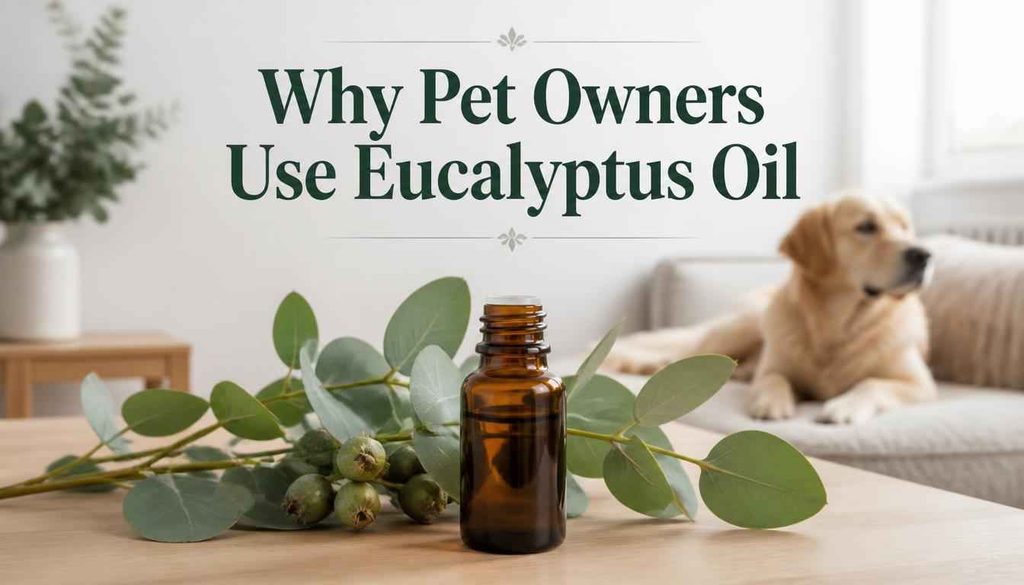
People commonly choose eucalyptus oil because it has a strong, refreshing smell and is associated with aromatherapy and household cleaning.
Some owners use it in diffusers to freshen a room, while others encounter it in shampoos, sprays, soaps, air fresheners, or other products.
The important point is that a product designed for people is not automatically appropriate for pets. Essential oils are highly concentrated, and their effects can vary based on the oil, concentration, route of exposure, and amount involved.
How and What is Eucalyptus Used For?
Eucalyptus is used in many everyday products. Its oil may appear in:
- Essential oil diffusers
- Air fresheners
- Cleaning products
- Shampoos and topical products
- Aromatherapy products
- Personal-care products
- Some cough and cold products
This makes accidental exposure possible even when a pet owner never intends to give eucalyptus to a dog.
Is Eucalyptus Oil Safe for Dogs?
Eucalyptus oil is not considered a safe product to use directly on dogs. Concentrated essential oils can be absorbed through the digestive tract, skin, lungs, and mucous membranes. Higher concentrations generally create greater risk.
So, is eucalyptus oil poisonous to dogs? It can be. Veterinary toxicology references identify eucalyptus oil among essential oils that can cause poisoning in dogs. Eucalyptus is also listed by the ASPCA as toxic to dogs.
That does not mean every dog exposed to a tiny amount will develop severe poisoning. Risk depends on factors such as concentration, amount, route, and the individual animal. Still, eucalyptus oil should not be deliberately applied to a dog or given by mouth unless a veterinarian specifically recommends a particular veterinary product.
How Dogs May Be Exposed to Eucalyptus Oil
Dogs can encounter eucalyptus in several ways. The most important are inhalation, skin contact, and ingestion. Similar concerns can apply to other concentrated essential oils, such as peppermint oil. For more information about its risks and safe handling around dogs, read our guide on Is Peppermint Oil Safe for Dogs?.
Diffusers and Airborne Exposure
An eucalyptus diffuser deserves particular caution. Strong fragrances can irritate a dog’s airways and may cause coughing, watery eyes or nose, drooling, vomiting, or breathing difficulty. Active diffusers that release tiny oil droplets can create an additional concern because those droplets may settle on a dog’s coat and later be swallowed during grooming.
So, can you diffuse eucalyptus around dogs? The safest choice is to avoid using eucalyptus oil around your dog, particularly in enclosed or poorly ventilated spaces.
If your dog develops breathing problems after exposure, move them to fresh air and contact a veterinarian promptly. Respiratory symptoms that do not quickly resolve require urgent veterinary attention.
Topical Products
Eucalyptus oil can be absorbed through the skin. Applying concentrated essential oil directly to your dog can therefore create both local irritation and systemic exposure.
Dogs also naturally lick their coats. This means an oil placed on the skin can become an ingestion risk later.
For that reason, never use undiluted eucalyptus essential oil as a home remedy for itching, fleas, pain, or another condition.
Ingestion
Ingestion is especially concerning because essential oils can be rapidly absorbed through the gastrointestinal tract.
A dog might chew an oil bottle, lick a spill, drink from a contaminated surface, or groom oil from its fur.
If your dog licked eucalyptus oil, do not assume the exposure is harmless. Contact your veterinarian or an animal poison service promptly and provide the product name and concentration if available.
Why Eucalyptus Toxicity Happens
Eucalyptus contains compounds that can be harmful to dogs, including eucalyptol. Essential oils are concentrated plant extracts, so the amount of active compound can be much higher than in the original plant material.
Veterinary references note that essential oils can be absorbed through the gastrointestinal tract, skin, lungs, and mucous membranes. The risk increases with higher concentrations.
This is why eucalyptus toxicity in dogs can occur through more than one exposure route.
Signs of Eucalyptus Oil Exposure in Dogs
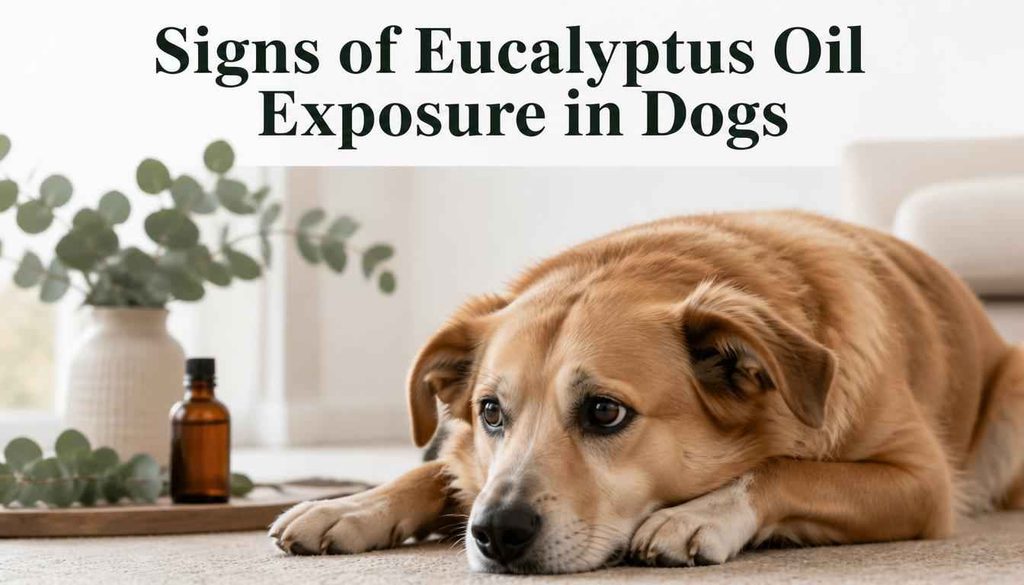
Signs can vary depending on the amount, concentration, and route of exposure.
Possible signs include:
- Excessive drooling
- Vomiting
- Diarrhea
- Weakness
- Depression or unusual tiredness
- Unsteady walking
- Skin or mouth irritation
- Coughing or breathing difficulty
- Tremors
- Seizures in severe cases
The ASPCA specifically lists salivation, vomiting, diarrhea, depression, and weakness among signs associated with eucalyptus toxicity. Veterinary toxicology references also describe more serious neurologic and respiratory effects with certain essential-oil exposures.
When to Seek Veterinary Help
Contact a veterinarian if you know or strongly suspect your dog has ingested eucalyptus oil or had significant skin or respiratory exposure.
Seek emergency veterinary care for serious symptoms such as difficulty breathing, collapse, seizures, severe weakness, or significant loss of coordination.
Do not wait for severe symptoms before asking for professional advice. Early assessment can help determine whether your dog needs treatment or monitoring.
Why Eucalyptus Oil Affects Dogs Differently
Dogs are not simply small humans. Their bodies process chemicals differently, and the risk from an essential oil depends on the substance, concentration, exposure route, and dose.
Metabolism Differences
The way an animal absorbs and processes essential oils affects how strongly it may react. Dogs can still experience systemic toxicity after exposure, even though cats are particularly sensitive to many essential oils because of important metabolic differences.
Sensitive Respiratory Systems
Strong fragrances can irritate a dog’s respiratory tract. Dogs with existing respiratory problems may be more vulnerable to irritation from airborne fragrances.
Behavioral Curiosity
Dogs explore their environment with their noses and mouths. A bottle, spill, diffuser, or eucalyptus-containing product can therefore become an accidental exposure source.
Spotting Mild Cases
Mild exposure may cause signs such as drooling, mouth irritation, vomiting, diarrhea, weakness, or unusual tiredness.
Even if the signs seem minor, contact your veterinarian for advice. The seriousness of an exposure cannot be judged reliably from symptoms alone because concentration and amount also matter.
Recognizing Serious Cases
More serious signs can include severe weakness, uncoordinated movement, breathing difficulty, tremors, seizures, or collapse.
These symptoms should be treated as an emergency. Move your dog away from the exposure and seek veterinary care immediately.
Potential Life-Threatening Conditions
Severe essential-oil poisoning can involve the nervous system and respiratory system. Merck Veterinary Manual lists eucalyptus among essential oils that can cause seizures in animals.
Another concern after oil ingestion is aspiration. Vomiting after an oil exposure can potentially allow material to enter the lungs, which is one reason owners should not attempt to make a dog vomit unless a veterinarian specifically instructs them to do so.
What To Do
If your dog has been exposed, stay calm and act quickly.
Step 1: Remove the Source
Move the eucalyptus oil, plant, diffuser, or contaminated product away from your dog.
If oil has contacted the coat or skin, prevent further licking and contact your veterinarian for appropriate decontamination instructions.
Step 2: Gather Essential Details
Keep the product container or label available.
Note:
- Product name
- Ingredients
- Oil concentration, if listed
- Approximate amount involved
- Time of exposure
- How exposure happened
- Your dog’s current symptoms
These details can help a veterinarian or poison specialist assess the risk.
Step 3: Call a Vet or Emergency Clinic
Contact your veterinarian or an emergency veterinary clinic as soon as possible if exposure occurred.
Do not induce vomiting unless a veterinary professional specifically tells you to. This is especially important with essential oils because aspiration can create another serious problem.
Helping Your Pet Before the Vet Visit
Your priority is preventing additional exposure while getting professional guidance.
Offer Small Amounts of Water
Do not force your dog to drink. Ask your veterinarian whether offering water is appropriate based on the type and route of exposure.
Protect Your Dog’s Safety
Keep your dog somewhere calm and away from stairs or furniture if they are weak or unsteady.
If breathing problems, seizures, collapse, or severe symptoms occur, go directly to an emergency veterinary clinic.
What About Other Essential Oils?

Eucalyptus is not the only essential oil that can create risks for dogs. Veterinary toxicology sources identify several essential oils that may cause poisoning, including tea tree, wintergreen, cinnamon, pennyroyal, and eucalyptus oils.
That does not mean every product containing a tiny amount of an essential oil is automatically dangerous. Formulation and concentration matter.
If you are also researching other household ingredients, see our guides on Is Frankincense Safe for Dogs?.
Safe Alternatives to Eucalyptus Oil for Pet Owners
If your goal is a fresh-smelling home, the safest solution is often simple: good ventilation, regular cleaning, and fragrance-free products.
For your dog’s skin or health, choose products specifically formulated for dogs and follow veterinary advice rather than experimenting with concentrated essential oils. If you are looking for information about another plant commonly encountered by dogs, read our guide on Is Catnip Bad for Dogs?.
A veterinarian can also recommend appropriate products for anxiety, skin problems, parasites, or other conditions without exposing your dog to unnecessary risks.
Talking to Your Veterinarian About Essential Oils
If you want to use an essential-oil product at home, ask your veterinarian first.
Bring the product label or ingredient list. Your veterinarian can consider the oil, concentration, exposure method, your dog’s health, and the environment in which the product will be used.
This is particularly important if your dog has respiratory problems or is likely to lick or contact the product.
Creating a Safe Home for Your Dog
A dog-safe home is not only about keeping essential oils out of reach. It also means checking the ingredients in everyday cleaners, foods, treats, and personal-care products before allowing your dog to use or contact them. If you are checking the safety of another common ingredient, read our guide on Is Sorbitol Safe for Dogs?.
Keep essential oils in closed cabinets, clean spills immediately, and check labels on air fresheners, cleaners, shampoos, and other household products. If you are unsure about an ingredient, ask your veterinarian before using the product around your dog.
Preventing Future Eucalyptus Toxicity
The easiest way to prevent eucalyptus toxicity is to prevent exposure.
Store essential oils securely, never apply concentrated eucalyptus oil directly to your dog, and avoid giving eucalyptus products by mouth.
Before using a new product around your pet, check the ingredient list and ask your veterinarian if you are unsure. Prevention is especially valuable because essential-oil exposures can happen quickly and accidentally.
For Pet Owners in Staten Island NY, We’re Here to Help
If you are in Staten Island and your dog may have been exposed to eucalyptus, contact your veterinarian or nearest emergency veterinary service for immediate guidance.
If you are outside Staten Island, contact your nearest emergency veterinarian or local animal poison service.
Is This an Emergency?
Treat difficulty breathing, seizures, collapse, severe weakness, or serious coordination problems as emergency signs.
For a known ingestion or significant exposure, call a veterinarian even if your dog currently looks normal. A professional can determine whether home monitoring is appropriate or whether your dog needs an examination.
Why Not Try Scrumbles Dog Calming Treats?
If your goal is to help your dog relax, avoid experimenting with eucalyptus oil as a calming remedy.
Instead, choose products specifically formulated for dogs and discuss persistent anxiety or stress with your veterinarian. A dog-safe approach is always better than relying on a concentrated essential oil intended primarily for human use.
FAQs about Eucalyptus Toxicity in Dogs
Is eucalyptus toxic to dogs?
Yes. The ASPCA lists eucalyptus as toxic to dogs, with eucalyptol identified as its toxic principle. Signs can include drooling, vomiting, diarrhea, depression, and weakness.
Can dogs smell eucalyptus safely?
Dogs can smell eucalyptus, but that does not mean concentrated eucalyptus fragrance is safe for them. Strong essential-oil odors may irritate the respiratory tract, and some exposure methods can create additional risks.
Can dogs breathe eucalyptus oil?
Dogs can inhale eucalyptus vapors, but concentrated exposure can cause respiratory irritation and other problems. If your dog develops coughing, wheezing, or breathing difficulty after exposure, move them into fresh air and seek veterinary advice.
Can you diffuse eucalyptus around dogs?
It is safest to avoid diffusing eucalyptus oil around dogs, particularly in enclosed spaces. Active diffusers can release tiny oil droplets that may settle on a dog’s coat and later be swallowed during grooming.
What if my dog licked eucalyptus oil?
If your dog licked eucalyptus oil, contact your veterinarian or an animal poison service promptly. Keep the product container so you can provide its name and concentration. Do not induce vomiting unless instructed by a veterinary professional.
Is eucalyptus oil poisonous to dogs?
Concentrated eucalyptus oil can be poisonous to dogs. The severity depends on factors such as concentration, amount, route of exposure, and the individual dog.
Is eucalyptus scent bad for dogs?
A strong eucalyptus scent can irritate some dogs, especially when exposure is concentrated or prolonged. Dogs with respiratory problems may be more vulnerable to airborne irritation.
Is eucalyptus safe for pets?
Eucalyptus should not be treated as generally safe for pets. Dogs and cats can react to essential oils, and eucalyptus is specifically identified as toxic to dogs by the ASPCA.
The bottom line: is eucalyptus safe for dogs
So, is eucalyptus safe for dogs? The safest answer is no—especially when it comes to concentrated eucalyptus essential oil.
Keep eucalyptus oils and products out of your dog’s reach, avoid applying them directly to your pet, and use caution with diffusers. If accidental exposure happens, quick veterinary guidance can give you the clearest and safest next step.
Your dog does not need eucalyptus to have a fresh, comfortable, and healthy home. Simple prevention and veterinarian-approved products are the smarter choice.



Pingback: Is Peppermint Oil Safe For Dogs? All You Need to Know
Pingback: Are Spider Plants Toxic To Dogs? Vet-Backed Safety Guide