

A blood blister on a dog is a red, purple, or dark blood-filled bump that may result from trauma, a hematoma, a tick, skin irritation, or a vascular tumor. Because these conditions can look alike, a veterinarian should check any persistent, growing, bleeding, or painful lesion.
A blood blister on your dog can look scary, but knowing what to watch for can help you act quickly and protect your dog’s health.
What’s a blood blister? Is it serious?
A blood blister is a raised area of skin containing blood or blood-tinged fluid. It can develop when small blood vessels are damaged and blood collects under or within the skin. Minor trauma can cause this type of lesion, but a blood-filled bump can also resemble tumors, insect bites, infections, or other skin disorders.
So, is it serious? Sometimes it is not. A small lesion caused by an injury may settle as the skin heals. However, some tumors and vascular disorders can also appear red, purple, dark, swollen, or blood-filled. Veterinary sources emphasize that skin tumors can have very different appearances and may be difficult to identify by sight alone.
That is why owners should avoid assuming that every blister is harmless. If the area is growing, bleeding, painful, repeatedly returning, or failing to heal, arrange a veterinary examination. A veterinarian may recommend a needle sample or biopsy when the appearance does not clearly explain the cause.
Top causes of blood blisters
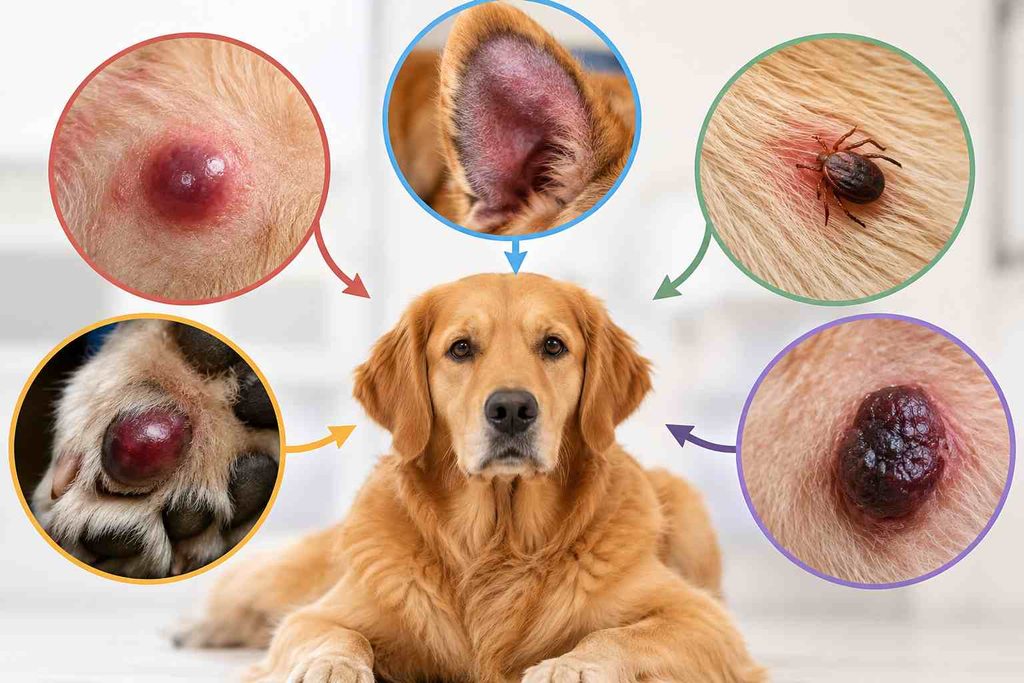
Several conditions can create a red, raised, or blood-filled area that looks like a blister. The cause matters because treatment can range from simple monitoring to surgery or other medical care.
1. Mast cell tumors
Mast cell tumors are common skin tumors in dogs and can look surprisingly different from one dog to another. They may appear as raised, red, swollen, or irritated lumps and can sometimes resemble an insect bite or allergic reaction.
A tumor cannot be confirmed simply by looking at it. A veterinarian commonly uses fine-needle aspiration to collect cells for examination, while a biopsy may provide additional information about the tumor and its behavior.
If you notice a new lump that changes size, becomes irritated, bleeds, or does not settle, professional evaluation is important. Early identification gives your veterinarian more information when deciding what treatment is appropriate.
2. Cutaneous hemangiosarcoma
Cutaneous hemangiosarcoma is a cancerous tumor involving blood vessels in the skin. Some lesions can appear red, dark, bruised, nodular, or blood-filled, making them easy to confuse with an ordinary skin blister.
These tumors are more often reported in areas such as the trunk, hip, thigh, and lower limbs. Sun exposure can play a role in some skin vascular tumors, particularly in dogs with lightly pigmented or sparsely haired skin.
A suspicious lesion needs veterinary assessment rather than home treatment. Diagnosis may require a tissue sample, and treatment depends on the type, size, location, and extent of the tumor.
3. Hemangioma
A hemangioma is a benign tumor that develops from blood vessels. Because it contains vascular tissue, it can look like a dark red or purple lump or even resemble a blood-filled blister.
These growths may occur on the skin and can sometimes ulcerate or bleed. Some vascular tumors are more common in areas exposed to sunlight, especially in dogs with light or thinly haired skin.
Although a hemangioma is benign, an owner cannot reliably distinguish it from a malignant vascular tumor by appearance alone. A veterinarian may recommend sampling or removal so the lesion can be properly identified.
4. histiocytomas
Histiocytomas are usually benign skin tumors that are especially common in younger dogs. They often appear as small, firm, red, raised growths and may occur on the head, neck, legs, or feet.
Some histiocytomas shrink on their own over time, but that does not mean every red lump should simply be watched without veterinary advice. Other skin growths can look similar.
If your dog develops a new red lump, especially one that grows quickly, becomes ulcerated, or causes discomfort, a veterinarian can determine whether monitoring, sampling, or treatment is appropriate.
5. Ticks
An engorged tick can sometimes look surprisingly similar to a small blood-filled lump. Ticks attach to the skin and become larger as they feed, so an owner may mistake one for a blister or dark bump.
Check the area closely, particularly after walks, outdoor activities, or time in tall grass. Do not squeeze, burn, or apply irritating substances to an attached tick.
If you are unsure whether the growth is a tick or a skin lesion, let a veterinary professional identify it. Regular, veterinarian-approved parasite prevention can also reduce the risk of tick attachment.
Trauma-Induced Hematomas
An injury can damage small blood vessels and allow blood to collect beneath the skin. This can happen after rough play, a bump against furniture, pressure, scratching, or another form of physical trauma.
A small hematoma may appear as a soft or firm swelling with red, purple, or dark discoloration. The appearance can change as the trapped blood is gradually broken down.
The important point is that not every blood-filled swelling is caused by trauma. If you did not see an injury, or if the swelling continues to grow or does not improve, have your dog examined rather than assuming it will disappear.
Allergic Reactions
Allergies can cause significant skin inflammation and itching. A dog that repeatedly scratches, licks, or bites irritated skin can create additional trauma and bleeding.
Fleas and other insects may also cause local skin reactions. In dogs with allergies, persistent itching can damage the skin and contribute to secondary irritation or infection.
Managing the underlying allergy is therefore more useful than simply treating the visible spot. Your veterinarian can help identify possible triggers and recommend appropriate parasite control, skin care, or medication when needed.
Other Medical Conditions
Blood-filled skin lesions can occasionally be associated with broader medical problems. Blood-clotting disorders, immune-mediated disease, infections, and different types of skin tumors can produce unusual bleeding, bruising, or lumps.
A blood blister on dog leg may therefore have a very different cause from one found elsewhere on the body. Location, size, growth rate, appearance, and other symptoms all matter.
For the same reason, a blood blister on dog head should not automatically be treated as an ordinary injury. If the cause is unclear, veterinary examination is the safest way to identify the problem.
When should you call your veterinarian
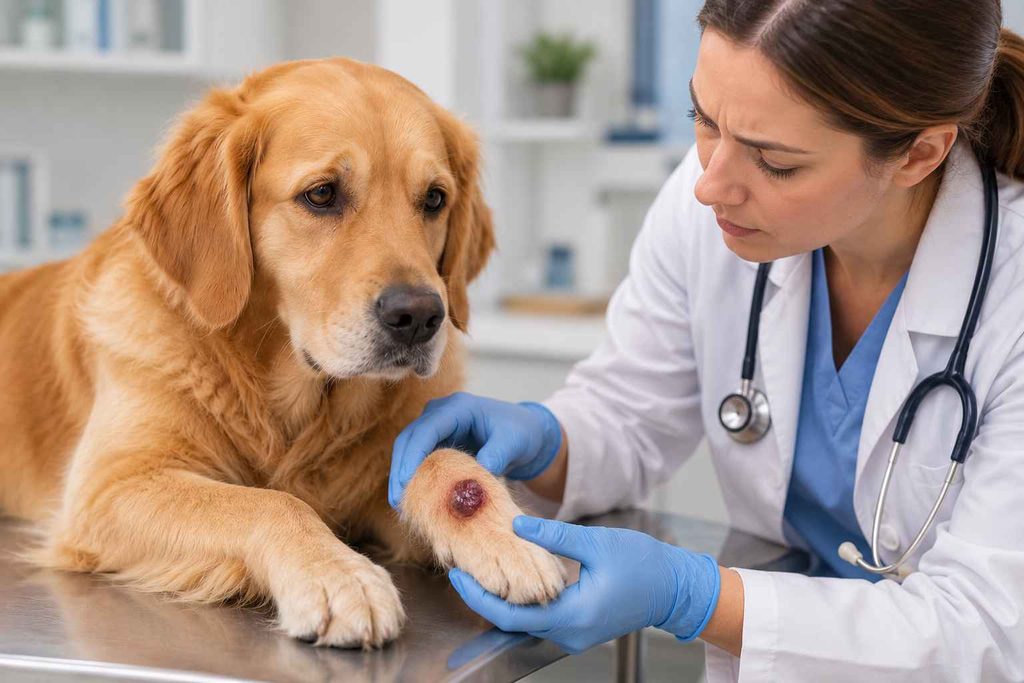
Contact your veterinarian when a new red, purple, dark, swollen, or blood-filled skin lesion appears and you are not sure what caused it. An appointment is especially important if the area grows, changes color, bleeds, becomes painful, repeatedly returns, or fails to heal.
Seek prompt veterinary care if your dog seems unusually tired, weak, painful, stops eating, or behaves differently. Heavy or ongoing bleeding requires urgent attention.
A lesion located near an eye, mouth, genital area, or another sensitive location also deserves professional assessment because irritation can create additional problems.
A word about ear hematomas
An ear hematoma is a specific type of blood-filled swelling involving the ear flap. It commonly develops after head shaking or scratching damages small blood vessels between the skin and cartilage.
The ear may become swollen, warm, thickened, or uncomfortable. Ear infections, allergies, and other sources of ear irritation can trigger the scratching or head shaking that contributes to the problem. If you notice other changes in your dog’s behavior or breathing along with the ear problem, you may also want to read why your dog keeps panting.
Do not puncture or drain an ear hematoma at home. Veterinary treatment is aimed not only at managing the collected blood but also at finding and treating the underlying ear problem.
What you can do at home while waiting for a vet appointment
Until your dog can be examined, focus on protecting the area rather than trying to remove the blister.
Keep your dog from licking, biting, or scratching the lesion. An appropriate cone or another veterinarian-approved barrier can help prevent additional damage.
Take a clear photograph and note the size, color, and location. Comparing photographs can help you notice whether the lesion is changing and gives your veterinarian useful information about its progression.
Keep a small, irritated area clean and dry, but avoid harsh disinfectants, essential oils, human creams, or unapproved medications. If there is heavy active bleeding, do not wait for a routine appointment; contact an emergency veterinary service.
For other skin problems that look like blood blisters:
Many skin conditions can resemble one another. A black blood blister on dog skin, for example, could represent dried blood, pigmentation, a tick, an irritated growth, or another lesion.
Likewise, blood blisters on dogs belly may have a different cause from lesions on the legs or ears. Skin conditions such as ringworm can also create unusual-looking patches, so you can learn more about what ringworms look like on dogs. The safest approach is to observe the lesion without squeezing or popping it and have persistent or suspicious changes evaluated.
If your dog has a history of recurring skin problems, tell your veterinarian about previous episodes, allergies, medications, parasite prevention, and any recent injuries.
Ear hematomas in dogs: What do they look like, and why do they occur?
An ear hematoma develops when blood collects between the skin and cartilage of the ear flap. It is often associated with repeated head shaking or scratching caused by an itchy or inflamed ear.
The swelling can be soft and fluid-filled or become firmer as it develops. Without appropriate care, healing can leave the ear thickened or wrinkled.
Common locations of hematomas:
Hematomas can develop in several places, depending on the cause. The ear flap is a particularly common location, but blood can also collect under the skin after trauma or certain procedures.
An owner may notice a blood blister on dog abdomen or swelling elsewhere on the body. A dog blood blister on foot may instead involve local trauma, irritation, infection, or another skin problem.
The location alone does not establish the diagnosis, so unusual or persistent swelling should be examined.
Appearance
A hematoma may look like a swollen pocket beneath the skin. An ear hematoma often causes part or all of the ear flap to become thick, swollen, warm, and uncomfortable.
Small hematomas may initially appear as a localized bulge. Larger ones can make the ear flap look dramatically different from the healthy ear.
A blood blister on dog paw may look different because the skin is exposed to pressure, walking, licking, and environmental irritation. Avoid opening it yourself, particularly if you are unsure what it is.
The veterinary visit: what to expect for diagnosis, treatment, outcome
The veterinarian will examine the swelling and the surrounding skin. They may also check the ears, skin, and other areas for an underlying source of irritation.
For a suspicious skin lesion, additional testing may be recommended. The goal is to identify what the lesion actually is before choosing treatment.
This is particularly important when the lesion has unusual features, grows quickly, bleeds repeatedly, or does not heal normally.
Diagnosis
Diagnosis depends on the appearance and suspected cause. A veterinarian may use a physical examination, fine-needle aspiration, skin cytology, biopsy, or other testing.
For suspected tumors, laboratory examination of collected cells or tissue is important because benign and malignant growths can look similar. Bloodwork or imaging may also be recommended when the veterinarian suspects a broader medical problem.
A Cancerous blood blister on dog skin cannot be confirmed from color or shape alone. Testing is what helps separate a harmless-looking lesion from a condition that requires more serious treatment.
Treatment
Treatment depends entirely on the diagnosis. A small traumatic swelling may only need observation and protection while it heals. Other lesions may require medication, drainage, surgical removal, or treatment of an underlying infection or allergy.
For ear hematomas, treatment aims to remove or control the collected blood and reduce the chance that the space fills again. The underlying reason for head shaking or scratching should also be addressed.
Do not attempt to drain a suspected hematoma yourself. Incorrect drainage can introduce infection, cause additional injury, or allow the swelling to return.
How to Prevent Ear Hematomas in The Future

Preventing another ear hematoma starts with controlling the problem that makes your dog shake or scratch the ear.
Ear infections and allergies are important causes of ear irritation. Watch for frequent head shaking, repeated scratching, redness, odor, discharge, or obvious discomfort.
Regular veterinary examinations and appropriate parasite and allergy management can help reduce recurring problems. Avoid using homemade ear-cleaning mixtures unless your veterinarian specifically recommends them, because some products can worsen irritation.
Treating blood blisters in dogs
The right blood blister on dog treatment depends on what caused the lesion. A small injury may only need protection and monitoring, while a hematoma, infection, or suspicious growth may require medication, drainage, surgery, or additional testing. Your veterinarian should identify the cause before treatment begins.
Veterinary Diagnosis and Care
Your veterinarian may first examine the lesion and then decide whether monitoring is reasonable or whether testing is needed. Fine-needle aspiration and biopsy are commonly used tools for evaluating suspicious skin growths.
If a tumor is suspected, the laboratory results help determine what type of growth is present and guide further care. Treatment may involve surgery, medication, or additional cancer care depending on the diagnosis.
Monitoring and Follow-up
Keep track of changes in size, shape, color, bleeding, and discomfort. A photograph taken every few days can make subtle changes easier to recognize.
Follow your veterinarian’s instructions after treatment and attend recommended rechecks. If a lesion returns, grows quickly, or develops new bleeding, contact the veterinary team rather than restarting an old treatment without advice.
Preventing Blood Blisters in Dogs
Not every blood-filled lesion can be prevented, but several habits can reduce avoidable skin problems.
Protect your dog from unnecessary trauma, maintain regular parasite prevention, manage known allergies, and check the skin during routine grooming. Pay particular attention to areas that are frequently scratched, licked, or exposed to sunlight.
Regular veterinary visits are also valuable because skin growths can be easier to manage when identified early. Keeping routine vaccinations up to date is part of preventive care; you can learn more about how often dogs get rabies vaccine. If you notice a new lump, blister, sore, or unusual discoloration, record when you first noticed it and whether it changes.
The same approach is useful for blood blisters on dogs skin anywhere on the body: observe carefully, prevent self-trauma, and seek professional advice when the lesion is persistent or unusual.
FAQs about blister on dog
How to treat a blood blister on a dog?
Treatment depends on the cause. Do not pop or drain it yourself. Protect the area from licking and scratching, keep it clean and dry, and arrange a veterinary examination if it persists, grows, bleeds, or causes discomfort.
How to treat blood blister on dog paw?
Because paws experience constant pressure and contact with the ground, a swelling there can become irritated quickly. Prevent licking and chewing and have the area examined if it is painful, bleeding, growing, or not healing.
What does a blood blister look like on a dog?
It may appear as a raised red, purple, dark, or blood-filled area under or within the skin. However, ticks, hematomas, tumors, and other skin problems can look similar, so appearance alone cannot confirm the cause.
Can a blood blister last for years?
A simple traumatic blister should not automatically be expected to remain unchanged for years. A persistent lump or blood-filled lesion needs veterinary assessment because long-lasting skin growths can have causes other than a simple blister.
The bottom line on blood blisters
A blood-filled bump on your dog can be worrying, but the appearance alone does not tell you exactly what it is. Some lesions are related to minor trauma, while others may involve hematomas, allergies, ticks, benign growths, or tumors.
The safest approach is simple: protect the area, avoid squeezing or draining it, watch for changes, and contact your veterinarian when the lesion persists, grows, bleeds, or causes discomfort.
A proper diagnosis replaces guesswork with a clear treatment plan. With timely veterinary care and good follow-up, many skin problems can be managed effectively while keeping your dog comfortable and healthy.
For general digestive warning signs that may accompany illness, you can also explore Why Is My Dog Throwing Up White Foam?.



Pingback: What Do Ring Worms Look Like On Dogs | Symptoms to Know
Pingback: Lymphoma in Dogs: Signs, Types, Stages, Treatment & Survival