

Runny noses in dogs are often caused by mild irritation or allergies, but persistent, thick, colored, bloody, or one-sided discharge can signal infection, a foreign object, dental disease, or nasal problems. Watch for sneezing, coughing, lethargy, or breathing trouble and contact your vet if these occur.
A dripping nose may seem harmless, but the color, duration, and other symptoms can reveal when your dog needs extra care.
What To Do if Your Dog Has a Runny Nose
If your dog has a small amount of clear discharge and is eating, playing, and breathing normally, keep watching rather than panicking. Give fresh water, rest, and a clean environment. Avoid smoke, strong sprays, dust, and other obvious irritants.
If unusual panting appears with nasal discharge, read our guide on why does my dog keep panting? for additional context.
Contact your veterinarian if discharge becomes yellow, green, cloudy, thick, foul-smelling, or bloody, or if your dog develops repeated sneezing, coughing, facial swelling, eye discharge, poor appetite, unusual tiredness, pain, or noisy breathing. Trouble breathing is an emergency.
Causes of Runny Nose in Dogs

Nasal discharge is a sign rather than a diagnosis. The cause may be simple irritation or a condition needing specific treatment, so the pattern and other symptoms matter.
Allergies
Dogs can react to pollen, mold, dust, and other airborne irritants. Allergies may cause clear discharge, sneezing, watery eyes, itching, or seasonal flare-ups. A veterinarian can decide whether allergies fit the pattern and recommend safe treatment.
Congenital
Some dogs are born with structural problems affecting the nose or the connection between the mouth and nasal passages. A cleft palate is one example. Food or water can enter the nasal cavity, causing discharge and respiratory problems. Puppies with discharge after eating need veterinary attention.
Foreign body or trauma
Grass awns, seeds, or small plant pieces can become lodged in a nasal passage. Sudden discharge from one nostril, repeated sneezing, face pawing, or bleeding can suggest a foreign body. Injury can also cause temporary discharge or bleeding.
Do not force tweezers or another object into the nose. A veterinarian can examine and remove a difficult foreign body safely.
Infections
Respiratory infections can cause discharge, sneezing, coughing, congestion, tiredness, or reduced appetite. Viral disease may be involved, while bacterial infection can occur as a secondary problem. Fungal disease is another possibility, especially in persistent cases.
Tell your veterinarian about recent daycare, boarding, grooming, or dog-park exposure.
Dental Issues
An upper-tooth infection can sometimes affect nearby nasal structures. An abscessed tooth or an abnormal connection between the mouth and nose may cause nasal discharge, especially around eating.
Bad breath, chewing difficulty, facial sensitivity, or swelling can provide useful clues. Dental imaging may be needed.
Nasal Mites
Nasal mites are uncommon parasites that live in the nasal passages and sinuses. They may cause sneezing, discharge, nosebleeds, noisy breathing, or face rubbing. Diagnosis can require examination, imaging, nasal flushing, or endoscopy.
Because other diseases can look similar, treatment should be guided by a veterinarian.
Nasal Tumors
Nasal tumors are more concerning when discharge is persistent, bloody, one-sided, or accompanied by noisy breathing, facial changes, or repeated nosebleeds. They are more often considered in older dogs.
How Veterinarians Diagnose the Cause of Runny Nose in Dogs
Your veterinarian will ask when the discharge began, whether one or both nostrils are affected, what it looks like, and whether your dog is sneezing, coughing, eating, or acting differently.
Depending on the findings, tests may include nasal swabs, blood work, dental X-rays, CT imaging, rhinoscopy, or biopsy. Chronic or unexplained nasal disease often needs more detailed testing because different conditions can look alike. Our guide to what do ring worms look like on dogs? covers another condition pet parents may notice while checking their dog’s health.
Treatment For Runny Nose in Dogs
Treatment depends on the diagnosis. While waiting for an appointment, provide water, rest, and a clean environment. A humidifier may sometimes help loosen secretions when your dog is otherwise comfortable, but it is not a substitute for diagnosis.
If you are specifically searching for Dog runny nose treatment at home, focus on comfort and observation rather than human medicines. Never give a cold medicine, decongestant, antibiotic, or other medication without veterinary advice.
Allergies
Treatment may focus on reducing exposure to triggers and controlling inflammation or other symptoms. Your veterinarian may recommend an appropriate allergy medicine based on your dog’s health.
Cancer
If a nasal tumor is suspected, imaging and biopsy help determine its type and extent. Treatment can include radiation, surgery, chemotherapy, or combinations depending on the tumor.
Cleft palate
A cleft palate creates an opening between the mouth and nasal cavity. Significant cases commonly require surgical repair to reduce complications such as food entering the airway.
Foreign body or trauma
A suspected foreign object should be assessed promptly. Removal may require sedation when the object is deep or the tissue is inflamed. Trauma is treated according to the injury.
Dental Issues
Treatment may include professional cleaning, dental X-rays, antibiotics when infection warrants them, pain control, or extraction of a diseased tooth.
Infectious
Treatment varies by cause. Some viral illnesses need supportive care, while confirmed bacterial, fungal, or parasitic disease may require specific medication. Antibiotics do not treat viral infections.
How to Stop a Dog’s Nosebleed
If stomach symptoms appear at the same time, our guide to why is my dog throwing up white foam? can provide additional background, but tell your veterinarian about all symptoms together.
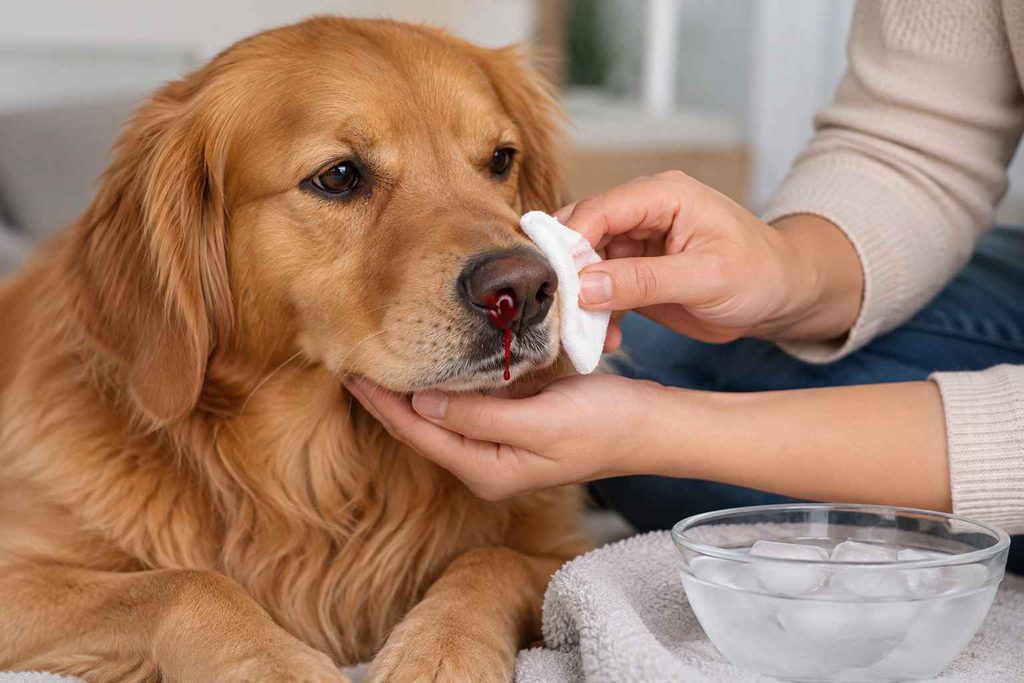
Keep your dog calm because excitement can increase bleeding. If safe, place a cool compress over the bridge of the nose between the eyes, without blocking breathing.
Do not tilt the head backward or put cotton, tissues, or other material into the nostril. If bleeding is heavy, follows an injury, keeps returning, or does not stop promptly, contact a veterinarian or emergency clinic.
Nosebleeds can follow trauma, but may also occur with foreign bodies, infection, clotting problems, or nasal disease.
Taking Care of Your Dog’s Nose
A healthy dog does not have to maintain one exact nose temperature or moisture level. A cool, wet nose is common, but a warm or dry nose alone does not prove illness.
Check the nose during normal care for sudden changes in discharge, crusting, swelling, bleeding, or discomfort. Also notice how your dog breathes. Persistent noisy or difficult breathing deserves veterinary attention. Keeping routine vaccines current is also important; see how often do dogs get rabies vaccine? for vaccination guidance.
What Does It Mean When Your Dog’s Nose Is Dripping?
A small amount of occasional clear moisture can be normal, but persistent dripping deserves attention. The appearance of the fluid, duration, age, and other symptoms help narrow the possibilities.
For example, a sudden one-sided drip after outdoor sniffing may fit a foreign object, while ongoing discharge with sneezing may suggest nasal inflammation or infection. A puppy with discharge after eating needs different consideration from an older dog with months of symptoms.
If you are asking why is my dogs nose dripping, look at the full pattern instead of judging the wet nose alone. The same applies to why is my dogs nose dripping clear liquid: clear fluid can have mild causes, but persistence or additional symptoms matter.
Observing the Type of Discharge Can Offer Clues
The appearance of discharge provides useful clues, but it cannot confirm a diagnosis.
- Clear: May occur with mild irritation or allergies.
- White or cloudy: Can reflect mucus and inflammation.
- Yellow or green: May occur with infection or inflammation.
- Bloody or pink: Can follow trauma or irritation but may also occur with foreign bodies, fungal disease, or tumors.
- One-sided: Can suggest a localized problem such as a foreign body, dental disease, or mass.
- Two-sided: May occur with broader inflammatory or infectious conditions.
Keep track of color, amount, duration, and whether one or both nostrils are involved.
Additional Symptoms to Watch For
Watch for frequent sneezing, reverse sneezing, coughing, gagging, face pawing, nosebleeds, eye discharge, facial swelling, reduced appetite, unusual tiredness, noisy breathing, or difficulty breathing. If coughing or breathing changes are confusing, our guide on do dogs get hiccups? explains a different, usually brief behavior.
A puppy runny nose should be watched carefully because young dogs can develop infectious or congenital problems. Nose Dripping in Senior Dogs that persists or changes also deserves veterinary assessment.
If you wonder can dogs get blocked noses, yes. Swelling, mucus, foreign material, or a nasal mass can narrow the passages and make breathing noisy or difficult.
When Dog Nose Dripping Signals Something More Serious
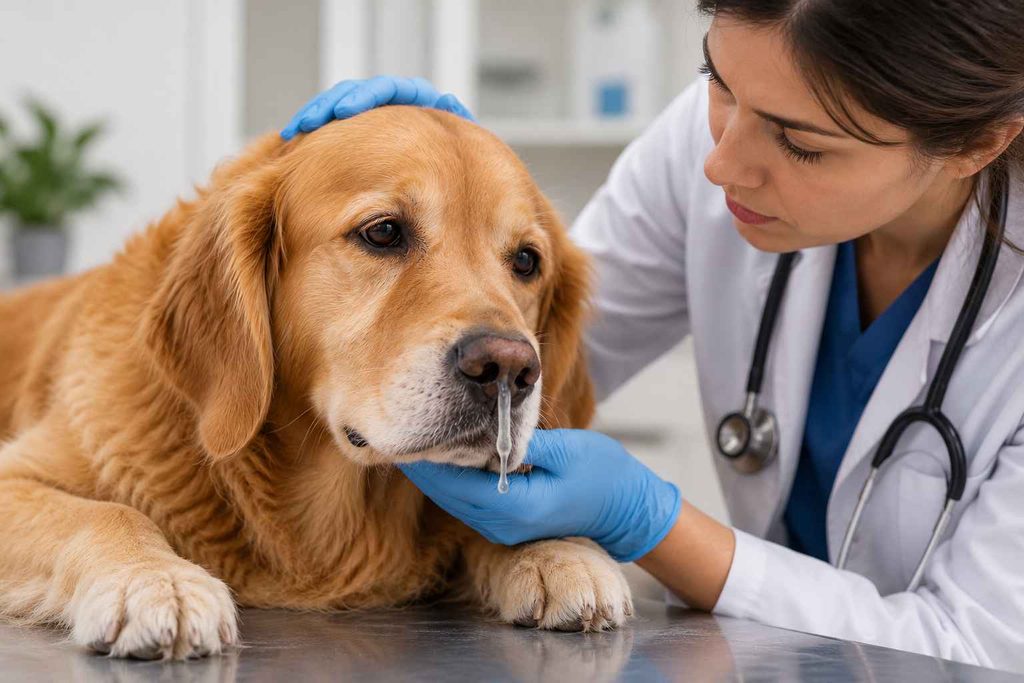
Persistent discharge is more concerning when it is bloody, foul-smelling, thick, one-sided, or linked with facial swelling, appetite changes, or breathing difficulty. Chronic nasal disease can involve dental disease, fungal infection, inflammation, foreign material, or tumors.
If you notice why is my dogs nose running and breathing heavy, do not treat it like an ordinary cold. Labored breathing can indicate a significant respiratory problem and needs prompt veterinary assessment.
Likewise, Dog runny nose white discharge should be considered alongside energy, appetite, breathing, and other signs rather than judged by color alone.
Why Prompt Veterinary Evaluation Matters
Persistent nasal discharge is difficult to diagnose from appearance alone. A veterinarian can combine the history, examination, and appropriate testing to separate minor irritation from conditions needing specific treatment.
Do not give human cold medicines, nasal decongestants, antibiotics, or other medications unless your veterinarian recommends them. Some human products can be unsafe for dogs.
If you notice why is my dogs nose running in the car, consider excitement, stress, motion, or environmental exposure. If it keeps happening outside car rides too, mention it to your veterinarian.
Some owners also search for Dog nose dripping anxiety. Stress can change breathing and behavior, but ongoing nasal discharge should not automatically be blamed on anxiety.
Helping Your Dog Breathe Easy Again
Most nasal discharge becomes easier to manage once the underlying cause is identified. Your role is to notice changes early, keep your dog comfortable, and know when observation is no longer enough.
If your dog has snotty nose symptoms that are mild, brief, and clear, observation may be reasonable. Persistent discharge, blood, unusual color, facial changes, poor appetite, or breathing difficulty should move the situation toward veterinary care.
For prevention, keep vaccinations and parasite prevention current, maintain dental care, reduce smoke and chemical exposure, and schedule routine veterinary examinations. Your observations can help your dog receive the right care sooner.
FAQs
Is a runny nose normal for dogs?
Occasional small amounts of clear moisture can be normal when a dog is otherwise comfortable. Persistent, thick, colored, or bloody discharge should be evaluated.
How long can a dog’s runny nose last?
There is no single normal duration because the cause matters. A brief episode that resolves may be minor, while ongoing or worsening discharge needs veterinary advice.
Should I clean my dog’s runny nose?
You can gently wipe discharge from the outside with a soft, damp cloth. Avoid inserting anything into the nostrils or using human nasal products.
Can stress cause nasal discharge in dogs?
Stress may change breathing and behavior, but persistent nasal discharge should not automatically be blamed on stress. Other causes should be considered.
Is a runny nose dangerous for puppies?
It can be, depending on the cause. Puppies with discharge plus poor appetite, weakness, coughing, or breathing difficulty should receive prompt veterinary advice.
Can dogs breathe through their mouths if their nose is blocked?
Dogs can breathe through the mouth, but significant nasal obstruction can still make breathing difficult. Open-mouth breathing at rest or respiratory distress needs urgent care.
What should I tell my vet about nasal discharge?
Tell your vet when it started, its color and consistency, whether one or both nostrils are affected, and any sneezing, coughing, bleeding, appetite changes, or breathing problems.
The bottom line: runny noses in dogs
A runny nose in dogs can be minor, but it can also be an early clue to allergies, infection, a foreign object, dental disease, parasites, or nasal disease. The safest approach is to judge the discharge together with your dog’s behavior and breathing.
Clear, brief discharge with a healthy, active dog can often be monitored. Persistent, colored, bloody, one-sided, or worsening discharge deserves veterinary evaluation. With careful observation and timely care, you can help your dog stay comfortable and breathe more easily.



Pingback: What Do Ring Worms Look Like On Dogs | Symptoms to Know