

Dogs can eat ripe, red tomatoes in small amounts as an occasional treat. Avoid green tomatoes, stems, leaves, and vines because they contain solanine and tomatine. Wash ripe tomatoes, remove all green parts, cut them into small pieces, and serve them plain without salt or spices.
Wondering if tomatoes are safe for your dog? Learn which tomatoes are safe, what to avoid, and how to serve them without worry.
Can Dogs Eat Tomatoes?
Yes, most healthy dogs can eat ripe tomatoes when they are given in moderation. The important part is choosing a fully ripe, red tomato and removing the stem and leaves before serving.
If you have ever wondered, can dogs eat tomatoes raw, the answer is yes when the tomato is ripe and served plain. Raw tomato does not need to be cooked to be safe. In fact, keeping it simple makes it easier to avoid ingredients that may cause problems.
Tomatoes should remain an occasional treat rather than a regular part of a dog’s diet. Dogs already get the nutrients they need from a complete and balanced food, so there is no nutritional need to add tomatoes every day.
A small piece can be a refreshing treat for a dog that enjoys the taste. Start slowly, especially if your dog has never eaten tomato before, and watch for digestive upset.
The main safety concern is not the ripe red flesh. It is the green parts of the tomato plant. Green tomatoes, leaves, stems, and vines contain higher levels of naturally occurring compounds such as tomatine and solanine. Veterinary toxicology sources identify these parts as the main concern for dogs.
If your dog enjoys trying different animal foods, you can also learn about other options such as chicken gizzards for dogs.
Can Puppies Eat Tomatoes?

Puppies can have a small amount of fully ripe tomato, but extra care is important. Young dogs have smaller bodies and developing digestive systems, so a new food can cause stomach upset more easily.
If you are asking, can dogs have tomatoes to eat when they are puppies, choose only a ripe, red tomato and give a very small piece. Remove all stems and leaves first.
Avoid green tomatoes completely. Puppies should also never be allowed to chew on tomato plants in the garden.
When introducing any new food, offer only one small amount at first. Watch your puppy for vomiting, diarrhea, unusual tiredness, or other changes. If anything concerning develops, speak with your veterinarian.
For puppies, tomatoes are best treated as an optional snack rather than something that needs to be added to meals.
Are Tomatoes Poisonous for Dogs?
Ripe red tomato flesh is generally considered non-toxic to dogs when eaten in small amounts. The situation changes when a dog eats green tomatoes or parts of the tomato plant.
Tomatine and solanine occur naturally in tomato plants, with higher concentrations found in the green parts and unripe fruit. As tomatoes ripen, these compounds decrease substantially.
That means the simple rule is:
- Ripe, red tomato: generally safe in moderation
- Green tomato: avoid
- Tomato leaves: avoid
- Tomato stems: avoid
- Tomato vines: avoid
- Seasoned tomato foods: check ingredients carefully
Serious tomato poisoning is uncommon, but consuming a large amount of green plant material can cause illness. The risk depends on the amount eaten, the dog’s size, and which part of the plant was consumed.
If your dog has eaten a significant amount of green tomato or plant material, contact a veterinarian rather than waiting for symptoms.
Are Tomatoes Good for Dogs?
Ripe tomatoes can provide some useful nutrients, although dogs do not need them to maintain a balanced diet.
Tomatoes contain nutrients such as vitamins C and K, potassium, folate, fiber, and antioxidants including lycopene. These nutrients are one reason tomato ingredients may appear in some commercial pet foods.
The biggest benefit for your dog is simply having another low-calorie food that can occasionally be used as a treat.
However, more is not better. Too much tomato may cause stomach upset because of its acidity and because every dog can respond differently to new foods.
If your dog has a sensitive stomach or an existing medical condition, ask your veterinarian before adding new human foods to the diet.
Are Tomatoes Bad for Dogs?
Tomatoes are not automatically bad for dogs. The safety depends mainly on which part of the tomato is eaten and how it is prepared.
The biggest concern is unripe fruit and the green parts of the plant. These contain higher levels of compounds associated with tomato plant toxicity. Large exposures can cause digestive and neurological signs.
Ripe tomato can also cause problems if a dog eats too much. Possible reactions include vomiting, diarrhea, reduced appetite, or general stomach discomfort.
The other issue is what gets added to tomatoes. A plain tomato is very different from tomato sauce containing onion, garlic, large amounts of salt, or other seasonings.
So, can my dog have tomatoes? For most healthy dogs, a small piece of ripe, plain tomato can be fine. The key is moderation and proper preparation.
Can I Give My Dog Tomato Sauce and Soups?
Tomato sauce and soup require more caution than plain tomato.
Many prepared sauces and soups contain ingredients that dogs should not eat, including onion, garlic, excessive salt, sugar, and strong seasonings. Onion and garlic are particularly important concerns because they can be harmful to dogs.
For this reason, it is better not to share ordinary tomato soup or heavily seasoned sauce from your own meal.
If you are cooking for your dog, check every ingredient instead of assuming that a tomato-based recipe is automatically safe.
This is similar to other human foods where the main ingredient may be acceptable but the finished recipe is not. For example, dogs and spaghetti can involve completely different safety considerations depending on the sauce and added ingredients.
Can Dogs Eat Canned Tomatoes?
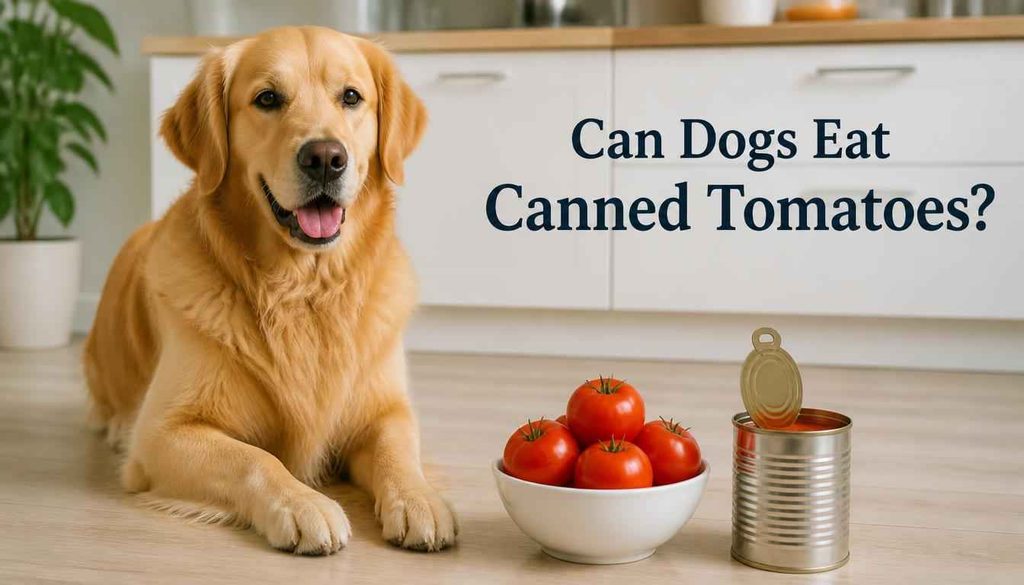
Canned tomatoes are not the same as fresh, plain tomatoes.
Some canned products contain added salt, preservatives, sauces, seasonings, onion, or garlic. These additions can make a product unsuitable for dogs.
If you are choosing a tomato for your dog, fresh, ripe, plain tomato is a much simpler option because you can see exactly what your dog is eating.
Always read the ingredient label before sharing any packaged tomato product. If the product contains onion, garlic, heavy seasoning, or excessive sodium, keep it away from your dog.
When in doubt, skip the canned product and choose a small piece of fresh ripe tomato instead.
How Can I Feed Tomatoes to My Dog?
Start with a fresh, ripe tomato that is completely red. Wash it thoroughly, remove the stem and leaves, and cut the flesh into small pieces.
You do not need to add oil, salt, spices, sauces, or other ingredients. Plain tomato is the easiest option.
If your dog has never tried tomato before, start with one small piece. Give your dog time to see how their stomach responds before offering another piece on a later occasion.
Some dogs may enjoy tomato immediately, while others may dislike its texture or taste. There is no reason to force it if your dog does not want it.
And can you give dogs tomatoes from your garden? You can offer ripe fruit, but make sure your dog cannot freely access the plant itself.
How Much Tomato Can My Dog Eat?
There is no single portion that works for every dog. A Chihuahua and a Great Dane obviously have very different nutritional needs.
The safest approach is to think of tomato as a small treat rather than a meal ingredient. Begin with a tiny piece and see how your dog reacts.
A few practical guidelines:
- Small dogs should start with a very small piece.
- Medium dogs can generally tolerate a little more.
- Larger dogs may handle several small pieces.
- Treats should remain a limited part of the overall diet.
- Reduce the amount if your dog develops stomach upset.
If your dog has a history of digestive problems, allergies, or another health condition, ask your veterinarian about an appropriate portion.
How To Safely Feed Tomatoes to Your Dog?
Safe preparation is straightforward. Choose a ripe red tomato, wash it, remove every stem and leaf, and cut the flesh into small bite-size pieces.
Do not add salt, garlic, onion, spicy seasoning, or sauce. This keeps the snack simple and reduces the chance of accidentally giving your dog an unsafe ingredient.
If you are introducing tomato for the first time, offer only a small amount. A gradual approach makes it easier to notice whether your dog tolerates the food.
Homemade Dog Treats With Tomatoes
Tomato can be included in a homemade dog treat when the other ingredients are also dog-safe.
Keep recipes simple and avoid onion, garlic, excessive salt, sugary ingredients, and heavy seasonings. If you are creating a regular homemade diet rather than an occasional treat, consult your veterinarian or a veterinary nutrition professional to make sure the overall diet is nutritionally complete.
Store-Bought Dog Treats With Tomatoes
Some commercial dog treats may contain tomato as one ingredient. These products are formulated differently from ordinary human tomato foods, so always read the label and follow the recommended serving size.
Tomato should not be treated as a reason to give your dog unlimited treats. Calories from all treats can add up quickly.
My Dog Ate Too Much Tomato—What Do I Do?
If your dog ate a large amount of ripe tomato, the most likely concern is digestive upset. Watch for vomiting, diarrhea, reduced appetite, or abdominal discomfort.
The situation deserves more attention if your dog ate green tomato, tomato leaves, stems, vines, or another green part of the plant. Those parts contain higher levels of potentially toxic compounds.
Try to determine what your dog ate, approximately how much, and when it happened. This information can help your veterinarian assess the situation.
Do not give home remedies or try to make your dog vomit unless a veterinarian or veterinary poison professional specifically tells you to do so. Pet Poison Helpline also advises owners not to induce vomiting without professional guidance.
If your dog is showing weakness, loss of coordination, tremors, repeated vomiting, or other concerning symptoms, contact a veterinarian promptly.
What Is Tomatine Poisoning?
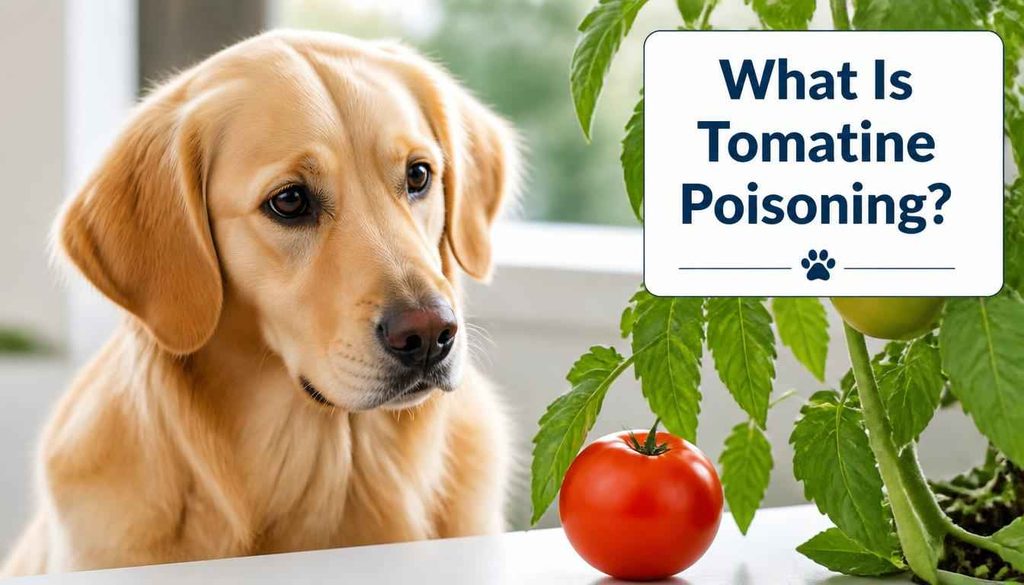
Tomatine poisoning refers to illness caused by consuming excessive amounts of tomato plant material containing higher levels of naturally occurring glycoalkaloids.
Tomatine is found throughout the tomato plant, but concentrations are much higher in the green parts and immature fruit. As the fruit ripens, levels decrease.
Most dogs are unlikely to consume enough tomato plant material to develop severe poisoning. Still, prevention is better than trying to manage an accidental exposure.
Keep tomato plants behind a secure barrier if your dog likes exploring the garden.
Symptoms of Tomatine Poisoning
Signs can vary depending on how much was consumed and which part of the plant was eaten.
Possible symptoms include:
- Vomiting
- Diarrhea
- Drooling
- Loss of appetite
- Weakness
- Lethargy
- Loss of coordination
- Tremors
- Dilated pupils
- Abdominal discomfort
- Changes in heart rate
Veterinary sources report gastrointestinal irritation as a common concern, while larger exposures can produce neurological signs such as weakness or incoordination.
If symptoms appear after your dog has eaten green tomatoes or tomato plant material, contact your veterinarian promptly.
How to Safely Share Tomatoes with Dogs
Sharing a tomato can be simple and enjoyable when you follow a few basic steps.
Choose a ripe, red tomato and wash it thoroughly. Remove all leaves, stems, vines, and other green plant material. Then cut the tomato into small pieces that are easy for your dog to eat.
Serve it plain. Avoid salt, sauces, garlic, onion, and strong seasonings.
If you are wondering can dogs Have tomatoes as a regular snack, remember that tomatoes should remain occasional treats. Your dog’s main diet should continue to provide the nutrition they need every day.
You can also rotate safe foods rather than relying on one treat. For example, chicken feet for dogs are a completely different food with their own preparation and safety considerations.
How to Prevent Dogs from Ingesting Too Many Tomatoes
The easiest way to prevent accidental exposure is to control access.
If you grow tomatoes, use fencing or another secure barrier around the garden. Keep fallen green tomatoes picked up and do not leave pruned stems or vines where your dog can reach them.
Inside the home, keep tomatoes and tomato products away from curious dogs. This is especially useful when preparing food because dogs can quickly grab ingredients from counters or dropped pieces from the floor.
Supervision also matters. A dog that repeatedly explores the garden may need a physical barrier rather than relying only on training.
Prevention is especially important for puppies and dogs that are naturally curious about plants.
FAQs
Can dogs eat cherry tomatoes?
Yes. Fully ripe cherry tomatoes can be given as an occasional treat. Remove the stem and cut larger pieces into an appropriate size for your dog.
Can dogs eat ketchup?
Ketchup is best avoided because many products contain added sugar, salt, spices, onion, or garlic. Plain ripe tomato is a much simpler choice.
Can dogs eat tomato sauce?
Ordinary tomato sauce is best avoided because recipes often contain onion, garlic, salt, or other seasonings. Always check the ingredients before sharing any tomato-based food.
Can dogs eat cooked tomatoes?
Plain cooked tomatoes made from ripe fruit are generally not considered toxic, but cooked recipes often include ingredients that are unsuitable for dogs. Plain fresh ripe tomato is easier to serve safely.
Can dogs eat tomato soup?
Most tomato soups are not a good choice because they commonly contain salt, onion, garlic, cream, or seasonings. It is safer to avoid prepared tomato soup.
Are cherry tomatoes safe for dogs?
Ripe cherry tomatoes can be safe in small amounts. Wash them, remove any green parts, and give an appropriate portion for your dog’s size.
What happens if my dog eats a green tomato?
A small exposure may not always cause serious illness, but green tomatoes contain higher levels of compounds associated with toxicity. If a large amount was eaten or your dog develops vomiting, weakness, tremors, or loss of coordination, contact a veterinarian promptly.
Can dogs eat tomatoes and cucumbers?
Plain ripe tomato and plain cucumber can both be appropriate occasional foods for many dogs. Introduce new foods separately and keep portions small.
Can dogs eat tomatoes and lettuce?
Plain lettuce and ripe tomato can both be offered in small amounts to many healthy dogs. Avoid dressings, sauces, salt, onion, and garlic.
Are tomatoes toxic to dogs?
Ripe red tomato flesh is generally considered non-toxic in small amounts. The main toxicity concern is green tomatoes and the leaves, stems, vines, and other green parts of the plant.
Are tomatoes ok for dogs?
Yes, ripe red tomatoes can be an occasional treat for many healthy dogs when served plain and in small amounts.
Are dogs allowed to eat tomatoes?
Dogs can eat ripe tomatoes as an occasional treat, but they should not have green tomatoes or the green parts of the tomato plant.
Can dogs eat tomatoes safely?
Yes, when the tomato is fully ripe, served plain, prepared properly, and given in moderation. Remove all stems and leaves before serving.
Are green tomatoes bad for dogs?
Yes. Green tomatoes contain higher levels of naturally occurring compounds such as tomatine and solanine, so they should not be fed to dogs.
Are tomato leaves poisonous to dogs?
Yes. Tomato leaves are part of the green tomato plant and contain compounds that can cause toxicity if enough is consumed. Keep dogs away from tomato plants.
The verdict on tomatoes and dogs
Ripe tomatoes can be a simple, refreshing treat for many dogs when served correctly. The key is to choose fully ripe red fruit, remove every green part, keep portions small, and serve the tomato plain.
The biggest concern is the tomato plant itself. Green tomatoes, leaves, stems, and vines contain higher levels of compounds that can make dogs sick, particularly after larger exposures.
If your dog enjoys a small piece of ripe tomato, there is generally no need to worry. Just keep tomato as an occasional treat, watch your dog’s reaction, and keep garden plants safely out of reach.
For any suspected poisoning, especially after eating a large amount of green plant material or when symptoms appear, contact your veterinarian promptly rather than relying on home treatment.



Pingback: Can Dogs Eat Strawberries? Safe Feeding Guide
Pingback: Can Dogs Eat Blackberries? Safety & Feeding Guide