

If your girl has started smelling like a fish market, I know how worrying that can feel. The good news: a fishy smell from your female dog almost always has a clear, fixable cause, and most of the time it comes down to her anal glands.
I will show you how to find where the odor comes from, what you can safely do at home, and the warning signs that mean she needs a vet now.
“In most cases, that fishy odor points to full anal glands — but if the smell comes with discharge, straining, or lethargy, skip the home fixes and call your vet.”
Start Here: Figure Out Where the Smell Is Coming From
Before you try any fix, play detective for two minutes. The location of the strongest smell tells you more than anything else. Check each of these spots:
- Around her rear end: a sharp, fishy hit right at the source usually means her anal glands — you may also catch it on her bedding.
- Around her vulva: an odor concentrated at her private area points toward vaginitis, a urinary tract infection, or normal discharge if she is in heat.
- Her urine: if the smell spikes when she pees, think urinary tract infection first.
- Her mouth: fishy breath is a different problem — usually dental disease — and needs a different fix.
- Her skin and ears: a musty, yeasty layer under the fishy note suggests a skin or ear infection.
Once you know the zone, the sections below tell you exactly what to do about it.
The Most Common Cause: Full or Irritated Anal Glands
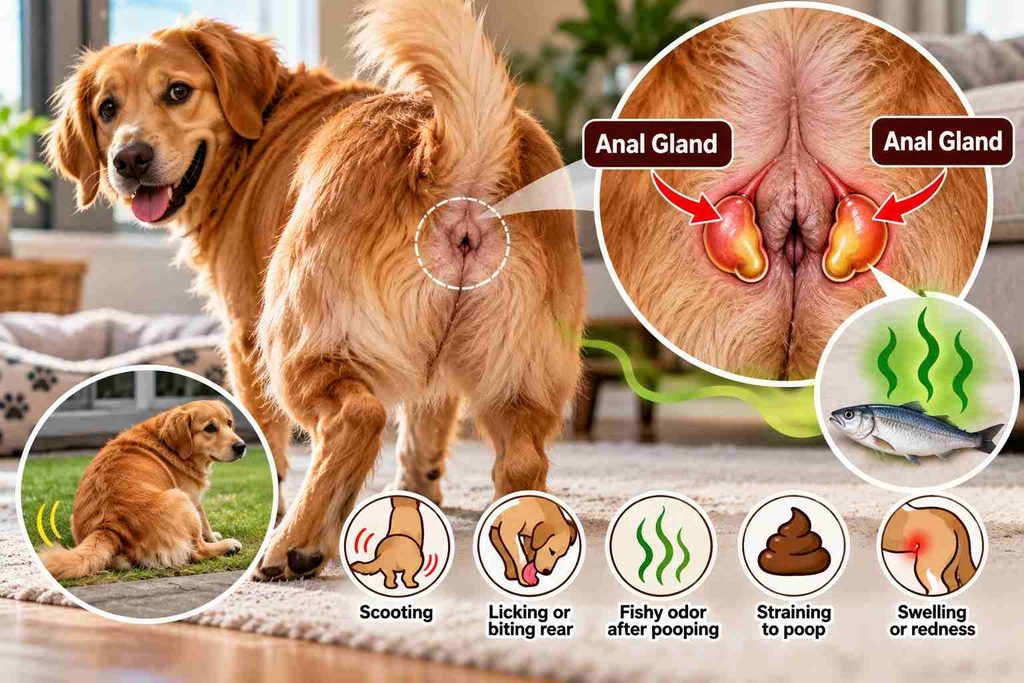
A dog smells fishy most often because of two tiny sacs sitting just inside her rear, one on each side. These anal glands release a strongly fishy fluid — the reason dogs sniff each other’s back ends. Normally a little of this fluid empties naturally every time she poops. When the glands do not empty properly, fluid builds up and the smell gets stronger and harder to ignore.
Watch for these signs:
- Scooting her bottom along the floor or grass
- Licking, biting, or chewing at her rear end
- A fishy burst of odor right after she poops
- Straining or whimpering during bowel movements
- Flinching when you touch near her tail
- A hard little lump near the rectum, or swelling and redness
Ignored glands can progress to impaction, infection, or an abscess that ruptures through the skin. The fix is simple: have them expressed by your veterinarian or an experienced groomer — it takes minutes. Do not learn the technique on her yourself the first time, because pressing incorrectly can injure the glands and cause the very infection you are trying to avoid.
To help the glands empty on their own, aim for firm, bulky stools — the pressure of a solid poop squeezes the glands naturally. More fiber helps, and many vets suggest plain canned pumpkin with no added salt or sugar as an easy fiber boost. Keep her at a healthy weight with regular exercise and plenty of fresh water; overweight dogs and dogs with soft stools get repeat gland trouble most.
A Urinary Tract Infection Could Be Behind It
If the smell is strongest in her urine, suspect a urinary tract infection — female dogs get them more often because of their shorter urethra. Owners usually notice two things at once: the dog pee smells like fish, and she suddenly needs to go outside far more often than usual.
Other UTI signs to watch for include:
- Straining to pee with little coming out
- Accidents in the house from a previously house-trained dog
- Blood in the urine or pink-tinged spots
- Excessive licking of the genital area
- Crying or restlessness while urinating
Even if the dog urine smells like fish but she otherwise seems fine, book the vet visit. UTIs almost always need prescription antibiotics, and your vet will likely run a urinalysis or culture first. Never guess at antibiotics or use leftover pills — the wrong drug or dose can make things worse. While you wait, make sure she drinks plenty of water and gets frequent potty breaks. If you work full time, check how long dogs can be left alone and arrange a midday break if needed — holding it for very long stretches is linked to urinary problems.
Vaginal Discharge: Heat, Vaginitis, and What Is Normal
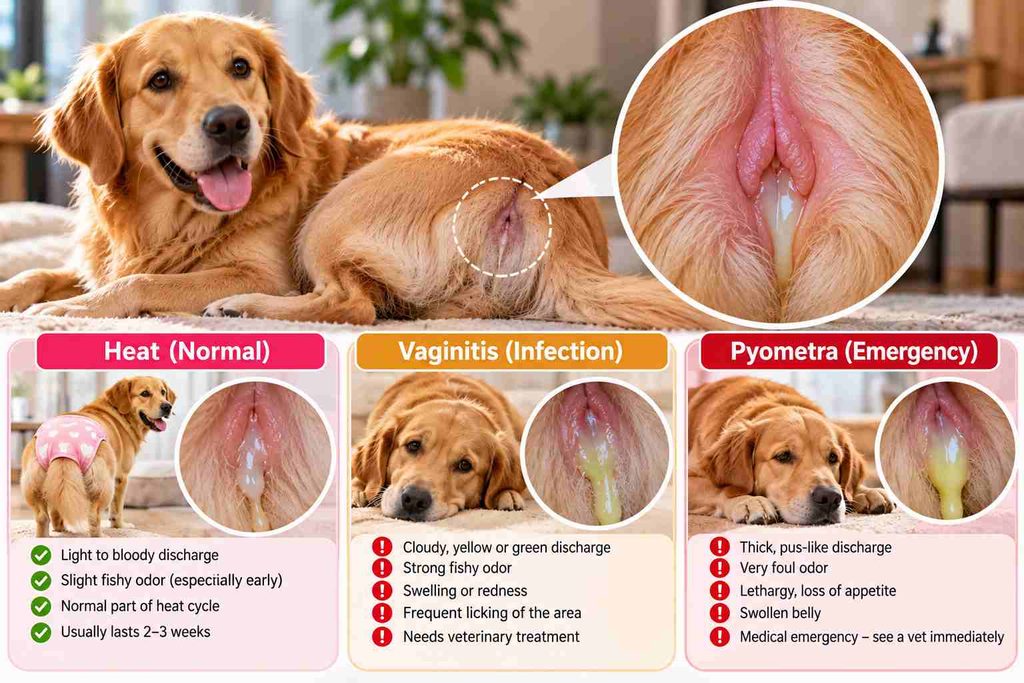
When the odor sits right at her vulva, the cause is usually in the reproductive tract. During her heat cycle, an unspayed female produces a natural discharge that can carry a strong, slightly fishy odor, especially in the first several days. This is hormonal and normal, and the smell fades as the cycle ends — usually within two to three weeks.
Vaginitis — inflammation of the vagina — is the more concerning lookalike, bringing cloudy, yellow, or greenish discharge with swelling, redness, and near-constant licking. Young unspayed females can develop puppy vaginitis, which often clears after their first heat. Any foul-smelling discharge not tied to an obvious heat cycle warrants a veterinary exam.
For day-to-day hygiene, gently wipe the vulva area with a soft cloth dampened with warm water or a pet-safe wipe when you notice odor or discharge — but only as needed. Over-cleaning strips natural oils and disrupts the area’s bacterial balance.
If the fur around her vulva is long, carefully trimming it back reduces the moisture and bacteria that trap odor. And if she is in heat, washable dog diapers changed frequently keep both her and your furniture cleaner.
The Emergency You Must Rule Out: Pyometra
I want to be direct about this one because it saves lives. In an unspayed female, a fishy or foul odor paired with pus-like vaginal discharge can signal pyometra — a severe uterus infection that fills it with pus. It typically strikes in the weeks after a heat cycle, and it is a genuine medical emergency.
Call your veterinarian immediately if you notice any of these together:
- Thick, foul-smelling, pus-like discharge from the vulva
- Lethargy or unusual tiredness
- Loss of appetite
- Fever
- Drinking far more water than usual and urinating more
- A visibly swollen or tender belly
Pyometra can turn fatal quickly without treatment, which is usually emergency surgery to remove the uterus. The reassuring part: spaying prevents pyometra entirely. If your girl is unspayed and past breeding plans, talk to your vet about spay timing — it eliminates this risk and the heat-cycle odor too.
Do Not Forget Her Skin, Ears, and Mouth
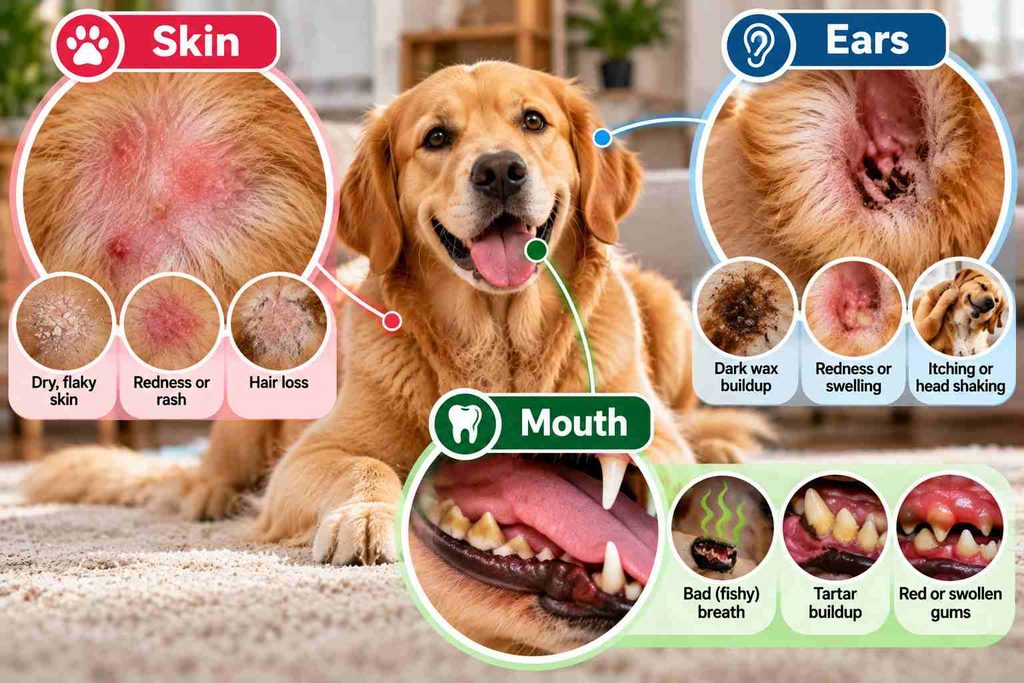
Sometimes the fishy note is only part of the story. Skin infections add their own layer to the normal smell of dog — a yeasty, sour, or musty undertone that regular bathing will not fix.
These infections love warm, moist places: skin folds, the groin, armpits, and around the vulva. Look for redness, flaking, greasy patches, or constant scratching and chewing at the paws or ears.
Ears deserve their own check, especially in floppy-eared breeds. A yeasty or bacterial ear infection can produce a surprisingly strong odor.
Signs include head shaking, scratching at the ears, redness, and dark waxy discharge. Clean the outer ear gently with a vet-recommended ear cleaner, and see your vet if the redness or odor persists — ear infections usually need medicated treatment.
Then there is the mouth. Fishy-smelling breath usually means bacteria along the gumline or early periodontal disease, easily mistaken for body odor when she breathes on you.
Brush her teeth regularly with vet-approved dog toothpaste, and offer appropriate dental chews — for dogs that enjoy a long-lasting chew, appropriately sized yak chews work well with supervision.
If your dog prefers something softer, bully sticks are another popular chewing option. Remove any chew once it gets small enough to swallow, and keep up with dental checkups — no chew replaces a vet cleaning once tartar has built up.
Could Her Food Be the Reason?
Sometimes the answer is simpler than a health problem: the dog smells like fish because she eats a lot of fish. Fish-based kibble, salmon treats, and fish oil supplements can all leave a fishy scent on her breath, skin, and even her stool.
One extra-fishy scenario I see often: a dog quietly eating a housemate’s fish oil capsules on top of her own — too much fish oil can absolutely make her rear end smell like a cannery.
If you recently switched foods and the smell showed up at the same time, check the ingredient list. You do not need to abandon fish entirely — it is a quality protein — but try a formula with a different primary protein and see if the odor fades over a week or two.
Transition gradually over about a week so her stomach stays settled, and keep supplements to the amount your vet recommends.
Getting the Smell Off Her — and Out of Your House
Once you are treating the underlying cause, clear the lingering odor like this:
- Bathe her with a dog-specific deodorizing shampoo. Human shampoo disrupts a dog’s skin pH, so stick to products made for dogs. Most dogs do well with a bath every one to three months, or as needed — over-bathing dries the skin and can make odor worse.
- Wipe the rear and vulva area between baths. Pet-safe grooming wipes handle daily freshening without a full bath.
- Wash her bedding weekly in hot water. Beds, blankets, and crate pads absorb gland secretions and discharge fast.
- Treat soft furnishings with an enzymatic cleaner. If a leak or a scooting session lands on the rug, this guide to getting dog poop out of carpet walks through the same blot-and-enzyme method I use for gland stains — blot, never rub.
- Wash food and water bowls regularly and air out her favorite spots. Stale bowls and closed-up rooms concentrate odor.
A quick caution: deodorizing sprays only mask the problem. If the fishy smell keeps returning a day or two after cleaning, the cause is still active — revisit the cause sections above and book that vet visit.
When to Call the Vet: A Quick Checklist
Home care covers a lot, but some signs mean professional help now. Call your veterinarian if you notice any of these:
- Colored, cloudy, or foul-smelling vaginal discharge
- Scooting, licking, or rear-end odor that lasts more than a day or two
- Straining to pee, blood in the urine, or frequent accidents
- Swelling, redness, or a painful lump near the rectum or vulva
- Lethargy, fever, appetite loss, or unusual thirst
- Any discharge in an unspayed female after a heat cycle
- A fishy smell that returns quickly after bathing and cleaning
When in doubt, call. A quick exam and a urinalysis or gland check cost far less than treating an abscess or advanced infection later.
Frequently Asked Questions
Why does my female dog smell like fish?
Most often, her anal glands are full. These two small sacs near her rear release a strongly fishy fluid, and when they do not empty properly during pooping, the odor lingers on her fur and bedding. A urinary tract infection, vaginitis, heat-cycle discharge, or a fish-heavy diet can also cause it.
What causes fishy smell in female dogs?
The usual causes are full anal glands, urinary tract infections, vaginitis, normal heat-cycle discharge, the emergency uterine infection pyometra, fish-based food or extra fish oil, and yeast or bacterial skin infections. Find the source and treat that cause directly.
Why does my female dog’s private area smell like fish?
A fishy odor around the vulva usually means vaginitis, a urinary tract infection, normal discharge during her heat cycle, or anal-gland fluid that has spread forward onto the surrounding fur. If you see colored discharge, swelling, or constant licking, have your vet examine her.
How to get rid of dog anal gland smell?
Have the glands expressed by your vet or groomer, then help them empty naturally with firm stools — more fiber, a healthy weight, and good hydration all help. Ask your vet about plain canned pumpkin with no added salt or sugar, and never try expressing the glands yourself the first time.
Why does my dog smell like fish?
Full anal glands are the number one reason in both male and female dogs. Other possibilities include a urinary tract infection, a vaginal infection, dental disease causing fishy breath, skin or ear infections, or a diet heavy in fish or fish oil.
Why does my dogs butt smell fishy?
That rear-end odor is classic anal-gland fluid. Watch for scooting, licking, or biting at the area — her way of telling you the glands feel full or irritated. A vet or groomer can express them in minutes, but redness, swelling, or pain means see the vet promptly.
How do I stop my dog’s glands from smelling?
Keep the glands emptying on their own: feed enough fiber for firm, bulky stools, keep her at a healthy weight, make sure she drinks plenty of fresh water, and have your vet check the glands at routine visits. Dogs prone to impaction may need scheduled professional expressions.
What does a female dog’s UTI smell like?
Her urine often smells sharply fishy or like strong ammonia, and you may notice her asking to go out constantly, straining with little result, or having accidents indoors. UTIs almost always need prescription antibiotics, so call your vet for a urinalysis rather than waiting it out.
Can a fishy smell mean my female dog has pyometra?
Yes — a fishy or foul odor with pus-like vaginal discharge in an unspayed female can signal pyometra, a life-threatening uterus infection. Lethargy, fever, appetite loss, and extra thirst often come with it. This is an emergency: contact your vet immediately.
What home remedy can I use to get rid of fishy smell in my dog?
Bathe her with a dog-specific deodorizing shampoo, gently wipe the vulva and rear with pet-safe wipes, wash her bedding in hot water, and treat carpets and upholstery with an enzymatic cleaner. These handle the odor, but only treating the underlying cause keeps the smell from coming back.
Your Fresh-Smelling Week: A Simple Plan That Actually Works
Put it together like this. Day one: do the two-minute sniff test and match the smell to its zone. Days two and three: handle the likely cause — book the gland expression or the vet visit, adjust the food if fish is the culprit, and give her a proper bath with a dog-safe shampoo. Through the week: wash her bedding, treat marked-upholstery with an enzymatic cleaner, and add the fiber your vet approves of.
Most fishy-smell stories end the same way: full glands, a quick expression, and a fresher dog by the weekend. The cases that do not resolve that easily are exactly the ones worth catching early — a UTI caught this week is a simple course of medication. Trust your nose, act on what it tells you, and when anything looks or smells truly off, let your vet take it from there.