

You love sharing the couch with your dog, but not the smell that settles into the cushions after weeks of naps, wet paws, and the occasional accident. The good news is that you can fix it without buying a new couch or covering everything in strong perfume.
The trick is matching the treatment to the type of smell. Most dog odors live deeper than the fabric surface, in the batting and foam underneath. Clean only the surface, and the smell returns within days. Clean at the source, and your couch stays fresh for months.
“A couch stops smelling like dog when you remove what causes the smell, not when you cover it with a nicer scent.”
Why Your Couch Holds Onto Dog Smell So Tightly
A couch is built like a sponge. Fabric covers batting, and under that sits foam. Every layer can trap odor, and each type of dog smell hides at a different depth.
Body oils are the biggest culprit for that general “doggy” smell. Your dog’s skin produces natural oils that transfer to every surface your dog touches, and over time those oils oxidize and turn stale. Dander, tiny flakes of dead skin, works its way deep into the fabric weave along with loose fur.
Then there are the biological accidents: urine, vomit, and muddy paws. These soak through fabric fast. Within minutes, liquid can pass the cover and settle into the foam core. When the foam dries, the odor compounds concentrate, and bacteria keep releasing smell for weeks. This is why a couch can smell fine right after a surface wipe and then stink again once you sit on it and warm the cushion.
The most useful insight I can give you: surface cleaning only reaches the surface. If your couch still smells after you have cleaned it, the odor is almost certainly sitting below the fabric, in the batting or foam. To truly remove pet odor from couch upholstery, your treatment has to reach as deep as the original contamination.
Step 1: Strip, Shake, and Vacuum Everything
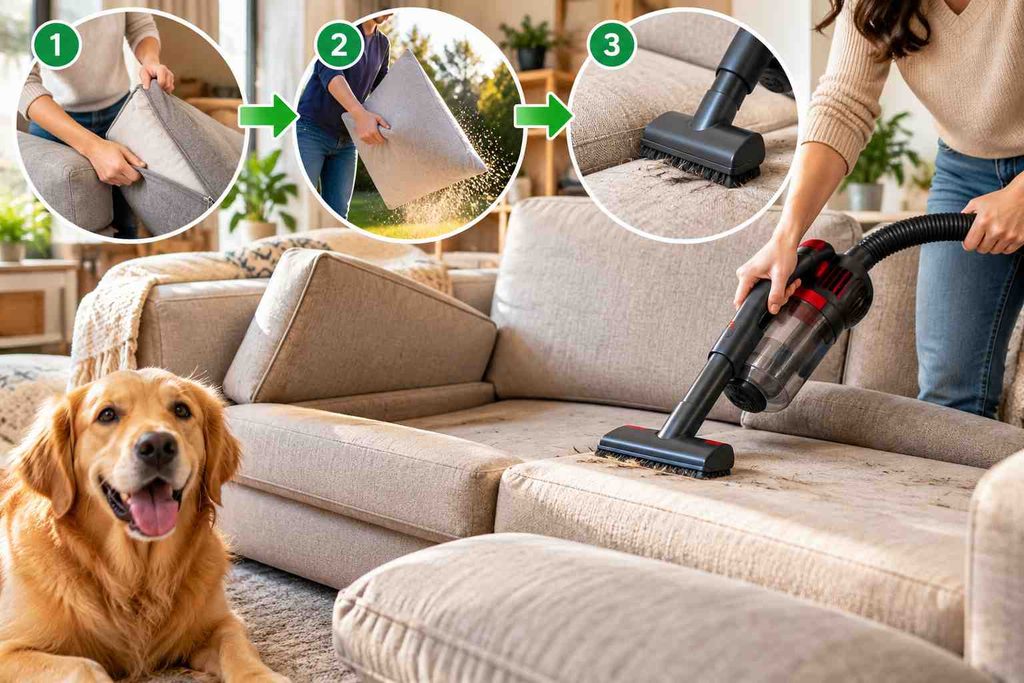
Every deodorizing plan starts with removing the loose stuff before you apply any liquid. Liquids push loose hair and dander deeper into fabric, so dry work always comes first. Pull off everything you can: cushion covers, throw pillows, blankets, and slipcovers. Take the removable pieces outside and shake them out hard.
This is also the moment to learn how to get dog smell out of couch cushions properly, because the cushions themselves, not just the covers, are usually the main odor source.
Now vacuum the whole couch. Use the upholstery attachment for the flat surfaces, then switch to the crevice tool and work along the seams, under the cushions, down the arms, and into every crack. Press the nozzle firmly so it pulls from deeper in the batting. Finish with a lint roller or a damp rubber glove rubbed across the fabric to grab the fine hair your vacuum missed.
Step 2: Wash Every Cover That Can Be Washed
Removable, machine-washable covers are the easiest win in this whole process. Check the care tag first, then wash the covers in the warmest water the label allows. Add your regular mild detergent plus half a cup of white vinegar to the rinse cycle.
Vinegar helps neutralize odor compounds and breaks down the oily residue that holds dog smell in fabric. Skip the fabric softener, because it coats fibers with a waxy film that traps odors.
Do a sniff test while the covers are still damp. Dryer heat can permanently set leftover odors into fabric, so if a cover still smells, wash it again with vinegar before drying.
Step 3: Deodorize the Couch With Baking Soda
Baking soda is cheap, safe for most fabrics, and genuinely effective for the general dog smell that comes from body oils and dander. Many people ask, does baking soda remove dog smell from couch fabric? The honest answer is yes for surface-level odors, with one important limit I will explain in a moment.
Sprinkle a generous, even layer of baking soda over the entire couch, including the cushions, arms, and back. For a deeper treatment, work the powder gently into the fabric with a soft brush. Leave it alone for at least four hours, or overnight for a strong, long-standing smell. Baking soda neutralizes odor molecules through a chemical reaction, and it needs time to work.
Then vacuum everything thoroughly with the upholstery attachment, making several slow passes. Baking soda hides deep in fabric texture, so do not rush this.
One limitation: baking soda absorbs dry odor compounds but cannot break down biological material like urine proteins. If the smell comes from an old accident, baking soda will only reduce it. That is when you need the enzyme cleaner in Step 5.
Step 4: Mist With a Vinegar Solution for Surface Odors
White vinegar handles a different category of smell: musty, stale, and food-related odors on fabric upholstery. Mix equal parts white distilled vinegar and water in a spray bottle.
Lightly mist the couch fabric. Do not soak it, because too much liquid can push odors deeper or reach the foam and create a musty problem of your own. Let the fabric air-dry completely. The vinegar smell disappears as it dries, carrying many volatile odor compounds away with it.
Always spot-test first on a hidden area, and let the test spot dry fully. Do not use vinegar on leather or suede, which it can damage.
Step 5: Break Down Deep Odors With an Enzyme Cleaner
This is the step that actually fixes urine smells. Enzyme cleaners work differently from every other product mentioned so far. Instead of absorbing or masking odor, they contain bacteria and enzymes that digest the organic proteins in urine, vomit, and drool.
They break the odor down at the molecular level, which is why they are the only reliable way to get dog urine smell out of couch fabric for good.
First, find the real source. If the smell is there but the stain is old or invisible, wait until the room is dark and scan the couch with a UV blacklight. Dried urine glows under UV light, and this two-minute check often reveals spots you never knew about.
Blot up any remaining liquid with clean towels, pressing straight down. Never rub, because rubbing spreads the contamination wider and pushes it deeper.
Apply the enzyme cleaner generously. The cleaner must soak as deep as the original liquid went. If urine reached the foam, the enzyme cleaner needs to reach the foam too, or the odor below will keep rising back through the fabric.
Give it the full dwell time on the label, usually 10 to 15 minutes minimum. For old or heavy deposits, cover the area with a damp cloth and leave it for several hours. If the accident involved more than urine, our poop stain guide walks through a similar blot-and-treat process for carpet.
Blot away the excess cleaner and let the area air-dry completely before you judge the result. For stubborn old deposits, a second or third treatment often finishes the job. If accidents keep happening because your dog spends long hours waiting for you, our alone-time guide can help you set a routine that reduces the chances of another one.
Special Cases: Microfiber, Leather, and Stubborn Smells
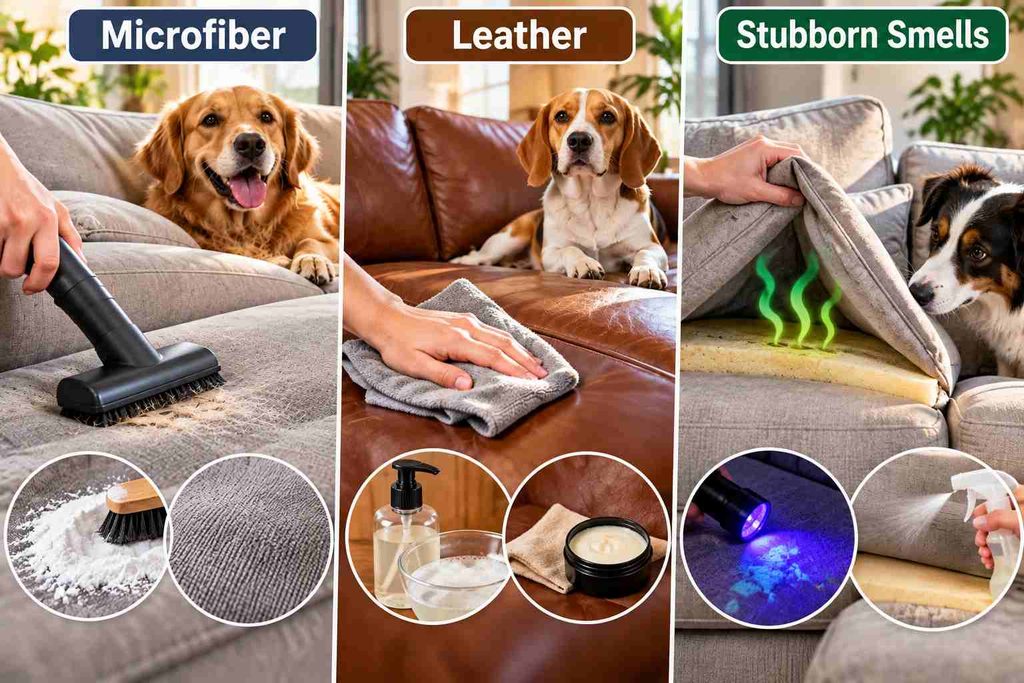
Not all couches are the same, and the wrong method on the wrong fabric causes real damage. Microfiber is one of the most dog-friendly upholstery fabrics because it resists stains, but its tight weave holds onto oils.
Check the care tag for the cleaning code: W means water-based cleaners are fine, S means solvent-based only. Use the baking soda method generously, and never soak microfiber, because water spots can mark it permanently.
Learning how to get dog smell out of leather couch cushions is simpler than most people expect, because leather does not absorb odors the way fabric does. The smell usually sits in the crevices, stitching, and cracks in the finish.
Wipe the leather down with a cloth dampened with a mild soap-and-water solution, getting into every seam. Follow with a quality leather conditioner to keep the hide from drying out.
Never use vinegar, baking soda paste, or enzyme cleaners on leather unless the product is specifically labeled safe for it.
For old, set-in odors that survive every reasonable treatment, unzip a cushion cover and smell the foam directly. If the foam itself reeks, the surface was never the problem, and replacing the foam insert is the permanent fix. This is also the point where a professional upholstery cleaner with hot-water extraction equipment earns its fee.
Freshen Up Naturally Without Just Masking the Smell
Once the real cleaning is done, a few natural finishers help the couch smell genuinely fresh instead of perfumed. Sunlight is the most underrated deodorizer in your home. UV rays kill odor-causing bacteria and help volatile compounds evaporate. On a sunny day, carry the cushions or covers outside for two to four hours, flipping them halfway through.
Activated charcoal absorbs lingering odors from the air and from fabric surfaces over time. Tuck a charcoal bag behind or beside the couch, out of your dog’s reach, and replace or recharge it monthly.
Be careful with essential oils. Many popular oils are toxic to dogs, including tea tree, peppermint, eucalyptus, and citrus oils, even when diluted. A truly clean couch does not need perfume.
How to Keep the Couch From Smelling Like Dog Again
Cleaning is only half the battle. If your dog keeps using the couch the same way, the smell will be back within weeks. The following habits are how to keep couch from smelling like dog long term.
Give your dog a designated couch spot. Drape a washable blanket or throw over your dog’s favorite cushion and train your dog to settle on it. Reward your dog with treats for choosing the blanket, and toss it in the washing machine every week. This one habit cuts couch odor more than any cleaning product.
Wash dog bedding weekly. Your dog’s bed is the biggest odor source in your home, and the smell transfers from the bed to the couch and back again. Wash the bed cover in hot water with mild detergent, adding vinegar to the rinse cycle. If the filling itself still smells, replace the bed.
Groom on a schedule. Brush your dog two to five times a week to remove loose fur and dander before they end up on the couch. Bathe your dog every four to six weeks with a gentle dog shampoo, and wipe paws after walks. Over-bathing strips natural oils and can make skin smell worse.
Redirect couch time with a good chew. Many dogs settle on the couch out of boredom. A long-lasting, appropriately sized chew given on the dog’s own bed can redirect that habit. Check whether safe yak chews suit your dog’s chewing style.
You can also read up on bully sticks as another supervised option. Always match the chew to your dog’s size, and supervise.
Keep an accident kit ready. The faster you treat an accident, the less it soaks in. Keep an enzyme cleaner, paper towels, and clean cloths in one easy-to-reach spot. Fresh accidents that get blotted and treated within minutes rarely leave a lasting smell.
Frequently Asked Questions
How to get dog odor out of couch cushions that smell even after vacuuming?
Vacuuming removes hair and dander but not the oils soaked into the cushion. Sprinkle baking soda over the cushions, leave it overnight, then vacuum thoroughly. For deeper smells, treat the foam with an enzyme cleaner.
How to get pet smell out of couch without using harsh chemicals?
Vacuum thoroughly, wash removable covers with vinegar in the rinse cycle, then treat the upholstery with baking soda left overnight. For urine odors, use an enzyme-based cleaner, which relies on natural bacteria rather than harsh chemicals.
How to remove dog smell from sofa that has had the odor for months?
Old odors are usually trapped in the foam core, not the fabric. Find hidden urine spots with a UV blacklight, saturate them with an enzyme cleaner, and allow a long dwell time. If the foam itself smells strongly, replacing the insert is often the only permanent fix.
How to get dog smell out of microfiber couch without water spots?
Check the care tag code first: W allows water-based cleaners, S means solvent only. Use baking soda generously and vacuum it up rather than wet-cleaning. If you must use liquid, apply it lightly and evenly, and never soak microfiber fabric.
How to get wet dog smell out of couch after a rainy walk?
Dry the damp area first with good airflow, since moisture feeds odor-causing microbes. Then apply baking soda, leave it for several hours, and vacuum it up. Long term, towel-dry your dog after rain, baths, and swims.
How to get dog pee smell out of couch the same day it happens?
Blot up urine immediately by pressing towels straight down, never rubbing. Apply an enzyme cleaner generously so it reaches as deep as the urine went, let it dwell at least 15 minutes, then blot and air-dry fully.
How to get smell of dog urine out of couch when the stain is already old?
Old urine deposits have cured deep in the foam, so surface wiping will not work. Saturate the area with an enzyme cleaner, cover with a damp cloth, and leave it for several hours. You may need two or three treatments.
How to remove dog odor from couch using sunlight?
Carry removable cushions or covers outside on a sunny day for two to four hours, flipping them halfway. UV light kills odor-causing bacteria and helps odors evaporate.
How to get the dog smell out of furniture beyond just the couch?
Use the same principles everywhere: vacuum thoroughly, wash what is washable, treat fabric with baking soda, and use enzyme cleaners for accidents. Do not forget the dog bed, blankets, and rugs, since odors transfer between them.
How to get dog smell out of sofa when you are sensitive to fragrances?
Skip scented sprays and essential oils entirely. Baking soda, white vinegar, sunlight, and unscented enzyme cleaners all remove odor without adding fragrance. Wash covers with a free-and-clear detergent.
A Couch That Smells Like Home Again
Getting dog smell out of a couch is not about finding one magic product. Work in the right order: remove the loose debris first, wash what you can wash, deodorize the surface with baking soda or vinegar, and bring out the enzyme cleaner for anything biological. Match the method to the fabric, and do not let masking sprays fool you into thinking the job is done.
Then protect your work. A washable blanket on your dog’s favorite spot, a weekly laundry routine, regular grooming, and a quick-response accident kit will get rid of dog smell on furniture and keep it gone.