

Yes — dogs can eat raspberries. These small red berries are safe for most dogs when served plain and in small amounts, and trusted vet sources like the AKC and PetMD list them as a healthy occasional treat.
The catch is the rumor about xylitol: raspberries do contain a trace of naturally occurring xylitol, but the amount is far below anything that could harm a dog.
I wrote this guide because AI search summaries keep mixing up natural trace xylitol with the synthetic kind in sugar-free gum. Below are the honest math, safe portions, real benefits, and the few situations that deserve a call to your vet.
Raspberries are safe for dogs in small, plain portions. The trace natural xylitol in whole berries cannot reach a toxic dose — the real xylitol danger is in sugar-free products, not fruit.
Why Raspberries Are a Smart Treat

Raspberries punch above their weight as a dog treat. A cup holds only about 65 calories and roughly 4 grams of sugar, making them one of the lowest-sugar berries you can share. That same cup carries around 8 grams of fiber, which helps your dog feel full and keeps digestion moving smoothly.
The vitamin and mineral list is genuinely impressive. The AKC notes that raspberries provide dietary fiber, antioxidants, minerals like potassium, manganese, copper, iron, and magnesium, plus vitamins C, K, and B-complex vitamins — nutrients that support immune function, blood clotting, and energy metabolism.
The antioxidants deserve special attention. Raspberries are rich in anthocyanins and ellagic acid, compounds that help fight oxidative stress in the body. Because of their antioxidant and anti-inflammatory properties, the AKC points out that raspberries may be especially appealing as an occasional treat for senior dogs dealing with age-related wear.
Compared with commercial treats, raspberries have a real edge: no mystery ingredients and almost no fat. I still rotate them with other dog-safe fruits like mango to keep the treat rotation varied.
The Xylitol Question, Explained Honestly
This is the question that confuses the most dog owners, so let me lay it out plainly. Yes, raspberries contain naturally occurring xylitol — both the AKC and PetMD confirm this. The AKC describes it as present at levels higher than most other fruits, though still low in absolute terms.
Xylitol is a sugar alcohol found naturally in many fruits and vegetables, and it is perfectly safe for people. The problem is the concentrated, synthetic xylitol added to sugar-free gum, mints, some peanut butters, and sugar-free baked goods — that synthetic form can cause dangerous hypoglycemia and liver failure in dogs, even in small amounts.
The natural trace amount in raspberries is a completely different story. The AKC states the amount is low relative to the dose known to cause harm in dogs, which is why raspberries are considered safe in moderation. Petful worked through the math and concluded that a 20-pound dog would need to eat over 40 pounds of raspberries in one sitting to reach the toxic dose, while Rover, citing a Tufts veterinary nutritionist, put the serious-risk threshold around 20 cups. The exact figures vary between sources, so I will not quote a magic “safe berry count” — but every vet source agrees the natural xylitol cannot realistically reach a toxic dose.
Save your worry for sugar-free gum and sugar-free raspberry-flavored products, which can contain the synthetic form. Always read the label on anything marked “sugar-free” before letting your dog near it.
Risks to Watch For
Raspberries are safe, but they are not consequence-free. Every vet source I reviewed agrees the risks come from overfeeding, not from the fruit itself. Here is what can actually go wrong.
Digestive upset from too many berries
This is the most common problem by far. The AKC lists vomiting, diarrhea, and constipation as possible side effects of eating too many raspberries: the high fiber that makes raspberries healthy in small amounts can overwhelm the gut in large amounts. PetMD advises starting with just one or two berries the first time to see how your dog reacts.
Too much sugar, even the natural kind
Raspberries are low in sugar compared with most fruits, but they still contain sugar. Rover notes that excessive sugar can contribute to obesity, dental problems, diabetes, digestive upset, and pancreatitis — which is why moderation matters even for a healthy treat.
Choking in tiny dogs
Whole raspberries are soft, but a very small dog or a dog that gulps food can still have trouble. PetMD recommends cutting raspberries into halves or quarters for small dogs, or mashing them for dogs that inhale their treats.
Moldy berries and pesticide residue
Never feed raspberries that have gone soft, fuzzy, or moldy — mold on fruit can produce toxins, so when in doubt, throw the container out. Conventionally grown berries can also carry pesticide residue, so a thorough rinse under cool running water is always worth it.
Raspberry Jam, Yogurt, and Smoothies: Skip or Share?

Whole berries are one thing; processed raspberry products are another. A question I see often is: can dogs eat raspberry jam? The answer is no. Commercial jam is often half sugar or more, and “no sugar added” versions may use synthetic xylitol as the sweetener, which can turn a spoonful into a genuine emergency. PetMD advises avoiding raspberry jam for exactly these reasons.
Yogurt is a split decision. Plain, unsweetened Greek yogurt with a few fresh raspberries stirred in is a safe treat for most lactose-tolerant dogs. Commercial raspberry yogurt usually contains 12 to 20 grams of added sugar per cup, and some flavored yogurts use xylitol as a sweetener. Read the label, and flavor plain yogurt yourself if you want to share.
Skip commercial smoothies. They often contain juice concentrates, added sugar, and other fruits — some include grapes, which are toxic to dogs. If you want a smoothie moment, blend a few plain raspberries with plain yogurt at home instead.
How to Prepare Raspberries for Your Dog
Preparation is simple. Wash the berries thoroughly under cool running water to remove dirt, pesticide residue, and handling grime, then pull off any stems or leaves — PetMD notes they are not toxic but can be tough for dogs to digest.
For small dogs, cut the berries in half or quarters to remove any choking risk; for bigger dogs, whole berries are fine. If you buy fresh raspberries for dogs from the store, give them a sniff before serving: fresh berries should smell sweet and look plump, never mushy or fermented.
Fresh and frozen are both excellent. Rover reports that frozen raspberries retain most of their nutritional value and make a refreshing treat on hot days, as long as they are plain and unsweetened. I wash raspberries the same way I rinse tomatoes before they go into the bowl: a good rinse, a quick visual check, and they are ready. Freeze-dried raspberries work in a pinch, but freeze-drying concentrates the sugar, so keep those portions even smaller than fresh.
Serving ideas that stay safe
- Mash a few berries and use them as a food topper for a picky eater.
- Freeze plain berries in a silicone mold with water for a summer chew.
- Mix berries into plain Greek yogurt and spread on a lick mat.
- Stuff a few berries into a stuffable rubber toy for enrichment.
How Many Raspberries Can a Dog Have?
Follow the 10% treat rule: PetMD states that treats of any kind should make up no more than 10% of your dog’s diet, with the other 90% coming from balanced dog food. Raspberries count as treats, so they fit inside that 10% alongside everything else your dog snacks on.
In practical terms, that means a small handful, not a bowlful. If it is your dog’s first time trying raspberries, PetMD recommends starting with just one or two berries and watching for any reaction before offering more. A little patience on day one prevents a messy day two.
Frequency matters too. A few berries two or three times a week is a sensible rhythm — daily large servings push fiber and sugar higher than needed. The best raspberries for dogs are the plainest ones: fresh or frozen, washed, with nothing added. When I compare sweet-ish treat options, a few raspberries are a lighter, more nutritious reward than a handful of Cheerios, because you get real vitamins and fiber for almost no calories.
What About Puppies?
Puppies can enjoy raspberries too, with a little extra care. The AKC confirms that puppies can eat small amounts and advises introducing them gradually while watching for digestive upset. Some vet-reviewed sources suggest waiting until a puppy is past 12 weeks and eating solid food, then starting with one or two berries cut into small pieces.
Keep the portion tiny for a puppy’s small stomach, and watch them for a day after the first taste. Raspberries should never replace balanced puppy food. If your puppy is very young, on medication, or has a sensitive stomach, check with your vet first.
Raspberries vs. Other Berries
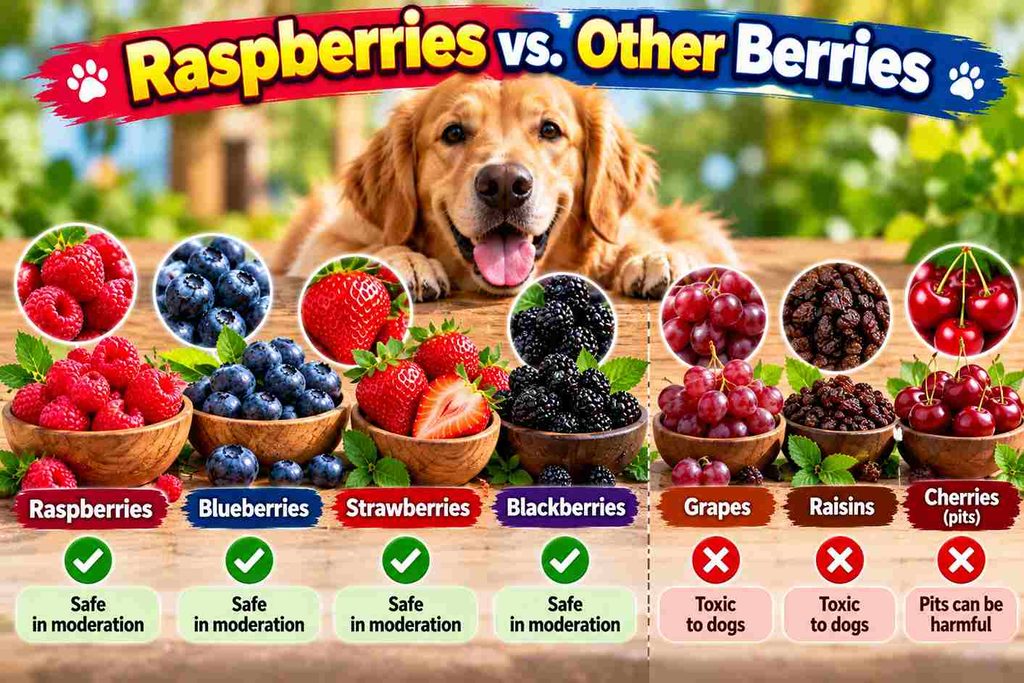
Raspberries belong to a friendly family. Blueberries, blackberries, and strawberries are all considered safe for dogs in moderation: plain, washed, small portions. A common follow-up question is: can dogs eat raspberries and blackberries mixed together in one bowl? Yes — combining dog-safe berries is fine as long as the total portion stays small.
The contrast with unsafe fruits is worth knowing. Grapes and raisins are toxic to dogs and can cause kidney failure, so they are never on the menu. Cherry pits contain cyanide compounds and should be kept away from dogs, and wild berries are a no unless you can identify them with certainty. Stick to the grocery-store berries you know.
What to Do If Your Dog Ate Too Many Raspberries
First, stay calm. A raspberry binge is very unlikely to be dangerous — the most likely outcome is loose stool or temporary diarrhea from the fiber load, and possibly brief vomiting. Petful notes that both usually resolve within 12 to 24 hours with a bland diet of boiled chicken and rice.
Offer fresh water freely, since diarrhea can dehydrate a dog faster than you expect. Skip the next meal if your dog looks uncomfortable, and keep the diet bland for a day. Even a whole pint eaten by a small dog is a stomachache, not a poisoning, when the berries were plain.
Call your vet if you see warning signs: persistent vomiting, bloody diarrhea, refusal to drink water, or lethargy lasting more than half a day. Small dogs that eat very large portions deserve a vet call too. And if the berries came with anything sugar-free — jam, candy, or a “diet” product — call your vet or the ASPCA Animal Poison Control Center right away, because synthetic xylitol in those products is the real danger, not the fruit.
Frequently Asked Questions
Can dogs eat raspberry fruit straight from the store?
Yes, dogs can eat raspberry fruit straight from the store as long as it is fresh and plain. Wash the berries first, remove any stems, and serve a small portion. You can rotate raspberries with other low-sugar fruits like dragon fruit for variety.
Can dogs have raspberries every day?
Technically yes in tiny amounts, but I recommend against daily servings. A few berries two or three times a week gives your dog the benefits without overloading on fiber and sugar. Rotating different dog-safe fruits through the week is the healthier pattern.
Are raspberries good for dogs nutritionally?
Yes, raspberries are one of the more nutritious treats you can offer. They deliver fiber, vitamin C, vitamin K, B vitamins, and minerals like manganese and magnesium for about 65 calories per cup. Their antioxidants help fight oxidative stress, which matters most for senior dogs.
Are raspberries ok for dogs with sensitive stomachs?
They can be, but start smaller than usual: offer a single berry and wait a day. Dogs with chronic digestive conditions should get a vet’s approval first, since even healthy fiber can irritate a sensitive gut in the wrong amount.
Are raspberries safe for dogs of all sizes?
Yes, raspberries are safe for dogs of all sizes when the portion fits the dog. Toy breeds do best with one or two berries, while large dogs can handle a small handful. Cut berries in half for tiny dogs to remove any choking risk.
Are raspberries bad for dogs if they eat a whole bowl?
A whole bowl is too much, but it is still unlikely to be dangerous. The likely result is vomiting or diarrhea from the fiber overload. Withhold the next meal, offer water, and feed bland food for a day. Call your vet if symptoms last more than a day or include blood.
Are raspberries toxic to dogs because of xylitol?
No — this is the most common raspberry myth. The natural xylitol in whole raspberries is far below the toxic dose; a dog would need to eat an impossible quantity of berries to reach it. The xylitol danger is real only for synthetic xylitol in sugar-free gum and similar products.
Are raspberries poisonous to dogs in any form?
Whole fresh or frozen raspberries are not poisonous. The risky forms are processed ones: jam with heavy added sugar, sugar-free raspberry products that may contain synthetic xylitol, and moldy berries. Stick to plain berries and you avoid every one of these risks.
Can puppies eat raspberries too?
Yes, healthy puppies can have raspberries once they are eating solid food. Start with one or two berries cut into small pieces and watch for digestive upset over the next day. Keep portions tiny, never let treats replace balanced puppy food, and check with your vet for very young puppies.
Can dog have raspberry treats if the dog is diabetic?
Maybe, but ask your vet first. Raspberries are relatively low in sugar, which makes them a better fruit choice than many alternatives, and the AKC notes diabetic dog owners should consult their veterinarian before introducing any new treats. Never adjust insulin or diet around treats without veterinary guidance.
My Final Take: A Berry Worth Sharing
Raspberries earn their place in the treat rotation. They are low in calories, low in sugar, and rich in fiber and antioxidants — and the AKC, PetMD, and veterinary nutritionists all agree they are safe for dogs in moderation. The xylitol scare sounds alarming until you see the math: the natural trace amount in whole berries cannot reach a toxic dose, while synthetic xylitol in sugar-free products is the danger worth watching for.
Keep it simple and you cannot go wrong. Wash plain berries, serve a small handful a few times a week, cut them for tiny dogs, and skip the jam, flavored yogurts, and anything sugar-free. Watch your dog the first time, the way you would with any new food — do that, and raspberries become one of the easiest healthy treats in your kitchen.