

Yes, dogs can eat plain Cheerios in small amounts as an occasional treat. Cheerios are not toxic to most healthy dogs, but they provide little nutritional value. Choose plain varieties, avoid harmful ingredients such as chocolate or xylitol, skip milk, and keep portions small.
Wondering if your dog can share your breakfast? Discover which Cheerios are safe, how much is enough, and what ingredients you should avoid.
Are Cheerios Safe for Dogs?
For most healthy dogs, a few plain Cheerios are unlikely to cause a problem. Original Cheerios are made mainly from whole grain oats, corn starch, sugar, salt, and added vitamins and minerals. The important point is that a food can be safe without being a good everyday choice.
If you are wondering, “Can Dogs Have Cheerios?” the answer is yes, but think of them as an occasional extra rather than part of your dog’s normal diet. They should never replace a complete and balanced dog food.
So, can dogs eat Cheerios cereal? Plain Original Cheerios are the simplest option because the ingredient list is relatively straightforward. Still, every dog is different. A dog with food sensitivities, a medical condition, weight concerns, or a veterinary-prescribed diet may need different rules.
Why They Can Eat them (But Shouldn’t Eat Many)

The reason dogs can usually handle a few plain Cheerios is that the basic cereal does not contain one of the major dog toxins such as chocolate, grapes, raisins, onions, garlic, or xylitol. Whole grain oats also provide carbohydrate and some fiber, but that does not make Cheerios a necessary source of nutrition for dogs.
This is where the question “are Cheerios good for dogs” needs a balanced answer. They can be an occasional snack, but they do not offer the complete nutrition your dog gets from a properly formulated diet. Treats and people foods should stay a small part of the daily calorie budget.
For a little variety, some owners prefer sharing small pieces of wholesome foods instead. If you are choosing animal-based treats, you can also read about whether chicken liver is good for dogs before adding it to your dog’s routine.
Flavored, Sweetened or Specialty Cheerios? Watch Out!
Plain Cheerios are easier to evaluate than specialty varieties. Once a cereal has extra sweeteners, flavorings, chocolate, nuts, spices, or other ingredients, the answer can change. The safest habit is to check the current package rather than assuming every Cheerio product is the same.
If you ask, “can dogs eat honey cheerios,” the answer depends on the exact product and amount. Honey itself is not the main concern here; the bigger issue is that sweetened cereal can add unnecessary sugar and calories. Some varieties can also contain ingredients that are inappropriate or toxic for dogs.
Chocolate deserves special attention. Chocolate is toxic to dogs, and a chocolate-flavored cereal should not be treated like plain Cheerios. Xylitol is another ingredient that requires immediate caution because it can cause dangerous low blood sugar and liver injury in dogs.
What about Honey Nut Cheerios?
So, can dogs eat honey nut cheerios? A small accidental amount is not automatically an emergency, but Honey Nut Cheerios are not the variety I would choose as a regular dog treat. Current product information lists sugar, honey, brown sugar syrup, salt, and almond flavor, and the product contains almond ingredients.
That makes the cereal sweeter and more complicated than Original Cheerios. If you are asking, “is honey nut cheerios good for dogs,” it is better to say no as a routine treat. If your dog has eaten a few pieces, check the label, consider the amount, and watch for digestive upset.
The same answer applies to “can dogs have honey nut cheerios?” They can accidentally consume a small amount without necessarily becoming sick, but plain dog-safe treats are a better choice. Puppies deserve even more care because their growing diets need to stay nutritionally balanced.
Portion and Frequency: Keep It Light
There is no single portion that is right for every dog. A tiny dog and a large dog have very different daily calorie needs, and treats should be counted as part of those calories.
Veterinary nutrition guidance commonly recommends keeping treats below 10% of a dog’s daily calorie intake, with the remaining calories coming from a complete and balanced diet. For some dogs, the practical amount of Cheerios may be only a few pieces.
If you are also considering other human foods as rewards, choose small portions and avoid turning several different snacks into a large daily calorie load. For another protein-rich food idea, see whether lamb can be good for dogs before offering it.
How Many Cheerios can a Dog Eat?
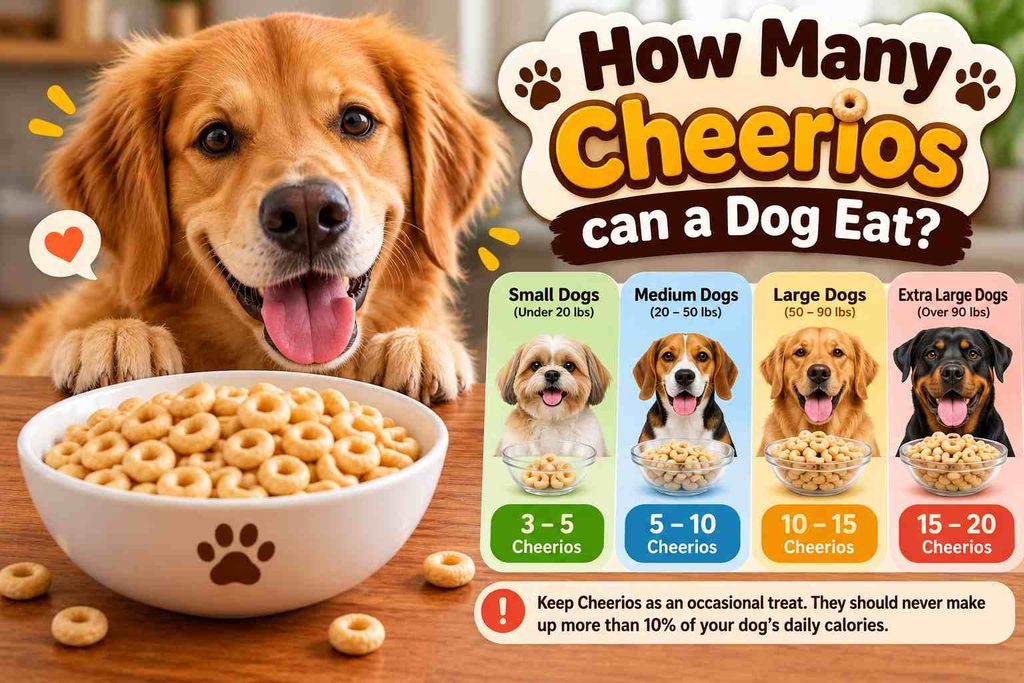
The best answer is: only enough to stay within your dog’s treat calorie budget. Avoid using a fixed number such as “10 Cheerios” for every dog because body size, age, activity, weight, health, and the rest of the diet all matter.
A few pieces can work as a tiny training reward for a healthy dog. A larger handful can become excessive, especially for a small dog. Cheerios should also never become a meal.
For puppies, overweight dogs, or dogs with diabetes, digestive disease, food allergies, or a prescription diet, ask your veterinarian about suitable treats and portions. Puppies have changing calorie and nutrient needs, so their main food should remain the priority.
When to Avoid Actually Giving Cheerios
There are times when skipping Cheerios is the smartest choice. If your dog has a known food sensitivity, is on a therapeutic diet, has a condition requiring strict calorie control, or has previously reacted to an ingredient, do not add cereal without veterinary advice.
Also avoid any variety containing chocolate or another ingredient known to be toxic to dogs. If a product is sugar-free, check the ingredient list carefully rather than assuming it is safer. Xylitol can be extremely dangerous to dogs.
You should also avoid using human cereal as a regular reward if it causes vomiting, diarrhea, gas, itching, or other signs of intolerance. A single mild digestive reaction may pass, but repeated symptoms deserve veterinary attention.
How to Use Plain Cheerios Smartly (If You Do)
If you choose to offer plain Cheerios, keep the routine simple. Use a small amount, serve them dry, and count them within your dog’s daily treat allowance. They can work as an occasional training reward because their small size makes it easy to control portions.
Do not turn a cereal snack into a full bowl. Your dog does not need the same breakfast you eat, and a large serving can add unnecessary carbohydrates, sugar, sodium, and calories.
For more suitable food-based rewards, consider small portions of plain cooked foods that are safe for dogs. For example, chicken feet may be used by some owners, but preparation and suitability matter, so learn about whether dogs can eat chicken feet before offering them.
A simple rule is useful: plain, tiny, occasional, and appropriate for your individual dog. If your dog has a medical condition or eats a prescription diet, check with the veterinary team first.
Better Treat Options Tailored for Your Dog
The best treat is not necessarily the most exciting food in your kitchen. It is one that fits your dog’s nutritional needs, calorie allowance, health status, and preferences.
For many dogs, small pieces of their regular kibble can be excellent training rewards. Other suitable options may include small portions of plain cooked lean meat or certain dog-safe fruits and vegetables, provided they are appropriate for the individual dog.
Treats should add enjoyment without taking over the diet. Veterinary nutrition guidance also points out that treats can be used for training, enrichment, and bonding, so you do not always need to use food. A toy, play session, praise, or attention can be a valuable reward too.
Can Dogs Eat Cheerios with Milk?
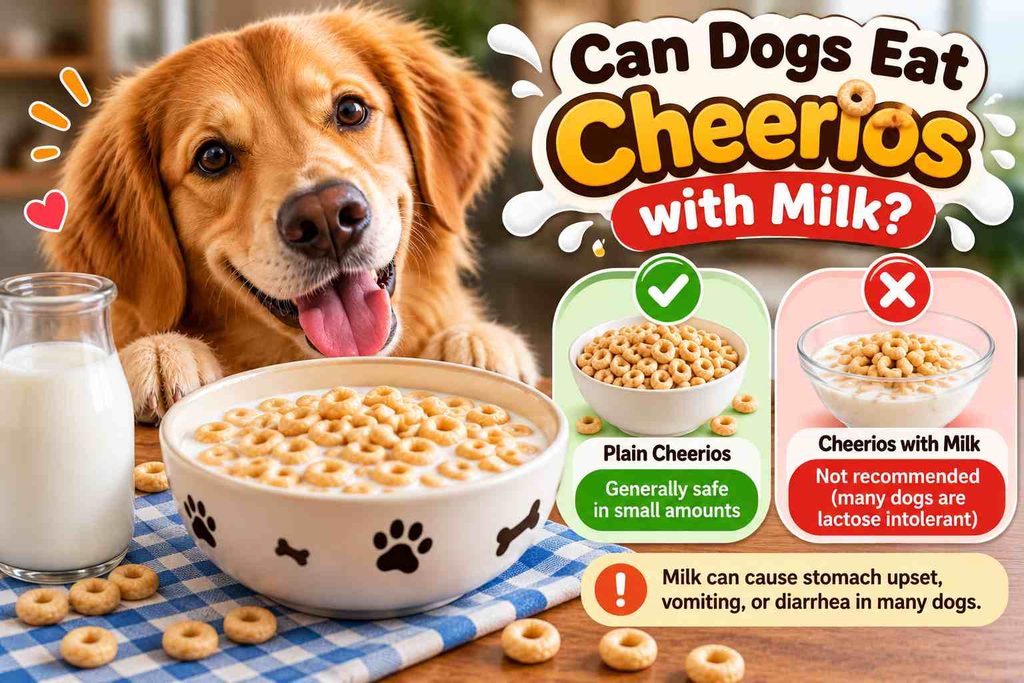
It is better not to make a bowl of Cheerios with milk part of your dog’s snack. Milk is not inherently poisonous to dogs, but many dogs have difficulty digesting lactose, and larger amounts can cause loose stools, vomiting, gas, or diarrhea.
If your dog steals a small amount of cereal with a little milk, monitor them rather than panicking. But intentionally serving cereal with milk adds another possible source of digestive trouble without giving your dog a meaningful nutritional advantage.
Water should remain your dog’s normal drink. If your dog repeatedly reacts badly to dairy, avoid experimenting with milk and ask your veterinarian about suitable alternatives.
Can Dogs Eat any Cereal?
No. You should not assume that every cereal is safe simply because plain Cheerios can be given occasionally. Human cereals can contain ingredients that are harmful to dogs, including chocolate, raisins, grapes, xylitol, or other unsuitable additives.
Always read the ingredient list before sharing a cereal. Products can also change formulas, so an old assumption may not match the current package.
The safest approach is to keep human cereal as an occasional exception rather than a normal part of your dog’s diet. If your dog eats a cereal containing a potentially toxic ingredient, contact your veterinarian or an animal poison-control service promptly instead of waiting for symptoms.
Quick Take
If you want the short answer, plain Cheerios can be an occasional treat for many healthy dogs, but they are not a necessary or particularly valuable part of a canine diet.
Keep the portion small, stay within the overall treat budget, and choose Original Cheerios over sweeter or more complicated varieties. Always check the label because formulations can change.
If you want a more nutrient-focused food reward, consider appropriate dog treats or carefully prepared whole foods instead. For another protein-rich option, you can also explore whether beef liver is good for dogs, but remember that even nutritious foods need sensible portions.
FAQs about Sheerios for Dogs
Can Dogs Have Cheerios?
Yes, dogs can have a small amount of plain Cheerios occasionally. They are generally safe for healthy dogs when given in moderation, but they should not replace a complete and balanced diet or become a regular treat.
Can I feed my dog Cheerios?
Yes. A healthy dog can usually have a small amount of plain Cheerios occasionally. Keep the portion small and make sure treats remain within the dog’s daily calorie allowance.
Are Cheerios OK for dogs?
Plain Original Cheerios can be OK for dogs in moderation. They should not replace complete dog food or become a daily staple.
Can dogs eat plain Cheerios?
Yes. Plain Cheerios are the simplest variety to consider because they have a relatively straightforward ingredient list. Even so, they should remain an occasional treat.
Are Cheerios bad for dogs?
They are not generally toxic in small amounts, but eating too many can add unnecessary calories, sugar, and sodium. Flavored varieties can present additional ingredient concerns.
Can puppies eat honey nut Cheerios?
It is better not to make Honey Nut Cheerios a puppy treat. Puppies need carefully balanced nutrition for growth, and sweetened cereal adds little useful nutrition. Ask your veterinarian about appropriate puppy treats.
How many Cheerios can a dog eat?
There is no universal number. The amount depends on the dog’s size, calorie needs, health, and other treats eaten that day. Keep treats below 10% of daily calories.
Is honey nut cheerios good for dogs?
Honey Nut Cheerios are not an ideal routine treat because they contain substantially more sugar than Original Cheerios. A small accidental amount is different from feeding them regularly.
Can dogs have honey nut cheerios?
A few pieces may not cause a problem in a healthy dog, but they are not the preferred option. Check the current label and choose a simpler dog-appropriate treat when possible.
Cheerios: worth sharing or better skipped?
Cheerios do not need to be completely off-limits. For many healthy dogs, a few plain Original Cheerios can be a harmless occasional reward. The key is moderation and careful label checking.
Skip chocolate-containing products and be cautious with specialty cereals. Keep portions small, avoid adding milk, and remember that your dog’s complete and balanced food should provide the foundation of the diet.
When in doubt, especially for a puppy, senior dog, overweight dog, or dog with a medical condition, your veterinarian can help choose the safest treats. A thoughtful approach lets you share a tiny breakfast moment without sacrificing your dog’s nutrition or long-term health.



Pingback: Can Dogs Eat Strawberries? Safe Feeding Guide