

Yes, dogs can eat plain, cooked spaghetti in small amounts, but it should only be an occasional treat. Plain spaghetti is not considered toxic to dogs, yet it does not provide much nutritional value compared with a complete and balanced dog food. The bigger concern is usually what is added to the spaghetti, especially sauces, garlic, onions, salt, butter, and rich seasonings.
If your dog grabbed a few plain noodles from your plate, there is usually no reason to panic. However, spaghetti covered in sauce or made with ingredients that are unsafe for dogs deserves more attention. So, before sharing your dinner, it is important to know which types are okay and which should stay off your dog’s menu.
Can Dogs Eat Plain Spaghetti?
Plain spaghetti can be given to a dog occasionally as long as it is fully cooked and served without sauce, seasoning, garlic, onion, butter, or excessive salt. The pasta itself is mainly made from ingredients such as wheat flour and water, with some varieties also containing eggs.
The important point is that safe does not necessarily mean healthy. A small serving of plain spaghetti can fit into an otherwise balanced diet, but it should not become a regular part of your dog’s meals. Most dogs get the nutrients they need from complete commercial dog food, while plain pasta mainly provides carbohydrates and calories.
If you want to give your dog human food as an occasional treat, lean animal proteins can provide more nutritional value. For example, you can learn more about chicken liver for dogs before choosing nutrient-rich foods to add to your dog’s diet.
Can Dogs Eat Cooked Spaghetti?
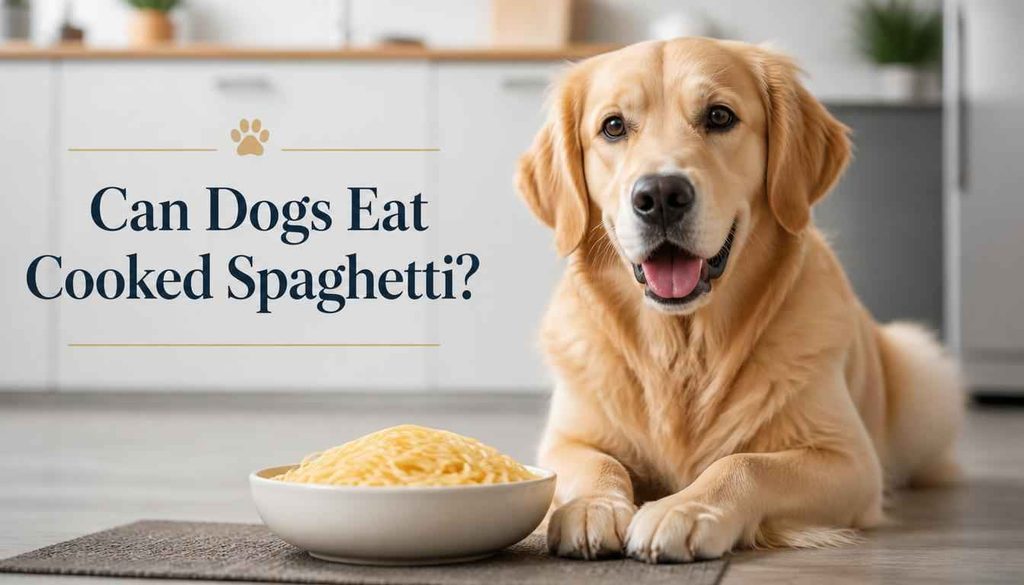
Cooked spaghetti is much more suitable than uncooked pasta. Soft, fully cooked noodles are easier for a dog to chew and digest, while dry or raw spaghetti can be hard and may create a choking risk if a dog tries to swallow large pieces.
When preparing cooked pasta for dogs, keep it as simple as possible. Do not add salt, oil, butter, garlic, onion, or pasta sauce to the portion you intend to share. Let the noodles cool before giving them to your dog, and offer only a small amount.
A dog that eats a little plain cooked spaghetti will generally tolerate it well. A larger amount, however, can cause digestive upset simply because it is a sudden, carbohydrate-heavy addition to the diet.
Can Dogs Eat Spaghetti Sauce?
Spaghetti sauce is where things become more complicated. Many commercial and homemade sauces contain ingredients that are unsuitable or potentially toxic to dogs, including garlic and onions. Sauces can also contain considerable amounts of salt, sugar, butter, oil, and other seasonings.
For this reason, it is better not to share your regular spaghetti sauce with your dog. Even when the tomato itself is not the problem, the other ingredients mixed into the sauce can create a safety concern. Veterinary guidance also recommends avoiding pasta sauces for dogs because of these common additions.
The same rule applies to restaurant spaghetti. You may know that your dog can tolerate plain noodles, but you usually cannot be certain about every ingredient used in a prepared sauce.
Can Dogs Eat Spaghetti With Garlic or Onion?
No, spaghetti containing garlic or onion should not be intentionally fed to dogs. Both belong to the Allium family and can cause gastrointestinal irritation and damage to red blood cells. The risk depends on the amount consumed, the form of the ingredient, and the size of the dog.
Garlic may appear in spaghetti sauce, garlic butter, seasoning blends, meatballs, and even some flavored oils. Onion can be found in tomato sauces, meat sauces, soups, and prepared foods. Because these ingredients are so common, checking the label or recipe is important before giving your dog leftover pasta.
If your dog has eaten a significant amount of spaghetti containing garlic or onion, contact your veterinarian for advice rather than waiting for symptoms to develop. Signs can include vomiting, weakness, panting, or other changes depending on the exposure.
Can Dogs Eat Spaghetti and Meatballs?
Spaghetti and meatballs are not a good choice for dogs when served as a typical human meal. The plain pasta may be relatively low risk, but meatballs frequently contain onion, garlic, salt, breadcrumbs, seasonings, cheese, or fatty ingredients.
The amount of fat is another consideration. Rich foods can cause stomach upset, and some dogs are particularly sensitive to high-fat meals. A meatball made specifically for a dog from plain, lean, cooked meat without harmful seasonings is a different situation from a restaurant or packaged meatball.
If you want to give your dog protein instead, plain cooked meat prepared without harmful seasonings is generally a better option. Variety can include appropriate portions of foods such as lamb, and you can read more about lamb for dogs when considering different protein sources.
Can Dogs Eat Spaghetti With Tomato Sauce?
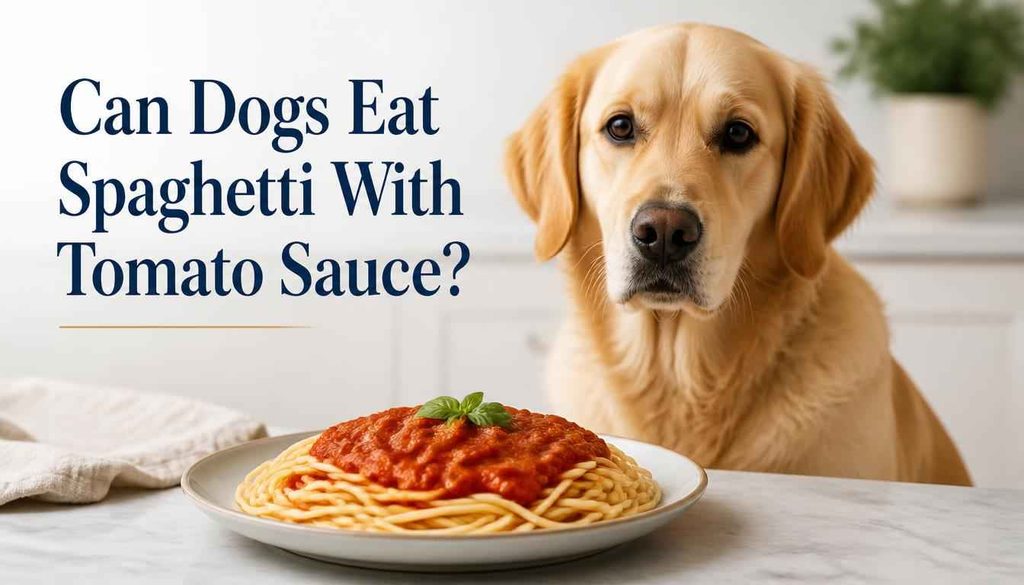
Dogs can eat small amounts of properly prepared ripe tomato, but that does not automatically make traditional spaghetti with tomato sauce safe. The problem is that most tomato sauces are recipes containing several additional ingredients.
Garlic and onion are particularly important to watch for. Salt and rich oils can also make a sauce unsuitable, especially when a dog consumes a large portion. Some sauces may contain other seasonings that are unnecessary for dogs as well.
If you want to share a noodle with your dog, plain cooked spaghetti is the safer choice. There is no real advantage to adding tomato sauce, so leaving it off removes several avoidable risks.
Can Puppies Eat Spaghetti?
Puppies can technically eat a small amount of plain, fully cooked spaghetti, but pasta should not take the place of their regular puppy food. Growing puppies need a carefully balanced diet that supplies appropriate amounts of protein, fat, vitamins, minerals, and calories for development.
Because puppies have smaller bodies and specific nutritional requirements, treats and table foods should remain limited. Introducing large amounts of human food can also cause digestive upset and may make it harder to maintain a balanced feeding routine.
If you decide to offer a puppy a tiny taste of plain spaghetti, make sure it contains no sauce, garlic, onion, or seasoning. For everyday feeding, a complete puppy diet is a much better choice.
How Much Spaghetti Can Dogs Eat?
There is no single amount that is appropriate for every dog because portion size depends on body size, age, activity level, overall health, and what else the dog eats during the day. As a general approach, spaghetti should be treated like an occasional treat rather than a meal.
A few plain, cooked noodles may be enough for a small dog, while a larger dog may tolerate a somewhat bigger taste. The key is moderation. Treats and extras should generally make up only a small portion of a dog’s daily calorie intake so they do not displace balanced nutrition.
Watch your dog after introducing any new food. If the pasta causes vomiting, diarrhea, bloating, or unusual discomfort, stop offering it and speak with your veterinarian if symptoms are significant or persistent.
What Happens If a Dog Eats Spaghetti?
What happens after a dog eats spaghetti depends heavily on how much was eaten and what was in it. A small amount of plain, cooked spaghetti will usually cause no serious problem in an otherwise healthy dog. A larger serving may simply result in temporary digestive upset.
The situation is different if the spaghetti contained garlic, onion, a large amount of sauce, excessive salt, or very fatty ingredients. In that case, the ingredients rather than the noodles themselves may create the main concern.
Raw pasta can also be problematic because it is harder and may be difficult to chew or digest. If a dog consumes a large quantity of uncooked pasta or appears distressed after eating it, contact a veterinarian for guidance.
Do not try to make your dog vomit unless a veterinary professional specifically tells you to do so. Instead, determine what your dog ate, approximately how much was consumed, and when it happened. That information can help your veterinarian decide what should happen next.
Are There Any Benefits of Spaghetti for Dogs?
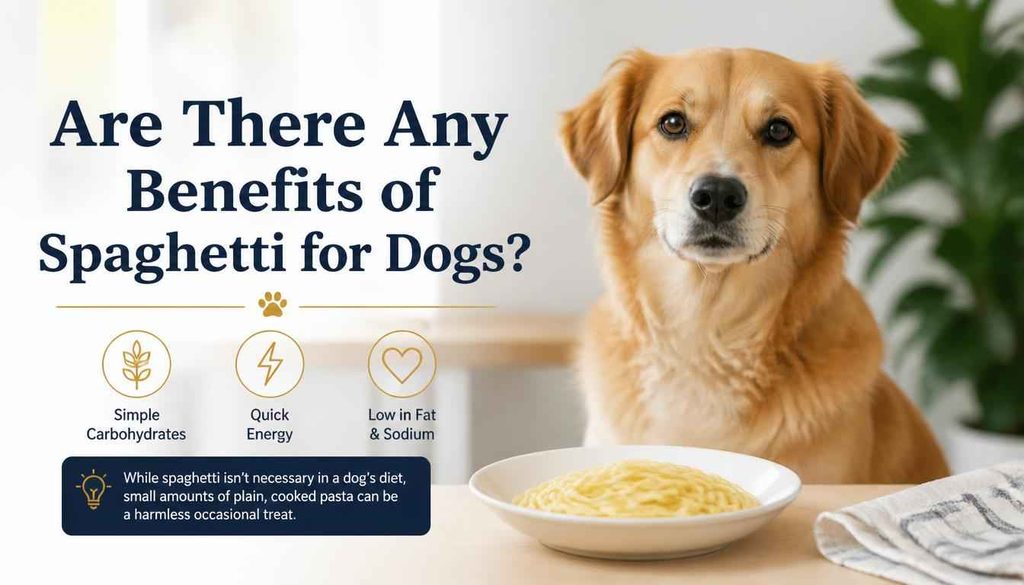
There are limited nutritional benefits to giving ordinary spaghetti to dogs. Pasta supplies carbohydrates and calories, and some varieties contain nutrients such as iron or B vitamins. Whole-grain pasta can also provide more fiber than refined pasta.
However, these benefits do not make spaghetti necessary for a dog’s diet. A properly formulated dog food already provides the nutrients a dog needs in appropriate proportions. Adding too much pasta can simply increase calorie intake without improving overall nutrition.
That is why the best approach is to think of spaghetti as an occasional treat rather than a health food. If your goal is to provide nutritious extras, appropriately prepared animal proteins and certain fruits and vegetables may offer more useful nutrients.
For example, dog owners interested in natural food options may also want to learn about chicken feet for dogs and how preparation affects their safety.
What Is the Safest Way to Give Spaghetti to a Dog?
If you decide to let your dog have spaghetti, simplicity is the safest approach. Cook the noodles thoroughly and allow them to cool. Serve them plain without sauce, garlic, onion, heavy seasoning, butter, or large amounts of oil.
Give only a small portion the first time and watch how your dog responds. Some dogs have sensitive stomachs and may react to a food that another dog handles without difficulty.
It is also worth remembering that dogs do not need pasta to stay healthy. If your dog already receives a complete and balanced diet, there is no nutritional requirement to add spaghetti. It is simply an optional human-food treat.
If you are looking for other foods to discuss with your veterinarian, DogTalkUp also covers different animal-based options, including chicken gizzards for dogs.
Frequently Asked Questions About Dogs and Spaghetti
Can dogs eat pasta?
Yes, a small amount of plain, fully cooked pasta can generally be given to a healthy dog occasionally. It should be unseasoned and should not replace a complete and balanced diet.
Can dogs have spaghetti?
Dogs can have a small amount of plain, cooked spaghetti as an occasional treat. Avoid noodles covered in sauces or seasonings that contain unsafe ingredients.
Can dogs eat pasta noodles?
Plain, cooked pasta noodles are generally okay in small portions. The noodles should be served without ingredients such as garlic, onion, heavy sauce, or excessive salt.
Can dogs have pasta noodles?
A few plain cooked noodles are usually fine for most healthy dogs. Keep the serving small because pasta adds calories without being an essential part of canine nutrition.
Can dogs have spaghetti noodles?
Yes, plain cooked spaghetti noodles can be offered occasionally. They are best served by themselves rather than with human-style sauces or seasonings.
Can dogs eat plain pasta?
Plain pasta is generally safe for dogs when it is cooked and offered in moderation. It is better viewed as an occasional treat than as a regular dietary ingredient.
Is Pasta Safe for Dogs?
Yes, plain, cooked pasta is generally safe for dogs in small amounts. Keep it simple and avoid sauces, garlic, onions, salt, butter, and heavy seasonings.
Is Spaghetti Safe for Dogs?
Yes, plain, cooked spaghetti is usually safe for dogs as an occasional treat. Serve only a small amount and avoid sauce, garlic, onions, and strong seasonings.
Can Dogs Eat Pasta Sauce?
Dogs should not eat regular pasta sauce because it may contain garlic, onions, salt, and other seasonings. These ingredients can upset your dog’s stomach or cause harm.
Can Dogs Eat Spaghetti Sauce?
It is best to avoid spaghetti sauce because many recipes contain garlic, onions, excess salt, or rich ingredients. Plain spaghetti is a much safer choice for dogs.
Final Verdict
Yes, dogs can eat a small amount of plain, cooked spaghetti occasionally, but it is not an essential or particularly nutritious food for them. The pasta itself is generally less concerning than the ingredients commonly added to it.
Keep spaghetti plain and avoid garlic, onions, heavily seasoned sauces, excessive salt, butter, and rich toppings. If your dog accidentally eats a small amount of plain pasta, serious problems are unlikely, but eating pasta containing potentially toxic ingredients is a reason to contact your veterinarian for personalized advice.
For more dog-food safety information, you can also explore DogTalkUp’s guide to whether dogs can eat cod or learn about ube for dogs. The same basic rule applies across many human foods: the food itself, preparation method, ingredients, and portion size all matter.



Pingback: Can Dogs Eat Tomatoes? Safety, Risks & Helpful Tips