

Yes, dogs can eat plain sauerkraut in small amounts, but not every type is safe for them. Sauerkraut is fermented cabbage, and some varieties contain ingredients such as onion, garlic, heavy amounts of salt, or spicy seasonings that can be harmful to dogs.
If you want to share sauerkraut with your dog, the safest choice is a plain variety with a short ingredient list. A tiny serving can be an occasional treat, but it should never replace your dog’s regular, balanced food.
Is Sauerkraut Safe for Dogs?
For most healthy dogs, plain sauerkraut can be safe when given in moderation. The biggest concern is usually not the cabbage itself but what has been added to it.
Traditional sauerkraut is made by fermenting cabbage with salt. During fermentation, beneficial bacteria can develop, which is one reason people often consider sauerkraut a probiotic food. However, commercial products can contain much more sodium than a dog needs.
Before sharing it, check the label carefully. If you see onion, garlic, chives, leeks, or strong seasonings, keep that product away from your dog. These ingredients can create much more serious problems than plain fermented cabbage.
What Makes Sauerkraut Safe for Dogs?
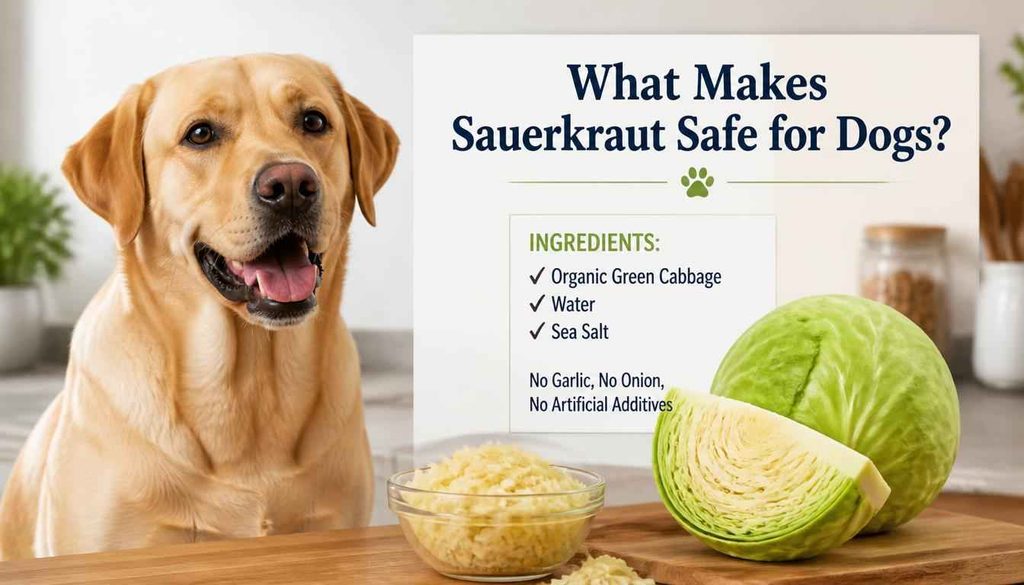
Simple ingredients are the key. A dog-friendly option should mainly contain cabbage and a reasonable amount of salt, without toxic vegetables, spicy seasonings, sauces, or other unnecessary additives.
Portion size matters too. Even a safe food can cause stomach trouble when a dog suddenly eats a large amount. If your dog has never tried sauerkraut before, start with a very small amount and watch how they respond.
It is also worth remembering that dogs do not need sauerkraut to stay healthy. Their normal complete and balanced dog food should provide the nutrition they need. Treats and extras should remain a small part of their overall diet.
When choosing foods for your dog, variety can be useful, but safety should come first. For example, if you’re looking for nutritious animal-based foods to add occasionally, you can also learn about whether chicken liver is good for dogs and how it fits into a dog’s diet.
What Makes Sauerkraut Unsafe for Dogs?
Sauerkraut becomes risky when it contains ingredients that dogs should not eat. Onion and garlic are especially important because they can damage a dog’s red blood cells and may cause anemia when enough is consumed.
Salt is another concern. Sauerkraut naturally uses salt during fermentation, and some packaged products contain a considerable amount. A small bite may not cause a problem in an otherwise healthy dog, but large quantities can contribute to excessive sodium intake and digestive upset.
Some products also include peppers, hot spices, bacon, sausage, or other ingredients. These additions can make the food much harder for a dog’s digestive system to handle.
This is why it is better to think about the ingredients rather than simply asking whether sauerkraut itself is safe.
Is Sauerkraut Good for Dogs?
There can be some potential benefits of sauerkraut for dogs, mainly because fermented cabbage may contain live microorganisms and provides some fiber. Still, these benefits should not be exaggerated.
A small amount of plain fermented cabbage may add variety to a dog’s diet. However, there is no need to feed it regularly just because it contains probiotics. The nutritional needs of dogs are different from those of humans, and a complete dog food already supplies the essential nutrients they require.
If your dog has a digestive condition, food sensitivity, or ongoing stomach problems, it is better to discuss dietary changes with your veterinarian before introducing fermented foods.
Can Sauerkraut Help a Dog’s Gut Health?
Fermentation can produce live microorganisms that may interact with the digestive system. This is why fermented food for dogs sometimes attracts attention from pet owners looking for natural ways to support digestion.
However, eating sauerkraut is not a guaranteed way to improve gut health. Every dog responds differently, and some dogs may actually develop gas, loose stool, or stomach discomfort after eating fermented foods.
If your dog already has a healthy digestive system, there is usually no reason to add sauerkraut simply for its probiotic content. If digestive support is needed, your veterinarian can help determine whether a dog-specific probiotic or another dietary approach makes more sense.
Does Sauerkraut Have Probiotics for Dogs?
Naturally fermented sauerkraut can contain live bacteria, particularly when it has not been heavily processed or heated. But the number and type of microorganisms can vary widely between products.
This means you should not assume that every jar of sauerkraut provides the same probiotic benefit. Pasteurized products, for example, may have fewer live cultures because heat can affect them.
For that reason, sauerkraut should be viewed as an occasional food rather than a dependable probiotic supplement. A veterinarian can recommend a product specifically designed for dogs if your pet needs targeted digestive support.
Can Dogs Eat Plain Sauerkraut?

Plain sauerkraut is generally the better choice if you decide to give your dog some. Look for a product with simple ingredients and avoid anything containing onion, garlic, chives, or leeks.
You should also check the sodium information. Choosing a lower-sodium option can make it a more sensible occasional treat.
The first time your dog tries it, offer only a small taste. If there is no vomiting, diarrhea, excessive gas, or other digestive reaction, you can occasionally offer a little more within a sensible portion.
Remember that plain does not automatically mean unlimited. Sauerkraut is still an extra food and should be treated that way.
Can Dogs Eat Raw Sauerkraut?
Raw sauerkraut can be offered in a small amount when it is plain and made with dog-safe ingredients. Because raw fermented cabbage may contain live cultures, some owners prefer it over heavily processed versions.
Still, raw sauerkraut has a strong sour flavor and can be high in sodium. Some dogs may enjoy it, while others may turn away immediately.
If your dog has a sensitive stomach, introduce it particularly slowly. A sudden change in diet can cause digestive upset even when the food itself is not toxic.
Can Dogs Eat Cooked Sauerkraut?
Cooked sauerkraut can be safe when it has been prepared without ingredients that are harmful to dogs. The cooking process itself is not the main concern; what matters most is everything added during preparation.
Human recipes often include onions, garlic, sausage, bacon, butter, heavy seasoning, or large amounts of salt. A dish prepared this way should not be shared with your dog.
If you want to give cooked cabbage to your dog, plain cooked cabbage without harmful seasonings is a simpler option. You can also explore other dog-safe foods, such as whether lamb is good for dogs, when looking for nutritious additions to an appropriate diet.
Can Dogs Eat Canned Sauerkraut?
Canned sauerkraut requires extra attention because packaged varieties can contain significant amounts of sodium. Always read the nutrition facts and ingredient list before offering it.
A tiny taste of a salty product may not cause illness in every dog, but repeatedly feeding high-sodium foods is not a good habit. Smaller dogs also have less body mass, so portions need to be especially modest.
If canned sauerkraut is the only option available, choosing a lower-sodium variety and offering only a tiny amount is preferable to giving a large serving.
Is Low-Sodium Sauerkraut Better for Dogs?
Yes, a lower-sodium option is generally a better choice. Dogs need sodium as part of a normal diet, but they do not need heavily salted human foods.
Rinsing sauerkraut may remove some salt from the surface, but it does not turn a highly salted product into a low-sodium food. Checking the label before buying is the better approach.
If your dog has a condition requiring sodium restriction, do not introduce salty human foods without veterinary guidance.
Can Dogs Eat Sauerkraut With Garlic or Onion?
Sauerkraut containing garlic or onion should not be given to dogs. Both belong to the Allium family and can be toxic to dogs, especially when enough is consumed.
The risk is not limited to fresh onion or garlic. Powdered and concentrated forms can also be a concern because they may be present in seasonings and prepared foods without being obvious at first glance.
Always read the full ingredient list rather than assuming that a product labeled “plain” or “natural” is automatically appropriate for your pet.
What Should You Do If Your Dog Eats Sauerkraut With Onion or Garlic?
If your dog eats sauerkraut containing onion or garlic, do not panic, but take the situation seriously. Save the package if possible so you can check the exact ingredients and determine roughly how much your dog ate.
Contact your veterinarian for advice, particularly if your dog ate a large amount, is very small, or consumed a product containing concentrated onion or garlic powder. Do not try to make your dog vomit unless a veterinary professional specifically tells you to do so.
Watch for symptoms such as vomiting, diarrhea, weakness, unusual tiredness, pale gums, or other changes in behavior. Some effects associated with Allium exposure may not appear immediately, so professional guidance is important.
How Much Sauerkraut Can Dogs Eat?
The right amount depends on the dog’s size, overall diet, and individual tolerance. For a first taste, a very small spoonful is enough to see whether your dog handles it well.
A small dog may only need a teaspoon or less, while a larger dog may tolerate a little more. Even then, sauerkraut should remain an occasional treat rather than something served in large portions.
Think of it as a taste of a human food, not a required part of your dog’s meal. If your dog develops loose stool or excessive gas after eating it, stop offering it.
How Often Can Dogs Eat Sauerkraut?
There is no nutritional reason for most dogs to eat sauerkraut every day. Occasional small servings are more appropriate, especially because sodium levels can add up when salty foods become regular treats.
Your dog’s primary diet should remain a complete and balanced food appropriate for their age and life stage. Extras, including fermented vegetables, should complement that diet rather than become a major source of calories or nutrients.
Can Puppies Eat Sauerkraut?

Puppies can be more sensitive to sudden dietary changes, so introducing sauerkraut is generally unnecessary. If a puppy does try it, only a very small amount of plain sauerkraut should be considered.
A puppy’s growing body needs carefully balanced nutrition. Too many treats or human foods can interfere with that balance and may also lead to digestive problems.
For young puppies, sticking with an appropriate puppy food and veterinarian-approved treats is usually the simplest approach.
Can Sauerkraut Cause Diarrhea in Dogs?
Yes, sauerkraut can cause diarrhea in some dogs, especially when they eat too much or are not used to fermented foods. Its fermentation, acidity, fiber, and sodium can all contribute to digestive discomfort in sensitive pets.
Some dogs may also experience gas, stomach noises, softer stool, or vomiting after trying it. These reactions do not necessarily mean that sauerkraut is poisonous, but they are a sign that the food may not agree with your dog.
If diarrhea is severe, continues, contains blood, or occurs along with repeated vomiting, weakness, or other concerning symptoms, contact your veterinarian.
Why Does Sauerkraut Upset Some Dogs’ Stomachs?
A dog’s digestive system may react to a new food simply because it is unfamiliar. Fermented foods can also have a strong combination of acidity, fiber, and microorganisms that some dogs tolerate poorly.
Large portions are more likely to cause trouble than a tiny taste. This is why introducing any new food gradually is a safer approach.
Dogs with food sensitivities may be particularly likely to react. If your pet frequently develops digestive problems after eating different foods, talk with a veterinarian before experimenting with additional human foods.
What Happens If a Dog Eats Too Much Sauerkraut?
Eating too much sauerkraut can lead to stomach upset, including diarrhea, vomiting, gas, increased thirst, or abdominal discomfort. The amount eaten and the product’s ingredients both matter.
If the sauerkraut was plain and your dog only ate a little too much, monitoring may be all that is needed. Make sure fresh drinking water is available and avoid giving additional treats until the stomach settles.
The situation is more concerning when the product contains onion, garlic, a very high amount of salt, or other potentially harmful ingredients. In that case, contacting a veterinarian is the safer choice.
Can Dogs Eat Sauerkraut Every Day?
Daily sauerkraut is not necessary for dogs. Although fermented cabbage can contain beneficial bacteria, dogs can meet their nutritional needs without it.
Regularly feeding a salty human food may also add unnecessary sodium to the diet. A small occasional serving makes more sense than turning sauerkraut into a daily meal topper.
If you are trying to improve your dog’s diet, focus first on a complete and balanced food. Human foods should be selected carefully and offered in appropriate portions.
Can Dogs Eat Sauerkraut Juice?
Sauerkraut juice is not a good choice as a regular drink for dogs. It can contain a concentrated amount of salt and the acidic liquid may upset a sensitive stomach.
There is also little reason to give the juice when your dog can get the small amount of nutritional value from a safer portion of plain cabbage or another dog-appropriate food.
Fresh water should always be your dog’s main source of hydration.
What Type of Sauerkraut Is Best for Dogs?
If you decide to share sauerkraut, choose one with the simplest ingredient list you can find. Plain fermented cabbage with lower sodium and no onion, garlic, leeks, chives, or spicy seasonings is the most sensible option.
Homemade sauerkraut for dogs can give you more control over the ingredients, but it still needs to be prepared safely. Fermentation requires proper food-handling practices, and adding unsafe ingredients defeats the purpose of making a simpler product.
It is also worth considering whether your dog actually needs it. There are plenty of nutritious foods that can be offered as occasional treats without relying on fermented vegetables.
For owners interested in other food options, chicken feet for dogs can be another topic to research, particularly because preparation and serving safety matter with animal-based treats too.
Ingredients to Avoid in Sauerkraut for Dogs
The most important ingredients to avoid are onion, garlic, leeks, and chives. These foods can be toxic to dogs and may appear in fresh, cooked, powdered, or seasoning forms.
You should also be cautious with products containing very high sodium levels, hot peppers, heavy spices, alcohol-based flavorings, or rich ingredients such as fatty meats.
Reading the label takes only a few seconds and can prevent an otherwise unnecessary health problem.
Healthier Alternatives to Sauerkraut for Dogs
Sauerkraut does not need to be your dog’s only vegetable or human-food treat. Depending on your dog’s individual diet and tolerance, simple foods such as plain cooked vegetables or appropriate lean animal proteins may be easier choices.
If you prefer animal-based treats, you can read about chicken gizzards for dogs and learn how this organ meat can be prepared and served appropriately.
Another option is to use treats that are specifically formulated for dogs. These are generally easier to portion and are designed with canine nutritional needs in mind.
How to Give Sauerkraut to Your Dog Safely
Start with a tiny amount of plain sauerkraut and give it separately from other new foods. This makes it easier to notice whether your dog has a reaction.
Watch your dog for the rest of the day for loose stool, vomiting, gas, or other digestive changes. If everything appears normal, sauerkraut can remain an occasional small treat.
Never mix it into a large meal simply because your dog enjoys the taste. The goal is to keep the serving small and make sure the rest of the diet remains nutritionally balanced.
If you are comparing different human foods for occasional treats, you may also want to read about whether beef liver is good for dogs and how rich organ meats differ from vegetable-based foods.
When Should You Call a Vet?
Contact your veterinarian if your dog develops repeated vomiting, severe diarrhea, weakness, unusual lethargy, pale gums, tremors, collapse, or other concerning symptoms after eating sauerkraut.
You should also seek professional advice if your dog ate sauerkraut containing onion or garlic, especially if the amount was substantial or the product contained concentrated powders.
If your dog has an existing medical condition or follows a special diet, it is also wise to check with your veterinarian before adding salty fermented foods.
For dogs that enjoy different food textures, it is better to investigate each ingredient individually. Even foods that sound healthy for people may not be appropriate for dogs in the same amounts. For example, cod for dogs has different nutritional considerations from fermented cabbage and should be evaluated separately.
Frequently Asked Questions
Can dogs have sauerkraut?
Yes, a healthy dog can generally have a small serving of plain sauerkraut. Choose a product without onion, garlic, leeks, chives, or excessive sodium, and introduce it slowly.
Is sauerkraut bad for dogs?
Sauerkraut itself is not necessarily harmful, but certain varieties can cause problems. Products containing toxic seasonings or too much salt are the main concerns, while large servings may also upset digestion.
Can a dog eat sauerkraut?
A dog may eat a small amount when the product is plain and made with safe ingredients. It should be treated as an occasional food rather than a regular part of the dog’s diet.
Can dogs eat fermented cabbage?
Yes, fermented cabbage can be offered in moderation when it has been prepared with dog-safe ingredients. The fermentation does not make onion, garlic, or excessive salt safe for dogs.
What are the benefits of sauerkraut for dogs?
Possible benefits include some fiber and live microorganisms from natural fermentation. These potential benefits are modest, and most dogs do not need sauerkraut to maintain a healthy diet.
Can dogs eat sauerkraut juice?
It is better not to give sauerkraut juice regularly because it can contain a concentrated amount of sodium. Plain fresh water is a much better everyday drink for dogs.
How much sauerkraut can a dog eat?
Start with a very small serving, such as a teaspoon or less, depending on the dog’s size. If your dog tolerates it well, it can remain an occasional small treat rather than a large portion.
Is sauerkraut a good probiotic for dogs?
Natural fermentation can produce live cultures, but sauerkraut is not a reliable substitute for a veterinary-recommended canine probiotic. The microorganisms and their amounts can vary between products.
Final Verdict
Dogs can eat plain sauerkraut in small amounts, provided it does not contain harmful ingredients such as onion or garlic. Lower-sodium varieties with simple ingredients are the better choice, while heavily seasoned or salty products should be avoided.
Sauerkraut may provide some fiber and live cultures when naturally fermented, but it is not an essential food for dogs. Treat it as an occasional extra rather than a daily supplement.
When in doubt, check the label, keep the serving small, and introduce it slowly. If your dog has a sensitive stomach or eats sauerkraut containing a potentially toxic ingredient, your veterinarian is the best source of personalized advice.



Pingback: Can Dogs Eat Truffles? Safety, Benefits & Risks