

Yes, dogs can eat a very small amount of plain bologna, but it is not a healthy choice for them. Bologna is a processed meat that is usually high in sodium and fat, and some varieties contain garlic, onion, or other seasonings that can be harmful to dogs. A tiny bite is unlikely to cause a problem in most healthy dogs, but bologna should not become a regular treat.
If your dog grabbed a piece from your sandwich, there is usually no reason to panic. The concern becomes greater when a dog eats several slices, an entire package, or a variety made with potentially harmful ingredients. The dog’s size, overall health, and the amount eaten all matter.
Is Bologna Safe for Dogs?
Bologna is generally not considered toxic to dogs when eaten in a small amount, but it is not an appropriate regular food. The biggest concerns are its salt, fat, calories, preservatives, and additional ingredients.
Unlike plain cooked meat, bologna is heavily processed before it reaches your refrigerator. It may contain salt, spices, flavorings, preservatives, and other ingredients that your dog does not need. Feeding it regularly can add too much sodium and fat to a dog’s diet.
A healthy dog that steals one small piece will usually tolerate it without serious problems. You should still check the package ingredients, particularly if the bologna was flavored or seasoned.
For a healthier meat option, plain cooked lamb can be a much better choice when served appropriately. You can learn more about this in our guide to whether lamb is good for dogs.
Is Bologna Bad for Dogs?
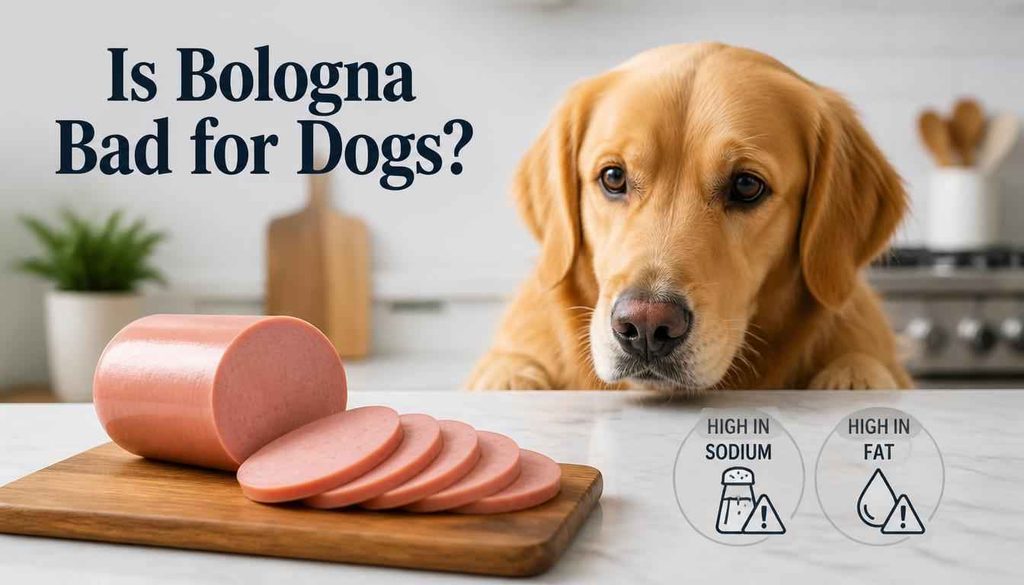
The problem with bologna is less about one tiny bite and more about what happens when dogs eat it frequently or in large amounts. It is designed as a convenient human food, not as a balanced food for dogs.
Bologna often contains considerable sodium. Dogs need sodium as part of a normal diet, but excessive salt can cause serious problems. Pet Poison Helpline notes that excessive salt ingestion can cause vomiting, diarrhea, increased thirst, incoordination, tremors, seizures, and, in severe cases, death.
Bologna is also relatively fatty. A fatty food can cause digestive upset, and repeatedly giving high-fat human foods can contribute to excessive calorie intake. Dogs that already have dietary restrictions or a history of problems related to rich foods should not be given bologna without veterinary guidance.
Another issue is that bologna varies between brands. One package may contain ingredients that are absent from another. That is why checking the label is especially important before giving any processed meat to your dog.
High Sodium Content
The sodium in bologna is one of the main reasons it should be limited. A dog that eats a tiny piece is receiving much less salt than a dog that eats several slices, but the amount can add up quickly.
Excessive sodium can cause increased thirst and digestive problems. In serious cases, sodium toxicity can progress to neurological signs such as tremors or seizures.
This does not mean that every dog who eats salty food will develop salt poisoning. The risk depends on the quantity consumed, the dog’s size, access to fresh water, and other individual factors. Still, there is little nutritional reason to give bologna when healthier treats are available.
High Fat Content
The fat content is another reason bologna should stay off your dog’s regular snack list. A small amount may only cause mild stomach upset, but larger portions of rich food can be much harder for some dogs to tolerate.
Too many fatty treats can also make it easier for a dog to gain excess weight. Dogs do best when most of their calories come from a complete and balanced diet rather than processed human foods.
If you want to give your dog an animal-based treat, plain foods such as properly prepared chicken gizzards can be a more sensible option. Our guide explains whether dogs can eat chicken gizzards.
Garlic and Onion Seasoning
Some bologna products may contain garlic, onion, onion powder, or garlic powder. This is more concerning than plain bologna because onions and garlic belong to the Allium family and can damage red blood cells in dogs.
According to the Merck Veterinary Manual, dogs can be affected after consuming raw, cooked, dehydrated, or granulated forms of onion and garlic. Concentrated forms such as powders can be particularly concerning. Signs of toxicity may take several days to appear because red blood cell damage can develop after the initial exposure.
For this reason, never assume that a flavored bologna is safe simply because your dog has eaten ordinary deli meat before. Read the ingredient list first.
Preservatives and Processed Ingredients
Bologna falls into the broader category of processed meat. It is made to have a particular taste, texture, shelf life, and convenience for people, which means it usually contains much more than simply meat.
That does not automatically make every ingredient dangerous to dogs. The bigger concern is that processed meat offers very little nutritional advantage over healthier, less processed choices.
A small piece once in a while is different from feeding processed meat regularly. If your dog enjoys meat-based treats, choose plain, fully cooked options without added salt, sauces, garlic, onion, or heavy seasoning.
How Much Bologna Can a Dog Eat?
There is no recommended serving of bologna for dogs because it is not a necessary part of their diet. If a healthy adult dog eats a tiny piece occasionally, it will usually be a very different situation from eating multiple slices.
Think of bologna as an unnecessary human-food treat rather than something that belongs in your dog’s meal plan. The smaller the dog, the more important portion size becomes because the same slice represents a larger amount relative to body weight.
You should also consider everything else your dog has eaten that day. A single small piece may be insignificant, but several salty treats combined can contribute to a much higher overall sodium intake.
Can Small Dogs Eat Bologna?
Small dogs should receive especially small portions if they are given any bologna at all. Because they weigh less, a given amount of salty or fatty food represents a larger intake relative to their body size.
For a small dog, I would avoid offering a whole slice. If the dog accidentally gets a tiny piece, monitor them and make sure fresh water is available. If they ate a substantial amount, contact your veterinarian for individualized advice.
Can Puppies Eat Bologna?
Puppies should not be given bologna as a routine treat. Their nutritional needs are especially important during growth, so most of their diet should come from a complete and balanced puppy food appropriate for their age and size.
A tiny accidental bite is unlikely to cause poisoning in an otherwise healthy puppy, but intentionally feeding processed deli meat is unnecessary. Puppies can be more sensitive to dietary changes and may develop vomiting or diarrhea after eating unfamiliar foods.
Instead of sharing your sandwich, offer a puppy-appropriate treat or a small amount of plain, properly cooked meat recommended for dogs.
What Happens If a Dog Eats Bologna?
What happens depends largely on how much was eaten and what was in the product. After a small piece of plain bologna, many dogs show no noticeable reaction at all.
A larger amount may cause stomach upset, including vomiting, loose stools, abdominal discomfort, excessive thirst, or reduced appetite. If the bologna contains garlic or onion, additional concerns arise because signs of Allium toxicity may not appear immediately.
A very large intake of salty food can potentially cause sodium toxicity. Pet Poison Helpline lists vomiting, diarrhea, lethargy, excessive thirst or urination, incoordination, tremors, seizures, and coma among possible signs of excessive salt exposure.
Signs to Watch for After Eating Bologna
After your dog eats bologna, keep an eye on their behavior and digestive system. Mild stomach upset may pass, but repeated vomiting, severe diarrhea, unusual weakness, difficulty walking, tremors, seizures, collapse, or other significant changes require prompt veterinary attention.
Do not wait for symptoms if you know your dog consumed a large amount of a highly seasoned product. The ingredient label can help your veterinarian determine what your dog was exposed to.
Remember that some toxic effects, particularly those associated with onion or garlic, can take days to become obvious. Merck Veterinary Manual explains that clinical signs of Allium-related anemia can develop several days after exposure.
What Should I Do If My Dog Ate Bologna?
If your dog ate a small piece, first stay calm and find out what type of bologna it was. Check the package for sodium, garlic, onion, spices, and other ingredients, then estimate how much your dog consumed.
Make sure your dog has access to fresh drinking water and watch for changes in behavior or digestion. Do not try to make your dog vomit unless a veterinarian or animal poison professional specifically tells you to do so. Pet Poison Helpline specifically warns that it is not always safe to induce vomiting or use home remedies after an ingestion.
If your dog ate a large quantity, is very small, has an underlying health condition, or consumed bologna containing garlic or onion, contact your veterinarian promptly. If your dog develops tremors, seizures, collapse, severe weakness, or other serious symptoms, seek emergency veterinary care.
Can Dogs Eat Turkey Bologna?
Turkey bologna is not automatically healthier or safer for dogs just because it is made with turkey. It is still processed deli meat and may contain significant amounts of sodium, fat, preservatives, and seasonings.
The nutritional profile can differ considerably between brands, so read the label rather than relying on the word “turkey.” A small accidental bite is generally less concerning than several slices, but it is still better treated as an occasional human food rather than a regular dog treat.
Plain, unseasoned cooked turkey is a much more appropriate choice when prepared without ingredients that are unsafe for dogs.
Can Dogs Eat Beef Bologna?
Dogs may tolerate a small piece of plain beef bologna, but it should not be a regular part of their diet. The fact that it is made from beef does not remove the concerns associated with processing, sodium, fat, and added ingredients.
If you want to offer your dog beef, plain cooked beef without added salt, sauces, onion, garlic, or heavy seasoning is a better option. Organ meats can also provide useful nutrients when fed appropriately. For example, you can read our guide on whether beef liver is good for dogs.
Can Dogs Eat Chicken Bologna?
Chicken bologna can be eaten by dogs in a tiny amount, but it still falls into the same processed-food category. Chicken does not make the product automatically suitable for dogs because the final food can contain salt, fat, preservatives, spices, and other additives.
If you are looking for a chicken-based treat, plain cooked chicken is a better choice. You should avoid giving your dog chicken prepared with excessive seasoning or sauces.
Chicken feet are another food that some owners consider for dogs, although they should be offered appropriately. You can learn more about whether dogs can eat chicken feet.
Can Dogs Have Fried Bologna?
Fried bologna is an even poorer choice for dogs because frying can add additional fat to an already processed food. The cooking method does not remove the sodium or other ingredients found in the bologna.
If your dog steals a small piece from your plate, there is usually no reason to assume an emergency solely because it was fried. However, intentionally feeding fried bologna is best avoided, especially for dogs that are sensitive to rich foods.
Instead, keep your dog’s treats simple and minimally processed. Plain cooked meat is generally a better choice than salty deli meat cooked in additional fat.
Can Bologna Kill a Dog?
A small piece of ordinary bologna is not expected to kill a healthy dog. However, saying that bologna is completely harmless would be inaccurate because excessive salt intake can cause potentially life-threatening sodium toxicity, and certain ingredients such as onion and garlic can cause serious toxicity.
Pet Poison Helpline notes that severe salt poisoning can progress to neurological signs and can be fatal in extreme cases.
The risk from bologna therefore depends on the amount eaten and the ingredients involved. If your dog has eaten a large quantity, do not try to calculate the risk based only on the number of slices. Contact a veterinarian and provide the product name, ingredient list, estimated amount, and your dog’s weight.
Are There Healthier Alternatives to Bologna for Dogs?
There are plenty of better choices than bologna. Plain cooked chicken, turkey, lean beef, or other dog-safe meats can be offered in small portions when prepared without added salt, onion, garlic, sauces, or heavy seasoning.
You can also choose appropriate commercial dog treats designed with canine nutrition in mind. The goal is not to make every treat exciting for humans; it is to give your dog something that fits comfortably into their overall diet.
For dogs that enjoy different protein sources, you can also explore other DogTalkUp food guides, such as whether dogs can eat cod. Just remember that any new food should be introduced in small amounts.
When Should You Call a Veterinarian?
Call your veterinarian if your dog ate a large quantity of bologna, particularly if the product contains onion or garlic. You should also seek veterinary advice if your dog is very small, has a medical condition that requires a restricted diet, or begins showing concerning symptoms.
Emergency signs include repeated vomiting, severe weakness, difficulty walking, tremors, seizures, collapse, or significant changes in responsiveness. Excessive salt exposure can produce serious neurological signs, while onion and garlic toxicity can cause delayed red blood cell damage.
When contacting the veterinarian, have the bologna package or a photograph of its ingredient label available if possible. Knowing exactly what your dog ate makes it easier for the veterinary team to assess the situation.
FAQs About Bologna for Dogs
Is Bologna Good for Dogs?
Bologna is not a good choice for dogs because it is processed, salty, and often high in fat. A tiny bite may be okay, but healthier meats are better.
Is Bologna OK for Dogs?
A small piece of plain bologna is usually okay for a healthy dog, but it should not be a regular treat. Too much can cause stomach upset and other problems.
Can Dogs Eat Baloney?
Yes, dogs can eat a tiny amount of baloney occasionally, but it is not a healthy food. Its salt, fat, and processed ingredients make better dog-safe meats preferable.
Can dogs eat a slice of bologna?
A whole slice is more than I would recommend as a routine treat. Bologna is high in sodium and often contains considerable fat, so a small bite is a better approach if you choose to share any at all.
Can dogs eat deli meat?
Some deli meats may be tolerated in tiny amounts, but they are generally not ideal dog treats because many contain added sodium, preservatives, fat, and seasonings. Plain cooked meat is usually a better alternative.
Can dogs eat bologna without seasoning?
Plain bologna without added garlic, onion, or strong seasoning removes some ingredient-related concerns, but it is still processed and can be high in sodium and fat. It should remain an occasional, very small treat rather than a regular food.
What meat is safe for dogs?
Plain, fully cooked meats such as chicken, turkey, lean beef, and some fish can be suitable for dogs when prepared without harmful seasonings and fed in appropriate portions. Fatty sauces, excessive salt, onion, and garlic should be avoided.
What happens if my dog eats a whole package of bologna?
Eating an entire package is considerably more concerning than eating a small piece because the dog may consume a large amount of sodium and fat. Contact your veterinarian promptly, especially if your dog is small or begins showing vomiting, diarrhea, excessive thirst, weakness, tremors, or other unusual signs.
Final Verdict
So, can dogs eat bologna? Technically, a healthy dog can usually tolerate a tiny piece of plain bologna, but that does not make it a good food for dogs. Its high sodium, fat, processed nature, and potentially unsafe seasonings make it something to limit or avoid.
If your dog accidentally ate one small piece, monitor them and check the ingredients. If they ate a large amount or consumed a variety containing onion or garlic, contact your veterinarian rather than relying on home treatment.
When you want to share meat with your dog, choose a simple, fully cooked, unseasoned option instead. Your dog does not need bologna to enjoy a tasty treat, and healthier choices can provide the same excitement without the unnecessary salt and additives.