

To make your dog a service dog, first confirm that you have a qualifying disability and identify specific tasks your dog can perform to help. Train the dog for reliable task work, obedience, and public behavior. Professional guidance can help, but federal law does not require certification or registration.
Want to turn your dog into a service dog? Discover the essential steps, training requirements, costs, legal rights, and qualifications you need to know.
Service Dogs Are
Service dogs are dogs individually trained to perform work or tasks directly related to a person’s disability. The task must do more than simply provide comfort; it should actively help manage or reduce the effects of the disability.
A service dog may retrieve objects, provide mobility assistance, interrupt harmful behaviors, alert to certain changes, guide a person with a visual impairment, or perform other trained actions. The exact work depends on the handler’s needs.
Assistance Dogs International (ADI) also emphasizes reliable behavior, public access skills, humane training, health, welfare, and appropriate matching between the dog and handler.
Service Dogs Are Not
A service dog is not simply a well-behaved pet wearing a vest. Emotional support, companionship, and comfort alone do not make a dog a service animal under the ADA.
A vest, ID card, online certificate, or registration number does not turn a pet into a service dog. Be especially careful with websites selling instant service dog registration or documents claiming to provide legal status.
If you are researching dog behavior and training, remember that specialized detection work is different from service work. For example, dogs can have remarkable scent abilities, as discussed in DogTalkUp’s guide on whether can drug dogs smell edibles, but scent detection by itself does not make a dog a service animal.
How to Get a Service Dog in 5 Steps
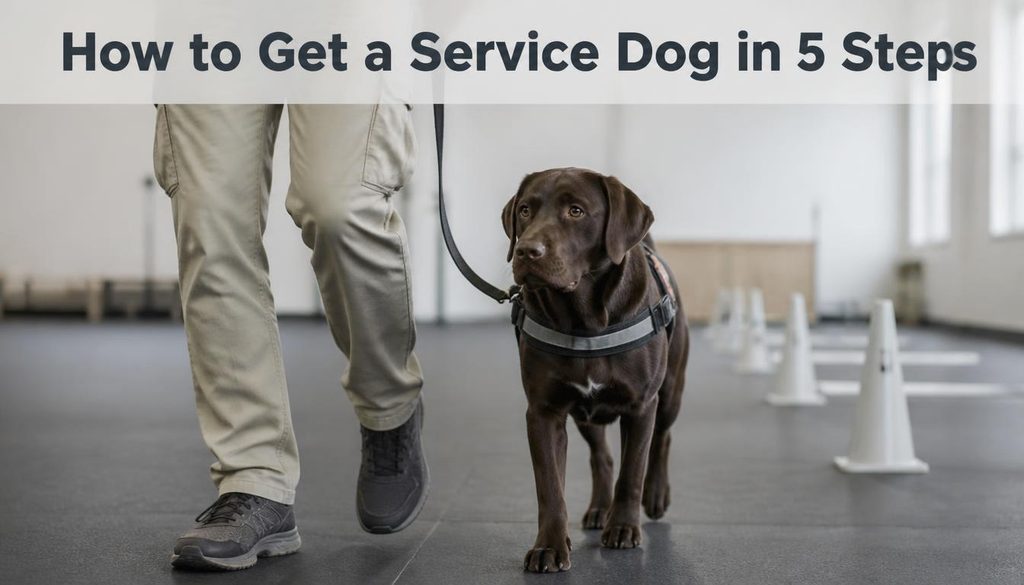
Whether you want to make your pet a service dog or receive one from a professional organization, the process should focus on disability-related tasks, dependable behavior, and public safety.
1. Confirm that you qualify:You need a disability covered by applicable law and a dog that can perform trained work or tasks related to that disability.
2. Choose your training route:You can work with an established program or pursue an owner trained service dog approach with appropriate professional guidance.
3. Build the dog’s skills:Start with basic obedience, then develop reliable public behavior and disability-specific tasks.
4. Practice in real places:Your dog needs to remain calm, focused, controlled, and unobtrusive around people, animals, noise, food, and distractions.
5. Maintain the partnership: Training does not really end after the dog learns its tasks. Regular practice keeps the dog’s skills reliable throughout its working life.
Step 2: Confirm You Qualify for a Service Dog
Before starting training, ask what the dog needs to do for you. Under the ADA, the important distinction is between a disability-related trained task and comfort from the dog’s presence. A psychiatric service dog, for example, may qualify when it is trained to take a specific action that helps with a psychiatric disability.
Your service dog qualification therefore depends on your disability-related needs and the dog’s trained work, not on the breed, color, size, or appearance of the dog.
A healthcare professional may also help you document your needs when applying to an assistance-dog program. However, do not confuse a medical letter with legal service-dog status. A psychiatric service dog letter may support an individual’s application to a program or explain a disability-related need, but the dog still needs appropriate task training.
Service Dogs Are Not
Service dogs are not defined by a diagnosis alone. Conditions such as mobility impairments, certain psychiatric disabilities, epilepsy, diabetes, autism, blindness, and hearing loss may involve service-dog assistance, but eligibility and suitable tasks depend on the person’s individual circumstances and the applicable law.
A dog that simply makes someone feel calmer does not automatically qualify. The dog needs to be trained to perform a specific action related to the person’s disability.
Age and Household Requirements
There is no single federal age requirement that applies to every owner-trained service dog. Programs can establish their own age and household rules, while families training their own dog should consider whether the handler can safely manage the animal.
Your household should also be able to support the dog’s daily needs. Food, exercise, grooming, veterinary care, training, rest, and safe handling are long-term responsibilities.
The dog’s temperament matters just as much. A service dog should be able to work without excessive fear, aggression, uncontrolled excitement, or persistent distraction.
Tasks Most Programs Will Not Train
Not every organization trains every type of task. Some specialize in mobility, some in guide work, some in psychiatric assistance, and others in medical alert or specific populations.
Common examples that may require a specialized provider include:
- Guide work for blindness or severe vision loss
- Seizure response or certain medical-alert tasks
- Allergen detection
- Complex mobility assistance
- Personal protection or aggression
A legitimate organization should clearly explain which disabilities and tasks it supports. ADI’s member search allows people to look for accredited programs by disability, service-dog type, location, and other criteria.
What Can Disqualify an Applicant
For a professional program, several factors can affect placement. The organization may not serve your disability, may not operate in your area, or may not have a training pathway for the tasks you need.
Your home environment and ability to care for the dog can also matter. Another household dog with serious behavioral problems, unsafe living conditions, or an inability to provide appropriate daily care may make placement unsuitable.
For owner training, the biggest concern is often the dog’s suitability. A dog with serious aggression, extreme fear, poor health, or an inability to settle around distractions may not be a safe candidate for service work.
Step 2: Choose Your Route, Program-Trained or Train Your Own
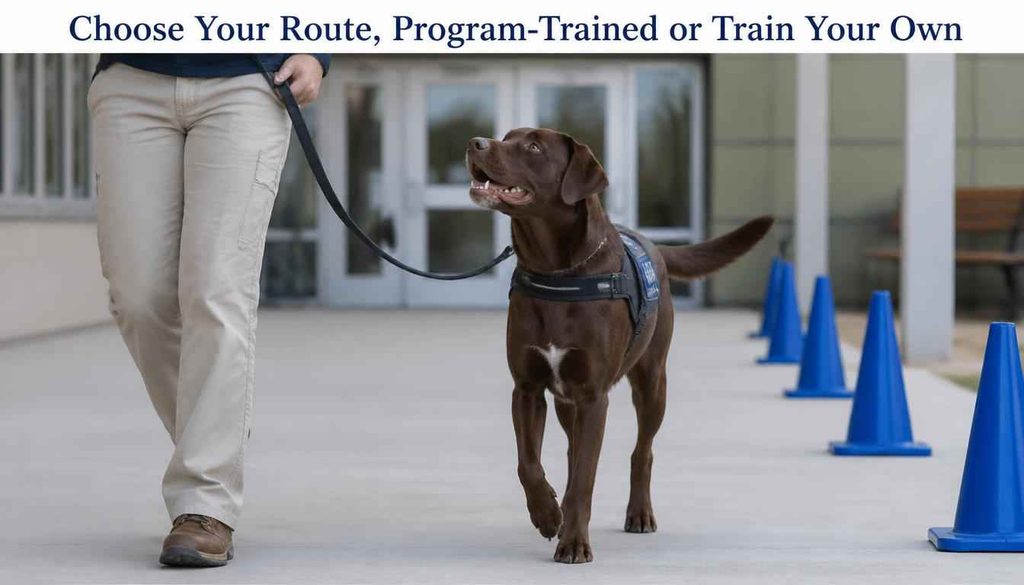
There are two main ways to obtain a service dog: work with a professional assistance-dog organization or train a suitable dog yourself.
The ADA does not require a service dog to be trained by a professional. A person with a disability may train their own dog, although professional guidance can make the process safer and more effective.
Route 1: Receive a Professionally Trained Dog
A professional program typically selects or breeds suitable dogs, evaluates their health and temperament, develops obedience and public-access skills, and teaches disability-related tasks.
This route can be attractive if you want structured support and do not want to manage every stage of how to train a service dog yourself.
Look for transparent organizations with clear training standards, placement requirements, follow-up support, and ethical treatment of dogs. ADI accreditation is one useful quality signal because its accreditation process evaluates areas including humane training, dog health, client screening, matching, legal compliance, and follow-up care.
1. What Happens to Dogs That Do Not Complete the Program: Not every dog that begins service-dog training becomes a working service dog. A dog may be released because of health, temperament, behavior, or training limitations.
This is not a failure. A dog that is not suited to service work may still become a wonderful companion or move into another appropriate role.
Responsible programs make decisions based on the dog’s welfare and ability to work safely rather than forcing an unsuitable dog into a demanding career.
2. Who Owns the Dog After Placement: Ownership arrangements vary by organization. Some programs transfer ownership to the recipient, while others may retain certain rights or responsibilities.
Always ask about ownership, veterinary expenses, follow-up training, retirement, and what happens if the partnership ends before accepting a dog.
Route 2: Train a Dog You Already Own
Training your own service dog can be rewarding because you develop the partnership from the beginning. It also requires patience, consistency, time, and honest evaluation.
Start by having the dog assessed for health and temperament. Then build a strong foundation:
- Name response and attention
- Loose-leash walking
- Reliable sit, down, stay, and recall
- Calm behavior around people and dogs
- Ignoring food and distractions
- Settling quietly in public
- Disability-specific task work
An owner-trained service dog should be evaluated by what it can reliably do, not by how much money has been spent on training or whether it wears professional-looking equipment.
Step 3: Apply to an Accredited Program
If you choose a professional program, research organizations carefully before sending applications or paying fees.
ADI recommends using its accredited member search to identify programs and explains that member organizations have defined service areas and their own requirements for the people and dogs they serve.
A strong service dog training guide should encourage you to check:
- Which disabilities the program serves
- Which tasks it trains
- Whether it accepts owner-owned dogs
- Its geographic service area
- Application requirements
- Training methods
- Costs and funding
- Follow-up support
If the organization promises instant approval, sells a certificate as the main proof of legitimacy, or says registration alone gives a dog public-access rights, treat that as a serious warning sign.
Step 4: Prepare for the Wait
Professional service dogs require substantial preparation. The waiting period varies widely by program, disability, funding, dog availability, and training needs.
Use this time productively. Keep medical information current if your chosen program requires it, strengthen your dog’s obedience if you are owner-training, budget for veterinary care, and practice calm behavior in appropriate environments.
Do not rush a dog into public work before it is ready. The goal is not to get a vest quickly. The goal is to build a dependable working partnership.
Step 5: Complete Team Training
A successful service dog partnership depends on both members of the team. Your dog may know its tasks, but you also need to understand how to cue, reward, manage, and care for it.
Team training can include public outings, task practice, handling skills, problem-solving, and guidance on maintaining the dog’s behavior.
Some programs use formal evaluations. An organization may have its own service dog public access test or assessment to determine whether a team is ready for placement or graduation.
The exact evaluation is not a universal federal certification. The ADA does not require a standardized national public-access test.
How Much Does a Service Dog Cost?
The cost varies greatly depending on whether you receive a nonprofit-trained dog, work with a private trainer, or train your own dog.
Professional training can involve substantial expenses because it may include veterinary care, food, equipment, trainer time, task development, public-access preparation, and follow-up support.
Owner training can reduce professional fees, but it is not free. You may still pay for a trainer, veterinary screening, equipment, transportation, food, and ongoing care.
The smartest approach is to calculate the full lifetime cost before beginning.
How to Get a Service Dog for Free
Free or heavily subsidized placements can be available through nonprofit programs, grants, donations, and programs serving specific populations.
Start with reputable organizations rather than websites selling inexpensive certificates. ADI maintains a directory of accredited programs and allows searches by disability and other criteria.
Eligibility, location, funding, and wait times differ between organizations, so there is no universal free-service-dog application.
What You Still Pay For
Even when a program provides the dog and training at no charge, you may still be responsible for everyday care.
Plan for:
- Food
- Routine veterinary visits
- Vaccinations and preventatives
- Grooming
- Leashes, harnesses, and other equipment
- Emergency veterinary treatment
- Transportation
- Retirement and replacement planning
The handler remains responsible for the care and supervision of a service animal.
How to Get a Service Dog Through The Dog Alliance
The Dog Alliance, an Assistance Dogs International-accredited nonprofit in Texas, offers service-dog training pathways described in the information provided for this article.
Its programs include options for veterans and civilians, with eligibility depending on the program, location, disability, and training needs.
Veteran Service Dog Program
The Veteran Service Dog Program provides a pathway for eligible Texas veterans with qualifying service-related needs. The available options include receiving a trained dog or working with an existing dog, depending on program requirements.
Because program rules, funding, locations, and eligibility can change, applicants should review the current requirements directly with The Dog Alliance before applying.
Civilian Service Dog Training
Civilian applicants may also have an option to work with a dog they already own. This can be useful for people interested in structured psychiatric service dog training or other task-focused training when their needs and dog meet the program’s requirements.
Professional guidance can help owners develop obedience, public behavior, and specific disability-related tasks in a controlled progression.
How to Start
Begin by reviewing the current application requirements and determining whether the program serves your disability and location.
Then gather the information requested, attend any required orientation or seminar, complete the application, and follow the organization’s evaluation process.
Do not pay for a supposed official service dog certification simply because a website says it is required. The ADA does not require service dogs to be certified or registered.
Your Rights With a Service Dog
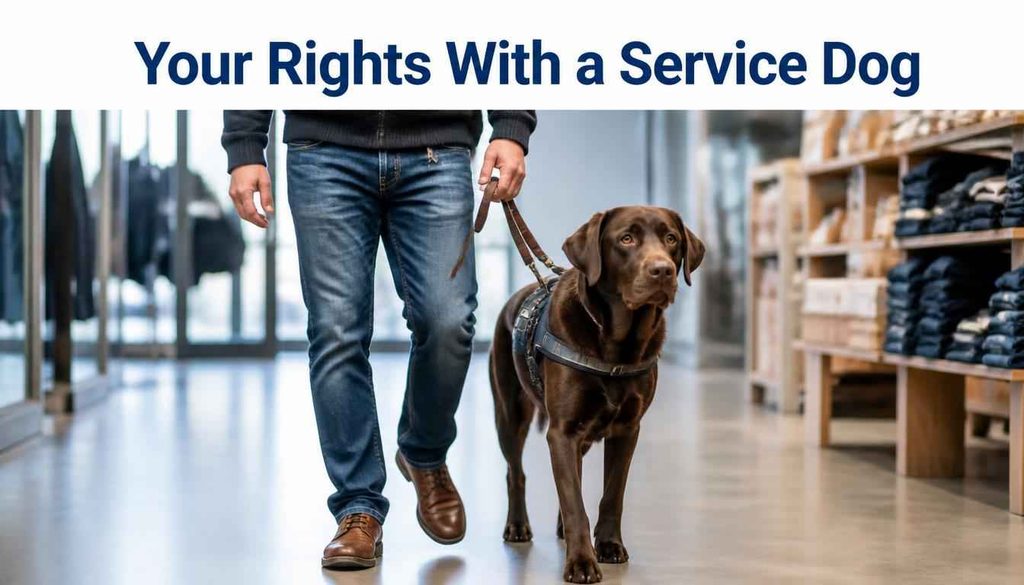
Under the ADA, service dogs generally have access to places open to the public, including businesses and public facilities, when they meet the legal definition and are under control.
A business generally cannot demand that you show a certificate, registration card, or medical documentation as a condition of entry.
That is why understanding your rights is more valuable than buying an online service dog certificate.
The Two Questions a Business Can Legally Ask
When the reason a dog is a service animal is not obvious, staff may ask only:
- Is the dog required because of a disability?
- What work or task has the dog been trained to perform?
They generally cannot ask you to explain your diagnosis, demand documentation, or require the dog to demonstrate its task.
A service dog also does not have to wear a vest, patch, special harness, or ID.
If you want to understand how fraudulent service-animal claims can affect businesses and legitimate handlers, DogTalkUp also explains how to catch a fake service dog.
Texas Service Dog Laws
Texas has additional rules concerning misrepresentation of service animals. State law can also address housing and access rights, so Texas handlers should check the current state statute and official guidance rather than relying on old online summaries.
Because state laws can change, always verify the current requirements before relying on a specific penalty, registration rule, or training provision.
Service Dogs vs. Emotional Support Animals
The key difference is what the animal is trained to do.
A service dog performs trained work or tasks related to a person’s disability. An emotional support animal provides comfort or emotional support through its presence and does not have the same federal public-access status under the ADA.
For example, a dog trained to interrupt a person’s harmful behavior or retrieve medication may perform a disability-related task. A dog that simply makes its owner feel safer by being nearby is not automatically a service animal.
The distinction protects both people with disabilities and the public. Responsible training ensures the dog can work calmly without disrupting others.
FAQs
How long does it take to get a service dog?
Getting a service dog can take several months to a few years, depending on the program, dog availability, training, and your specific needs.
How hard is it to qualify for a service dog?
Qualifying depends on having a disability and needing a dog to perform specific tasks related to it. Each service dog program may have additional requirements.
What kind of disabilities qualify for a service dog?
Physical, sensory, psychiatric, and other disabilities may qualify when a dog is needed to perform tasks that directly help with the disability.
Can I train my own service dog?
Yes. Under the ADA, you can train your own service dog, although professional guidance can make task training and public behavior easier.
Does my dog need a vest or ID?
No. The ADA does not require a service dog to wear a vest, carry ID, or have official certification or registration.
What tasks can a service dog perform?
Service dogs can perform tasks such as retrieving items, alerting to sounds, guiding, providing mobility support, interrupting harmful behaviors, or responding to medical needs.
Can I get a service dog for anxiety or PTSD?
Yes, a person with anxiety or PTSD may qualify if the condition meets the ADA disability definition and the dog performs trained tasks related to it.
Are service dogs allowed everywhere?
Service dogs are generally allowed in places open to the public under the ADA, but limited exceptions apply when their presence creates a legitimate safety or health concern.
Do veterans get service dogs for free?
Some veterans can receive service dogs at little or no cost through nonprofit programs. Eligibility, funding, and wait times vary between organizations.
How do I get a service dog?
Start by confirming that you have a qualifying disability and need a dog to perform specific tasks related to it. You can apply through an accredited program or train your own dog.
How do I register a service dog?
There is no official federal service dog registration required under the ADA. Businesses generally cannot require registration, certification, or an ID card as proof.
Can I train my own service dog?
Yes, you can train your own service dog under the ADA. Your dog should reliably perform disability-related tasks and behave appropriately in public.
Where can a service dog go?
Service dogs are generally allowed in places open to the public, including stores, restaurants, and public transportation. Some limited exceptions apply for legitimate safety or health reasons.
Is a service dog the right path for you?
Making your dog a service dog is a meaningful journey, but the goal should never be a vest, certificate, or registration card. The real goal is a safe, reliable partnership in which your dog performs trained tasks that genuinely help with your disability.
Start by confirming your needs, honestly evaluating your dog’s temperament, choosing the right training route, and building skills one step at a time. With patience, humane training, and professional guidance when needed, the right dog can become a confident and highly capable working partner.
Most importantly, choose quality over shortcuts. A well-trained service dog does more than open doors—it can give its handler greater independence, confidence, and freedom in everyday life.



Pingback: How To Teach A Dog Not To Bite And Stop Nipping
Pingback: Can Drug Dogs Smell Nicotine | The Facts About Sniffer Dogs