

If your dog just licked Aquaphor off your hands, take a breath — a small lick is very unlikely to cause harm. The searches for ‘aquaphor safe for dogs’ almost always come from one of two places: panic after a dog gets into the tube, or hope that this medicine-cabinet staple can fix cracked paws or a crusty nose.
Here is the short version: Aquaphor is generally safe for dogs when used on the skin in thin layers, but it is not meant to be eaten. Below is exactly when to use it, how to apply it, and what to do if your dog swallows some.
“Think of Aquaphor as safe for your dog’s skin but not for your dog’s stomach — a thin layer on dry paws is fine, but a chewed-up tube is a call-your-vet situation.”
What’s Actually Inside the Tube
Aquaphor Healing Ointment is built around petrolatum (about 41% of the formula), the same purified petroleum jelly used in many skin protectants. The rest includes mineral oil, ceresin (a mineral wax), and lanolin alcohol, which help it spread smoothly and seal in moisture. It is fragrance-free, which is part of why veterinarians are comfortable with it as a short-term option.
The key thing to understand is how it works: Aquaphor is occlusive, meaning it forms a barrier that locks moisture in rather than adding much moisture itself. That is great for cracked paws and flaky noses, but it also explains its biggest limitation — it should never go on hot spots, infected skin, or deep wounds, because sealing bacteria under an airtight layer can make things worse.
So, Is Aquaphor Safe for Dogs?
Yes, with the right precautions. Veterinary sources generally describe Aquaphor as having low toxicity for dogs, and it is commonly suggested as a short-term barrier for dry, cracked skin.
The main risk is not the ointment itself but how much of it ends up in your dog’s stomach. A thin layer licked off a paw will usually pass without any trouble, while larger amounts can irritate the gut and cause vomiting or diarrhea simply because the digestive system is not designed to process petroleum-based oils.
In practice: store the tube like any medication, out of reach; apply thin layers only; and supervise your dog for 10–15 minutes afterward so the barrier sets before the tongue arrives.
Where Aquaphor Can Actually Help
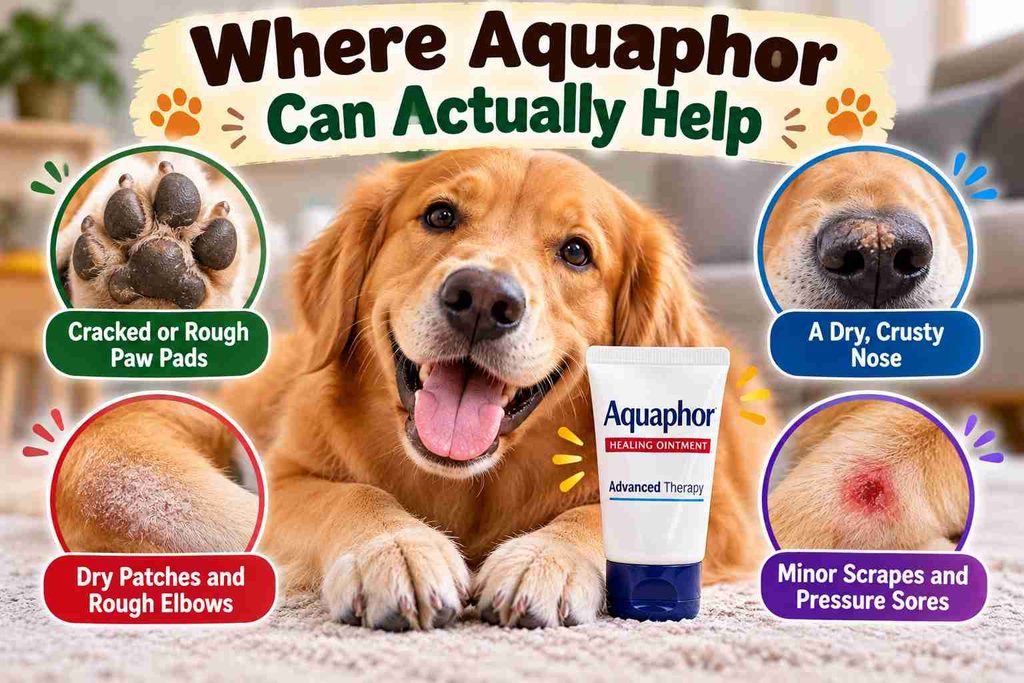
Cracked or Rough Paw Pads
Winter road salt, hot pavement, and rough trails all chew up paw pads. Using aquaphor for dogs paws during the dry months is one of the most common reasons owners reach for the tube.
Rub a pea-sized amount into each pad after walks, once paws are clean and dry. If your dog will tolerate them, soft dog socks for 20–30 minutes afterward give the barrier time to work.
A Dry, Crusty Nose
A paper-thin layer of aquaphor on dog nose skin twice a day usually softens flakiness within a few days. Owners who dab aquaphor on dog crusty nose areas often see the cracked texture smooth out after consistent use. Keep it off the nostrils themselves, and never use it as a fix for a nose that is bleeding, oozing, or changing color — those signs need a vet, not an ointment.
Dry Patches and Rough Elbows
Applying aquaphor on dog skin that is simply dry — flaky elbows, scaly spots along the back, rough patches from lying on hard floors — can ease the itch and lock in moisture.
Some vets mention aquaphor for dog dry skin as a short-term barrier while the underlying cause gets addressed — low indoor humidity or a diet low in fatty acids. It is a symptom-soother, not a diagnosis, so if the dryness spreads or comes with hair loss, get it checked.
Minor Scrapes and Pressure Sores
For a shallow scrape or the start of a callus on an elbow, a thin layer can protect the area while it heals. Never put it on deep cuts, punctures, or anything that looks infected — those need veterinary care first, and an occlusive ointment can trap bacteria in a dirty wound.
How to Apply It the Safe Way
Putting aquaphor on a dog works best when the area is clean and completely dry, since the ointment seals in whatever sits underneath it.
- Clean gently. Wipe the paws, nose, or skin with a damp cloth to remove dirt and salt, then pat fully dry.
- Use less than you think. A pea-sized amount per paw, or a thin smear on the nose, is plenty. Thick layers just invite licking.
- Distract for 10–15 minutes. A stuffed chew toy, a short walk, or a quick training session keeps your dog’s tongue busy while the barrier sets.
- Time it right. Apply after the last walk of the day rather than right before meals or bedtime, when unsupervised licking is most likely.
- Watch the first use. Check for extra redness or itching in the hours after. Reactions are rare, but stop using it if you see any.
When You Should Skip Aquaphor Entirely
There are situations where Aquaphor is the wrong tool, and using it anyway can do more harm than good:
- Open wounds, deep cuts, or punctures — sealing a dirty wound can trap bacteria and slow healing.
- Hot spots or infected skin — moisture trapped under the barrier makes these inflamed areas worse.
- Spots your dog licks nonstop — if the tongue never rests there, the ointment will end up in the stomach, not on the skin.
- Around the eyes or inside the mouth — keep it away from mucous membranes.
- Dogs with a known lanolin sensitivity — patch-test a small area first and watch for itching or redness.
One more caution: the medicine cabinet holds products far riskier than Aquaphor. Before reaching for scented oils or so-called natural remedies, read about eucalyptus oil dangers — some popular home products are genuinely toxic to dogs, while Aquaphor is not.
What to Do If Your Dog Licked or Ate Aquaphor: Step by Step
If your dog licked aquaphor off your hands or their own paws, a tiny amount is unlikely to cause harm — but know the full plan in case they got into the tube. Follow these steps in order:
- Stay calm and assess how much is missing. A licked paw and a half-eaten tube are very different situations, and your response should match.
- Take the tube away and inspect it. If your dog ate aquaphor tube fragments or the cap, the plastic is a bigger concern than the ointment itself — sharp pieces and blockages are the real risk here.
- Wipe your dog’s mouth and paws with a damp cloth to remove leftover residue.
- Offer fresh water. Do not force your dog to drink, and do not try to induce vomiting — most aquaphor dog ingestion cases involve small licks and need nothing more than watchful waiting.
- Watch for symptoms over the next 12–24 hours: vomiting, diarrhea, drooling, greasy stools, or loss of appetite.
- Call your vet if symptoms last more than a day, if your dog swallowed any tube pieces, or if a small puppy or a dog with a sensitive stomach ate a large amount.
- Save the packaging. Knowing the exact product and how much is missing helps your vet give precise advice.
| What happened | What to do |
|---|---|
| Licked a thin layer off paws or nose | Usually fine; monitor for 12 hours |
| Licked some off your hands | Wipe mouth, offer water, watch for tummy upset |
| Ate a large blob from the tube | Monitor closely; call your vet if vomiting or diarrhea lasts |
| Chewed or swallowed tube pieces | Call your vet — the plastic is the bigger risk |
Searches pairing “dog toxicity aquaphor” spike every winter, but actual poisoning cases are virtually nonexistent. The ingredients are not classified as toxic; the problem is volume, not poison.
A little perspective helps here too — most of what a curious dog chews around the house is more dangerous than petrolatum, so check our sorbitol safety breakdown to see how a common everyday ingredient gets evaluated for dogs.
Possible Side Effects to Watch For
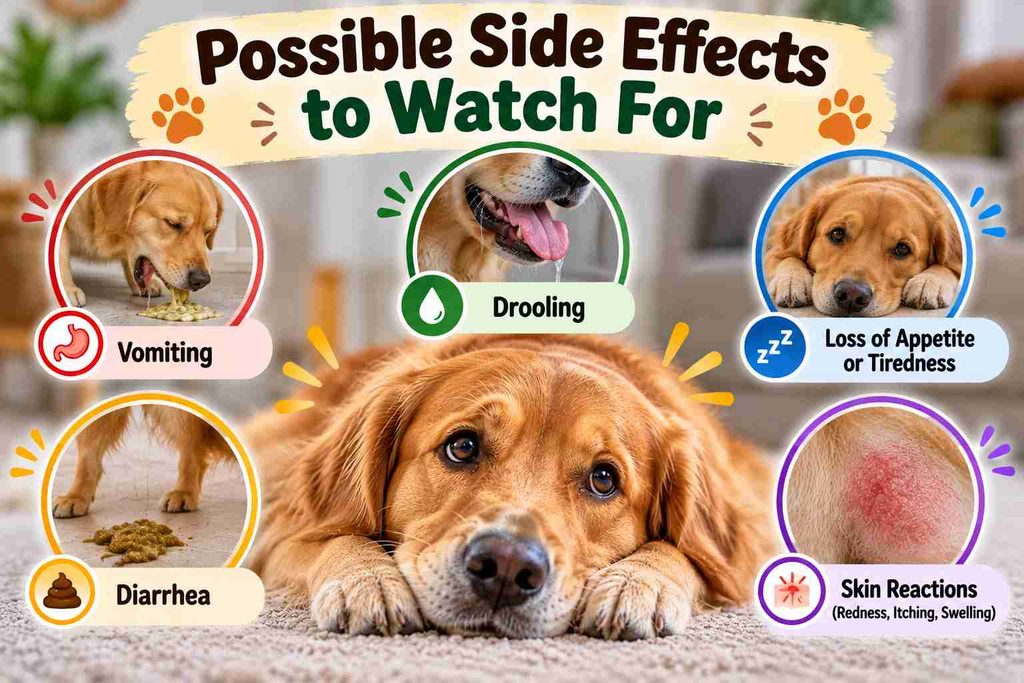
The side effects of aquaphor on dogs reported most often are mild digestive ones: loose or greasy-looking stools, or a single episode of vomiting after a larger lick. These come from the gut struggling with petroleum-based oils, not from any toxic ingredient.
Skin reactions are uncommon but possible — increased redness, itching, or swelling at the application site, usually tied to lanolin sensitivity. Stop using it and call your vet if you notice hives, facial swelling, or trouble breathing, though such reactions are extremely rare with this product.
Pet-Safe Alternatives for Dry Paws and Noses
If the licking battle is not worth fighting, purpose-made products remove the worry. Dog paw balms and snout balms use waxes and plant butters that are designed to be licked safely in small amounts.
Coconut oil works as a light moisturizer, though it is high in fat, so keep quantities small. Vitamin E oil can soothe flaky spots. For chronic dryness, ask your vet about the cause — sometimes the real fix is a humidifier or more omega-3 fatty acids in the diet, not another tube of ointment.
Seasonal hazards go beyond dry skin. Before flea-and-tick season arrives, check the citronella safety guide — what keeps bugs off you is not always safe for your dog.
And while you are making the home safer, glance at your windowsills too — find out if spider plants are toxic before your dog decides to taste-test the greenery.
Frequently Asked Questions
Can I put Aquaphor on my dog?
Yes, you can put Aquaphor on your dog’s skin in thin layers for dry paws, a crusty nose, or minor dry patches. Keep amounts small, supervise afterward to prevent licking, and skip it on wounds or infected skin. If your dog licks constantly, a pet-specific balm is the easier choice.
What happens if my dog licks Aquaphor?
In most cases, nothing serious — a licked-off layer usually passes without symptoms. Larger amounts can cause mild vomiting, diarrhea, or greasy stools because the gut cannot easily process petroleum-based oils. Monitor your dog for 12–24 hours and call your vet if symptoms persist or worsen.
Is Aquaphor toxic to dogs?
No, Aquaphor is not considered toxic to dogs. Veterinary and poison-control sources classify it as low-toxicity — its ingredients are non-toxic, though eating large amounts can upset the stomach. The tube itself is the bigger hazard if your dog chews it into pieces.
Can dogs have Aquaphor?
Dogs can have Aquaphor used on their skin, but they should not eat it. It is an external ointment, not a food or supplement, so treat it like any other medicine-cabinet product and store it out of your dog’s reach.
Is Aquaphor OK for dogs?
Yes, Aquaphor is OK for dogs for minor skin dryness when used sparingly and with supervision. It is one of the few human skin products veterinarians are generally comfortable with for short-term use, though pet-formulated balms remain the safer everyday option.
Can you use Aquaphor on dogs?
You can use Aquaphor on dogs for dry paw pads, crusty noses, and minor dry skin, applied in a thin layer to clean, dry skin. Avoid hot spots, deep wounds, infected areas, and anywhere near the eyes. Stop use and call your vet if the skin looks worse afterward.
Is Aquaphor safe for puppies?
Aquaphor is generally considered safe for puppies’ skin in the same small amounts used for adult dogs. Puppies explore the world with their mouths, so they are more likely to lick it off — supervise closely after applying. For very young puppies, check with your vet first since their skin is more sensitive.
Can I use Aquaphor on my dog?
You can use Aquaphor on your dog for dryness and minor irritation, following the same rules: a thin layer on clean, dry skin, and no licking for 10–15 minutes afterward. It is not a substitute for veterinary care if the problem keeps coming back.
Is Aquaphor better than Vaseline for dogs?
Both are petroleum-based and considered similarly safe for dogs, but Aquaphor has a slight edge for dryness. It adds humectant ingredients like glycerin and lanolin alcohol that help skin hold moisture, while plain Vaseline works only as a surface barrier.
Can I put Aquaphor on my dog’s hot spots?
No. If you are asking ‘can I put Aquaphor on my dogs hot spots,’ the answer is a firm no — it seals moisture against the skin, which can worsen these inflamed, infected areas. Hot spots need to stay clean and dry, and most require veterinary treatment to heal properly.
Keep the Tube Handy, but Keep the Lid On
Aquaphor earns its place in a dog owner’s cabinet for one job: short-term relief for dry paws, crusty noses, and rough skin. Used in thin layers with a little supervision, it is one of the safer human products you can borrow for your dog. The rule is simple — on the skin, fine; in the stomach, not ideal. When in doubt, pet-formulated balms take the licking worry off the table entirely, and your vet is always the right call for anything that does not improve within a few days.
Staying consistent with pet-safe choices pays off across the whole house — read our catnip safety facts so every product your dog encounters gets the same careful check.