

Yes, dogs can see TV, but they experience screens differently from humans. Dogs see fewer colors, detect motion well, and may notice screen flicker more easily. They can recognize moving animals and sounds, although they likely don’t understand television or stories the same way people do.
Wondering why your dog stares at the screen? Discover what dogs really see on TV, why they react, and which shows grab their attention.
Do Dogs Know That TV Isn’t Real?
It is difficult to know exactly how a dog understands a television image. Dogs can recognize visual information on screens, including other dogs, but that does not mean they understand television as humans do.
Studies show that dogs can visually categorize other dogs from images, even when the dogs shown have different breeds and appearances. This helps explain why your dog may suddenly become interested when another dog appears on the screen.
At the same time, dogs experience the world through several senses. Smell is especially important to them, and a television cannot provide the scent of an animal shown on screen. Because of this sensory difference, it is safer to think of TV as a visual and sound experience rather than something your dog understands like a real-life event.
Some dogs may bark at a dog on television or follow an animal moving across the screen. That reaction shows that the content has caught their attention, but it does not prove that they believe the animal is physically inside the room.
The simplest answer is: dogs can recognize meaningful things on a screen, but we cannot assume they understand television in the same conceptual way people do.
What Do Dogs See When They Watch TV?
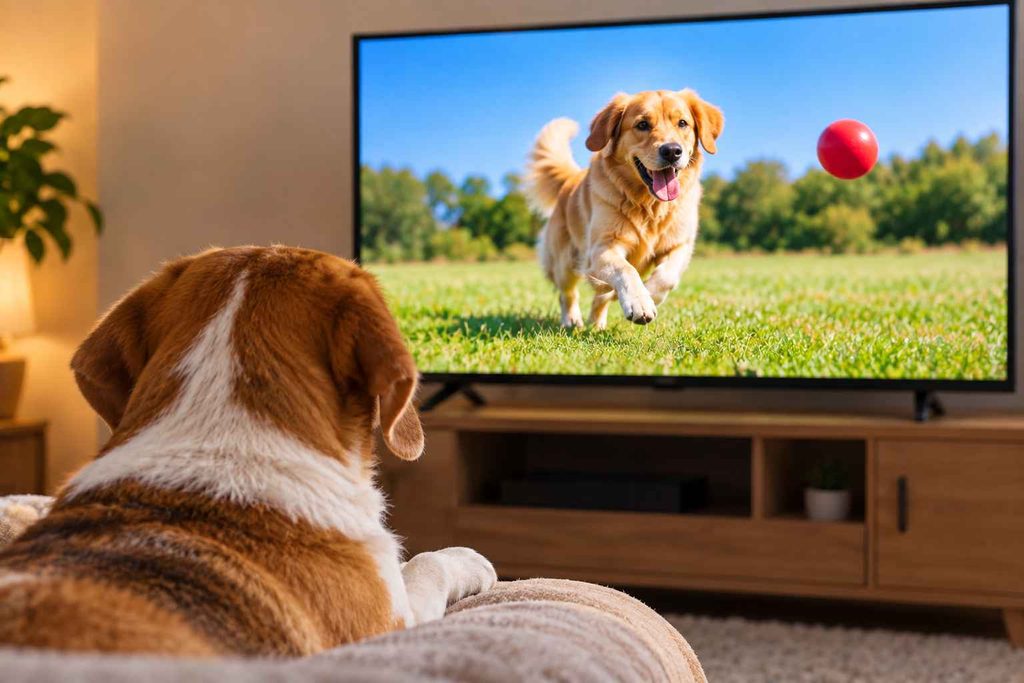
Dogs can see the television screen clearly enough to respond to images and movement. However, their visual experience is different because canine eyes process color and rapidly changing images differently from human eyes.
If you are wondering what do dogs see when they watch TV, imagine a picture with fewer colors and a different sense of motion. Dogs have dichromatic color vision, meaning they have two main types of cone cells instead of the three found in typical human vision.
For a closer look at canine color vision, see our guide on Can Dogs See Pink?.
Fewer Colors
Dogs do not see the full range of colors that humans see. Their color vision is commonly compared with red-green color blindness in humans, so colors that look very different to us can appear more similar to them.
Blue and yellow shades are generally easier for dogs to distinguish than red and green shades. This can affect how attractive certain scenes appear on a TV.
For example, a bright blue object moving across a yellow background may stand out more clearly to your dog than a red object placed against a green background.
This does not mean dogs see television in black and white. They see color, just within a more limited range than humans.
Their eyes also contain many rods, which help with low-light vision and detecting movement. This is one reason motion can be especially attention-grabbing for dogs.
If you’re curious about other colors, our guides on Can Dogs See Purple?.
Higher Flicker Fusion Frequency
Another important difference is how dogs perceive rapidly changing images. Dogs have a higher critical flicker-fusion threshold than humans, meaning they can detect flickering at faster rates. Research has demonstrated that dogs can discriminate flicker at relatively high frequencies.
This matters because a screen that looks like smooth continuous movement to you may be perceived somewhat differently by your dog.
Modern displays can refresh at high rates, so the old idea that dogs simply see television as a visibly flashing picture is too simplistic. Screen technology, brightness, distance, and the individual dog’s vision can all influence what they perceive.
The important point is that dogs are capable of processing moving images on screens. Their visual system is simply tuned differently from ours.
Why Do Dogs Watch TV?
Dogs may watch TV because something on the screen catches their natural attention. Movement is one of the strongest triggers, while sounds can provide another reason to look toward the screen.
A large 2024 survey found that owners most often reported movement attracting their dogs to screens, followed by sound. Many dogs also reacted when the sound was muted, suggesting that visual movement can be enough to hold their attention.
So, how do dogs watch TV? They may track movement with their eyes, turn their head, prick their ears, approach the screen, bark, whine, or simply sit and stare.
Some dogs may also enjoy television because they are relaxing beside their favorite person. The shared experience can become part of a comfortable routine.
If you notice your dog watching a screen, pay attention to what happens immediately before they become interested. You may discover that they prefer movement, animal sounds, certain colors, or particular types of animals.
What Kind of TV Shows Do Dogs Like?
Dogs do not have one universal favorite type of programming, but animal-based content appears especially interesting to many screen-watching dogs.
Research on companion dogs found that animal content was the most popular broad category among dogs that interacted with screens. Dogs, wild animals, cats, livestock, horses, and squirrels were among the subjects owners reported their dogs watching.
That means a nature documentary may be more exciting for your dog than a quiet drama with mostly stationary people.
You can experiment with:
- Dogs running or playing
- Birds flying
- Squirrels and other small animals
- Nature documentaries
- Ball sports
- Moving objects
- Calm animal videos
Some dogs may also respond to cartoons or other fast-moving images. The best choice depends on your individual dog.
And yes, can dogs watch movies? They can watch moving images from movies, but most dogs will not follow a movie’s story the way a person does. They are more likely to respond to individual sights and sounds that attract their attention.
Why Do Some Dogs Watch TV and Others Don’t?
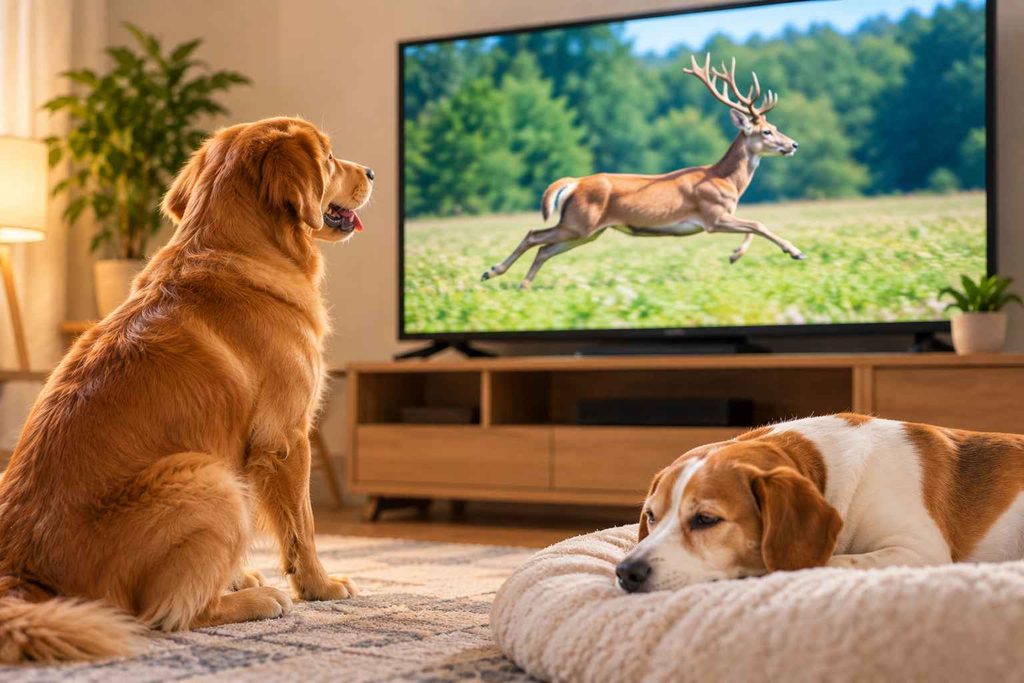
Dogs have individual personalities, experiences, visual abilities, and breed tendencies, so why do some dogs watch TV and others don’t has no single answer.
Some dogs are naturally more interested in moving objects. Sporting, herding, and other visually attentive dogs may be more likely to notice screen activity, although there are plenty of exceptions. A 2024 survey found differences related to age, visual status, and breed type among dogs reported to interact with screens.
Age can matter, too. Younger dogs in the survey were reported to interact with screens more frequently than older dogs.
Your dog’s eyesight also makes a difference. If a dog has reduced vision, the screen may simply be less interesting or harder to follow.
A dog that ignores TV is not missing anything important. It may simply prefer activities that involve movement, scent, exploration, food puzzles, or direct interaction with people.
Why Doesn’t My Dog Watch TV?
If your dog never looks at the television, there is usually no reason to worry. Some dogs simply find screen content less rewarding than real-world experiences.
Your dog may prefer smells, outdoor movement, toys, training, or social interaction. Since dogs rely heavily on their sense of smell, a screen cannot reproduce the complete sensory experience of encountering an animal in real life.
A dog’s age, eyesight, breed tendencies, and individual personality can also affect screen interest.
You may notice the same thing with smaller screens. Can dogs see phone screens? Yes, dogs can look at and respond to images displayed on phones and other digital screens, although their interest varies greatly.
If your dog suddenly stops responding to visual things they previously noticed, however, that is different from simply disliking TV. A sudden change in vision or behavior deserves a conversation with your veterinarian.
For another useful look at canine vision, see Can Dogs See Yellow?.
Should You Leave the TV on for Your Dog?
Leaving the TV on can be reasonable for some dogs, particularly when the sound provides familiar background noise while you are away. However, television should not replace exercise, play, training, social interaction, or other forms of enrichment.
A recent survey found that many owners used television or video content when their dogs were home alone. Veterinary guidance also recognizes background TV or radio as one possible way to provide familiar sound for dogs that struggle with being alone.
Keep the volume comfortable and give your dog the freedom to move away from the screen.
If your dog becomes excited, frightened, or frustrated by particular programs, switch them off. The goal is a calm and positive environment—not forcing your dog to watch.
Should you leave the television on for them when you’re not home?
Yes, you can leave the television on when your dog is home alone if they appear comfortable with it. Some dogs may enjoy the familiar voices and background sound, while others will simply ignore the television and sleep.
Do not assume that TV alone will prevent boredom or separation-related problems. Dogs still need appropriate physical activity, mental stimulation, and social contact.
If your dog shows pacing, persistent barking, destructive behavior, escape attempts, or other signs of significant distress when alone, television is not a substitute for proper behavioral support. Separation anxiety can require a structured plan with veterinary or qualified behavior support.
For a dog that enjoys watching, you can leave on calm programming at a moderate volume. For a dog that ignores it, there is no need to make television part of their routine.
When Should You Be Concerned About Your Dog Watching TV?
Watching TV is generally not concerning by itself. The important thing is how your dog behaves while watching.
Look for signs that the experience is enjoyable or neutral, such as calmly watching, resting, or briefly following movement. On the other hand, repeated barking, growling, frantic running toward the screen, hiding, whining, or obvious fear may mean the content is overstimulating.
You should also avoid letting television replace essential daily activities. Dogs need varied enrichment, including physical movement, mental challenges, exploration, and social connection. The American Animal Hospital Association recommends providing varied enrichment to support dogs’ physical and emotional wellbeing.
If your dog’s reaction to the television seems unusually intense or represents a sudden behavior change, stop the program and observe what happens. If the behavior continues or concerns you, speak with your veterinarian.
How to Have the Best Bingefest With Your Dog
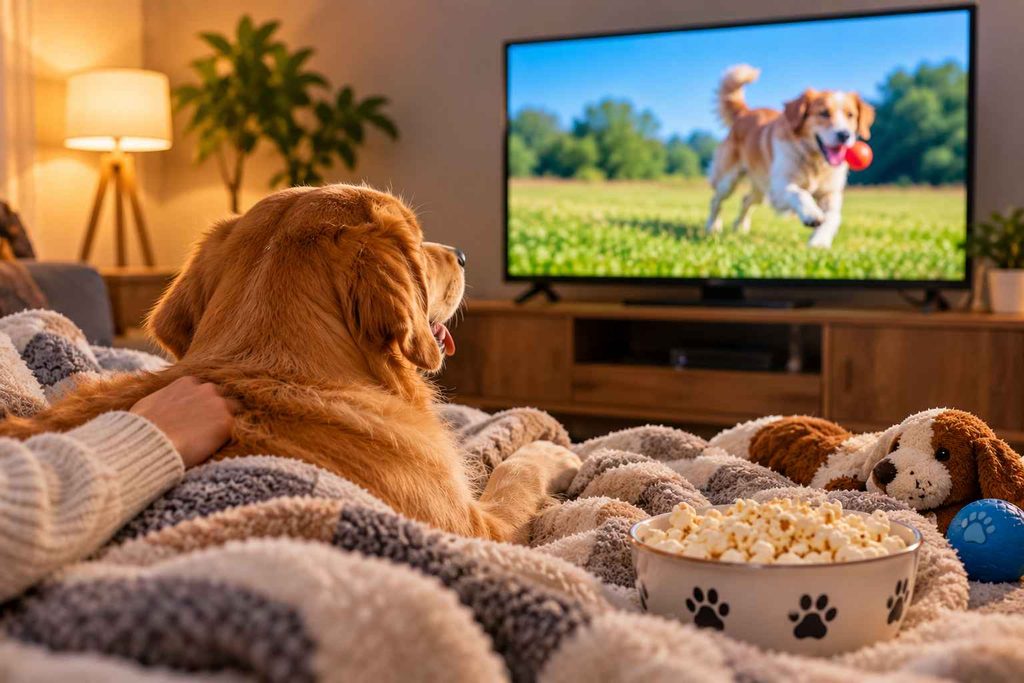
TV time can be a simple way to relax together. The trick is to make the experience comfortable, optional, and balanced with more active forms of enrichment.
Pick a show they’d like.
Start with content that matches your dog’s interests. Try animals, nature scenes, moving objects, or other visually active programs and watch their reaction.
Do they follow the movement? Do their ears perk up? Do they calmly settle beside you? These small clues can help you discover what your dog enjoys.
Do not worry if they walk away after a few minutes. In a screen-interaction study, many dogs watched for only short periods, with 1–5 minutes being the most commonly reported duration of a watching event.
Snuggle up together in a comfy blanket.
Make the viewing area comfortable with your dog’s usual bed, blanket, or favorite resting place.
You do not need to make TV the main event. A relaxed dog lying beside you while occasionally looking at the screen may be having a perfectly good time.
The companionship may be just as valuable as the program itself.
Keep interactive dog toys on hand.
Give your dog something more engaging to do when the screen loses its appeal. Puzzle toys, treat-dispensing toys, short training games, and sniffing activities can provide useful mental enrichment.
The American Animal Hospital Association recommends varied enrichment rather than relying on one activity. Cognitive, food-based, sensory, physical, and social activities can all contribute to a healthier daily routine.
And remember, can dogs see screen doors? Yes, many dogs can see mesh screen doors, although the fine pattern may be less obvious depending on lighting, contrast, and the dog’s vision. That is another example of how canine vision differs from our own.
FAQs
Do Dogs See TV?
Yes, dogs can see TV screens and notice movement, sounds, shapes, and some colors. Their vision differs from humans, so television looks different to them.
Do Dogs Understand TV?
Dogs can recognize familiar animals, movement, and sounds on TV, but they likely do not understand television or fictional stories the way humans do.
Can a Dog See a TV Screen?
Yes, a dog can see a TV screen and may follow moving animals, objects, or people. Their interest depends on vision, personality, breed, and content.
Can Dogs See TV Screens?
Yes, dogs can see TV screens and respond to moving images and sounds. However, their limited color vision and different motion perception change how screens appear.
Do Intelligent Dogs Watch TV?
Intelligent dogs may watch TV, but intelligence alone does not determine screen interest. Personality, breed traits, eyesight, age, and the type of content matter more.
Can Dogs See Images on TV?
Yes, dogs can see images on TV and may recognize animals or follow movement. They process those images differently because their color and visual systems differ.
Can dogs watch television?
Yes. Dogs can see television screens and may respond to moving images, animal sounds, and other visual or auditory details. Interest varies from dog to dog.
Is it good for dogs to watch TV?
For most dogs, occasional TV viewing is fine when it does not replace exercise, play, training, social interaction, or other enrichment. Keep the experience calm and optional.
Do dogs like to watch TV when alone?
Some do, while others ignore it. TV can provide background sound for a dog that is comfortable alone, but it should not be considered a complete solution for boredom or separation anxiety.
Are dogs able to recognize animals on television?
Dogs can visually recognize and categorize other dogs from images, and many companion dogs show strong interest in animal content on screens.
What do dogs see on TV compared with people?
Dogs see a more limited range of colors and process rapidly changing visual information differently from humans. Movement can be especially noticeable because of their visual system.
Can dogs see television screens clearly?
Yes. Many dogs can see and respond to screen content, although clarity and interest can vary with eyesight, age, distance from the screen, and the individual dog.
How can dogs see TV but not understand a movie like humans?
Seeing an image and understanding a story are different abilities. A dog can notice movement, recognize an animal, or react to a sound without understanding the plot, characters, or fictional nature of a movie.
Which dogs are most likely to watch TV?
There is no single breed that always watches television. Research suggests age, visual status, and breed type may influence screen interest, with sporting and herding-type dogs appearing relatively common among reported screen watchers.
The bottom line: can dogs see TV
So, can dogs see TV? Absolutely. Dogs can see screens and often notice movement, animal images, colors, and sounds that capture their attention.
Their viewing experience is different from ours because canine eyes have different color vision and temporal processing. Some dogs may happily follow animals across the screen, while others may glance once and return to sleep.
There is no need to make your dog a television fan. If they enjoy it, let TV be a small, positive part of their routine. If they do not care about it, offer activities that better match their natural interests.
For more about how dogs handle low-light environments, see Can Dogs See in the Dark?. Most importantly, keep screen time balanced with walks, play, sniffing, training, rest, and plenty of happy time together.



Pingback: Can Dogs See Purple | A Visual Guide in 2026