

No, spider plants (Chlorophytum comosum) are not toxic to dogs. A small bite may still cause mild stomach upset, so it is best to prevent repeated chewing. If your dog ate soil, fertilizer, a pot piece, or an unidentified plant, contact your veterinarian for advice.
Spider plants look harmless, but can dogs eat them? Get the simple answer and learn what to do if your dog takes a bite.
Are Spider Plants Toxic to Pets?
Spider plants are among the more reassuring choices for homes with pets. The ASPCA lists Chlorophytum comosum, commonly called spider plant, ribbon plant, or spider ivy, as non-toxic to dogs and cats. This makes it one of the non toxic plants for dogs and means the plant itself is not considered poisonous when a pet chews or eats it.
So, are spider plants safe for pets? Yes, when you have correctly identified the plant. That distinction matters because common plant names can sometimes be confusing. A plant sold under a similar name may be a completely different species with different safety concerns.
It is also important to understand what “non-toxic” means. It does not mean a dog should freely eat houseplants. ASPCA notes that consuming plant material can cause vomiting or gastrointestinal upset in dogs and cats, even when the plant is listed as non-toxic.
For that reason, a spider plant can be a practical choice among pet friendly indoor plants, but it should still be placed where your dog cannot constantly chew it.
Are spider plants safe around dogs?
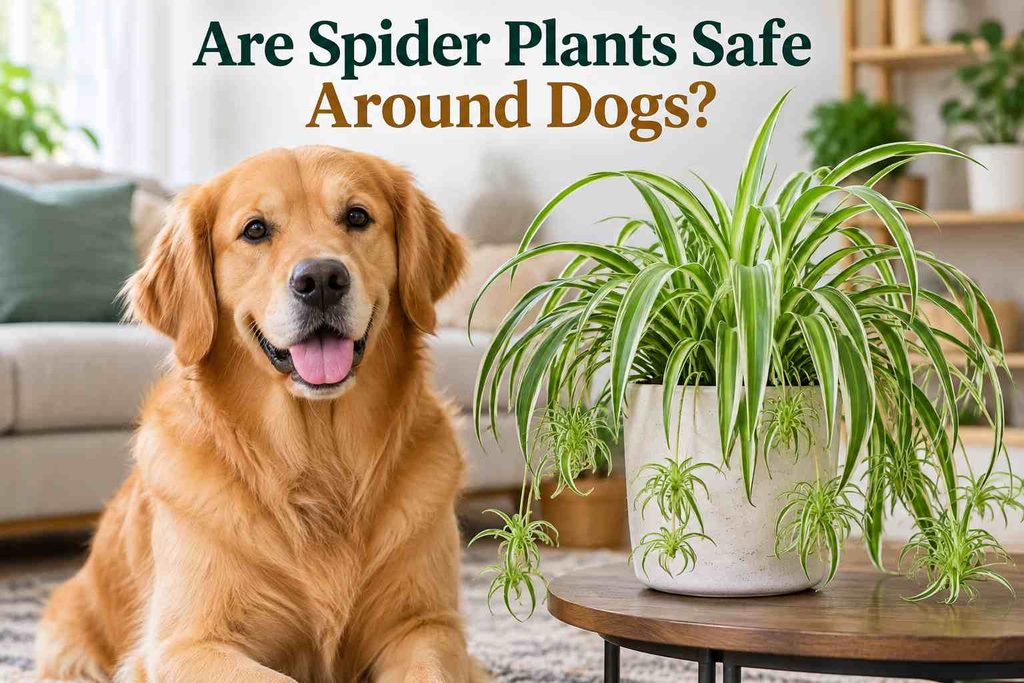
Yes. A correctly identified spider plant is considered safe around dogs because it does not contain a recognized toxic principle that would cause classic plant poisoning. The current ASPCA listing specifically identifies spider plants as non-toxic to dogs.
If your dog takes one or two bites, there is usually no reason to panic. The main concern is ordinary digestive irritation from eating plant material rather than spider plant dog toxicity.
You may notice signs such as:
- Mild vomiting
- Loose stool
- Drooling
- Temporary appetite changes
- Mild stomach discomfort
These signs are not proof of poisoning. They can occur simply because a dog has eaten plant material.
If you are wondering, can dogs eat spider plants? The safest answer is that the plant is non-toxic, but it should not be treated as food. Repeated chewing can damage the plant and may lead to digestive problems.
Concern becomes more important when you cannot confirm the plant’s identity, when your dog swallowed something besides the leaves, or when fertilizer, pesticide, potting products, plastic, string, or broken pot pieces may have been eaten.
For comparison, household substances can have very different safety profiles. If your dog has also been exposed to essential oils or similar products, see our guide to is eucalyptus safe for dogs? rather than assuming every plant-related exposure is harmless.
Leaves, runners and the pot: check the whole setup
A spider plant is more than the leaves you see in the pot. Mature plants can produce long runners with small plantlets, often called spiderettes. These can hang low enough for an interested dog to grab.
Start by checking the leaves. Look for missing pieces, bite marks, or leaves pulled from the plant. A few chewed leaves are different from swallowing a large amount.
Next, check the runners and plantlets. Their movement can attract a curious dog, particularly when the plant hangs from a basket. Remove fallen pieces from the floor before allowing your dog back into the area.
Then inspect the pot and surrounding soil. A disturbed pot can tell you more about the exposure than the plant itself. Ask:
- Is any potting soil missing?
- Is the container cracked?
- Is a plastic piece missing?
- Was a hanging cord or tie chewed?
- Could your dog have swallowed fertilizer?
- Was a pesticide or other plant product recently used?
This wider check is important because Chlorophytum comosum toxic to dogs is not the real concern with an identified spider plant. The plant itself is listed as non-toxic, but another substance or swallowed object can create a separate problem.
If you use plant food or other gardening products, keep their original packaging. The ingredients can help your veterinarian determine whether additional advice is needed.
Keep trailing plants away from curious dogs
Even safe plants are better kept out of reach. This is especially true for spider plants because their long leaves and hanging plantlets can make them tempting targets.
A hanging basket can work well, but check the lowest leaf, not just the height of the pot. A plant may appear high enough while its leaves still hang directly at your dog’s nose level.
You can also place the plant in a room your dog does not enter, use a stable elevated location, or close the door when you cannot supervise the area. Good spider plant care also means checking its placement regularly as the leaves and plantlets grow longer.
Good prevention includes:
- Keep fallen leaves and plantlets picked up.
- Check the plant as new growth becomes longer.
- Keep chairs and furniture away from reachable foliage.
- Secure hanging baskets and stands properly.
- Store fertilizer and sprays in closed original containers.
- Give your dog an appropriate alternative to chew.
If plant chewing happens often, look at the environment rather than simply moving the pot a few inches higher. A determined dog may jump, climb furniture, or find another route.
For other household exposure questions, you can also read our guide on is citronella safe for dogs?.
Check after moving or sharing plants
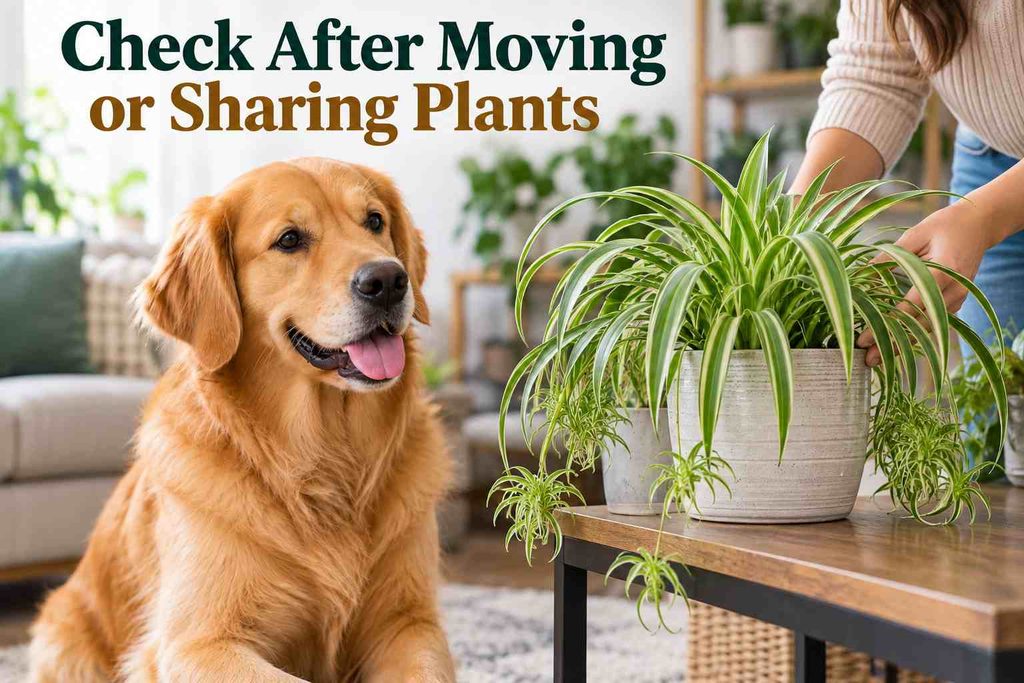
Spider plants are easy to propagate, so many owners give small plantlets to friends and family. When moving or sharing one, keep the plant, loose soil, scissors, and cut runners away from your dog until everything has been cleaned up.
A new location also deserves a fresh safety check. A plant that was previously unreachable may become accessible after furniture is moved.
If you receive a spider plant from someone else, check the label if possible. Do not rely only on a nickname. Confirm the species before deciding that it is safe.
Also ask whether the plant was recently treated with fertilizer, pesticide, leaf products, or another substance. A non-toxic plant can still become a different exposure if another product is involved.
What to do if your dog eats spider plants
First, stay calm and move your dog away from the plant. Remove any remaining leaves or plantlets from your dog’s reach.
If you know it is Chlorophytum comosum and your dog only took a small bite, the situation is generally reassuring because the ASPCA classifies spider plants as non-toxic to dogs.
Still, check what else may have been involved. Look around the pot for missing soil, fertilizer packets, plastic, string, broken pieces, or other objects.
If your dog develops repeated vomiting, significant weakness, breathing problems, choking, collapse, or another serious change, seek veterinary care promptly. A non-toxic plant classification does not rule out a separate illness, swallowed object, or exposure to another substance.
Do not try to diagnose the situation from the plant name alone. If you are uncertain about what your dog swallowed, contacting your veterinarian is the safest way to get advice specific to your dog’s size, age, health, and exposure.
For suspected exposure to another household ingredient, accurate identification matters. For example, our guide to is sorbitol safe for dogs? explains why the exact substance involved matters.
What to do right now
If you just noticed your dog chewing a spider plant, use this simple checklist:
- Move the plant away. Prevent additional chewing.
- Check the plant. Look for missing leaves or plantlets.
- Check the floor and pot. Look for spilled soil or missing objects.
- Confirm the plant. Look for the botanical name Chlorophytum comosum on the label.
- Check for products. Find out whether fertilizer, pesticide, or another treatment was used.
- Watch your dog. Pay attention to vomiting, diarrhea, drooling, appetite changes, or unusual behavior.
- Call your veterinarian when unsure. Give them the clearest information you have.
Do not wait for severe signs if you believe your dog swallowed a product or foreign object. Bring the product label or a clear photo when possible.
The ASPCA also advises contacting a veterinarian or its Poison Control service when an animal may have ingested a potentially harmful substance or when you have questions about plant exposure.
What not to do
Do not induce vomiting at home unless a veterinarian or qualified animal poison professional specifically tells you to do so. Trying to make a dog vomit without professional direction can create additional risks.
Do not give random home remedies, oils, milk, medications, or other substances in an attempt to “neutralize” the plant.
Do not assume that every symptom means spider plant poisoning. Because the plant is considered non-toxic, symptoms may have another explanation, especially if your dog ate soil, fertilizer, another plant, or a household object.
At the same time, do not dismiss serious symptoms simply because the plant is listed as safe. Trouble breathing, choking, collapse, severe weakness, or inability to swallow requires urgent veterinary attention.
The goal is simple: identify what was eaten, prevent further exposure, and get professional guidance when the situation is unclear.
What to Tell the Vet or Poison Line
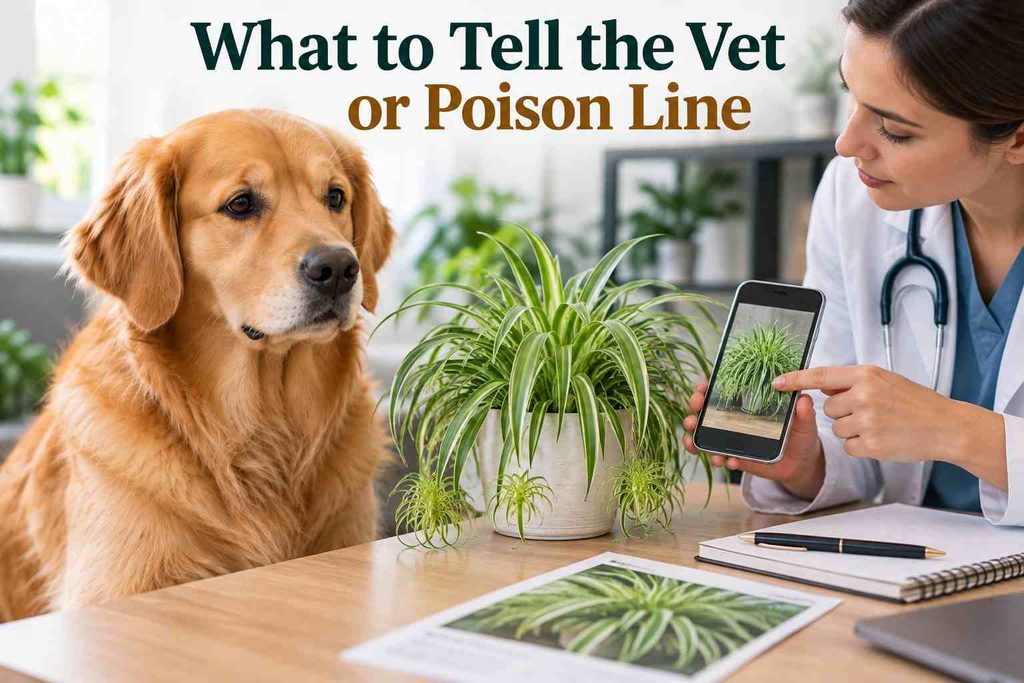
Clear information can make an exposure assessment much easier. Before calling, gather as many of these details as possible:
- The plant’s common and scientific name
- A clear photo of the plant
- The nursery label, if available
- The approximate amount your dog may have eaten
- Which parts were eaten
- The time of the incident
- Your dog’s approximate weight and age
- Any current symptoms
- Whether soil or pot material was swallowed
- Any fertilizer, pesticide, or other product used on the plant
If you did not actually see your dog eat the plant, say so. Finding a disturbed pot is different from witnessing ingestion.
Also explain whether your dog is vomiting, drooling, having diarrhea, refusing food, acting unusually tired, or showing any other changes.
Keep product containers and labels available if another substance may have been involved. This can help the veterinary team identify the actual exposure rather than assuming the spider plant caused the problem.
Cats and Spider Plants
Cats can live around correctly identified spider plants too. The ASPCA lists spider plants as non-toxic to both dogs and cats.
Cats may show more interest in spider plants because the long leaves and dangling plantlets can attract their attention. Merck Veterinary Manual notes that cats may reach spider plants by climbing or when plantlets fall from mature stems; it also describes vomiting, salivation, retching, and temporary appetite loss after ingestion in cats.
That information does not mean spider plants are considered poisonous to cats. Rather, it shows why eating plant material can still cause digestive signs even when a plant is classified as non-toxic.
If you have both a dog and cat, the same basic prevention works for everyone: keep trailing leaves and fallen plantlets away from chewing range, secure the pot, and store gardening products safely.
FAQ’s
Is a spider plant pet friendly?
Yes. A correctly identified spider plant is generally considered pet friendly because the ASPCA lists it as non-toxic to both dogs and cats. Even so, pets should not be encouraged to eat houseplants because plant material can still cause stomach upset.
What are some safe houseplants for dogs?
Several common plants are listed by the ASPCA as non-toxic to dogs, including spider plants, African violets, Boston ferns, roses, and certain palms. Always check the exact species before bringing a new plant into a home with pets because common names can be confusing.
What indoor plant is toxic for dogs?
Some indoor plants can cause serious problems in dogs, so plant identification is important. Examples of plants with documented toxic effects include sago palm and certain lilies or other ornamental plants. The safest approach is to check the scientific name against a reliable veterinary poison-control database before allowing a dog access.
How can I grow baby spider plantlets into more plants?
Place a healthy plantlet over moist potting mix in a small container while it is still attached to the parent plant. Once it develops roots, it can be separated and grown as its own plant. Keep the small pots and loose soil away from dogs while you work.
Can spider plants be grown outdoors?
Yes. Spider plants can be grown outdoors in suitable conditions, although they are commonly kept as indoor plants. Protect them from unsuitable temperatures and check the growing conditions for your local climate. If your dog spends time outside, keep the plant in an area that remains inaccessible to chewing.
What Plants Are Toxic to Dogs?
Some plants toxic to dogs include sago palm, oleander, azaleas, and certain lilies. Depending on the plant and amount eaten, they can cause vomiting, weakness, heart problems, kidney damage, or other serious effects. Always confirm the plant species with a veterinarian.
Are Spider Plants Poisonous to Dogs?
No. Spider plants (Chlorophytum comosum) are listed as non-toxic to dogs by the ASPCA. However, eating plant material can still cause mild stomach upset, such as vomiting or diarrhea. Keep the plant out of reach and contact your veterinarian if symptoms develop.
Indoor Plants Not Toxic to Dogs
Several indoor plants are considered non-toxic to dogs, including spider plants, Boston ferns, African violets, and certain palms. Always verify the exact plant species before bringing one home, because similar-looking plants can have very different safety profiles.
Are Spider Plants Easy to Care For?
Yes, spider plants are easy to care for. They grow well in bright, indirect light, need moderate watering, and tolerate normal indoor conditions, making them beginner-friendly houseplants.
Are Spider Plants Toxic to Humans?
No, spider plants are generally considered non-toxic to humans. However, people should avoid eating the leaves, and young children should be supervised around houseplants to prevent accidental swallowing.
Are Spider Plants Toxic to Babies?
Spider plants are generally considered non-toxic to babies. Still, babies should never chew or swallow plant leaves, soil, or fertilizer. Keep plants safely out of their reach.
Are Spider Plants Toxic to Kids?
No, spider plants are generally considered non-toxic to children. However, kids should not eat the leaves or soil, and younger children should be supervised around indoor plants.
Are Spider Plants Dangerous to Dogs?
No, spider plants are not considered dangerous or toxic to dogs. Eating the plant may still cause mild stomach upset, so prevent repeated chewing and monitor for symptoms.
The bottom line: are spider plants toxic to dogs
Spider plants are a reassuring choice for dog owners because the ASPCA lists Chlorophytum comosum as non-toxic to dogs and cats.
Still, safe does not mean edible. Eating plant material may cause mild stomach upset, while fertilizer, pesticide, potting soil, plastic, or another swallowed object can create a separate concern.
If your dog takes a small bite of a confirmed spider plant, there is usually no reason to panic. Remove the plant, check the entire setup, watch for changes, and contact your veterinarian if symptoms appear or you are unsure what was swallowed.
For trustworthy pet-safety information, rely on established veterinary and poison-control references rather than assuming every plant with a similar name has the same safety profile. This article is based on current ASPCA Poison Control and veterinary reference information and should complement—not replace—advice from your veterinarian.



Pingback: Can Dogs Have Pepper? Complete Safety Guide for Pet Parents