

Finding dog poop blood in the yard or on a walk is one of the most frightening things a dog owner can see — I understand the panic if you’re staring at it right now. Here’s the short answer: blood in a dog’s stool is never normal, but it is not always an emergency.
Bright red blood usually points to the lower digestive tract, while dark, tarry stool points higher up. Either way, your vet should hear about it. Below, I’ll walk you through what the blood looks like, the causes, when to rush to the vet, and what to do right now.
“Blood in your dog’s stool is never normal, but a single small streak in a healthy adult dog is often minor — while dark, tarry stool or a large amount of blood is always an emergency. When in doubt, call your vet.”
First, Read the Blood: What the Color and Look Tell You
Before anything else, look closely at the stool you found. The color, amount, and consistency are the biggest clues your vet will use, and each pattern points to a different part of the digestive tract.
Bright red blood in dog poop is called hematochezia in dogs — fresh bleeding from the lower digestive tract (colon, rectum, or anus). Fresh blood in dog stool looks red because it hasn’t traveled far enough to be digested. Dogs with this type of bleeding often poop more frequently, with softer stool or a mucus coating.
The other main pattern is dark, tarry stool — melena in dogs, meaning digested blood in dog poop from bleeding higher up, in the stomach or small intestine. Digested blood turns dark brown or black and sticky, like tar. A dark tarry stool dog owners find is easy to miss, since many don’t realize black stool can mean blood — when in doubt, treat it as blood until your vet says otherwise.
Here is a quick guide to what you might be seeing:
- Bright red streaks or dots on formed poop: usually lower-tract bleeding, often from irritation, straining, or mild colitis.
- Red blood mixed through soft stool or diarrhea: points to the colon, often with mucus and frequent trips outside.
- Jelly-like mucus with blood: typically means inflammation of the colon lining itself.
- Liquid that looks more red than brown: suggests a large amount of fresh bleeding and needs urgent care.
- Black, tarry, sticky stool: digested blood from the upper digestive tract — always treat this as urgent.
Sometimes what looks like blood isn’t blood at all — beets, berries, and red food dyes in treats or kibble can tint stool red. Think back over the last day or two. But never assume it’s just dye: if you’re unsure, treat it as blood and call your vet.
Why This Happens: The Most Common Causes

The blood in dog poop causes vets investigate most often range from simple stomach upset to serious disease — which is exactly why a vet visit matters, since you can’t tell them apart by looking.
Among the many dog pooping blood reasons vets see, most fall into a handful of categories. Bloody stool in dogs is a symptom, not a diagnosis, so the real question is always what’s causing the bleeding.
Something Your Dog Ate
Dietary indiscretion — the vet term for “my dog ate something it shouldn’t have” — is one of the top reasons dogs develop bloody stool. Table scraps, garbage, spoiled food, rich leftovers, or a sudden food switch can all inflame the gut.
Non-food items count too: bones, sticks, toys, and gravel can scrape the intestines on the way through. If your dog is a known trash-raider or you recently switched foods, tell your vet — that detail alone can point straight at the cause.
Parasites
Intestinal parasites are a classic cause of blood in dog feces, especially in puppies, shelter dogs, and dogs not on regular prevention. Hookworms and whipworms feed on blood from the intestinal wall; roundworms, coccidia, and giardia inflame the gut lining.
You usually can’t see these parasites yourself — your vet finds them with a fecal test, which is why bringing a fresh stool sample helps so much. Year-round parasite prevention takes this cause off the table.
Infections, Including Parvovirus
Bacterial infections and viruses can all cause bloody stool — raw-fed dogs face a higher salmonella risk. The most feared is parvovirus, which attacks the intestinal lining and causes severe bloody diarrhea.
Puppy pooping blood should always be treated as urgent: parvovirus bloody stool in puppies can turn life-threatening fast, and unvaccinated puppies are most vulnerable.
Stress and Colitis
Yes — stress colitis in dogs shows up after boarding, moving, fireworks, or any big routine change. The inflamed colon produces dog colitis blood and mucus in the stool: soft poop streaked with red, coated in jelly-like mucus, with urgent, frequent trips outside.
Dogs with inflammatory bowel disease (IBD) get similar flare-ups. If bloody stool started right after a stressful event, mention the timing to your vet — it’s a meaningful clue.
Acute Hemorrhagic Diarrhea Syndrome (AHDS)
Acute hemorrhagic diarrhea syndrome in dogs (formerly called hemorrhagic gastroenteritis) is one of the most serious causes of sudden bloody diarrhea. It strikes fast and can cause dangerous dehydration and shock within hours. Sudden severe bloody diarrhea with vomiting, lethargy, or collapse means the emergency clinic now, not in the morning.
Straining, Constipation, and Foreign Objects
Sometimes the cause is mechanical: dog straining and pooping blood often go together when hard, dry stool scrapes the rectum, leaving small bright-red streaks.
Constipation, dehydration, or low fiber can set this up. More seriously, swallowed objects like sticks or toy pieces can cut or block the intestines, causing bleeding with vomiting and belly pain. Repeated straining with little coming out is a red flag worth a vet call on its own.
Bleeding Around the Rectum and Anus
Not all blood comes from deep in the gut. Dog bleeding from rectum tissue can start right at the exit: infected anal glands, small tears from hard stool, perianal fistulae (most common in German Shepherds), or rectal polyps. Watch for scooting, back-end licking, crying while pooping, or spotting blood when your dog sits — a quick rectal exam often reveals the source.
Pancreatitis
Pancreatitis — inflammation of the pancreas — can cause bloody stool with vomiting, belly pain, and appetite loss, often triggered by a fatty meal. Breeds like Miniature Schnauzers and Cocker Spaniels are more prone, and severe cases are emergencies.
Ulcers and Medications
Ulcers in the stomach or small intestine bleed slowly, and that blood gets digested on the way down — which is why ulcers typically cause black, tarry melena rather than bright red blood.
Steroids and NSAIDs can cause or worsen ulcers — never give your dog human painkillers, and always ask your vet before using products like aspirin for dogs. Liver and kidney disease can also contribute to ulcers, particularly in older dogs.
Clotting Problems and Toxins
Some dogs bleed into their stool because their blood doesn’t clot properly — from inherited disorders, immune-mediated platelet destruction, tick-borne disease, or rat poison.
Anticoagulant rodenticides stop blood clotting, so an exposed dog can bleed internally days after exposure. Any chance your dog got into rat bait is an emergency: early vitamin K treatment can be lifesaving, and waiting makes it far less effective.
Tumors and Polyps
Growths in the digestive tract or around the rectum can bleed as passing stool irritates them. Both benign polyps and malignant tumors are possible, and risk rises with age — persistent bleeding in a senior dog should always be investigated, never assumed to be minor. Your vet may recommend imaging or biopsy — finding these early gives your dog the best options.
When It Is an Emergency
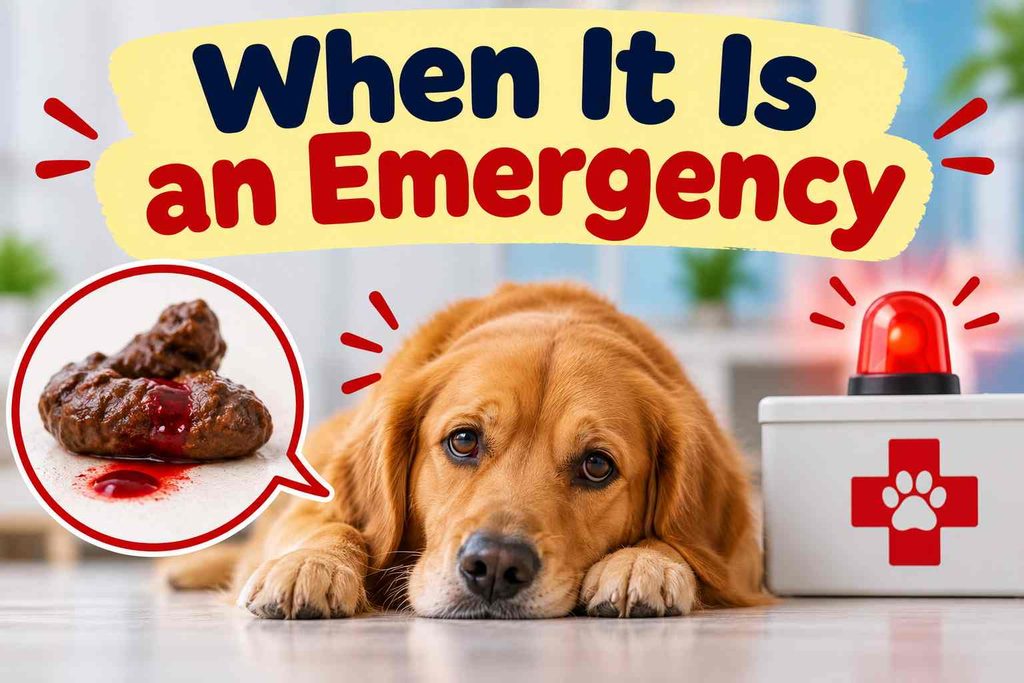
Dog bloody diarrhea combined with vomiting is one combination you should never wait on — fluid loss from both ends dehydrates a dog dangerously fast. Go now if you see any of these:
- A large amount of blood, or liquid blood with very little stool
- Black, tarry stool (melena), which signals upper digestive tract bleeding
- Bloody stool plus vomiting — especially throwing up white foam repeatedly
- Lethargy, weakness, collapse, or unresponsiveness
- Pale or white gums
- Signs of shock such as heavy panting or cold limbs
- A puppy with bloody stool, or any dog not fully vaccinated
- Possible exposure to rat poison or other toxins
- Bleeding that keeps happening for more than a day
A healthy, vaccinated adult acting normal with one small streak of bright red blood can often be monitored until morning — but still call your vet. When in doubt, the call is always the right move.
What to Do Right Now: Five Calm Steps
These five steps take ten minutes and genuinely help your vet — including deciding when to call the vet for bloody dog stool:
- Look and note. Note the blood’s color (bright red vs. black and tarry), amount, and the stool’s consistency. A quick photo helps, odd as it feels.
- Collect a fresh sample. Scoop some into a clean bag. Your vet will likely run a fecal test for parasites and bacteria, and a fresh sample saves a return trip.
- Check your dog’s overall state. Note energy, appetite, vomiting, gum color, and belly tenderness. If your dog passing blood in stool shows any emergency signs above, skip the list and go.
- Call your vet. Describe the color, amount, and your dog’s behavior, and follow their guidance rather than internet home remedies.
- Do not medicate on your own. Don’t give human anti-diarrhea drugs, painkillers, or “natural” remedies without veterinary direction, and never induce vomiting. Keep water available and your dog calm.
What Your Vet Will Do
To diagnose canine bloody stool, your vet starts with a physical exam, including a rectal check for masses, foreign objects, and anal gland problems, plus feeling the abdomen for pain or blockages. Expect questions about diet, trash-raiding, stress events, medications, and vaccines — your notes from the steps above make this much easier.
Diagnostics often include a fecal exam, blood work for anemia and organ function, parvo/giardia snap tests (especially for puppies), X-rays or ultrasound for blockages or tumors, and sometimes endoscopy to view the gut lining and take biopsies.
Treatment targets the cause: dewormers for parasites, antibiotics for infections, fluids for dehydration, surgery for foreign bodies or some tumors. Mild colitis may be managed with a vet-approved bland diet for a few days, sometimes with probiotics for dogs to support gut recovery. Your vet will set a recheck plan — bloody stool should visibly improve with treatment, and if it doesn’t, your vet needs to know right away.
Preventing Bloody Stool in the Future
You can’t prevent every cause, but you can sharply lower the odds. Keep your dog’s vaccination schedule current — parvovirus and distemper vaccines prevent two of the nastiest causes. Stay on year-round parasite prevention with fecal tests as your vet recommends.
Feed a consistent, high-quality diet and transition foods gradually over a week or more. Dog-proof your home and yard against garbage, bones, swallowable toys, and rodenticides. Train a solid “leave it” for walks, manage stress around boarding and travel, and keep up regular checkups.
Frequently Asked Questions
What causes blood in dog poop?
Blood in a dog’s stool usually signals irritation or disease somewhere in the digestive tract. The most common culprits are dietary indiscretion, intestinal parasites, infections like parvovirus, stress colitis, foreign objects, pancreatitis, ulcers, clotting disorders, and tumors. The blood’s color helps narrow it down: bright red points to the lower tract, while black and tarry points to the upper tract.
Is a dog pooping blood an emergency?
It depends. It’s an emergency with a large amount of blood, black tarry stool, or bleeding plus vomiting, lethargy, pale gums, or collapse. One small streak of bright red blood in a healthy, vaccinated adult may be safe to monitor briefly — but always call your vet first.
My dog is pooping blood but acting normal — should I still worry?
Yes — call your vet. Dogs often act normal early in conditions that later turn serious, and you can’t judge the cause by behavior alone. Your vet may advise monitoring or schedule a visit, but that call belongs to a professional.
Why does my dog’s poop look like jelly with blood in it?
Bloody, jelly-like stool usually means an inflamed colon lining mixing excess mucus with blood. When owners describe dog pooping jelly like blood, vets often think of colitis or acute hemorrhagic diarrhea syndrome. Mild colitis may resolve with veterinary guidance, but sudden severe jelly-like bloody diarrhea is an emergency.
Can my dog die from pooping blood?
Yes — severe cases can be life-threatening: heavy blood loss causes anemia and shock, and combined vomiting and bloody diarrhea dehydrate a dog fast. Parvovirus and AHDS can kill without prompt treatment. But many mild cases resolve fully with veterinary care — which is why getting seen quickly matters so much.
Why is my dog bleeding from the butt?
It usually traces to the colon, rectum, or anal area — irritated anal glands, small rectal tears, colitis, or straining. It can also signal polyps, perianal fistulae, or tumors. Active, heavy, or recurring bleeding needs a veterinary exam to find the source.
What will the vet do to diagnose bloody stool?
Expect a physical and rectal exam, a fecal test, blood work, and possibly parvo or giardia snap tests. X-rays or ultrasound spot blockages or masses; persistent cases may need endoscopy with biopsies.
Can stress cause blood in my dog’s stool?
Yes — stress colitis is real. Boarding, moving, or fireworks can inflame the colon and produce bloody, mucusy stool within a day or two. It often looks alarming but responds well to veterinary care. Still, don’t assume stress is the cause without checking, since serious conditions can coincide with stressful events.
Can this clear up on its own without a vet visit?
Sometimes a single small streak from minor irritation resolves within a day. But you can’t know from home whether the cause is minor or serious — and waiting on AHDS, parvovirus, or rat poison exposure can be fatal. The safe rule: call your vet, describe what you see, and let them decide.
What can I feed my dog after bloody stool?
Feed only what your vet recommends. For mild cases, vets often suggest plain boiled chicken and white rice for a few days, in small frequent meals, before transitioning back gradually. Don’t start a bland diet or withhold food without veterinary guidance, and no table scraps while the gut recovers.
Your Next Step: Don’t Watch and Wait Too Long
Remember: dark tarry stool, heavy bleeding, or any other symptoms mean go now; a single small streak in a healthy adult means call your vet today and monitor. You now know which details matter — color, amount, consistency, and behavior. Trust your instincts: better to call and be reassured than to wait and wish you hadn’t.