

Black, tarry stool is one of those sights that stops you mid-walk. If you have been asking “why is my dog poop black,” here is the honest short answer: it often means digested blood in dog poop, blood from bleeding higher up in the digestive tract.
Some cases trace back to something harmless, like a supplement or a medicine, but many point to a real medical problem. This one deserves a same-day vet call, even if your dog is wagging, eating, and acting completely fine.
“New black, tarry stool should be treated as a possible sign of bleeding in the upper digestive tract until your veterinarian says otherwise.”
What Is Melena?
Melena is the veterinary term for black, sticky, tar-like stool caused by digested blood. When bleeding happens in the upper digestive tract — the esophagus, stomach, or upper small intestine — stomach acid and digestive enzymes break the blood down as it travels through the gut, turning it from red to almost black. Melena is a symptom, not a disease.
The dog black poop meaning most owners should remember: black, tarry stool most often signals digested blood, and digested blood means the bleeding started high in the digestive tract.
Contrast this with a dog pooping dark blood that still looks bright red or has red streaks. That blood has not had time to be digested, so the bleeding is almost always lower down, closer to the colon or rectum. (Our companion article on dogs pooping blood covers that red-stool side.) Every vet discussion of this topic comes back to the melena vs hematochezia dogs distinction: digested black blood points high, fresh red blood points low.
What True Melena Looks and Smells Like
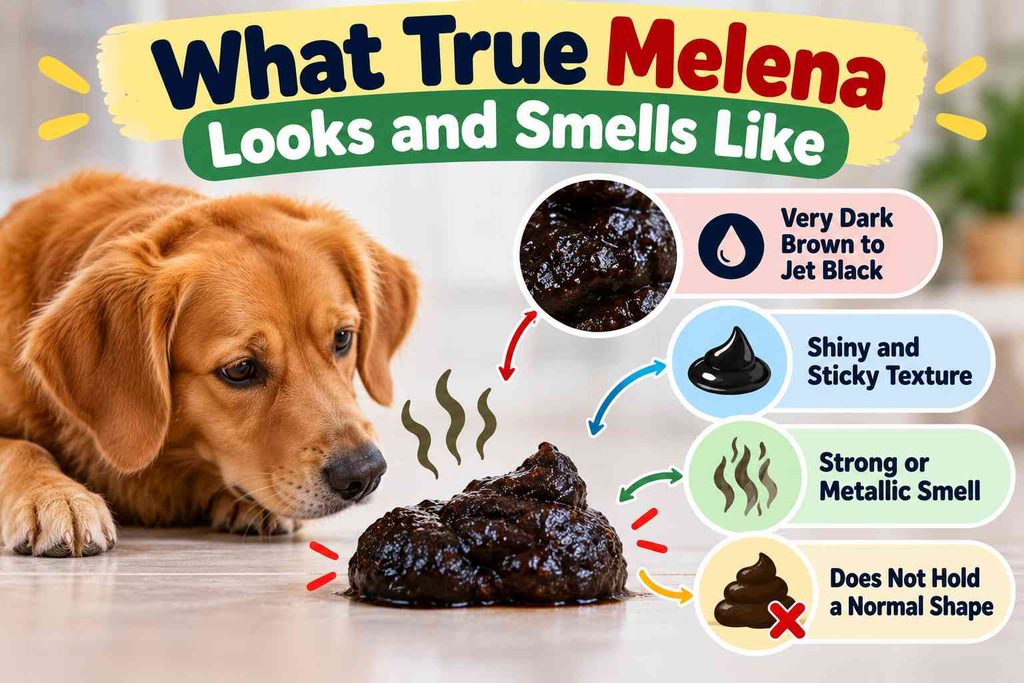
True melena has a look that is hard to mistake once you know it. A dark tarry dog stool is very dark brown to jet black, shiny, and sticky, with a tar-like texture and a notably strong or metallic smell. Vets describe tarry dog feces the way you would describe roofing tar: glossy, sticky, and wrong-looking.
When a dog pooping black stool is really passing melena, the stool does not hold a normal shape the way diet-darkened stool does. Ordinary dark stool from food stays well-formed and smells normal. If you cannot confidently explain the color from something your dog ate or was given, treat it as melena until your vet tells you otherwise.
Could It Be Something Harmless?
To be fair, there is a real list of dog dark stool causes that involve no bleeding at all. If the stool is dark but still well-formed, not sticky, and without that unusual smell, one of these could explain it:
- Iron supplements. Dogs treated for anemia often get iron, and dark stool is a well-documented, expected side effect.
- Bismuth products. Products like Pepto-Bismol can turn stool black or dark gray (more on this below).
- Activated charcoal. Sometimes given by a vet after a suspected toxin ingestion, this turns stool black temporarily.
- Organ meat or raw meat. A meal heavy in liver or other organ meats is rich in dark pigments and can darken stool for a day or so.
- Dehydration. When a dog does not get enough fluids, stool loses moisture and can look darker and harder than usual.
If none of those apply and the stool is genuinely black and sticky, do not talk yourself into a benign explanation.
Should You Worry If Your Dog Is Acting Normal?
It is understandable to feel relieved when your dog is still eating and playing. But with melena, the absence of other symptoms does not rule out internal bleeding, which can start gradually, well before obvious signs show up. Even a bloody black dog stool with no other symptoms deserves a same-day vet call.
If you see any of these warning signs alongside the stool change, treat the situation as urgent and go to your vet or an emergency clinic right away:
- Pale or white gums, a sign of blood loss or anemia
- Vomiting, especially vomit that looks like coffee grounds — the classic coffee ground vomit dog owners should never ignore
- Weakness, lethargy, or collapse
- Refusing food or water
- Signs of belly pain, like a hunched posture or not wanting to be touched
What to Do Right Now
Call your veterinarian today. If any of the urgent signs above are present, skip the regular appointment and go to your nearest emergency vet now.
Before you go in, gather details that genuinely help your vet move faster: a clear photo of the stool, a fresh stool sample in a clean bag if you can collect one safely, a list of everything your dog has eaten, chewed, or been given in the last few days, and when the black stool started.
Do not try to induce vomiting at home unless a veterinarian tells you to, and do not give Pepto-Bismol, iron, or charcoal at home to “fix” unexplained black stool, because those can mask what your vet needs to see. If you suspect poison exposure, call your vet or the ASPCA Animal Poison Control Center at (888) 426-4435 right away, before symptoms even appear.
Black Dog Stool Causes: What Your Vet Will Consider
When vets investigate upper GI bleeding in dogs, they work through a familiar list. These are the leading causes of melena in dogs, roughly from most common to least common.
1. Stomach or Intestinal Ulcers
Ulcers, open sores on the lining of the stomach or small intestine, are among the most common reasons for melena in a dog. They can form from long-term use of certain medicines, severe stress, or underlying kidney or liver disease. The signs of stomach ulcers in dogs are not always obvious at first: vomiting, going off food, discomfort after eating, or a hunched belly.
2. Medicines That Cause or Mimic Black Stool
NSAIDs, whether your dog’s own prescription or a human painkiller like ibuprofen given without guidance, can irritate the stomach lining and cause ulcers over time. Steroids such as prednisone carry a similar risk. If your dog has black stool while taking an NSAID, tell your veterinarian immediately. Then there is the classic pepto bismol black stool dogs situation: bismuth turns stool dark as a known side effect, not from bleeding, which can hide real melena underneath.
3. Hookworms and Other Intestinal Parasites
Hookworms in dogs black poop is a pairing every vet takes seriously, especially in puppies. Hookworms attach to the intestinal wall and feed on blood, and in a heavy infestation that blood gets digested on the way through and comes out black and tarry. A dog can carry a significant burden and still act normal for a while. A simple fecal test catches them, and deworming is usually straightforward.
4. A Swallowed Foreign Object
A dog swallowed foreign object black stool scenario usually involves something sharp or hard: bone splinters, toy fragments, stones, or socks. As these pass through, they can scrape or tear the delicate lining of the stomach or small intestine. Watch for repeated vomiting, refusing to eat, or belly pain, and tell your vet immediately if you saw your dog swallow something.
5. Blood Swallowed From Somewhere Else
The blood in melena does not always start in the gut. A bad nosebleed can drip backward into the throat and be swallowed, especially in a dog that already has a runny nose, and that swallowed blood gets digested on the way through.
The mouth can be the source too: severe gum disease, a damaged tooth, or even a burst blood blister can bleed enough for the dog to swallow it.
6. Toxins and Rat Poison
Many rodenticides disrupt the blood’s ability to clot, causing bleeding throughout the body. A rat poison dogs black stool emergency can appear days after exposure, because some poisons take time to take effect. Do not wait for symptoms: early treatment with vitamin K can be lifesaving.
7. Tumors and Growths
Tumors in the stomach or small intestine can bleed slowly over weeks or months, so the stool stays black and tarry while the dog gradually becomes anemic. If a senior dog develops a persistent black stool that does not resolve, your vet will want to look for masses with imaging or endoscopy.
8. Blood Clotting Disorders
Conditions that prevent blood from clotting properly can cause spontaneous bleeding inside the digestive tract. Von Willebrand’s disease is the most common inherited clotting disorder in dogs, caused by a deficiency in a protein platelets need to work.
9. Severe Infections and Inflammation
Bacterial infections like salmonella or clostridium, severe gut inflammation, and inflammatory bowel disease can all damage the intestinal lining enough to bleed.
A Special Note About Black Stool in Puppies

In puppies, dark or bloody stool is more urgent. With a much smaller blood volume and less reserve, they can become dehydrated or anemic within hours. The two most common causes are parvovirus and hookworms.
Parvovirus attacks the intestinal lining, mostly in puppies who have not finished their vaccine series. The typical picture is vomiting and a very foul-smelling black tarry dog diarrhea, along with lethargy and refusing food. The parvo puppy black stool picture is an emergency: parvo can become life-threatening quickly, and early treatment works best.
Hookworms can cause dark, tarry stool, pale gums, and weakness in a young puppy. If your puppy has dark or bloody stool with vomiting, lethargy, or refusal to eat, see a vet or emergency clinic now. And make sure every puppy finishes their full vaccination schedule on time.
How Your Vet Finds the Cause
These are the tests vets use to pin down the source of gastrointestinal bleeding dogs may have:
- A full history. Medicines, supplements, diet, things your dog may have chewed or swallowed, vaccination status, and when the black stool started.
- Physical exam. Checking the gums for paleness and feeling the belly for pain or masses.
- CBC and chemistry panel. Bloodwork can reveal anemia, blood being lost faster than it is replaced, and organ problems driving the bleeding.
- Fecal exam. A stool test checks for parasites and hidden blood, and it is one of the quickest, least invasive tests available.
- Imaging. X-rays or ultrasound can reveal a foreign object, a mass, or other structural causes of bleeding.
Treatment always follows the diagnosis. Melena is the sign, and your vet’s job is to find what is behind it first.
How Black, Tarry Stool Is Treated
Treatment depends entirely on the cause, which is why the workup comes first. A dog with significant bleeding or shock may need immediate stabilization: fluids, supportive care, and in serious cases a blood transfusion.
Once the cause is found, the treatment gets specific. Ulcers are often managed with medicines that reduce stomach acid and protect the gut lining, alongside stopping any NSAID or steroid that may have contributed. Parasites are treated with the appropriate dewormer once the fecal test confirms them. Toxin exposure, especially rodenticide, needs intensive supportive care and sometimes vitamin K, started as early as possible.
During recovery, your vet may recommend a bland, easy-to-digest diet for a while so the gut can heal, and you can ask whether probiotics for dogs would help. The key thing I want you to take away: there is no single treatment for black stool. Anyone selling you one universal fix online is not being honest with you.
Lowering the Risk Going Forward
You cannot prevent every cause on this list, but you can reduce the biggest avoidable risks:
- Keep medicines where dogs cannot reach them. Human painkillers like ibuprofen and aspirin can cause ulcers.
- Never give human painkillers without vet guidance. Many ulcer cases start with “just one pill for the limp.”
- Dog-proof the chewing zone. Pick up socks, toy fragments, and anything small enough to swallow.
- Secure rodenticides and toxins. Switch to pet-safe alternatives or place them where no animal can ever reach them.
- Know your dog’s normal. Noticing what your dog’s stool usually looks like is what lets you spot a real change fast.
Questions About Black Dog Stool, Answered
What does black dog poop mean?
It usually means melena: digested blood from bleeding in the upper digestive tract. Common causes include ulcers, parasites, swallowed objects, toxins, and tumors.
Is black, tarry stool an emergency?
Treat it as urgent. New black, tarry stool often signals internal bleeding, even when your dog seems fine. Go to the emergency vet right away with pale gums, coffee-ground vomit, weakness, collapse, or refusal to eat.
Can medication turn my dog’s stool black?
Yes. Bismuth products like Pepto-Bismol, activated charcoal, and iron supplements can darken stool as a known side effect. NSAIDs and steroids can cause black stool indirectly by triggering ulcers and bleeding.
Can worms cause black stool in dogs?
Yes. Hookworms attach to the intestinal wall and feed on blood, and heavy infestations can produce black, tarry stool. A fecal test confirms parasites, and deworming usually clears them up.
My dog is acting normal. Do I still need a vet?
Yes. Upper-tract bleeding can develop gradually, before signs like weakness or pale gums appear. A same-day vet call is the right move.
What does melena look and smell like?
True melena is very dark brown to jet black, shiny, sticky, and tar-like, with a notably strong or metallic odor. When in doubt, treat it as melena.
How will my vet diagnose the cause?
Your vet will take a full history and do a physical exam, then typically run bloodwork plus a fecal test. X-rays or ultrasound may follow to look for foreign objects or masses.
Is black stool in a puppy an emergency?
It can be. Parvovirus and hookworms are the most common causes, and both can make a young puppy seriously ill within hours. If your puppy also vomits, seems lethargic, refuses food, or is unvaccinated, seek care immediately.
Can my dog’s diet darken his stool?
Sometimes. Meals heavy in organ meat or liver, raw meat, and iron-rich foods can darken stool temporarily. But diet darkening usually leaves the stool well-formed and non-sticky. If the stool is tar-like, see your vet.
How do I collect a stool sample for the vet?
Use a clean plastic bag or a container with a lid, and collect a fresh sample as close to the appointment as you can. Take a photo of it first. Keep the sample cool but not frozen. A photo plus a description still helps if you cannot collect one.
Your Dog’s Stool Is Worth a Second Glance
Notice what your dog’s stool normally looks like, so a real change gets your attention fast. A phone photo takes two seconds and can be genuinely useful to your vet.
Black, tarry stool is one of those signs where acting early beats waiting and hoping. Most causes are far easier to handle when caught at the black-stool stage rather than the pale-gums-and-collapse stage. If you are staring at a black stool right now and feeling unsure, trust the instinct that brought you here and call your vet today.