

You have probably heard the scary stories about Greenies — the dental treats that supposedly caused blockages and even killed dogs. With that kind of history floating around, it is completely fair to ask: are Greenies bad for dogs? The short answer is that today’s Greenies are safe for most dogs when you follow the package rules — the right size for your dog’s weight, one treat per day, and only for dogs older than six months.
Those frightening stories come from the original 2006 formula, which the company later changed. That said, Greenies are not risk-free, so let’s look at what changed, what can still go wrong, and how to feed them safely.
“Greenies are not bad for dogs when they are chewed properly and fed by the size and age rules — but a gulped-down or wrong-sized Greenie can still cause serious trouble.”
The 2006 Scare That Started It All
In early 2006, CNN reported that at least 13 dogs had died after eating Greenies, then the country’s top-selling dog treat. Owners and veterinarians said the treats became lodged in dogs’ throats or intestines, and some vets reported that pieces removed after days inside the body were still hard and had not broken down.
The worry centered on two dangers: esophageal obstruction, where a large piece gets stuck in the throat, and intestinal blockage, where it lodges further down and stops digestion. A class-action lawsuit followed, and the maker eventually settled with pet owners.
I want to be straight with you: those reports were real, and they are the reason this question still gets asked twenty years later. But they describe the original formula — not the treat on store shelves today. If your fear of Greenies comes from something you read back then, you are working with outdated information, and the next section explains why.
What Changed in the Greenies Formula
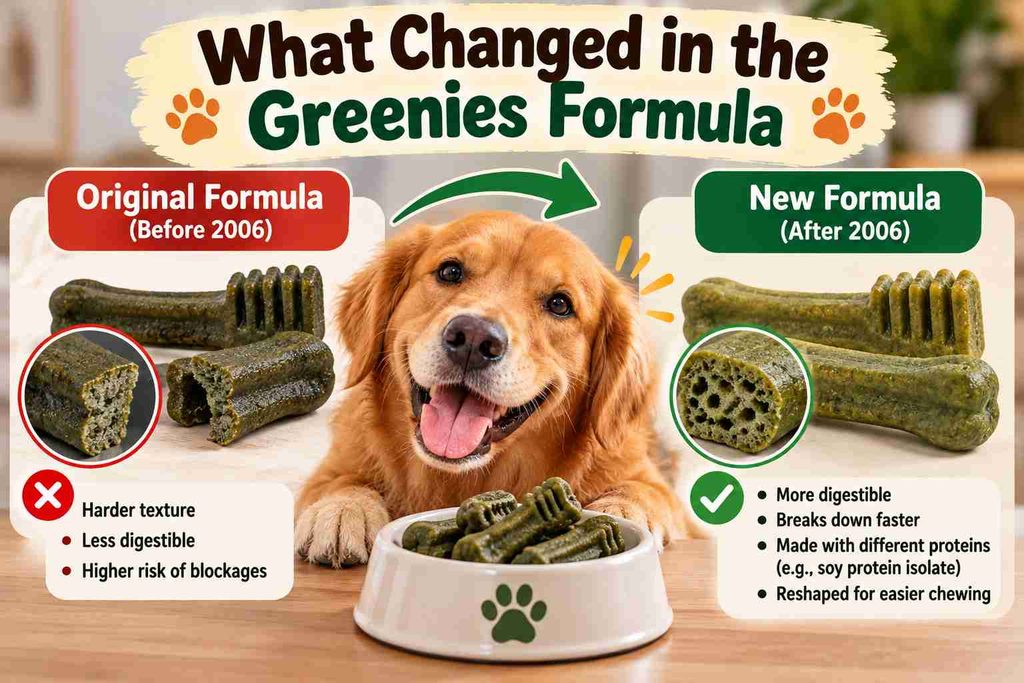
After the 2006 reports, the maker — then S&M NuTec, now part of Mars Petcare — reformulated Greenies to increase solubility and digestibility, and reshaped the treats with more natural break points so dogs chew them into smaller pieces.
The new formula leaned on different proteins, including soy protein isolate, chosen specifically so the chew breaks down faster in the digestive system. The company reported that in a simulated digestion test, a whole petite chew reduced to mush within a day.
Because the composition changed, the reformulated product had to be resubmitted to the Veterinary Oral Health Council, which re-awarded its seal after reviewing new trial data.
In other words, the Greenie your dog eats today is a genuinely different product than the one behind the 2006 headlines. That history still matters — it is why the size and supervision rules exist — but the chemistry inside the treat changed.
Are Greenies Digestible Today?
With the current formula, Greenies are designed to be highly soluble: they soften and break down in the digestive tract rather than sitting there intact. For most dogs that chew their treats normally, digestion is simply not a problem, and Greenies are now considered more digestible than an average dry dog food.
The risk rises with dogs who gulp their food instead of chewing, because large unchewed chunks are harder for any digestive system to handle. If your dog is a gulper, choose Greenies Lil’ Bits, the smaller size made for toy breeds, gulpers, and puppies — or skip dental chews entirely and ask your vet about brushing instead.
Always supervise your dog with any chew treat, and watch closely the first few times: if your dog bites a Greenie in half and swallows the pieces whole, that is a clear sign this treat is not a good match for them.
What’s Actually Inside a Greenie
Looking at the Greenies ingredients list helps explain both the benefits and the complaints. The main ingredients are wheat flour, wheat gluten, glycerin, gelatin, and oat fiber, plus water, lecithin, natural poultry flavor, minerals, vitamins, dried apple pomace, and coloring from fruit juice and turmeric. Nothing exotic — but two things stand out for owners.
First, Greenies are low in fat, which sounds great until you check the second point: do not let the slim shape fool you. Check the Greenies calories on the package, because a large treat carries over 100 calories, and those add up fast for small or weight-watching dogs.
One treat a day is a real limit, not a suggestion. Also note the wheat: Greenies contain wheat flour and wheat gluten, so they are not a good pick for dogs with wheat allergies or sensitivities — there are grain-free dental chews that suit those dogs better.
Side Effects and Sensitivities Worth Knowing
Even with the safer formula, possible Greenies side effects are worth knowing before you hand one over. The most common complaints are mild digestive upset — vomiting or soft stool — especially in dogs that gulp or in dogs trying Greenies for the first time.
Because the treats contain wheat and poultry flavoring, dogs with food allergies can react with itching, ear irritation, or digestive trouble; if you see those signs, stop the treats and talk to your vet.
Hard chews of any kind are also associated with tooth fractures in dogs, so check your dog’s teeth regularly and stop the treats if you notice a cracked or painful tooth. One practical caution for treat time: some owners add sweetened breath-freshening products to the routine — if you use dental water additives, check whether sorbitol is safe for dogs first.
If you prefer essential-oil remedies for your dog’s breath or nerves, look up whether frankincense is safe for dogs before diffusing anything near your pet.
The Right Way to Feed Greenies
Most Greenies problems come down to wrong size or wrong amount. These five rules keep the risk low:
| Greenies Size | Dog’s Weight |
|---|---|
| Teenie | 5–15 lbs |
| Petite | 15–25 lbs |
| Regular | 25–50 lbs |
| Large | 50–100 lbs |
- Feed one Greenie per day — no more, whatever the size.
- Match the size to your dog’s weight using the chart above. A big dog should not get a Teenie, and a small dog should not get a Large.
- Never give Greenies to puppies under six months old or dogs under five pounds.
- Keep fresh drinking water available.
- Supervise every time, especially the first few — watch that your dog actually chews.
Think of the size chart as a safety device, not a serving suggestion. The sizes exist because a correctly sized treat forces proper chewing, and proper chewing is what makes the whole thing safe.
What to Do If Your Dog Swallowed a Whole Greenie
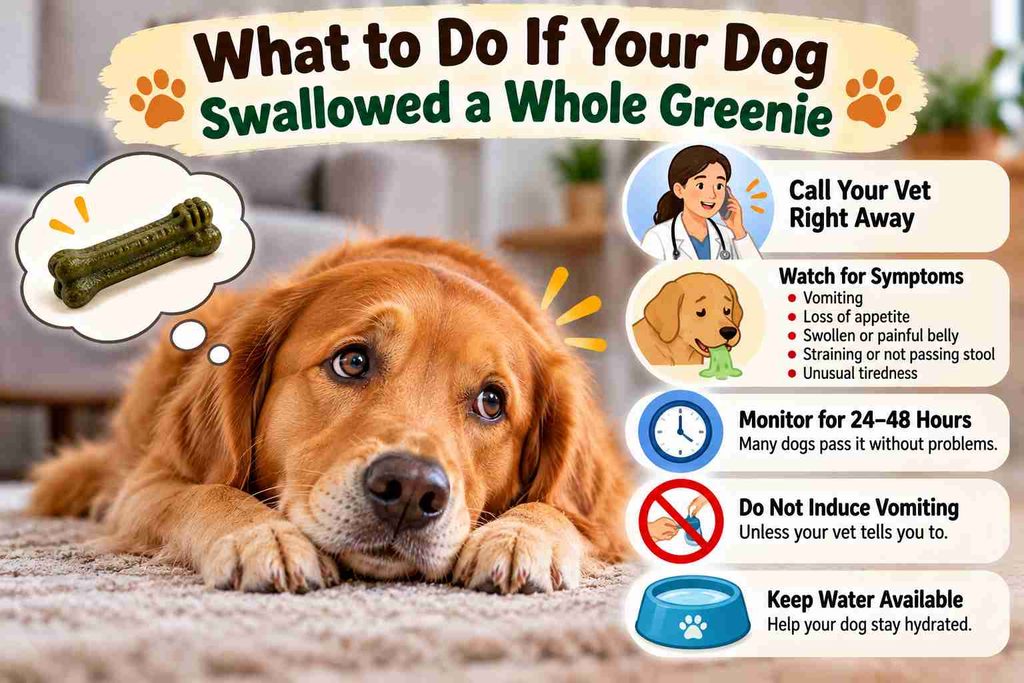
First, try not to panic. Today’s formula is designed to break down, and a single swallowed Greenie often passes without drama — especially if it was the right size for your dog. Still, a whole unchewed treat deserves close watching for the next 24 to 48 hours.
Call your veterinarian right away if you notice repeated vomiting, gagging or retching, loss of appetite, a swollen or painful belly, straining without producing stool, or unusual tiredness. These can signal that something is stuck and needs professional attention. Do not try to induce vomiting at home unless your vet specifically tells you to — that can make some situations worse.
When you call, have three facts ready: your dog’s weight, the size of the Greenie swallowed, and roughly when it happened. That information helps your vet decide whether to watch and wait or see your dog urgently. And if your dog is a repeat gulper, take this scare as your sign to switch to one of the safer options below rather than rolling the dice again.
Do Greenies Really Clean Teeth?
Yes — within limits. Greenies earned the VOHC Seal of Acceptance, which means independent veterinary dentists reviewed trial data showing the treats genuinely reduce plaque and tartar.
The cleaning comes from mechanical abrasion: the chewy, toothbrush-shaped texture lets teeth sink in and scrub as your dog gnaws. The brand’s own trials claim tartar reduction averaging around 60 percent with daily use.
But a dental chew is a helper, not a replacement for brushing and professional cleanings. Most dogs show signs of dental disease by age three, so treats work best as one part of a routine — daily chewing plus brushing plus regular vet dental checks — not the whole routine on their own.
Safer Alternatives to Greenies
If Greenies are not right for your dog — a dedicated gulper, a wheat-sensitive pup, or a senior with fragile teeth — you have solid options. Greenies vs Dentastix is the comparison most owners make: Dentastix are another widely sold dental stick, but they do not carry the same independent dental-council backing, so compare labels and ask your vet which suits your dog. For wheat-free needs, Virbac C.E.T. VeggieDent chews are plant-based and also carry dental-council acceptance.
Honestly, nothing beats a toothbrush and dog toothpaste for actual cleaning, and annual professional cleanings catch what home care misses.
For older dogs, the brand makes Greenies Aging Care, a formula about 50 percent softer designed for dogs over seven — still follow the size rules. One home-safety note while we are on the subject: if you mask dog odors with scented sprays or diffusers, check whether eucalyptus is safe for dogs before using them around your pet.
Similarly, if you use yard or coat sprays for bugs, look up whether citronella is safe for dogs first — some “natural” products are not dog-safe at all.
Frequently Asked Questions
Are Greenies safe for dogs?
Yes, for most dogs over six months old when you follow the package rules: correct size for weight, one per day, and supervised chewing. The 2006 blockage problems came from the original formula, which was later reformulated for digestibility. Gulpers and very small dogs face higher risk.
Can puppies have Greenies?
No, not regular Greenies — they are not for puppies under six months old. Young puppies chew aggressively and their digestive systems are still developing. Ask your vet about puppy-specific dental options, and start regular Greenies only after the six-month mark.
How many Greenies can a dog have per day?
One per day — that is the official feeding guideline for every size. More than that adds unneeded calories and raises the chance of stomach upset. Greenies are a treat, not a meal, so they should stay a small part of your dog’s daily calories.
Do Greenies really clean dogs’ teeth?
They help, but they are not magic. The chewy texture scrubs tooth surfaces as your dog gnaws, and trials reviewed by the Veterinary Oral Health Council showed real plaque and tartar reduction. They work best alongside brushing, not instead of it.
Can Greenies cause diarrhea?
They can in some dogs, especially gulpers or dogs with sensitive stomachs — soft stool or mild vomiting are the most reported reactions. If it happens, stop the treats and offer bland food and water. Call your vet if diarrhea lasts more than a day.
Can Greenies cause seizures in dogs?
There is no scientific evidence linking Greenies to seizures. Online anecdotes exist, but no study or veterinary body has established a connection. If your dog has a seizure, treat it as an emergency and contact your vet immediately, regardless of what they ate.
What happens if my dog eats a whole bag of Greenies?
Greenies are not toxic, so a whole bag is unlikely to poison your dog — but expect significant stomach upset such as vomiting, diarrhea, or loss of appetite. Watch closely, keep water available, and call your vet, especially for small dogs.
Are Greenies good for senior dogs?
They can be, but choose the softer senior formula made for dogs over seven, which is about 50 percent softer and easier to chew. Have your vet check your senior dog’s teeth first — cracked or loose teeth and hard chews are a bad combination.
Can Greenies replace brushing?
No. Dental chews reduce plaque and tartar between cleanings, but they cannot match a toothbrush for gumline cleaning, and they do nothing for problems below the gumline. Think of Greenies as a daily helper, with brushing and vet cleanings doing the real dental work.
Do Greenies expire?
Yes — they have an 18-month shelf life from manufacture, with a best-before date printed on the package. Once opened and resealed, use them within three to four months. Stale treats lose flavor and texture, so toss the bag once it passes its date.
Feeding Greenies Without the Worry
So, are Greenies bad for dogs? Not the ones on shelves today — provided you buy the right size, stick to one a day, and supervise the chewing. The 2006 scare left a lasting mark on the brand’s reputation, but the reformulated, digestibility-tested treat that earned dental-council acceptance is a different product from the one behind those headlines. Know your dog: a careful chewer with no wheat issues will likely do great, while a gulper or a tiny puppy needs a different plan. When in doubt, bring the question to your vet — a quick chat beats a worried internet search every time.