

Dogs lick each other’s ears as a natural social behavior linked to grooming, affection, bonding, communication, curiosity, and appealing scents. Occasional licking is usually harmless, but sudden or excessive ear licking may signal irritation or an ear problem and should be checked for redness, odor, or discharge.
Dogs licking each other’s ears may seem strange, but this sweet behavior can reveal friendship, grooming, communication, curiosity, and possible health concerns.
Why Do Dogs Lick Each Other’s Ears?
Dogs do not have just one reason for licking another dog’s ears. Their behavior can reflect social communication, grooming, curiosity, taste, or a response to something unusual around the ear.
Greeting
Licking can be a friendly way for dogs to greet one another. A dog may approach a familiar companion, sniff, and then give a few gentle licks around the face or ears.
This can be especially common between dogs that already know and trust each other. Their body language matters too. A relaxed posture, loose movements, and calm interaction generally suggest that both dogs are comfortable.
Dogs also use licking as part of broader social communication. Similar behavior can be seen when dogs lick the face or mouth of another dog. If you have ever wondered why do dogs lick each others mouths, it is often connected with social communication, familiarity, or submissive behavior rather than something mysterious.
For dogs that live together, these small interactions can become part of their normal routine. You can learn more about other everyday dog behaviors in our guide to why dogs like bones.
Grooming
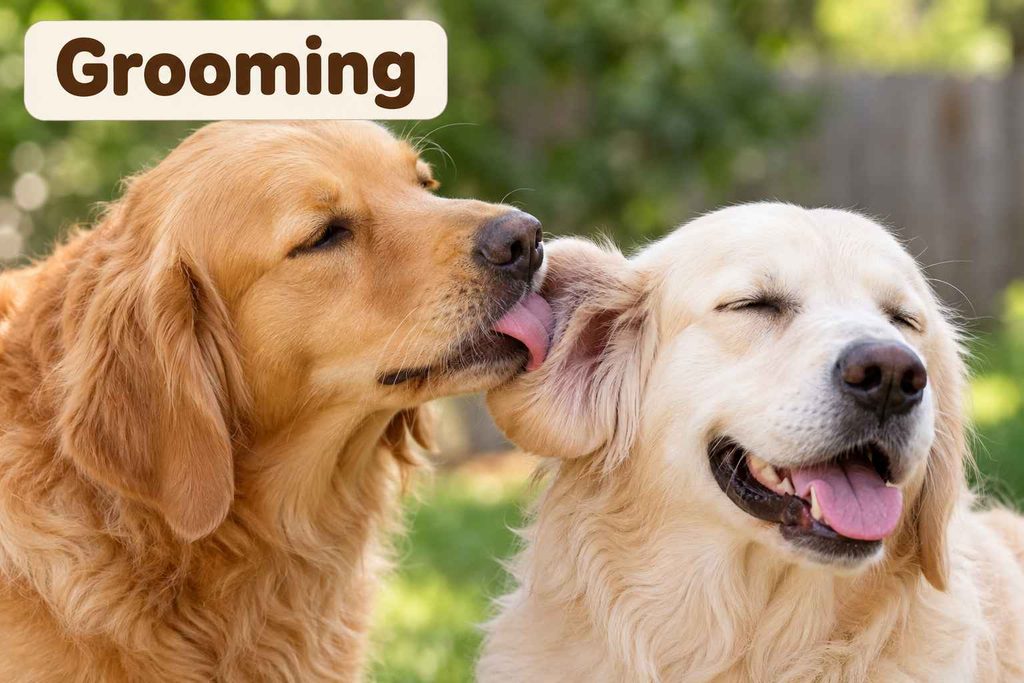
Grooming is another common explanation. Dogs can lick areas that another dog cannot easily reach, including parts of the ears and face.
This does not mean a dog can properly clean or treat another dog’s ear canal. Instead, the behavior may be a natural form of social grooming. Dogs that spend a lot of time together may groom one another as part of their comfortable relationship.
So, why do dogs clean each others ears? In many cases, the behavior may simply be social grooming. The licking can remove small amounts of surface debris, but it should not replace appropriate ear care.
If your dogs are relaxed while doing it, occasional grooming may be nothing more than a normal part of their interaction.
Submission
Licking can also be associated with appeasement or submissive social signals. A dog may lick another dog as a way of communicating that it does not want conflict.
The behavior is not necessarily about a strict “dominance hierarchy.” Dog relationships are more flexible than that, and context matters. A dog’s posture, facial expression, tail position, and the response of the other dog all help explain what the interaction means.
If one dog calmly accepts the licking and both animals remain relaxed, the interaction may simply be part of their social communication.
It Tastes Good
Sometimes the explanation is surprisingly simple: your dog may like the smell or taste around another dog’s ears.
Dogs experience the world heavily through their noses and mouths. Natural oils, moisture, and earwax can have interesting scents and tastes that attract a curious dog. This may explain why do dogs lick inside other dogs ears even when there is no obvious problem.
However, a sudden strong interest in one dog’s ear deserves attention. Changes in odor, discharge, redness, or irritation can occur with ear disease. A dog may notice an unusual smell before an owner does, but licking itself cannot diagnose an infection.
Affection and Bonding
Ear licking can also happen between dogs that have a close relationship. Licking may be one small part of a wider pattern of friendly behavior, such as resting together, following each other, playing, or grooming.
This is why owners often ask, what does it mean when dogs lick each others ears? In a relaxed pair, it can simply be a social behavior that helps maintain familiarity and connection.
The same idea can apply when dogs lick other parts of the body. Why do dogs lick each others face? Face licking can have several social meanings, including appeasement, greeting, and communication.
It’s gentle-cleansing
Some people describe ear licking as a form of cleansing, but it is important to be precise. A dog may remove a little surface material while licking, yet this does not make licking a safe or reliable ear-cleaning method.
Dogs should not be expected to treat another dog’s ear with their tongue. Excess moisture, repeated licking, or irritation can create additional problems.
If your dog is licking another dog’s ear because something smells different, look at the ear rather than assuming the licking is beneficial. Redness, swelling, discharge, odor, pain, or frequent head shaking can indicate an ear problem that needs proper assessment.
Should You Be Concerned About Dogs Licking Ears?
Most occasional ear licking is not automatically a problem. The key is to watch how often it happens, how both dogs respond, and whether either dog shows signs of discomfort.
Normal vs. Excessive Behavior
Normal licking is usually brief and easy to interrupt. The dogs may interact, move on to another activity, and continue their day normally.
Excessive licking looks different. One dog may repeatedly return to the same ear, become difficult to redirect, or continue licking even when the other dog tries to move away.
Pay attention to the dog receiving the licking. If that dog appears relaxed and willingly stays nearby, the interaction may be socially comfortable. If the dog hides, moves away, shakes its head, scratches the ear, or seems irritated, it is time to step in.
Persistent licking can sometimes occur alongside anxiety, boredom, compulsive behavior, or an underlying medical problem. Repetitive licking should therefore be considered in the full context of the dog’s behavior.
Risks of Ear Licking
The main concern is repeated moisture and irritation. Constant licking can keep the skin around an ear damp and may contribute to irritation.
It can also make an existing ear problem harder to ignore. If one dog repeatedly targets another dog’s ear, check for changes rather than assuming it is simply affection.
Watch for:
- Red or swollen skin
- Strong or unusual odor
- Ear discharge
- Frequent head shaking
- Scratching or rubbing
- Sensitivity when the ear is touched
- The dog avoiding the other dog
These are recognized signs associated with canine ear disease and should not be ignored.
Can Ear Licking Lead to Other Skin Issues?
Yes, repeated licking can irritate already-sensitive skin. Constant moisture and friction may contribute to redness, soreness, or damaged skin around the ear.
The risk becomes more important when licking is intense or when the receiving dog already has allergies, inflammation, or another ear problem.
Do not assume that every irritated ear is caused by licking. Ear inflammation can have many causes, including allergies, parasites, foreign material, bacteria, or yeast. A veterinarian can identify the underlying cause and recommend appropriate treatment.
Is It Safe for Dogs to Lick Each Other’s Ears?
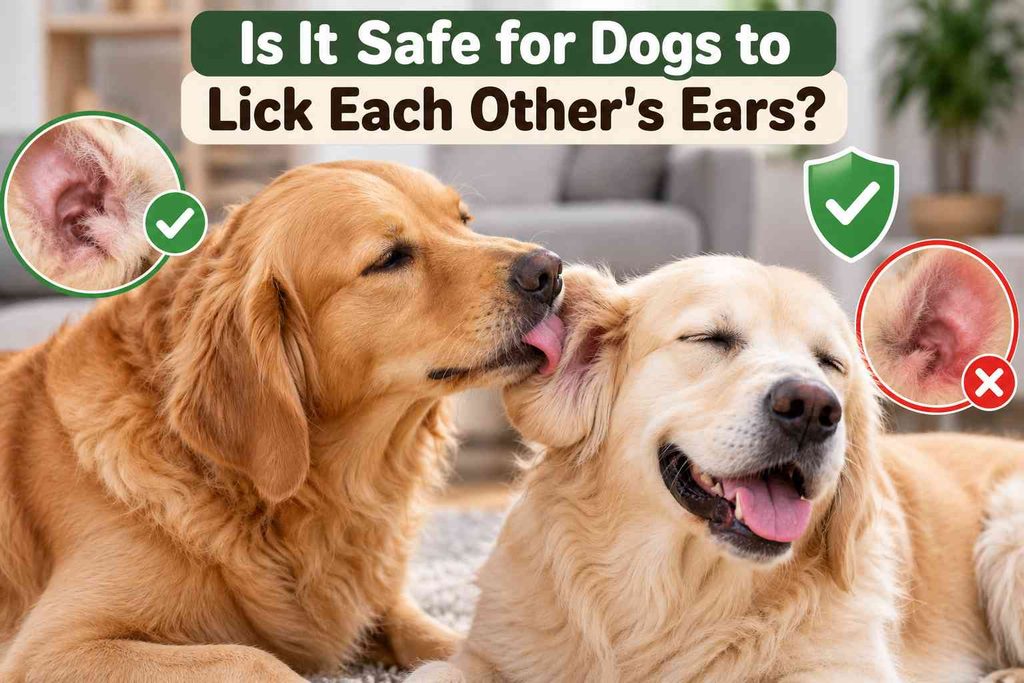
Occasional, gentle licking between comfortable dogs is generally not something that requires panic. Still, “usually harmless” does not mean unlimited licking is always safe.
Potential Risks of Excessive Ear Licking
The biggest concern is persistent behavior. Repeated licking can increase moisture and friction around delicate ear tissue, especially if the dog already has irritated skin.
There is also a behavioral concern. If one dog repeatedly follows another specifically to lick its ears, the receiving dog may become frustrated or uncomfortable. Dogs should be allowed to move away from social contact.
If you notice that your dog will not stop licking, calmly interrupt the interaction and offer another activity. Avoid punishment, which can add stress without teaching the dog what behavior you want instead.
Ear Infections
An ear infection can make an ear smell different, produce discharge, become itchy, or become painful. Those changes may attract another dog’s attention.
Common signs of otitis externa include head shaking, scratching, pain, redness, swelling, odor, and discharge. Veterinary examination can help determine whether bacteria, yeast, parasites, allergies, foreign material, or another cause is involved.
This is especially important when an owner asks, why is my dog licking my other dogs ear infection. Licking does not mean your dog knows the diagnosis. It may simply be responding to an unusual smell or discharge.
If one dog suddenly becomes intensely interested in another dog’s ear, inspect the ear and watch for other symptoms. Do not use ear medication unless it is appropriate for that dog and condition.
How to Manage and Prevent Excessive Ear Licking
When licking becomes repetitive, the goal is not to stop every normal interaction. Instead, identify what may be driving it and calmly encourage healthier alternatives.
When to Intervene
Intervene when the licking becomes constant, the receiving dog tries to escape, or either dog shows signs of stress or discomfort.
You should also intervene if the targeted ear looks abnormal. Redness, swelling, odor, discharge, pain, or repeated head shaking can indicate a medical issue that needs attention.
A sudden behavior change is particularly worth noticing. If your dog normally ignores another dog’s ears but suddenly becomes intensely focused on them, checking the ear is sensible.
Redirecting the Behavior
Redirect your dog calmly instead of scolding. Call them away, offer a toy, start a short training exercise, or encourage another appropriate activity.
Positive reinforcement can make redirection more effective. When your dog responds to your cue and leaves the other dog alone, reward that calm choice.
This approach is useful for many repetitive licking behaviors. If you have also wondered why does my dog lick my other dog’s ears, remember that the reason may be social interest, taste, habit, boredom, or a response to an unusual ear smell.
You can also read about other licking behaviors in our guide to why does my dog lick everything.
Ear Hygiene and Maintenance
Healthy ears still need sensible care. Check your dog’s ears regularly for changes in odor, color, moisture, discharge, or sensitivity.
Avoid trying to clean deep inside the ear with cotton swabs or unapproved home remedies. Veterinary guidance is especially important if the ear is painful, inflamed, or producing discharge. Merck Veterinary Manual recommends appropriate veterinary examination and cautions against irritating home remedies that may worsen an inflamed ear.
Good ear care can help you notice problems early. It also helps you determine whether unusual ear licking is simply social behavior or a response to something that needs veterinary attention.
How to Stop Your Dog From Licking Other Dogs’ Ears

If your dog repeatedly targets another dog’s ears, combine health checks, enrichment, training, and management rather than relying on punishment.
1. Maintain Your Dog’s Ear Health
Regularly check both dogs’ ears and follow your veterinarian’s recommendations for cleaning. Healthy ears are less likely to develop odor, discharge, or irritation that can attract attention.
Do not over-clean healthy ears. Your veterinarian can advise you about whether routine cleaning is needed and which product is suitable for your dog’s ear condition.
2. Provide Plenty of Mental and Physical Stimulation
Bored dogs often look for activities that keep them occupied. Exercise, sniffing opportunities, training, interactive play, and food puzzles can give your dog better outlets.
If your dog seems restless before the ear licking starts, adding structured activity may help. The goal is to make appropriate behaviors more rewarding and interesting.
3. Use Lick Mats or Chew Toys
A lick mat or suitable chew toy can give your dog something appropriate to focus on. Use these tools when you notice the early signs of repetitive ear licking.
Choose safe products that match your dog’s size and chewing style, and supervise when appropriate. The alternative should be enjoyable rather than a punishment for interacting with another dog.
4. Behavior Modification and Training
Teach a simple cue such as “leave it” or “come.” Start in a low-distraction environment, reward the response, and gradually practice around the other dog.
If the behavior is linked with anxiety or becomes difficult to interrupt, a veterinarian or qualified behavior professional can help identify the underlying trigger. Repetitive licking can sometimes have medical or behavioral causes that require more than basic training.
5. Keep Dogs Separated When Necessary
Temporary separation can protect both dogs when one repeatedly licks and the other cannot get comfortable.
Use baby gates, separate resting areas, or supervised interactions when needed. Separation should be calm and practical, not a punishment.
If your dog also shows other unusual licking habits, such as persistent paw licking, identifying the broader pattern can help. Our guide on why do dogs lick at their paws explains why repetitive licking can sometimes be connected with allergies, irritation, boredom, anxiety, or other problems.
FAQs
What does it mean when dogs lick each others ears?
It can mean several things. Dogs may lick each other’s ears during greeting, social grooming, affection, or appeasement. Some dogs may also be attracted to the smell or taste around another dog’s ear.
Is it normal for dogs to lick each other’s ears?
Yes, occasional gentle licking can be normal canine behavior, especially between dogs that are comfortable together. It becomes more concerning when the licking is constant or the receiving dog shows discomfort.
Can dogs lick each other’s ears if they have an ear infection?
They can, but licking should not be considered treatment. An infected ear may have odor, discharge, redness, swelling, itching, or pain, which can attract another dog’s attention. A veterinarian should evaluate those signs.
Are dogs licking ears a sign of affection?
Sometimes. Ear licking can occur between dogs with a close social relationship, but the behavior does not have one fixed meaning. The dogs’ overall body language provides better context.
Why do dogs lick humans ears?
Dogs may lick human ears because they are curious about the smell or taste, seeking attention, greeting the person, or showing social interest. As with licking another dog, the surrounding behavior matters.
What should I do if my dog won’t stop licking my other dog’s ears?
Calmly interrupt the behavior, redirect your dog to a toy or training activity, and check the other dog’s ear for redness, odor, discharge, swelling, or pain. If the behavior continues, speak with your veterinarian.
Can dogs clean other dogs ears safely?
A dog may remove a small amount of surface material through licking, but dogs should not be relied upon to clean another dog’s ears. Proper ear care should follow veterinary guidance, particularly when an ear looks abnormal.
Why do dogs lick other dogs ears?
Dogs lick other dogs’ ears for several reasons, including greeting, grooming, affection, social bonding, curiosity, or interest in natural ear odors. Occasional licking is usually normal between comfortable dogs.
Why do my dogs lick each others ears?
Your dogs may lick each other’s ears as a friendly social behavior. Grooming, affection, bonding, curiosity, and interesting scents can all encourage ear licking between familiar dogs.
Why do dogs lick each others eyes?
Dogs may lick each other’s eyes or the surrounding area during grooming, greeting, or close social interaction. Gentle licking can be normal, but excessive licking may indicate irritation.
My dog won’t stop licking my other dog’s ears
If your dog constantly licks another dog’s ears, calmly redirect the behavior and check the ear for redness, odor, discharge, swelling, or discomfort that could indicate an underlying problem.
Why do dogs lick each others ears and face?
Dogs may lick each other’s ears and face as part of greeting, grooming, affection, social communication, or curiosity. Occasional licking is generally normal when both dogs remain relaxed and comfortable.
Which signs show that ear licking may be a health problem?
Redness, swelling, discharge, unpleasant odor, frequent head shaking, scratching, pain, or sensitivity are important warning signs. These can occur with ear inflammation or infection and warrant veterinary attention.
How can I stop excessive dogs licking ears?
Use calm redirection, provide exercise and enrichment, teach useful cues, and separate the dogs when necessary. First, rule out an ear problem in the dog receiving the licking.
What should I do if my dog suddenly starts licking another dog’s ears?
Check the targeted ear carefully for changes and monitor the dogs’ interaction. A sudden increase in interest may be linked to an unusual odor or ear problem, so persistent licking or abnormal ear signs deserve veterinary attention.
The takeaway for worried owners
Dogs licking each other’s ears can look strange to us, but it is often a normal part of canine social behavior. Greeting, grooming, affection, appeasement, curiosity, and simple attraction to an interesting smell can all play a role.
The important point is to watch the frequency and context. A few relaxed licks between comfortable dogs are very different from nonstop licking that leaves one dog irritated or uncomfortable.
If your dog suddenly becomes focused on another dog’s ear, check for redness, swelling, odor, discharge, scratching, or head shaking. These signs can point to an ear problem that needs proper veterinary care.
With good observation, appropriate ear care, positive training, and plenty of healthy activities, you can support a comfortable relationship between your dogs while still allowing their natural social behaviors.