

No. Vets generally advise against giving your dog aspirin for a limp without direct veterinary guidance. Aspirin can cause stomach ulcers, internal bleeding, and kidney damage in dogs, and safer vet-approved pain medications exist. Call your vet for proper diagnosis and treatment instead.
I know how hard it is to watch your pup hobble around the house — so let me walk you through exactly what to do instead, step by step.
The Short Answer Vets Agree On
Search for aspirin for limping dog advice and almost every vet source flashes the same warning: put the medicine cabinet away. Aspirin is not FDA-approved for dogs, and even a small dose can damage your dog’s stomach, kidneys, and blood clotting. PetMD, the AKC, and VCA all say the same thing — aspirin only belongs in your dog’s body if your vet prescribes it at a dose they choose.
Here’s what most people miss: a limp is a symptom, not a diagnosis. Aspirin can mask the pain while the underlying problem gets worse. A sprain, a thorn in the paw, arthritis, or a torn ligament can all look like “a limp” — yet each one needs very different treatment.
Why Aspirin Is Risky for Dogs

Aspirin belongs to a drug family called NSAIDs. Put simply, it blocks the enzymes that drive pain and swelling. The catch? Those same enzymes also protect your dog’s stomach lining, keep blood flowing to the kidneys, and help blood clot normally.
The list of canine aspirin side effects is long and serious: stomach ulcers and internal bleeding, kidney damage, liver trouble, and dangerous blood-clotting problems. Puppies, senior dogs, pregnant dogs, and dogs with kidney or liver disease face the highest risk — and mixing aspirin with steroids like prednisone or other pain drugs makes everything worse.
That’s how aspirin toxicity in dogs builds up — sometimes over days, not hours. And here’s what many owners don’t realize: with aspirin in your dog’s system, your vet often must wait five to seven days before starting a safer prescription pain drug. Giving aspirin at home can literally delay the better treatment your dog needs.
Pain signs in dogs are easy to miss. A hurting dog often goes quiet, eats less, or starts panting heavily even at rest. If you notice these signs after giving any medicine, stop it immediately and call your vet.
Why Is My Dog Limping? Common Causes
Before reaching for any medicine, it helps to know what’s actually causing the limp. Here are the most common reasons:
- Paw injuries. A thorn, splinter, cut pad, burr, or even a small blood blister between the toes can make a dog start limping out of nowhere.
- Sprains and strains. Hard running, wild jumping, or an awkward landing can stretch a muscle or ligament.
- Arthritis. Senior dogs often limp more after resting or in cold weather, then loosen up as they get moving.
- Torn cruciate ligament. The dog version of an ACL tear — it often triggers sudden, severe hind-leg limping.
- Hip or elbow dysplasia. Common in large breeds; it causes gradual limping that slowly worsens over time.
- Fractures or dislocations. A bad fall or accident can break a bone. These dogs usually refuse to put any weight on the leg at all.
- Infections or tick-borne disease. Lyme disease and similar infections can cause lameness that shifts between legs, often with fever.
A sudden limp after play usually points to an injury; a slow limp that builds over weeks usually points to arthritis or joint disease. Knowing the difference gives your vet a real head start.
Front Leg or Hind Leg: What the Limp Tells You
Not all limps are the same — and where your dog limps changes what you should check first.
For dog front leg limping pain relief, start with a careful paw and lower-leg exam. Front-leg limps usually trace back to paw injuries, shoulder strains, or elbow problems. Gently part the toes and check for thorns, cuts, or swelling. A cold compress on a swollen spot for 10 to 15 minutes can ease the ache while you arrange a vet visit.
Dog limping hind leg treatment at home follows the same basics, but watch for different clues. Hind-leg limps often involve the knee or hip. If your dog suddenly can’t bear weight on a back leg after running, a cruciate ligament tear is possible — that needs a vet exam, not home treatment. If the limp is mild and your dog still walks on the leg, strict rest for 24 to 48 hours is a safe first step.
Either way, no running, jumping, or stair climbing until you know what’s wrong.
What to Do Right Now: Safe First-Aid Steps
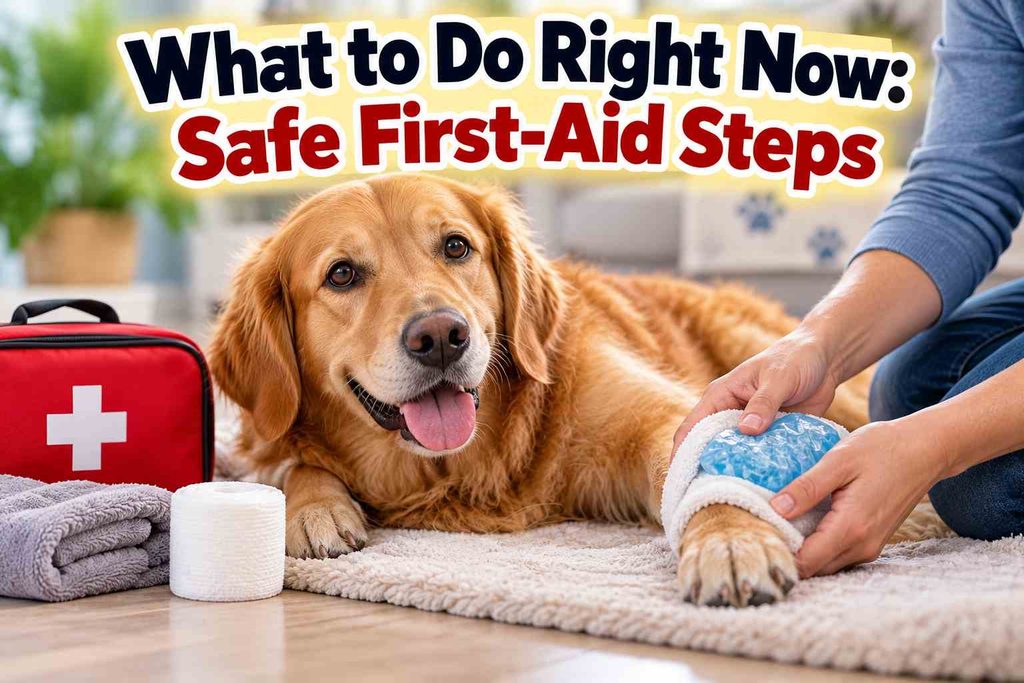
Your dog is limping and you want to help tonight. Here’s exactly what I’d do:
- Calm your dog and limit movement. A small room or a leash works fine. No running, jumping, or rough play.
- Check the paw. Look between every toe for thorns, glass, burrs, or cuts. Feel for heat or swelling up the leg.
- Apply a cold compress. For a fresh injury with swelling, hold a cold pack wrapped in a towel on the area for 10 to 15 minutes, two or three times a day.
- Skip the stairs. Carry small dogs up and down stairs. Use a baby gate for bigger dogs.
- Offer a soft resting spot. An orthopedic bed or thick blanket takes pressure off sore joints.
- Watch and take notes. Note which leg, when it started, and whether it’s getting better or worse. Your vet will ask.
- Don’t give human medicine. This is the big one. No aspirin, no ibuprofen, no Tylenol — all of them can harm your dog.
If the limp is mild and your dog is eating and happy, a day or two of home rest is reasonable. No improvement? Call your vet.
Quick-Reference Table: What Helps vs What to Avoid
Scan this before you do anything — it’s the fastest way to check what’s safe:
| What it is | Safe for a limping dog? | Why |
|---|---|---|
| Vet-prescribed NSAIDs (carprofen, meloxicam) | Yes, with a vet’s direction | Made for dogs, dosed for dogs, far safer |
| Rest and restricted activity | Yes | Prevents a small injury from becoming a big one |
| Cold compress on swelling | Yes | Eases pain and swelling in fresh injuries |
| Orthopedic bed and weight control | Yes | Takes pressure off sore joints every day |
| Aspirin from your medicine cabinet | No, unless your vet says so | Ulcers, bleeding, and kidney damage risk |
| Ibuprofen (Advil) or naproxen (Aleve) | Never | Highly toxic to dogs, even in small doses |
| Tylenol (acetaminophen) | Never | Can destroy red blood cells and damage the liver |
True safe pain relief for limping dog cases comes from vet-prescribed medications, not the medicine cabinet. An over the counter dog pain killer made for humans is never the right first choice for a dog — and dog pain medication over the counter options are extremely limited, because most human formulas are unsafe for dogs.
What Your Vet Will Recommend Instead
Giving a dog aspirin for joint pain is an old-fashioned approach most vets have moved away from — because far better options exist now.
Your vet may prescribe a dog-specific NSAID such as carprofen, meloxicam, or deracoxib. These are built for canine bodies, so they relieve pain with far less risk to the stomach and kidneys than aspirin. For arthritis, newer non-NSAID options exist too — like Librela, a monthly injection that targets arthritis pain directly.
When people ask me which safe anti inflammatory for dogs they should choose, my answer is simple: one made for dogs and prescribed by your vet after an exam. That’s the whole secret.
There is no official dog aspirin dosage for limping — aspirin isn’t FDA-approved for dogs, so none exists. You may see “5 to 10 mg per pound every 12 hours” quoted on some websites, but that is not a do-it-yourself number. Only your vet can decide whether aspirin suits your dog’s health situation, and most of the time they’ll choose something safer instead.
Beyond medication, vets often recommend joint supplements with glucosamine and omega-3 fish oil, weight loss for overweight dogs, and physical therapy. These tackle the cause of the pain instead of just masking it.
Every good alternative to aspirin for dogs starts with a proper diagnosis. A quick vet exam reveals whether you’re dealing with a sore paw, arthritis, or something that needs an X-ray.
Safe Home Remedies That Actually Help

If you’re looking for dog limping home remedies pain relief that genuinely helps while you wait for your vet appointment, these are the ones worth doing:
- Strict rest — the most powerful home remedy there is. Leash walks for bathroom breaks only, 24 to 48 hours.
- Cold, then warmth. Use cold packs for the first day of a fresh injury, then switch to a warm towel for stiff, arthritic joints.
- Epsom salt paw soak. If the paw looks sore but not cut, a 5-minute soak in lukewarm water with Epsom salt can ease swelling.
- Weight control. Every extra pound adds stress to sore legs. Keeping your dog lean is one of the best long-term fixes.
- Joint supplements. Glucosamine, chondroitin, and omega-3s support joint health. Ask your vet which product fits your dog.
- Gentle massage. Light, slow strokes around (not on) the sore area can relax tight muscles. Stop if your dog flinches.
None of these replaces a vet visit for a limp that won’t improve — but every one of them is genuinely safe.
When to Call the Vet Right Away
Some limps can wait a day. Others can’t. Call your vet immediately — or head to an emergency clinic — if you see any of these:
- Your dog cannot put any weight on the leg at all
- The leg looks bent, deformed, or badly swollen
- There’s an open wound or heavy bleeding
- Your dog cries out in pain when touched
- The limp came with vomiting — especially throwing up white foam — black stools, or extreme tiredness
- The limp lasts more than 48 hours despite rest
- Your dog has a fever, stops eating, or seems very weak
Trust your gut. You know your dog — and if something feels wrong, it probably is.
Frequently Asked Questions
Can I give my dog aspirin for pain?
Not on your own. Aspirin can cause stomach ulcers, internal bleeding, and kidney damage in dogs. Give it only if your vet directly tells you to — and ask about safer dog-specific pain medications first.
Is aspirin safe for dogs?
Generally no. Aspirin isn’t FDA-approved for dogs and carries real risks of ulcers, bleeding, and organ damage. Today’s vets prefer safer prescription medications built for canine bodies.
Can you give a dog human aspirin?
You shouldn’t. Human aspirin comes in human-sized doses that are easy to get wrong for a dog, and coated tablets don’t dissolve reliably in a dog’s stomach. If a vet ever prescribes aspirin, they’ll choose the exact product and dose.
Can I give my dog baby aspirin for pain?
Baby aspirin isn’t the safe shortcut it sounds like. Some people ask about baby aspirin for dog limp because the smaller tablet seems gentler — but even low doses can cause ulcers and bleeding in dogs. Talk to your vet about dog-specific options instead.
How much aspirin can I give my dog?
There’s no safe at-home dose you should guess. Only your veterinarian can set a dose based on your dog’s weight, health, and other medications. Never calculate it yourself.
What can I give my dog for pain?
The safest choice is a vet-prescribed pain reliever made for dogs, like carprofen or meloxicam. Before your visit, stick to rest, cold compresses, and a comfortable bed — never human painkillers.
Is it true aspirin delays better treatment?
Yes. If your dog has aspirin in their system, vets usually must wait five to seven days before starting a safer prescription pain drug, because mixing them can cause severe bleeding and kidney damage.
What are the warning signs if my dog already had aspirin?
Watch for vomiting, diarrhea, loss of appetite, black or tarry stools, unusual tiredness, fast breathing, or pale gums. If any of these appear, stop the aspirin and call your vet or an emergency clinic right away.
How long should I rest a limping dog?
For a mild limp, try strict rest for 24 to 48 hours — leash walks for bathroom breaks only. If the limp isn’t clearly better after two days, book a vet visit.
Can I use ice or heat on my dog’s leg?
Use a cold pack wrapped in a towel for fresh injuries with swelling, 10 to 15 minutes at a time. For older, stiff arthritic joints, gentle warmth works better. Never put ice or heat directly on the skin.
Can a limping dog get better without any medicine?
Often, yes. Minor sprains and paw irritations heal with rest alone in a few days. But if the limp is severe, lasts more than 48 hours, or keeps coming back, your dog needs a vet exam to find the real cause.
Should I still see the vet if the limp goes away?
If it was a one-time mild limp that fully resolved with rest, you can monitor. But limps that come and go can signal early arthritis or joint disease, so mention it at your next checkup.
The Bottom Line: Comfort Your Dog the Safe Way
Watching your dog limp is stressful, and reaching for aspirin feels like doing something. But the kindest move is the safe one: rest your dog, check the paw, apply a cold compress, and call your vet. Dog-specific pain medications relieve pain better — with far less risk — than aspirin ever could. Your pup is counting on you to make the safe call. Now you know exactly how.