

Lymphoma in dogs is a cancer of lymphocytes, the white blood cells that fight infection. It usually starts in the lymph nodes and spreads through the body. It cannot be cured, but chemotherapy puts 80–90% of dogs into remission, with most living 9–14 months after diagnosis.
If your vet just said the word “lymphoma,” take a slow breath. This guide covers everything I wish every dog owner knew — in plain.
What Is Lymphoma in Dogs?
Lymphoma — also called lymphosarcoma — ranks among the most common cancers in dogs. It begins when lymphocytes, the white blood cells that defend your dog against infection, start growing out of control.
Because lymph tissue exists almost everywhere in the body, lymphoma can turn up in the lymph nodes, spleen, liver, bone marrow, skin, gut, chest, or even the eyes. Vets treat it as a whole-body (systemic) disease, which is why treatment usually means medication traveling through the entire body rather than surgery on one spot.
Signs of Lymphoma in Dogs
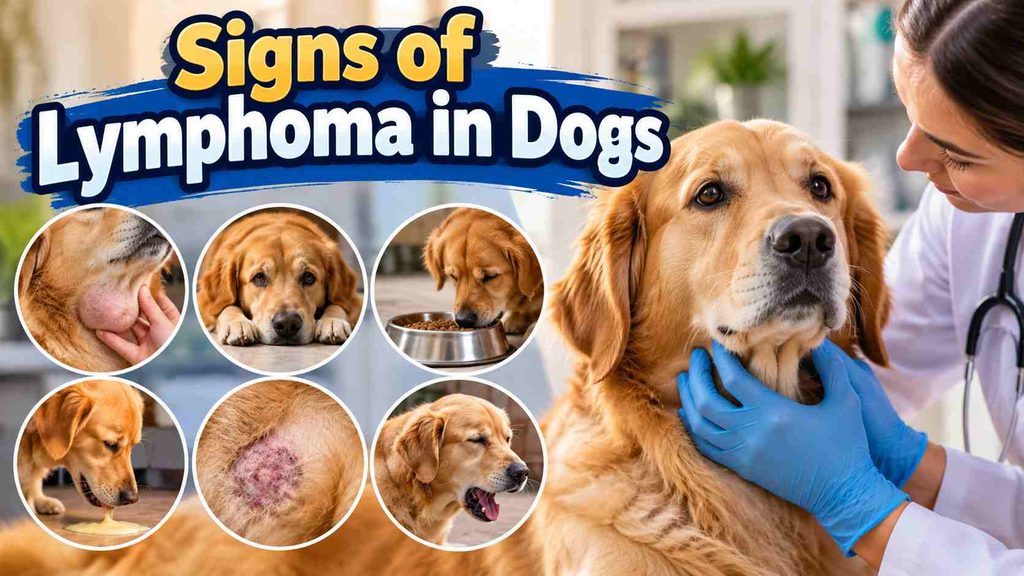
The classic first sign is one or more enlarged lymph nodes that feel firm and rubbery yet cause no pain when you touch them. Check monthly — the easiest ones to find sit under the jaw, in front of the shoulders, and behind the knees.
What else to watch for depends on where the cancer sits and how far it has spread:
- Less energy and more sleeping than usual
- Eating less, or losing weight for no clear reason
- Drinking and peeing more than normal
- Fever that comes and goes
- Vomiting or diarrhea
- Coughing or trouble breathing
- Swelling of the face or legs
- Dry, crusty skin patches with hair loss — these mimic other conditions, so it helps to know what ringworm looks like on dogs before assuming the cause
Many dogs feel perfectly normal in the early stage, making swollen glands the only clue. If lumps under the jaw or anywhere else linger beyond a week or two, call your vet.
Types of Lymphoma in Dogs
Where the cancer starts changes both the symptoms and the outlook, so vets classify lymphoma by location:
| Type | Where it starts | Share of cases | Typical signs | General outlook |
|---|---|---|---|---|
| Multicentric | Lymph nodes, often with liver or spleen | About 80–85% | Painless swollen glands | Responds best to chemo |
| Alimentary | Stomach and intestines | Under 10% | Vomiting, diarrhea, weight loss | Harder to treat |
| Mediastinal | Lymph nodes and thymus in the chest | Rare | Coughing, breathing trouble, sometimes high blood calcium | Often T-cell; tougher outlook |
| Cutaneous | Skin | Uncommon | Crusty patches, nodules, sores that won’t heal | Varies widely |
Multicentric lymphoma in dogs is by far the most common form. It typically shows up as swollen glands in several places at once and answers to chemo better than the other types.
Alimentary lymphoma in dogs targets the digestive tract. Because its signs — vomiting, diarrhea, and weight loss — look like countless ordinary stomach problems, it can take longer to diagnose.
Mediastinal lymphoma in dogs grows in the chest, where it can press on the windpipe and cause coughing or labored breathing. It shows up more often in young dogs, frequently runs as T-cell type, and sometimes raises blood calcium to dangerous levels.
Cutaneous lymphoma in dogs appears on the skin as crusty patches, raised nodules, or sores that refuse to heal. If you spot an odd bump, compare it with photos of a blood blister on a dog — then let your vet take a look rather than guessing at home.
Lymphoma can also strike a single organ outside the lymph system — the kidneys, eyes, brain, heart, liver, or bone. Vets call this extranodal lymphoma, and it is uncommon.
There is also indolent lymphoma, a slow-growing, low-grade form that moves far more slowly than the aggressive types above. For this kind, vets sometimes simply watch and wait.
B-Cell vs T-Cell Lymphoma in Dogs
Beyond location, vets classify lymphoma by which lymphocyte turned cancerous. Roughly 70% of cases are B-cell type, and these tend to respond better to treatment. T-cell lymphoma is less common and a known negative prognostic sign — it resists drugs more easily and usually means shorter survival. Your vet determines the type with special lab tests on the biopsy sample.
Dog Lymphoma Breeds at Risk

Any dog can develop lymphoma, but some breeds face clearly higher odds: Boxers, Golden Retrievers, Rottweilers, Scottish Terriers, Basset Hounds, Airedales, Chow Chows, German Shepherds, Poodles, St. Bernards, Bulldogs, and Beagles. Golden Retrievers carry the highest known risk — about 1 in 8 will develop lymphoma in their lifetime.
Most cases surface in middle-aged dogs between 6 and 9, though young dogs get it too. The exact cause remains unknown — the weed killer 2,4-D was suspected in one study but never proven. As a precaution, keep your dog away from lawn chemicals, cigarette smoke, and strong household toxins.
Dog Lymphoma Stages
Once lymphoma is confirmed, your vet assigns a stage from I to V based on how far it has spread. Staging shapes both the treatment plan and the prognosis:
| Stage | What it means |
|---|---|
| Stage I | A single lymph node is affected |
| Stage II | Several nodes, but all in one region of the body |
| Stage III | Lymph nodes all over the body |
| Stage IV | Nodes plus organs such as the liver, spleen, or chest |
| Stage V | The bone marrow is involved |
Vets also add a substage: “a” means your dog still feels well, “b” means the dog feels ill — and dogs in substage “a” generally do better. Earlier stages carry a better outlook, while stage V has the poorest prognosis. Even so, advanced-stage dogs often respond to chemo.
How Vets Diagnose Lymphoma
Diagnosis usually starts when your vet feels enlarged nodes. The most common first test is a fine-needle aspirate: a thin needle draws a few cells from the node for a pathologist to examine. It is quick, and most dogs barely notice.
If the aspirate comes back unclear, your vet may remove a whole node for biopsy. Then comes staging — chest X-rays, abdominal ultrasound, blood work, and sometimes a bone marrow sample — to map the spread. Special lab tests identify whether it is B-cell or T-cell, and many vets then refer you to a veterinary oncologist to design the treatment plan.
Lymphoma in Dogs Treatment: What Are the Options?
Because lymphoma is a whole-body disease, it needs whole-body treatment. Surgery cannot cure it — vets remove nodes only to secure a diagnosis. The real weapons are drugs, sometimes joined by radiation for a stubborn local spot.
Chemotherapy for Dogs with Lymphoma
Chemotherapy is the main treatment, and here is the reassuring part: dogs handle chemo far better than people do. Vets use lower doses, and the goal is keeping your dog feeling good — not pushing treatment to the limit.
Side effects are usually mild: a day or two of low appetite, tiredness, or an upset stomach. If vomiting shows up, this guide on why dogs throw up white foam can help you judge when to call the vet. Serious effects like bone marrow suppression or infections are uncommon. Most dogs keep their fur — hair loss mainly affects poodles, shih tzus, lhasa apsos, maltese, bichon frises, and Old English sheepdogs, and it grows back after treatment ends.
If your dog gets chemo drugs at home, your vet will teach safe handling: wear gloves, wash your hands, and clean up waste carefully, since chemo drugs pass through it.
The CHOP Protocol for Dogs with Lymphoma
The most common multi-drug plan is the CHOP protocol, also called the Madison–Wisconsin protocol. It combines four drugs — cyclophosphamide, doxorubicin (hydroxydaunorubicin), vincristine (Oncovin), and prednisone — given in weekly vet visits over several months. It is the gold standard because 80–90% of dogs reach remission on it.
Other protocols your oncologist might discuss:
| Protocol | What it involves | Typical results |
|---|---|---|
| CHOP (Madison–Wisconsin) | Four-drug combination including prednisone | Median survival 9–14 months; the gold standard |
| COP | Cyclophosphamide, vincristine, prednisone | Shorter remissions, averaging around 4 months |
| Lomustine-based (LOPP) | Lomustine plus other drugs | Often chosen for T-cell lymphoma; median survival around 10–17 months in studies |
| Single-agent doxorubicin | One drug only | Results comparable to COP; less expensive |
| Radiation | Targeted beams | Useful for a single stubborn node or nasal/skin spots, not for whole-body disease |
Prednisone for Lymphoma in Dogs
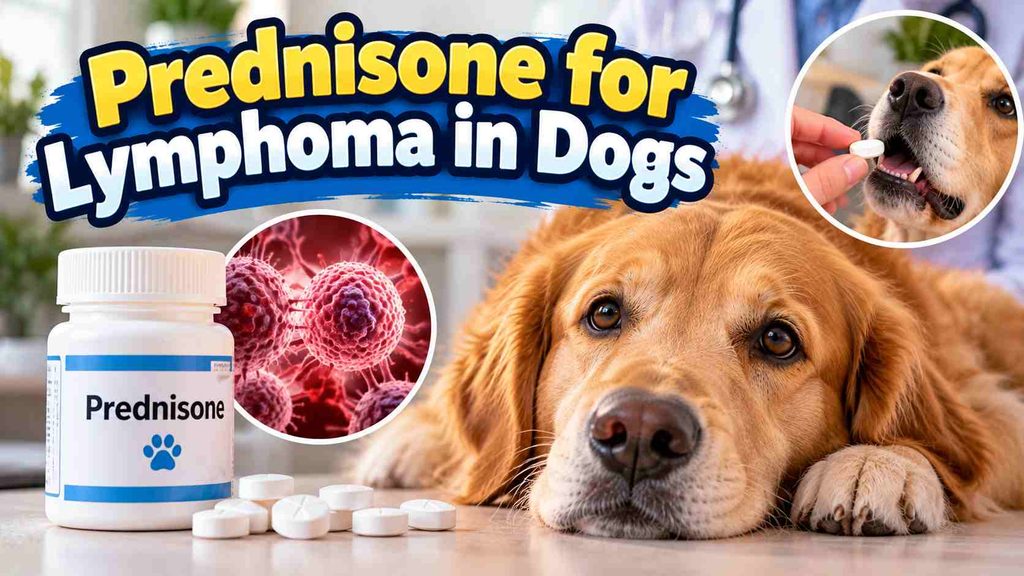
Prednisone is a cheap steroid pill, and dogs often perk up within days — better appetite, more energy, smaller nodes. The side effects are hard to miss, though: huge thirst, constant peeing, a ravenous appetite, and heavy panting in dogs. Long-term use can cause muscle loss and raise infection risk.
Now the critical warning: do not start prednisone before your vet confirms the diagnosis and you have chosen a treatment plan. Steroids can make cancer cells resistant to chemo later, shrink nodes so staging looks better than it really is, and studies link pre-chemo steroid use to shorter survival. The one question I urge every owner to ask: “Should we do the needle test before starting steroids?”
Dog Lymphoma Remission: What It Really Means
When treatment works, your dog enters remission — the vet can no longer detect any cancer, the nodes shrink back to normal, and your dog acts like their old self again. But remission is not a cure. The cancer is still hiding at levels too small to detect, and most dogs relapse at some point.
The typical first remission lasts 6–9 months. A second remission is possible with different drugs but usually runs shorter, since the cancer learns to resist treatment. Regular rechecks matter — swollen nodes are often the first sign the disease is back, and catching it early gives you more options.
Lymphoma in Dogs Prognosis
When owners ask about lymphoma in dogs life expectancy, the honest answer depends on three things: the type and stage, whether it is B-cell or T-cell, and the treatment chosen. These are the numbers vets work with:
| Situation | Typical survival |
|---|---|
| No treatment | 4–6 weeks after diagnosis |
| Prednisone alone | 2–3 months |
| CHOP chemotherapy (median) | 9–14 months |
| About 20–25% of treated dogs | 2 years or longer |
Keep in mind that “median” means half of dogs live longer than the number shown. Dogs that feel well at diagnosis (substage “a”), carry B-cell type, and are caught at an earlier stage tend to beat the average. Throughout it all, the goal is quality of life — most dogs on chemo keep eating, playing, and enjoying their routine.
Caring for Your Dog During Treatment
Day to day, your job is comfort and consistency. Feed a complete, balanced diet and ask your oncologist about nutrition — many vets favor digestible food with quality protein during chemo. Keep mealtimes regular, set up a soft bed in a quiet spot, and add ramps or steps if your dog seems stiff or tired.
Keep a simple log of appetite, energy, vomiting, and diarrhea, and report changes at rechecks. Stay on top of routine preventive care too — your vet can confirm how often dogs need the rabies vaccine and keep wellness exams on schedule alongside chemo visits.
One hopeful note: schools like Cornell are running clinical trials on immune-based treatments for canine lymphoma — ask your oncologist whether a trial could be an option.
Frequently Asked Questions
Can dogs survive lymphoma?
Yes. Lymphoma cannot be cured, but most dogs respond to chemotherapy and live for months or even years in remission, feeling like themselves. Roughly 1 in 4 to 5 treated dogs lives two years or longer.
What causes lymphoma in dogs?
The exact cause is unknown. Genetics play the biggest role — certain breeds develop it far more often than others. Environmental factors such as the herbicide 2,4-D are suspected but have never been proven.
How fast does lymphoma spread in dogs?
It can move fast. Without treatment, most dogs decline within 4–6 weeks of diagnosis. That is why vets recommend confirming the diagnosis and choosing a treatment plan as quickly as you reasonably can.
How long can a dog live with untreated lymphoma?
Most dogs live only 4–6 weeks after diagnosis without treatment, though a few last one to three months as the cancer keeps growing.
Is lymphoma painful for dogs?
Early on, usually not — the swollen nodes themselves don’t hurt. As the disease advances, dogs can feel sick, exhausted, or uncomfortable, which is why pain relief and comfort care become part of the plan.
Can lymphoma in dogs be cured?
No. Treatment aims for remission — no detectable cancer — and the best possible quality of life for as long as possible. Relapse is common, but many dogs enjoy long, happy remissions.
What should I feed a dog with lymphoma?
Feed a complete, balanced diet and ask your oncologist for guidance — some vets recommend higher-protein, easily digestible meals during chemo. Report any appetite loss right away.
How much does lymphoma treatment cost for dogs?
Chemotherapy typically costs $1,000–$10,000, averaging around $5,000 depending on the protocol, your location, and how many rounds your dog needs. Ask your oncologist for a written estimate before you commit.
When is it time to say goodbye to a dog with lymphoma?
When the bad days start outnumbering the good ones — constant pain, no interest in food, trouble breathing, no joy in favorite things. Your vet can help you judge quality of life honestly.
Which type of lymphoma is the most dangerous?
Alimentary and T-cell lymphomas generally carry a worse outlook than multicentric B-cell lymphoma, which responds best to chemotherapy. Your vet’s staging and lab tests will tell you where your dog stands.
The Bottom Line for Dog Owners
A lymphoma diagnosis is frightening — but it is not hopeless, and it is not a death sentence next week. Most dogs feel fine at first, respond well to treatment, and enjoy many more good months with their families.
Take away five things: feel your dog’s lymph nodes monthly; get lingering lumps checked quickly; never start steroids before a confirmed diagnosis; ask for an oncologist referral; and measure every decision by quality of life, not just the calendar. Your dog trusts you — and now you have the knowledge to decide well.