

You have probably wondered how long it takes a dog to digest food — while waiting for that post-dinner walk, or after your dog swallowed something it should not have. The short answer: most dogs digest a meal in about 8 to 10 hours, though the range runs from 4 to 12 hours depending on size, age, and what is in the bowl.
“Most healthy dogs digest a meal in about 8 to 10 hours — but the full trip from bowl to backyard can take up to 48 hours. Knowing the difference helps you read your dog’s body like a pro.”
Understanding dog digestion time helps you plan feeding schedules and spot trouble early. Here is the full timeline, stage by stage, plus what affects your own dog’s speed.
The Short Answer: How Long Digestion Takes in Dogs
If you want one number to remember, make it this: the average digestion time for dogs is roughly 8 to 10 hours from the first bite to the finished job in the stomach and intestines. Small and young dogs often land near 4 to 6 hours, while large breeds can take 10 to 12 or more. In practical dog digestion hours, breakfast at 7 is largely processed by mid-afternoon.
But here is the catch: some sources quote “4 to 12 hours” and others say “24 to 48 hours,” and both are right — they measure different things. The shorter range is active digestion (stomach plus small intestine). The longer range is the full canine gastrointestinal transit time: mouth to poop.
Why the Numbers You See Online Disagree So Much

Part of the confusion is that digestion is not one event — it is a relay race, and different websites stop the clock at different baton passes. Here are the three numbers you will keep seeing:
- Stomach emptying: how long food stays in the stomach — about 8 to 10 hours for a full meal.
- Active digestion: stomach plus small-intestine work, where nutrients are absorbed. The commonly cited 4-to-12-hour range for how long for dog digestion overall.
- Full gastrointestinal transit: mouth to poop, including the slow trip through the large intestine — where the 24-to-48-hour figures come from.
So when one site says “8 hours” and another says “48 hours,” both can be right — but only if they say which clock they are reading. Any honest discussion of dog food transit time names its clock, and so will I.
The Canine Digestion Timeline, Stage by Stage
Your dog’s digestive system is a surprisingly efficient assembly line, and each station has its own rough schedule. Here is the full timeline, from bowl to backyard:
1. Mouth and esophagus: seconds
Dogs barely chew — their jaws move only up and down, so food is crushed, mixed with saliva, and swallowed fast. Dogs that gulp also swallow a lot of air, which can cause burping — and in some dogs, dog hiccups after a hasty meal.
2. Stomach: roughly 8 to 10 hours
The stomach churns food with powerful acid and enzymes into a semi-liquid mixture. A dog’s stomach acid is far stronger than ours, which breaks down protein fast and kills many bacteria — partly why dogs get away with eating things off the ground that would upset our stomachs.
3. Small intestine: roughly 3 to 5 hours
Most nutrient absorption happens here. Enzymes finish breaking food down, and the intestinal walls absorb nutrients into the bloodstream — the most important nutritional work of the entire dog digestive cycle duration.
4. Large intestine: 12 to 24+ hours
The slowest stage by far. The large intestine absorbs water and forms stool, and waste can sit here half a day or more — this stage causes almost all the variation in total transit time between dogs.
5. Elimination
Waste is stored in the rectum until your dog is ready to go. From first bite to poop bag, the full journey typically lands between 24 and 48 hours.
The timeline in one glance:
- Mouth to stomach: under a minute
- Stomach: ~8–10 hours
- Small intestine: ~3–5 hours
- Large intestine: ~12–24+ hours
- Full mouth-to-poop transit: ~24–48 hours
Kibble vs Wet Food vs Raw: Which Digests Fastest?
What is in the bowl matters almost as much as who is eating it. The denser and drier the food, the more work the stomach has to do.
- Dry kibble: the slowest. Dense, low-moisture, and heavily processed, it needs extra stomach work — typically 8 to 12 hours of active digestion.
- Wet and canned food: noticeably faster, roughly 4 to 8 hours. The high moisture content helps food move through the tract more efficiently.
- Raw diets: generally quick too, in a similar window to wet food, since raw food skips the nutrient-damaging heat processing kibble goes through.
Fat and fiber pull in opposite directions: higher-fat meals slow stomach emptying, while moderate fiber keeps things moving. This is one reason sudden food switches upset stomachs — the new recipe changes the whole rhythm at once. Change foods gradually over a week or two.
What Affects Your Dog’s Digestion Speed
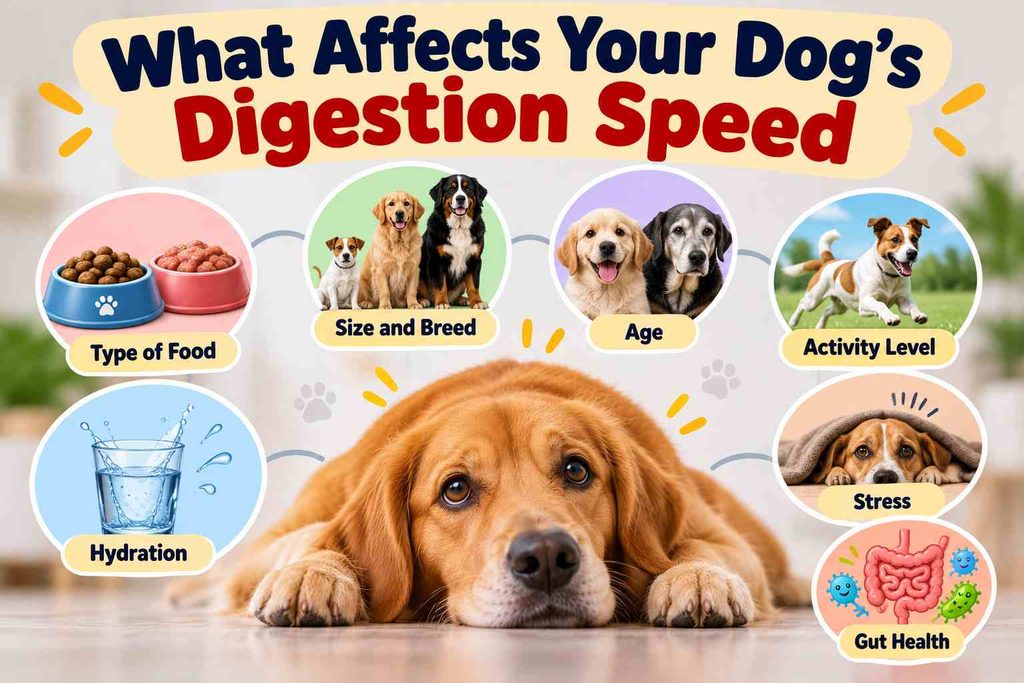
Two dogs can eat the same meal and finish digesting it hours apart. Here are the biggest reasons why — and this is where the question of what affects dog digestion speed gets interesting, because the science does not always match the common wisdom.
Size and breed
Small dogs generally digest faster than large ones. But a 2010 study measuring real transit times with motility capsules in 31 healthy dogs found no simple “bigger dog, slower digestion” rule — smaller dogs actually had longer stomach and small-intestine transit times, with most total-time difference coming from the large intestine. Size matters, but not in the tidy way the internet claims.
Age
Puppies digest faster than adults; seniors slow down as metabolism winds down. An older dog that seems “backed up” may just have slower gut motility with age — though any lasting change deserves a vet check.
Activity level
A daily walk improves gut motility so waste does not sit in the colon. One exception: vigorous exercise immediately after a meal is a bad idea — in large, deep-chested breeds it raises the risk of bloat, a dangerous twisting of the stomach. Let your dog rest after eating, then walk.
Hydration
Dehydration slows gut transit and raises constipation risk. As a rough guide, dogs need about one ounce of water per pound of body weight per day — more in hot weather or after exercise.
Stress
A move, boarding, or fireworks can disrupt the gut’s bacterial balance and swing digestion toward diarrhea or constipation. Watch for stress signals like panting in dogs that seems out of proportion, plus appetite changes. Keeping routines steady is one of the kindest things you can do for a sensitive stomach.
The gut microbiome
Trillions of gut bacteria do real digestive work — breaking down fiber and keeping harmful microbes in check. Antibiotics or illness can throw this balance off, slowing or disrupting digestion. That is why vets often recommend probiotic support after antibiotics, and why a quality probiotics for dogs supplement is worth discussing with your vet for recurring tummy trouble.
Puppies Digest Differently
If you have a puppy, you know the rhythm: eat, play, poop, repeat. Puppy digestion time is genuinely faster — young pups often process a meal in as little as 4 hours, which is why puppies may poop five or more times a day while a healthy adult goes once or twice.
Several things drive the puppy pace: a faster metabolism, smaller meals eaten more often, and an intestinal wall that has not yet thickened the way an adult’s has. As your puppy grows, digestion gradually slows and bathroom trips space out. If stool is consistently loose or watery rather than just frequent, though, that is not normal puppy speed — talk to your vet, since young pups dehydrate quickly.
Why Does My Dog Poop Right After Eating?
If digestion takes 8 to 10 hours, why does your dog poop twenty minutes after dinner? The gastrocolic reflex: a new meal stretches the stomach, which signals the colon to move along waste already waiting there. That post-dinner poop is not the dinner you just served — it is yesterday’s dinner exiting.
This reflex is completely normal — and useful. Feeding on a consistent schedule plus a walk shortly after meals is the easiest way to house-train a puppy, because you can predict it. If you are mapping out a dog food to poop timeline for walk planning, expect the real “result” of a meal about 12 hours later.
Do Dogs Digest Faster Than Humans?
Yes — considerably. While your own meal takes 24 to 72 hours to fully pass through, your dog finishes the same journey in roughly 4 to 12 hours of active digestion. The main reason is anatomical: dogs have a much shorter intestinal tract relative to body size, so food travels less distance.
There is a trade-off, though: dogs hold food in their stomachs longer than we do, but move it through the intestines faster. That long stomach soak followed by a quick intestinal sprint is the signature of a scavenger’s gut, built for big occasional meals wolfed down fast.
Warning Signs Your Dog’s Digestion Is Off Track
So just how quick do dogs digest food when everything is working well? Fast enough that you should notice when the rhythm changes. Digestion that runs too fast or too slow both leave clues.
Too slow: straining to poop, small hard stools, going more than 48 hours without a bowel movement, or bloating. Occasional constipation after a diet change often resolves on its own — but lasting more than a day or two, especially with vomiting or belly pain, needs a vet visit, since it can signal a blockage.
Too fast: loose stools, diarrhea, or urgency. One or two soft stools after scavenging something on a walk are usually nothing to worry about. But diarrhea lasting more than 24 hours, blood in the stool, or repeated white foam vomiting alongside it warrant a vet call. Puppies and seniors dehydrate faster, so do not wait as long with them.
What About Undigested Food in Your Dog’s Poop?
Finding recognizable bits of food in stool is common and not always a problem. If you are wondering how long does food take to pass through a dog completely, the full trip is 24 to 48 hours — and some things never fully break down. Fiber from vegetables, corn kernels, and bits of chews often pass through visibly without harm.
The line is drawn at quantity. A few flecks of undigested vegetable matter is normal; whole recognizable chunks of dinner, repeatedly, suggests the digestive system is not doing its job — possibly from eating too fast, an unsuitable food, or a condition like exocrine pancreatic insufficiency, where the body cannot make enough digestive enzymes. If it comes with weight loss or chronic loose stools, schedule a vet check.
Simple Ways to Support Healthy Digestion
You cannot change your dog’s anatomy, but you can give their digestive system the best working conditions:
- Feed on a schedule. Two meals a day at consistent times (three to four for puppies) keeps the digestive rhythm predictable.
- Keep water fresh and available. Wash the bowl daily — dogs drink more from a clean bowl.
- Walk after the rest, not right after the bowl. Give your dog 30 to 60 minutes of calm time after eating, then walk.
- Slow down speed-eaters. A slow-feeder bowl turns a 30-second inhale into a five-minute meal, cutting swallowed air and bloat risk.
- Change foods gradually. Mix the new food in over 7 to 10 days. Sudden switches are a top cause of digestive upset.
- Do not forget fiber. Moderate fiber keeps stool formed and moving — add it under your vet’s guidance rather than guessing.
- Talk to your vet about gut support. After antibiotics or during recurring tummy trouble, probiotic support can help rebuild a healthy microbiome.
Frequently Asked Questions
How fast do dogs digest food?
Most dogs digest a meal in 8 to 10 hours, with a normal range of 4 to 12 hours depending on size, age, and food type. Small and young dogs are fastest; large breeds and seniors take longer. The full mouth-to-poop journey takes 24 to 48 hours.
How long does it take for a dog to poop after eating?
A healthy adult dog usually poops about 12 hours after its last meal. Many dogs also poop shortly after eating due to the gastrocolic reflex — that is yesterday’s meal clearing out, not the one just eaten.
How long does food stay in a dog’s stomach?
About 8 to 10 hours for a full meal. Fatty meals and large portions can extend this; small, moist meals may pass through sooner.
How long for a dog to digest kibble?
Dry kibble usually takes 8 to 12 hours — longer than wet or fresh food, since its dense, low-moisture structure needs more stomach work.
How long does wet food take to digest in dogs?
Generally 4 to 8 hours. The high moisture content moves food through the tract more efficiently and supports hydration.
How long after eating do dogs digest food?
Active digestion is mostly finished within 8 to 12 hours after eating, with the stomach emptying around the 8-to-10-hour mark. Elimination typically follows 24 to 48 hours after the meal.
Do dogs digest food faster than humans?
Yes — dogs take roughly 4 to 12 hours versus 24 to 72 for humans. Dogs have a shorter intestinal tract, so food travels less distance, though their stomachs hold food longer than ours.
Can dogs digest bones?
Dogs should not eat cooked bones, which can splinter and injure the mouth, throat, or intestines. Any indigestible fragment risks an obstruction — a veterinary emergency.
Should I exercise my dog right after eating?
No — rest 30 to 60 minutes after a meal first. In large, deep-chested breeds, exercising on a full stomach raises the risk of bloat, a life-threatening stomach twist.
How many times a day should a dog poop?
Healthy adults usually go one to three times a day; puppies five or more. Consistency matters most — a sudden change from your dog’s normal pattern deserves attention.
What Your Dog’s Digestion Is Really Telling You
Once you know the timeline — 8 to 10 hours of active digestion, 24 to 48 hours bowl to backyard — your dog’s daily rhythms start making sense. The post-dinner poop sprint, the morning walk payoff, the way a new food throws everything off for days: it is all one system on a fairly predictable clock.
The most useful thing you can do is learn your own dog’s normal. Same food, same schedule — and you will notice small changes before they become big problems, with real observations to share with your vet. That is what understanding digestion is for: earlier, calmer, better decisions for your dog.